Smoke on the Water

The debate to close regulatory loopholes that allow casinos to permit smoking on their gaming floors continues in New Jersey, Pennsylvania and Rhode Island.
On one side are employee groups and health care advocates that are lobbying to close those loopholes and force casinos to adhere to indoor air quality standards mandated for most every other business. On the other side are casino operators who fear a diminution in gaming revenue if those loopholes were closed. Their concern is that if they were forced to ban smoking, customers would go to nearby jurisdictions where smoking is still permitted.
The Uneven Playing Field
The concept of an uneven playing field, in which regulations give one jurisdiction a competitive advantage over another, has long been a concern to commercial casino operators. The closure of smoking loopholes in Illinois, Delaware, Colorado and New Orleans, all prior to the pandemic, provided ample evidence that gaming revenue initially declined, albeit at different rates, yet recovered in subsequent years.
Nevertheless, the uneven playing field continues to be a concern to commercial operators where loopholes are being challenged.
The Bossier City/Shreveport, Louisiana gaming market is an example of an uneven playing field.
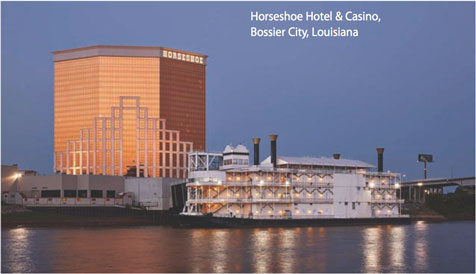
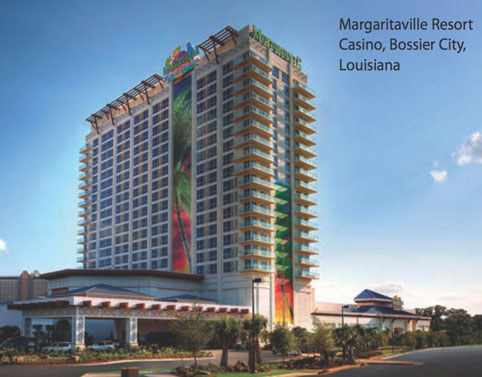 Five casinos straddle the Red River, with the Margaritaville Resort Casino, Boomtown Casino and Horseshoe Hotel & Casino on the Bossier City side of the river, and Bally’s Shreveport and Sam’s Town Hotel and Casino on the Shreveport side to the west. Two bridges connect one part of the market to the other. Louisiana Downs, a racetrack casino in Bossier City, is located eight miles east of the river.
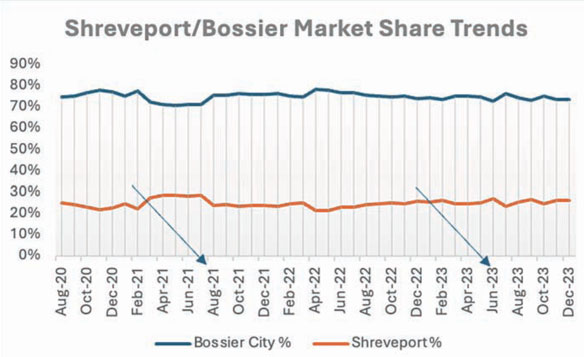
On August 1, 2021, the Shreveport City Council mandated that the two casinos in its jurisdiction adhere to a citywide policy and ban smoking. During that ban, the two operators made the case that they were at a disadvantage since gamblers who smoke could simply travel across the river to play in a casino that permitted smoking.
 Collectively, their share of the market declined from 26 percent to 24 percent. After a concerted lobbying effort, the Shreveport City Council rescinded their ban and smoking was reintroduced on June 1, 2023. Once the ban was lifted, the two casinos’ market share returned to 26 percent, but their overall gaming revenue declined from an average of $12,128,700 during the ban to $12,054,700 after the ban was lifted.
The graph illustrates this trend.
The Interstate 5 Corridor in Washington
Uneven playing fields can also be found in markets that are not under state-mandated restrictions and where individual operators determine their own policies. One market that illustrates a more nuanced approach to smoking restrictions are the casinos that serve the greater Seattle/Tacoma (SeaTac) gaming market, clustered on or near Interstate 5.
Eleven casinos are located along the I-5 corridor, from Arlington to the north to Rochester to the south. An additional four casinos are located on the southern portion of the Olympic Peninsula and also serve portions of the SeaTac region. Each casino adopted its own unique policy towards smoking.
In May 2020, Angel of the Winds Casino Resort, 47 miles north of Seattle, announced that upon reopening, their property would permanently prohibit smoking. In so doing, it became the first casino to permanently ban smoking since the Ho Chunk Casino in Madison, Wisconsin did so in 2015.
Shortly after Angel of the Winds’ announcement, the Tulalip Tribe, operator of the Tulalip Resort Casino, Quil Ceda Creek Casino and Tulalip Bingo and Slots, adopted a similar policy for its three casinos to the west of I-5, 10 miles south of Angel of the Winds and 37 miles north of Seattle. Leadership at Tulalip had long used market research and analytics to drive their business decisions.
That research led them to the decision to ban smoking. Although the tribe has yet to codify that policy as permanent, four years on, the tribe continues to operate its three casinos as 100 percent smoke-free.
The Snoqualmie Casino, a property that enjoys a location 26 miles east of downtown Seattle and is the closest casino to that market, took a completely different approach. After reopening in 2020, management designated 50 percent of its gaming floor as non-smoking. Over time, that allocation was reduced to where today 1,640 electronic gaming devices (EGDs) on the main gaming floor are located in areas that permit smoking.
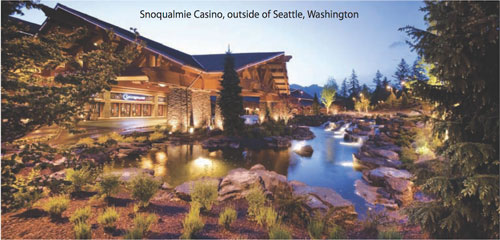 A separate, glass-enclosed room provides 60 machines in a smoke-free environment, although patrons must navigate across the main gaming floor to access those devices. Patrons are not permitted to smoke while playing table games on the main gaming floor.
The Muckleshoot Casino Resort is located in Auburn, approximately 28 miles south of Snoqualmie, and 15 miles northeast of Tacoma. With over 3,500 EGDs, 70 table games and 400 hotel rooms, it is one of the largest casino resorts in the Pacific Northwest. Its approach to smoking differs from properties to the north.
Approximately 50 percent of its electronic gaming devices are located in large, well-ventilated rooms that are 100 percent non-smoking. While not fully partitioned from smoking areas, its air handling systems do an adequate job of keeping the smell of smoke from permeating non-smoking areas. Management also maintains a policy that prohibits smoking at table games, even those that are located in smoking zones.
Muckleshoot Bingo, a locals-oriented property located nearby, also offers separate smoking and non-smoking rooms with EGDs and a main bingo floor designated as non-smoking.
The Puyallup Tribe of Indians owns and operates two casinos in Tacoma. The Emerald Queen Casino Resort, located on the east side of Interstate 5, opened in 2020, replacing an older facility. The property has approximately 2,100 EGDs, 60 tables and a 155-key 4-star hotel.
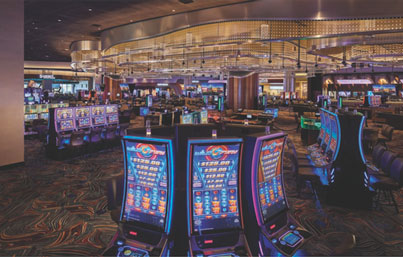
The casino adopted yet another policy different from others in the market. Smoking is permitted throughout most of the main gaming floor. A small portion of the slot floor near the property’s entertainment venue is designated as non-smoking, although there are no physical barriers separating those two zones. This design is similar to what casinos in Atlantic City offer; however, unlike Atlantic City, patrons are not permitted to smoke while playing table games.
Emerald Queen Casino Fife is an older property located on the west side of Interstate 5. It is comprised of 2,300 EGDs and a 103-key hotel. Table games are not offered. The casino contains a series of rooms, each designated as either smoking or non-smoking. Management made a concerted effort to provide patrons with direct access to a non-smoking room from portions of its parking lot without forcing customers to walk through smoking zones.
Further south, the Nisqually Red Wind Casino near Olympia has taken yet another approach. The casino is divided into two zones: a non-smoking main casino with 937 EGDs and 20 table games with access to all of its primary restaurants, and a separate room with 713 machines in a smoking zone. Migration of smoke is kept to a minimum, and the two areas offer a near identical mix of EGDs.
Further south in Rochester, the Lucky Eagle Casino & Hotel adopted a similar strategy, although its allocation of gaming devices favors smokers. The casino floor closest to the main entrance is smoke-free, as are all of its table games. The remainder of the casino is designated as smoking. Access to some of the restaurants requires patrons to walk through smoking zones.
The Olympic Peninsula
The casinos along the southeast portion of the Olympic Peninsula, west of Tacoma, offer yet another mix of policies. The Little Creek Casino Hotel in Shelton features approximately 750 EGDs and 20 tables. The Squaxin Island Tribe adopted a non-smoking policy at the onset of the pandemic and has not veered from that decision. Smoking is only permitted outdoors. Covered areas provide smokers with protection from the elements.
Thirteen miles to the north, the Lucky Dog Casino offers 191 EGDs on its main gaming floor, designated as 100 percent non-smoking. An outdoor smoking patio, located at the rear of the property, features a small wooden shed, which houses four EGDs where patrons can play and smoke at the same time.
The Suquamish Clearwater Casino Resort overlooks the Puget Sound, approximately 55 miles north of Tacoma. The property features two hotels and a casino with approximately 1,250 EGDs and 28 table games. Prior to the pandemic, the casino featured a glass-enclosed room that served as the non-smoking section.
Post-pandemic, the allocation of space was reversed. Today, the majority of the casino is non-smoking and approximately 70 EGDs are located in what is now a separate smoking zone.
Finally, the Point Casino Hotel in Kingston, comprised of two Sprung structures and a 94-key hotel, took a different approach from other operators on the peninsula. As competitors confined smoking to smaller areas of the casino or eliminated it completely, leadership saw an opportunity and doubled down on smoking.
They designated their larger Sprung structure, which houses their main casino, as 100 percent smoking. They then converted a smaller Sprung structure that once served as an entertainment venue into a non-smoking gaming area. Positive air pressure and a separate entrance from the parking lot allow patrons to avoid smoking zones.
The Interstate 5 corridor and the Olympic Peninsula offer an alternative approach to the uneven playing field. Unlike most commercial jurisdictions, each operator sets its own policy and tilts that field to its strategic advantage.
For some operators, their strategy is to restrict smoking or ban it completely to best serve the needs of their business, their customers and their employees. For others, smoking is used as a competitive advantage, either to gain more market share, or as a point of differentiation.