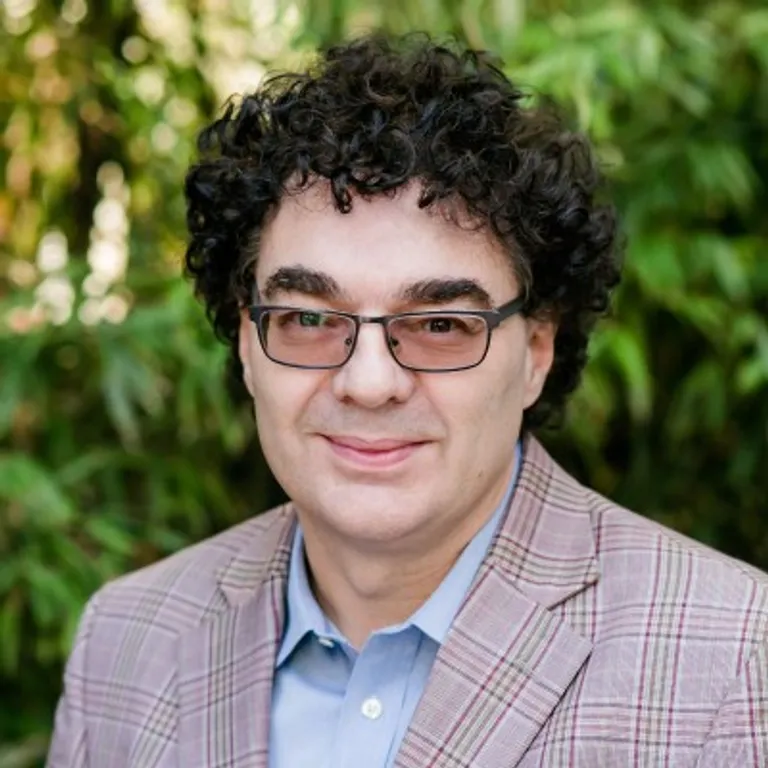
Ben Lee

Ben Lee, Managing Partner, IGamiX
In his 2026 policy address, Macau Chief Executive Sam Hou Fai sharpened his focus on economic diversification, a plan to balance the dominant casino industry with the development of new business sectors. GGB Managing Editor Marjorie Preston asked gaming consultant Ben Lee how the plan is unfolding in the world’s leading gaming jurisdiction, the only place in China where gambling is legal.
GGB: Macau is on order to reduce its reliance on gaming revenue to a more diversified economy with four pillars: “Big Health,” financial services, technology and MICE. Will these elements make Macau more resilient in case of future crises, like the pandemic?
Ben Lee: There’s the dream and then there’s the reality. The dream is to reduce Macau’s reliance on gaming. The reality is, with the gaming industry soaking up nearly all the resources in the market, we haven’t moved the needle as much as we’d like to. Macau’s non-gaming as a percentage of total revenue was 5.4 percent in 2010, rising to 10.5 percent in 2019 and peaking at 22 percent in 2022 before trending down to 13.5 percent YTD3Q 2025 as gaming revenue recovered.
The conundrum is that gaming revenue is too easy to earn: “Just open the doors,” as someone famously said. Nothing else generates the same return on investment, so we do as little as we think we can get away with.
The problem Macau faces is structural. It revolves around the social contract the government believes it has with the local community, to guarantee full employment. There’s nothing wrong with that objective, which normally would be a desirable one. But the talent needed to broaden the economy is virtually non-existent in this tiny labor market of under 380,000, and authorities and locals are resistant to any foreign import. Investment principals and most foreigners are rejected for residency and work visas on the basis that some young local with no experience can fill their roles. Specialist guest lecturers to local universities are denied temporary visas because there are unemployed graduates. One has to wonder if there’s any will to lift the local population and economy to greater heights.
Then there’s the issue of “fit.” Health, finance and technology are all worthwhile aspirations, but only the big gaming concessions have the resources and staying power to go through the torturous, almost impossible process of obtaining work visas.
Can Macau reach its target of 60 percent non-gaming GDP by 2028, or is that unrealistic?
See the figures above. I think it speaks for itself.
The six concessionaires are on the hook for more than $16 billion in non-gaming investments over the course of their 10-year terms. How are they doing so far?
To date, we’ve seen very little evidence of hard capex investment on the ground. Big-ticket items—new hotels, conservatory, high-tech theme park, cultural center—are yet to be worked on. What we’ve seen is lots of art galleries and more concerts.
Can non-gaming investment meaningfully lift the gaming sector?
Theoretically it should, but the data is still unclear. Some say non-gaming visitors crowd out actual players, the recent Macau Grand Prix being a prime example of GGR dropping during a major event. Some say the same goes for most concerts that target the young (non-gambling) crowd—for example, K-Pop events.
Will non-gaming help Macau brace for new gaming competition from Japan, the UAE and maybe, eventually, Thailand?
Japan won’t be any threat to Macau, as the ability to channel funds from China to Japan for gaming purposes is highly constricted at both ends. The Thai gaming initiative is dead in the water for now; the longstanding social antipathy towards gaming from this predominantly Buddhist citizenry has not only continued, but rendered the issue politically suicidal. UAE looked very promising, but needless to say, the current Middle East conflict has covered the project in a cloud of dust for the next few years.
In 2025, gaming analyst Alidad Tash said more hotel rooms are essential to Macau, as this will mean more overnight visitors, who have a compounding effect on revenue. Do you agree?
There seems to be some disagreement among operators on the ground on that specific issue. Sands China, which had the largest room inventory, reduced their room count at the Parisian from 3,000 to 2,700. Shortly after that, they remodeled Sands Cotai Central onto the Londoner, losing another 1,600 rooms. They obviously believe room count isn’t the issue but size of rooms is in the current market battlespace. With more and more operators refurbishing their rooms to go after the premium market, it’s evident they believe there’s more prospect in going after that high-end segment than the mass.
What types of investments will best shore up and grow the economy?
What we need are major infrastructural game-changers such as the Sphere in Vegas. Investments like that will put Macau on the map, and not just for its casinos.