Playing AGS
The meteoric rise of AGS to become a private supplier zeroing in on the top of the slot market
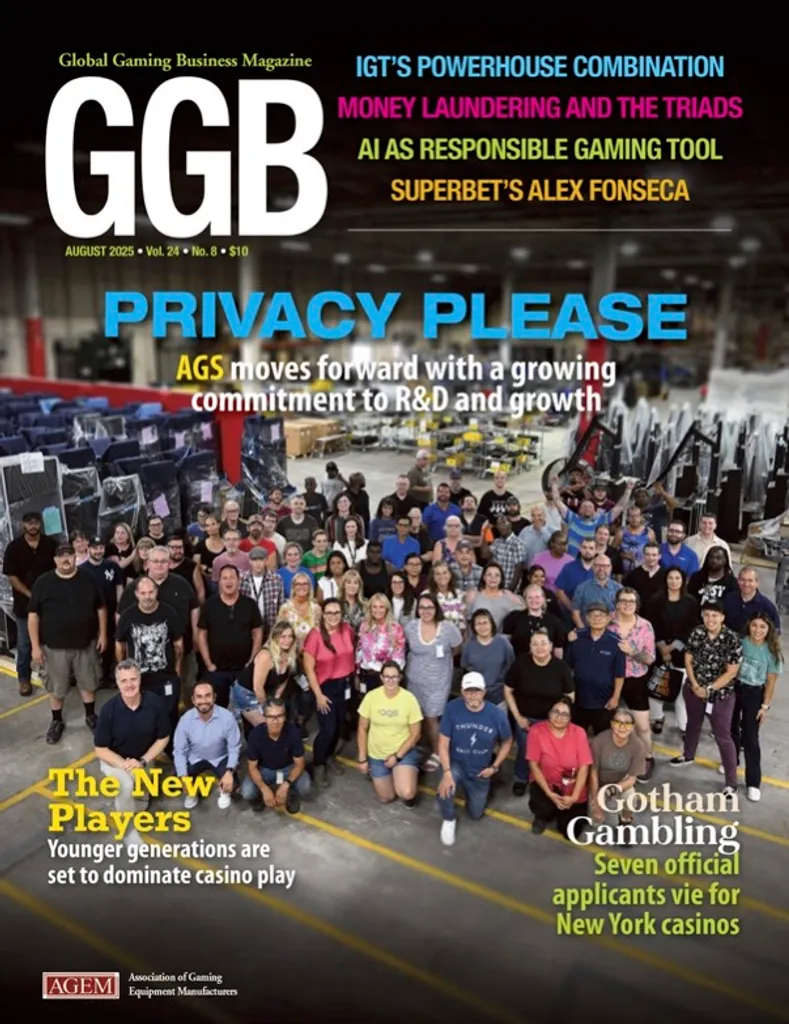
On June 30, middle-market private equity firm Brightstar Capital Partners announced it had completed its acquisition of PlayAGS, Inc., better known as the gaming supplier AGS.
The closing of the $1.1 billion transaction, which saw AGS stockholders receive $12.50 per share and delisted AGS from the New York Stock Exchange, was the culmination of a wild and wonderful ride for the supplier—a ride that first gained steam when David Lopez was lured from his position as president and CEO of the former Global Cash Access at the end of 2013 to become president and CEO of what was then a small company known as American Gaming Systems.
At the time, AGS was anything but a sure bet. Primarily a Class II supplier, the company had been acquired the previous year by affiliates of Apollo Global Management. That deal was brokered by then-CEO Bob Miodunski, the former Bally/Alliance CEO who had been lured out of retirement to lead a push for AGS to crack the Class III markets. The effort generated slow returns, producing little more than a series of knowledge-based games led by a Ripley’s Believe It Or Not! video slot.
“Looking back to when I was being recruited,” Lopez recalls, “if I had to make the decision 10 times, I wouldn’t make it half the time to leave a great company like Global Cash Access and come to a company that was very small, was struggling at the time, and had been acquired by private equity. But they sold me on a bunch of promises—and they made good on all of them.”
The biggest promise was free rein to build AGS into a supply powerhouse through acquisition, funded out of Apollo’s deep pockets. After Lopez became CEO, things immediately began changing for the better.
The first year, AGS acquired Colossal Gaming and its main product, a giant slot machine called Colossal Diamonds on a cabinet known as “Big Red.” It’s a product AGS sells to this day.
“We had a very small R&D team, and Big Red was the main product,” says Lopez. “It’s interesting, because we had nothing to sell in Class III but this one thing. Credit Colossal Gaming for coming up with a cool, unique product. It worked, and it still works to this day. Its performance is great.”
The following year brought the acquisition of Georgia-based Class II supplier Cadillac Jack, renowned for its engineering and game development talent.
The former Cadillac Jack engineers developed a powerful proprietary game platform, and the inherited game development talent immediately put AGS on the Class III map—in no small part because of the chief technology officer brought in from Cadillac Jack, Sigmund Lee.
“Cadillac Jack was massively transformational,” says Lopez. “Cadillac Jack was largely a Class II company; we were a Class II company. Combined, we didn’t have very many Class III units out at all. And so when we combined, what we saw was that we had certain infrastructure that they didn’t have, and they had R&D on a scale that we didn’t have.”
Just before the acquisition, the Cadillac Jack R&D team perfected the platform and hardware that resulted in the Orion portrait cabinet—“just a monster cabinet for us,” Lopez says. In fact, Orion was what sealed the deal. “It was something truly unique at the time,” he says. “When I saw it, in the very late innings of diligence, I remember making a phone call and saying, ‘Let’s do this deal.’
“This is a great R&D team, and it’s worked out great. We took it from a combined EBITDA in the range of $60 million to $70 million when we joined forces to over $175 million today.”
The table-game division, headed by Senior VP and General Manager, Table Products John Hemberger, developed rapidly, acquiring a collection of specialty table games, side bets, progressives and utility products.
“The table products were fun, because we really took an approach
where we didn’t have a business,” Lopez says. “There wasn’t a whole lot going on in the space to acquire at the moment. We saw that John Hemberger was available, and he is the most tenured guy on the planet right now as far as running a table and shuffler division.”
Another 2015 acquisition, social gaming supplier RocketPlay, marked the company’s entry into the interactive space.
By 2018, Lopez was ready to take the new star of gaming supply public.
Ringing the Bell
By the time Lopez and other AGS executives rang the bell to open the New York Stock Exchange on January 26, 2018 as the newly listed public company PlayAGS, Inc., the company bore little resemblance to the Class II supplier Lopez had joined four years earlier.
In those four years, Lopez built the company into a full-service gaming supplier rivaled by few in the industry. Today, as a newly minted private company, AGS is once again a business transformed.
The changes over the past seven years, however, were built on the foundation forged in advance of its initial public offering. Its slot business—run by Mark Dedeaux, who took over as senior vice president and general manager, slots in 2019—expanded its range, with megahits like the Rakin’ Bacon franchise and the development of the company’s first stepper slots.
Hemberger oversaw not only an increasing library of table games, but side bets, shufflers and multiple table-game progressive systems, including Bonus Spin Xtreme. That system, which can link every table game in a casino to a single progressive jackpot, is now finding a new greenfield market across the industry’s poker rooms, where many are seeing the poker room jackpot linked to the jackpot in the pit, resulting in seven-figure progressives.
Zoe Ebling, brought on as vice president of interactive in 2023, has built a booming business in the iGaming market for AGS, both porting successful land-based titles and creating new titles and omnichannel releases through a new online-only studio.
“It was important on the commercial side to have someone who was willing to go 100 miles an hour,” Lopez says of Ebling, “forming customer relationships, getting out there and being everywhere we needed. Combined with tucking the online R&D group under our existing slot R&D group so we could get all the torque to the wheels, if you will, and put out as many games as we can, this was a great combination for success.”
The AGS Interactive platform has been efficient in porting higher-denomination three-reel titles from the brick-and-mortar side to the interactive side, he adds. “It was a great platform to build off of to be porting games, and we had a lot of success,” Lopez says.
“We have been pretty sticky with launching new games at the top of the Eilers report for quite some time. We don’t make a lot of games, but we’re ranked in slot GGR in the U.S.. To get there and not put out a ton of games, it requires us to be in the top ranks on the release of new games. We’re very happy with that, and obviously it’s our plan that over time, we will release more games. We’ll be investing there so we can get more to market.”
Omnichannel releases put AGS in rarified air for the online space. “Our coordination between our land-based team, sales team, and then our interactive team with Zoe’s crew, is a lift for the customer, too,” Lopez says
“Everybody’s got to coordinate. Everybody has to put effort into it. But I’d say that when we do omnichannel events and we do these parallel launches, customers have really been pleased with it. And it’s done great numbers as well.”
In 2019, AGS had 750 employees worldwide. Today, the company has more than 940—38 percent of whom are on the R&D side. Game development has grown from three studios in 2019 to eight studios across the world.
Lopez recalls that Lee, the CTO, proposed opening a studio in Australia, and it was set up in 20 minutes. “Why I was so receptive to it? One, I had a great experience with R&D in Australia in my past with Shuffle Master (as COO), which became Bally, and is part of Light & Wonder today.
“I felt like it was a great place for talent. Aristocrat’s proven that; Light & Wonder’s proven that. We opened up those studios down there because we thought that was where some of the greatest game development was. And it’s worked out very nicely for us. We have three studios there now.”
Eilers-Krejcik Gaming ranks AGS as the No. 1 overall online slot supplier, and the No. 1 new online slot supplier. AGS is the No. 2 table content provider by revenue.
Meanwhile, AGS has moved into the No. 4 spot in the North American slot market, zeroing in on cracking the list of the so-called “Big 3” suppliers. Over the past three years, AGS has more than doubled its global slot unit sales to over 6,100 units, has grown online real-money gaming content revenue by more than 150 percent, and increased table revenue by more than 50 percent. AGS products in all three categories can now be found in 26 countries, and that footprint is growing as well.
Comparing these results to what the company was when Lopez took over in 2014 reveals an amazing transformation that officials of Brightstar Capital have said was what made them look at acquiring AGS.
Into the Future
AGS is now poised to add to and improve all three of its operating divisions under the ownership of Brightstar Capital.
Brightstar officials have stated publicly that they have no intention to interfere with or govern the operation of AGS under Lopez. “We are thrilled to officially welcome David and the AGS team to Brightstar,” said Andrew Weinberg, founder, CEO & co-chair of Brightstar, in the press release announcing the deal’s closing.
“We believe that AGS’ full-spectrum product offering and customer-centric culture set it apart in a growing industry. Our goal is to help the company expand into new markets and continue to use technology to create exciting games and products.”
For Lopez, going back to a privately owned company causes no disruption to the business—quite the contrary, in fact. “Through our history of being private and being public, our greatest period of growth happened when we were private,” he says. “There’s no arguing that. We did a fantastic job of growing the company while we were private.
“In a private company, you can make short-term, long-term, mid-term decisions, and every decision is going to be for the future of the company. In a public forum, you have your eyes on the future, but you always have to manage to today. You’ve got to think about next week, and about this month. We still do that as a private company, but all the decisions you make, you’re really thinking about a long-term view and the health and wealth of the company.”