
PA High Court: Skill Games Are Slots

The Pennsylvania Supreme Court has held that so-called skill games are slot machines, subject to the same rules as casino slots
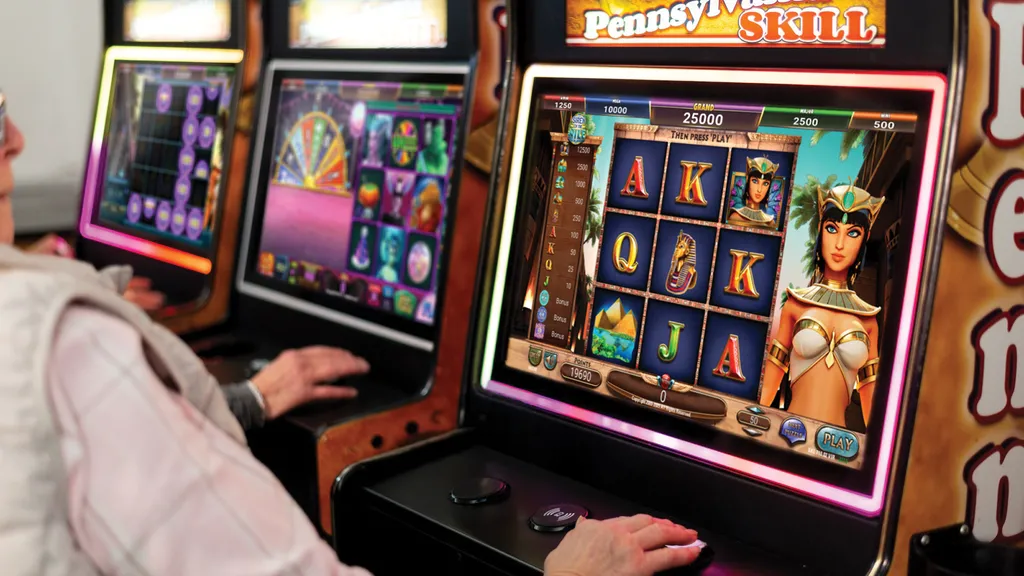
For the past decade, casino operators have had to deal with unfair competition for their customers’ gambling dollars—not from other casinos, not from lotteries or bingo parlors, but from gambling machines as close to home as the corner store.
So-called “skill games”—slot-like machines whose manufacturers and distributors have insisted are not actually slot machines because of some small element of skill that can improve a player’s chance of winning—have proliferated in at least a half dozen casino states. The games have cropped up in gas stations, convenience stores, fraternal clubs, bars, pizza shops and even laundromats.
Other than Wyoming, where skill games were legalized in 2023 with restricted locations and a 20 percent revenue tax, the machines have continued to operate tax-free, with no regulatory guidelines for fairness, return-to-player requirements or responsible gaming safeguards. Locations such as pizza shops and mom-and-pop stores often offer the games without age restrictions.
Manufacturers including Pace-O-Matic, Torch Electronics and a few others have consistently claimed the machines are legal because of the purported skill element, and have built tax-free war chests to fund lobbying campaigns to head off legislation that would ban them.
The regulated casino industry has been unanimous in condemning skill games as illegal slot machines. In 2021, the American Gaming Association (AGA) and the Association of Gaming Equipment Manufacturers (AGEM) announced a joint campaign to have the games banned.
States have battled skill games in court and in legislatures with mixed results. Virginia officially banned the games in 2020, and after a grace period due to the pandemic, a court decision rescinded the ban, and in 2023, the Virginia Supreme Court reinstated the ban. In Missouri, a judge ruled in February that skill games are illegal slot machines, and efforts to pass a bill to legalize and regulate the games died in the state Senate. The state attorney general has ordered operators to unplug the machines or face sanctions.
Pennsylvania Skill
The AGA has estimated that skill games have cost the legal gaming industry $27 billion in lost revenue. It has been a bitter pill for the 17 casinos in Pennsylvania, which arguably has been the epicenter of the skill-game phenomenon.
Georgia-based Pace-O-Matic has flooded every corner of the state with machines branded “Pennsylvania Skill.” Official estimates number the games at 70,000 across the state, but some have put the number closer to 90,000. The Pennsylvania casino operators have been unanimous in calling for the removal of the games, at one point even filing suit seeking an order to suspend the 54 percent tax they pay on slot revenues in light of the untaxed competition.
The state Attorney General’s Office has directed seizures of the machines as illegal slots, but Pace-O-Matic won two lower-level court cases overturning the actions. Pace-O-Matic officials have leaned on those decisions heavily as evidence their games are legal.
The first decision came in a 2019 case in which the company joined with a bar owner in a suit seeking return of property after police seized Pennsylvania Skill machines as illegal slot machines.
The Dauphin County Court of Common Pleas and Commonwealth Court both ruled in that case that the games are skill-based and therefore not subject to regulations for slot machines.
In the other case, Pace-O-Matic sued the state seeking a judgment declaring whether or not the games are legal. Commonwealth Court ruled the state’s existing law regulating gambling doesn’t apply to skill games.
The state attorney general combined the cases in an appeal to the Pennsylvania Supreme Court. On June 15, the justices issued a single ruling, holding for the state in both cases and declaring that Pennsylvania Skill machines are, in fact, illegal slot machines under state law.
In both cases, a majority of state Supreme Court justices said Commonwealth Court’s interpretation of the statutes was “deeply flawed,” and the court was “incorrect on both points.”
A skill game, they wrote, is a slot machine “several times over” because it meets the general definition of slot machine in the state’s gaming statute, and because it meets the ordinary English definition of “a coin-operated gambling machine that pays off according to the matching of symbols on wheels spun by a handle.”
Whether it involves some minor element of skill is irrelevant, the court wrote. The justices said the language of the gaming statute clearly applies to the skill games. A definition of games including skill elements was added to the Pennsylvania Gaming Act’s definition of a slot machine in 2017. The Supreme Court’s decision was “premised upon the (lower) court’s misreading of fundamental aspects of the statutory scheme,” justices wrote.
The decision grants a 120-day delay before state enforcement of the ruling, to allow lawmakers time to pass a law to regulate the games under the Gaming Act. “Naturally, because all that follows is a consequence of statutory law, our General Assembly also remains free at any time to take whatever legislative action it may deem appropriate,” they wrote, adding that their decision “does not constitute an endorsement of any particular policy view concerning the proliferation of ‘skill games’ throughout our commonwealth.”
Last year, two bills in the Pennsylvania legislature to legalize and regulate skill games ultimately stalled. One, filed by skill game champion Senator Gene Law, would have implemented age restrictions and placed regulation of the games under the state Department of Revenue, which oversees the Pennsylvania Lottery. Yaw’s proposal would limit skill games to five per location, with a state revenue tax of 16 percent.
Considering the high court’s decision, an alternative bill filed last year by Senator Chris Gebhard is the more likely plan to pass judicial muster. It would apply the current rules followed for truck-stop VGTs, with a tax rate of 35 percent and under the jurisdiction of the Pennsylvania Gaming Control Board (PGCB), which regulates casino slots.
Regardless of any legislation that may pass, Pennsylvania Skill games will now have to follow the same rules that apply to casino slots and VGTs. Manufacturers and operators will be required to become licensed by the PGCB.
Manufacturers like Pace-O-Matic will have to be vetted under the same background scrutiny as the major slot manufacturers. Presumably, pending rules set by any new legislation, machines will have to be examined by the state slot lab or an independent test lab for fairness, theoretical return and responsible gaming controls, and approved by the lab. They will only be permitted in age-restricted locations.
“Today’s ruling is a significant victory for consumers, taxpayers and the rule of law in Pennsylvania,” state Attorney General Dave Sunday said in a statement following the decision. “The Supreme Court recognized what our office has argued from the beginning—these machines operate as gambling devices and cannot legally exist without the same oversight, regulation and accountability as other forms of legalized gaming in the commonwealth. Pennsylvanians deserve protections that ensure games are fair, transparent and operated within the bounds of the law.”
The AGA and AGEM also praised the decision as a victory in the industry organizations’ ongoing battle against skill games.
“The Pennsylvania Supreme Court’s ruling makes clear that ‘skill games’ are illegal slot machines under state law,” said AGA President and CEO Bill Miller in a statement to GGB.
“We applaud the Supreme Court’s decision and commend Attorney General Sunday for his leadership in holding these operators accountable. This ruling protects Pennsylvania consumers, business owners and communities from the harms these so-called ‘skill games’ pose and the public revenue they divert.”
“Today’s ruling is a significant victory for consumers, taxpayers and the rule of law in Pennsylvania. The Supreme Court recognized what our office has argued from the beginning—these machines operate as gambling devices and cannot legally exist without the same oversight, regulation and accountability as other forms of legalized gaming in the commonwealth.“
Dave Sunday, Pennsylvania Attorney General
“The recent decision in Pennsylvania surrounding ‘skill’ games is a welcome development for our industry,” AGEM President and CEO Daron Dorsey told GGB in a statement. “By addressing these illegal gaming activities, the Pennsylvania Supreme Court preserves the framework established for gaming within Pennsylvania, a framework that is critical to protect consumers, promote integrity, ensure responsibility, and combat illegal activity while generating the revenues necessary for public priorities there.”
Predictably, Pace-O-Matic pointed again to the lower-court decisions in statement following the decision. “We are disappointed with the decision by the Pennsylvania Supreme Court,” the company said, “and strongly believe it does not accurately reflect the facts presented—notably, the same facts that led to a string of lower court rulings affirming the legality of our skill games, including a unanimous Commonwealth Court ruling.
“Sadly, this opinion will have far-reaching consequences, with more than 10,000 Pennsylvania small businesses and fraternal clubs becoming the real victims. They are now potentially left facing an impossible choice: cease operating these games and lose an important source of revenue, or endure a legislative solution that could bring excessive regulation and crippling taxation.”
What’s Next
The level of that taxation has been a major sticking point in legislative debate on regulation of skill games in Pennsylvania. Governor Josh Shapiro addressed the potential revenue in his January budget statement, suggesting a tax rate of 52 percent, close to the current tax on casino slot revenue.
Republicans in the state Senate, where a new skill-game bill likely will originate, are in favor of a lower rate, some favoring the 35 percent proposed last year by Gebhard and others supporting the low 16 percent rate in the Yaw proposal.
“We appreciate the clarity the Supreme Court has given with today’s ruling,” said a statement by Pennsylvania Senate President Pro Tempore Kim Ward and Senate Majority Leader Joe Pittman issued the day of the ruling. “As expressed in the decision today, under a plain reading of the law, ‘skill game’ devices are subject to both the Gaming Act and the Crimes Code.
“The proliferation of skill games is a matter of public safety which must be addressed, and given the timing of this decision, we believe gaming reform is a critical piece of resolving this year’s budget. In addition, with the fiscal realities facing our commonwealth, it stands to reason that new revenue from gaming reform should be directed to the General Fund, as the governor proposed in his 2026-27 budget.”
“The Gaming Control Board has believed and in kind participated in court proceedings to classify skill game machines as gambling devices,” PGCB Communications Director Doug Harbach said in a statement to GGB. “We are pleased the Pennsylvania Supreme Court has agreed and helped bring some clarity to this matter. It is our belief that our agency is best prepared to regulate these machines, and we look forward to the General Assembly and the governor to craft a law that will provide guidance on what a regulated skill games market would look like.”
It remains to be seen whether or not a bill to legalize and regulate skill games can be crafted, passed by both chambers of the legislature and signed into law within the 120-day period set by the ruling. “What we are talking about here is the potential largest expansion of gambling in Pennsylvania history since the casinos,” state Rep. Ben Waxman told the news site Spotlight PA last month. “And we cannot make short-term decisions with really long-term consequences.”
Harbach would not speculate on what happens if no law is passed within four months. “It’s hard to speculate on what would occur after 120 days and no law,” he said, “but the ruling certainly appears to make the machines illegal at that juncture.”
At that point, enforcement plans would be the purview of the Attorney General’s Office and state police.