Kenya’s Regulatory Reset

After years of regulatory uncertainty, the Kenyan gambling sector is inviting interest from operators and investors
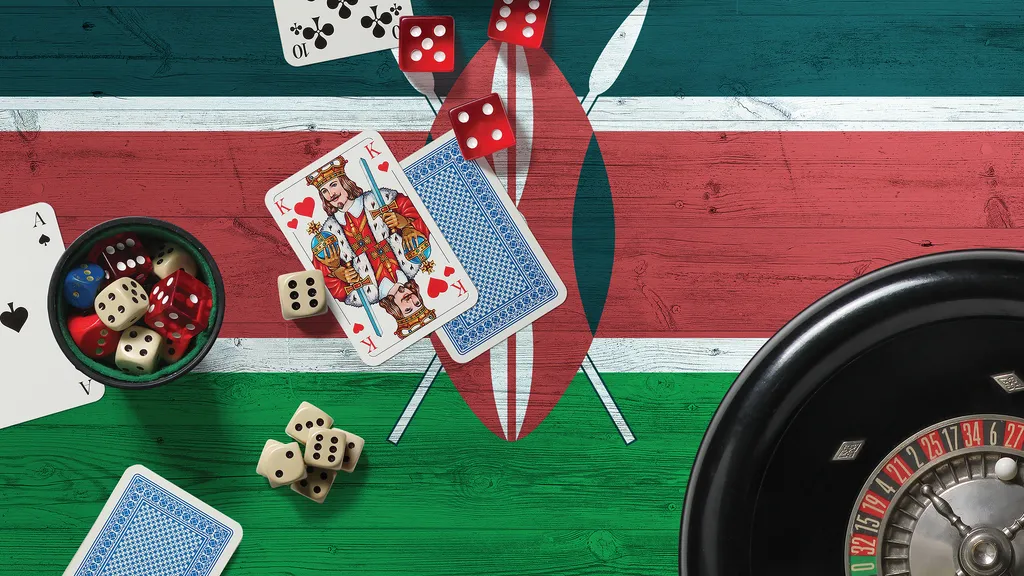
For years, Kenya’s gambling market has been plagued by volatility and turbulence. But the landscape appears to have shifted thanks to the landmark Gambling Control Act, allowing the market to shed its previous reputation.
Kenya’s gambling laws were established in 1966 under the Betting, Lotteries and Gaming Act, with the Betting Control and Licensing Board (BCLB) in charge of supervision. That’s all changed thanks to the Gambling Control Act, established in 2025, which replaced the BCLB with the newer Gambling Regulatory Authority (GRA).
The new dawn is one of excitement, with much broader legislation that covers both land-based and online gaming.
While the BCLB was under-resourced, the GRA has significantly expanded powers; operators will have to meet much stricter compliance requirements to meet the regulator’s expectations. John Mutua, CEO of the Association of Gaming Operators Kenya (AGOK), believes the Gambling Control Act’s regulations are “far-reaching in the best sense,” giving the market long-awaited structural foundations after such turmoil.
“What we’re seeing is a fundamental shift in how operators will do business in Kenya,” Mutua says. “Those who comply will survive long-term, and those who choose to operate outside the compliance scope will find it increasingly difficult to sustain their business.
“You’d be surprised at the number of inquiries from established operators wanting to pitch tent in Kenya”
John Mutua, CEO, Association of Gaming Operators Kenya (AGOK)
“The ownership framework carries a clear requirement that business modeling must include a local shareholding component of 30 percent. That signals a deep-seated desire to ensure that tax obligations carry direct accountability from Kenyans who hold that local stake.
“We’re also seeing a meaningful shift in how responsible gambling is approached,” he says. “The focus is no longer on what can theoretically be done, but on what is actually implemented on the ground.”
Certainty Brings International Interest
Gambling taxes in Kenya have been altered on a number of occasions in recent years, and in 2025, the regulator banned all advertising for 30 days due to compliance failures from a number of operators.
But the tax scenario is settled, at least for now. Last July, the Kenyan government rolled out a 5 percent tax on every withdrawal from a betting wallet, replacing the 20 percent levy on net winnings. Additionally, there’s a 5 percent excise duty on deposits, doing away with the previous duty of 15 percent.
The shift away from this historical unpredictability is a signal to international operators that Kenya is once again a market worth investing in.
“You’d be surprised at the number of inquiries coming through from established operators wanting to pitch tent in Kenya—ranging from long-established players in European markets to emerging operators from Asia and from within Africa itself,” Mutua says.
“The regulatory certainty that the GCA provides is doing real commercial work. Investors price risk, and ambiguity is risk. When the rules are known, the timelines are defined and the authority is properly resourced to administer them, Kenya becomes a genuinely attractive destination rather than a market to watch from a distance.
“The momentum is real, and I expect it to build as the subsidiary regulations are finalized and the GRA establishes its operational track record.”
Mutua reveals that some operators that previously exited the Kenyan market are now sizing up a reentry thanks to the clarity gained by the recent regulatory developments.
“(The revised tax structure) gives us the ability to say, ‘Okay, now things are stabilized, we see a path to profitability and we’ll try Kenya again’”
Alinda van Wyk, CFO, Super Group
Super Group holds a podium position in seven of its eight African markets, with Nigeria the exception. CFO Alinda van Wyk hints that the company is weighing up a potential entry into Kenya.
“Kenya has had a very challenging tax regime for a long time,” Van Wyk says. “And when I say challenging, it’s when it’s irrational, when it’s not clear, when the legal operators can’t operate in a market because of the economics of the taxes. What happens is, naturally, the illegal operators take over.
“Now that Kenya has changed its tax laws, you see the negative impact unreasonable taxes have on the industry. They’ve reverted to much more of a setup of taxes that benefit not only the operators and the revenue authorities, but also protect the customers to some extent.
“It gives us the ability to say, ‘OK, now things are stabilized, we see a path to profitability, and we’ll try Kenya again.’ So it’s definitely on the roadmap.”
Certainty for Operators
Peter Kesitilwe is CEO of the African iGaming Alliance (AiA), a trade body representing the regulated industry across the continent.
He believes Kenya is moving towards the long-term regulatory structure it has long needed. One area he highlights is the move to three-year licenses, compared to the previous scenario in which operators required annual renewals.
With this comes certainty, an aspect he believes will prove crucial to a successful future for the sector in Kenya.
“The current framework appears more comprehensive and aligned than the previous approach,” he says. “You’ll find that it introduces clear structures, your oversight structures, your appeals mechanism, stronger responsible gaming obligation and clearer online provision.
“The key now is consistency. What markets struggle with is unpredictability. So these are some of the positives that are coming out from what is happening in Kenya.”
However, Kesitilwe also feels there are areas where the AiA will work with AGOK to improve. “I’d say it’s a move in the right direction,” he adds. “There will need to be some tweaks here and there.”
AiA board member and pawaTech Head of Responsible Gaming Olabimpe Akingba also acknowledges the importance of collaboration, which she believes is the “only way forward” for the industry as a whole.
“We can see the increased collaboration with stakeholders by the government, especially collaboration with AGOK,” she explains. “We see now that they’re involved in policy directions. The association is being called to make submissions, so it’s not like before where policies are made-up and it seems like it’s cast in stone and then taken out.
“In Kenya, we can see great collaboration between AGOK and policymakers and the regulators. For me, that has always been one thing that I make sure to emphasize.
“We know that the operators always have the hands-on experience. The policymakers are the experienced ones in drafting the law. But when we come together and match experience with the law, of course, what we are going to have is something that is workable for all parties. And that’s the only way forward for a sustainable industry.”
The Mobile Money Advantage
In Kenya, payments provider M-Pesa accounts for approximately 90 percent of its mobile money market. H2 Gambling Capital Managing Director Ed Birkin says M-Pesa only allows licensed operators to use its services.
Birkin estimates the platform processes between 70 percent and 90 percent of Kenya’s online betting and gaming payments, making it a key channelization tool for leading licensed operators such as Betika. This, he says, makes it “very hard for illegal operators to compete against huge, really popular domestic ones that just make it so easy for people (to bet).”
Mutua says the importance of mobile money and digital payments infrastructure to Kenyan gambling is more than most people in the global gaming industry appreciate. When he began his career in the gambling sector over 20 years ago, getting money on and off a platform was one of the biggest friction points he observed.
Now, it’s one of the market’s key strengths.
“That friction does not exist in Kenya in the same way it exists elsewhere,” he suggests. “M-Pesa solved a payments problem that most of the developed world solved through bank accounts and cards—but M-Pesa solved it faster, and it solved it for a much wider population, and far more conveniently.
“A motorbike rider in a far-flung town with a feature phone and an M-Pesa account can fund a betting wallet and withdraw winnings in the same instance. That is not a given in most African markets.”
Mutua believes this allows Kenya to punch above its weight in sports betting. Kenya is part of the “Big Three” in Africa’s gambling industry alongside South Africa and Nigeria, despite its population ranking as approximately the seventh largest in the continent.
According to the latest H2 Gambling Capital numbers, Kenya’s gambling sector achieved a gross win of $789.2 million in 2025. Some 85.8 percent of this came from its interactive segment, the highest in the world according to H2’s data. By the end of 2031, H2 predicts the Kenyan market will more than double in size to a gross win of $1.8 billion, with mobile money set to play a key role in that growth.
“When we come together and match experience with the law, we have something that is workable for all parties.”
Olabimpe Akingba, Head of Responsible Gaming, pawaTech
“Why our per-capita engagement numbers look the way they do—part of the answer is product, part is football culture, part is competitive odds, but a very large part is that the rails just work,” Mutua continues. “Any international operator who comes into Kenya and does not build their onboarding and payment journey around mobile money is going to struggle.
“It’s not a feature—it’s the infrastructure. Our success story is built on real money moving in real time, woven so completely into daily life that cash has become the alternative rather than the default. I say mobile money broadly—M-Pesa is the dominant rail, but the principle holds across the ecosystem.”
More Work to Be Done
But while the general feeling around the Kenyan gambling sector is one of optimism—and perhaps even a little relief—industry figures warn that the Gambling Control Act alone will not guarantee long-term success.
The real challenge now lies in stability, but also the enforcement of the regulations.
One area where that balance is being tested is advertising. While operators broadly support measures aimed at protecting vulnerable consumers and minors, there are concerns that some proposed restrictions risk going too far.
Advertising with celebrities is now banned, while advertising outdoors is restricted to digital billboards. The penalties are severe, with those convicted of failing to comply risking a fine of up to KSh20 million ($154,704) and/or a jail term of up to 20 years.
“The intent is right,” Mutua says. “The detail is where it gets complicated. “Protecting minors, reducing saturation, ensuring that advertising does not target vulnerable populations—nobody serious in this industry is arguing against those objectives.”
His concern is that excessive restrictions could unintentionally strengthen the unlicensed market. “Unlicensed operators do not follow advertising rules—they don’t follow any rules,” he says. “If licensed operators are restricted so severely that they can no longer maintain brand awareness, you don’t reduce gambling—you redistribute it toward operators who carry no obligations whatsoever to players or to the state. That is a worse outcome for consumers, worse for tax revenue, and worse for the integrity of the regulated market.”
For now the prevailing mood across the industry is one of cautious optimism. After years in which shifting taxes and regulatory uncertainty defined Kenya’s gambling landscape, operators are instead talking about investment, longer-term planning and sustainable growth.
The combination of regulatory clarity, industry collaboration and world-leading mobile payments infrastructure has given it the foundations to cement its place as one of Africa’s most attractive regulated gambling markets.