Designing for What’s Next

Designing for What’s Next Rethinking casino efficiency as a performance strategy
For years, “efficiency” in casino design was shorthand for energy performance, cost control and speed to market. Those fundamentals still matter, but they no longer define success.
Today’s most competitive casino resorts are designed as high-performing ecosystems where operations, guest experience, workforce productivity and long-term asset value are tightly aligned.
Efficiency is no longer a line item. It’s a strategy. What’s emerging is a more holistic model that prioritizes performance across four key dimensions:
Flow as a Revenue Engine
Casino floor layout has always mattered. But today, it’s being evaluated with greater precision and intention. Operators increasingly recognize that circulation is directly tied to spend:
• How easily guests move between gaming, dining and entertainment
• How intuitively they navigate the property
• How often they encounter new experiences along the way
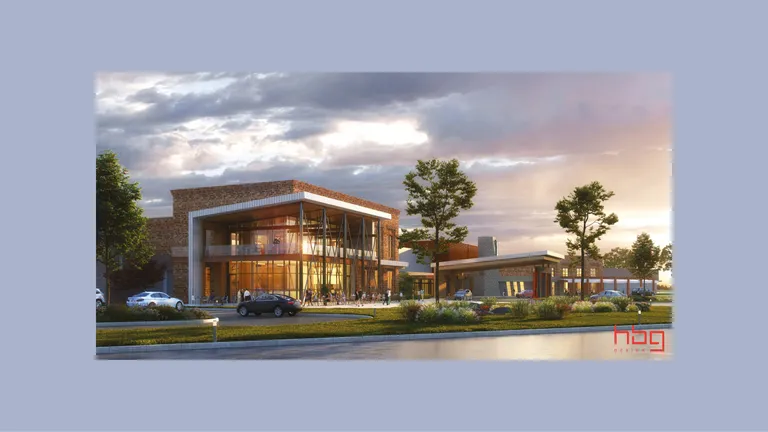
The most effective environments feel effortless, but are carefully choreographed. At HBG Design’s recent Bossier City LIVE! project, the porte cochere lobby merges exterior and interior, immersing visitors in the energy of the gaming floor the moment they arrive. A large-scale LED installation from the arrival canopy through the lobby reinforces wayfinding and brand identity while offering a dynamic, cost-effective way to refresh the guest experience in real time.
Today’s approach reflects a broader shift in planning: centralized gaming cores surrounded by high-value amenities and shorter, intuitive paths between destinations and layered zones that support different energy levels. Rather than asking, “Does this layout work?” the more important question is: “Does this layout drive movement, discovery and dwell time?”
Designing for a More Complex Guest Profile
The casino audience has expanded and diversified. Today’s properties must serve core gaming patrons, younger, experience-driven visitors, and non-gaming guests drawn by dining, entertainment and social environments. We are moving away from “one-size-fits-all” gaming floors toward multi-experience environments.
We see increased demand for flexible social spaces that transition throughout the day; integrated non-gaming amenities that feel intentional, not secondary; and “together, but not crowded” environments that balance energy with personal space.
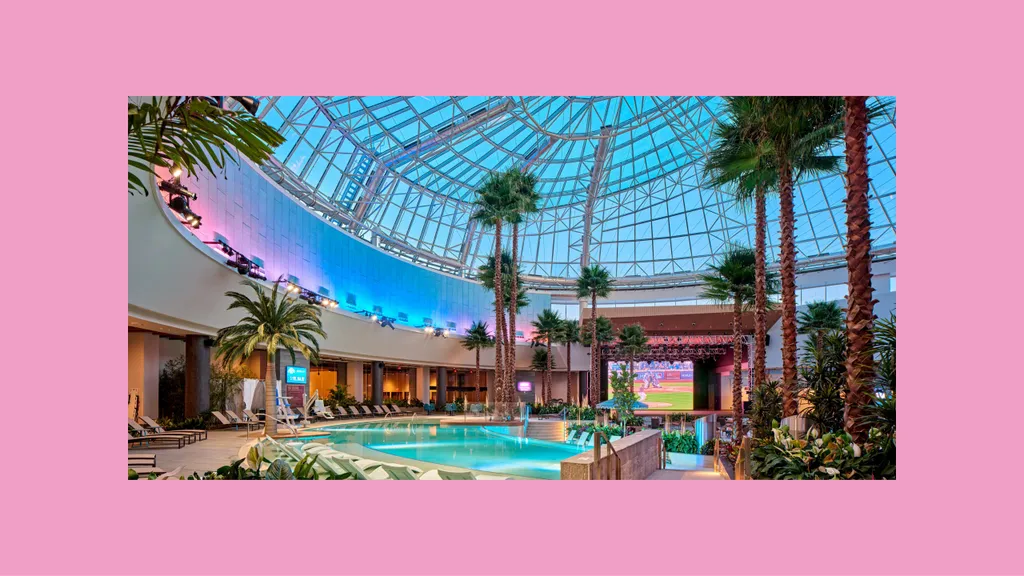
At the Wawyé Oasis at Michigan’s Gun Lake Casino Resort, the expansive glass-roofed venue is both a year-round resort amenity and a high-capacity entertainment destination, transitioning from a daytime pool to concerts and private events in the evening. This adaptable, all-season experience complements the broader resort.
The takeaway is clear: Casinos are no longer designed around a single guest journey; they’re designed to support multiple journeys happening simultaneously.
Designing for Lifecycle, Not Just Opening Day
A significant shift in recent years is the growing focus on long-term performance. With rising construction costs and tighter margins, owners are emphasizing durability, adaptability and life-cycle value. Design decisions are evaluated through a different lens, influencing everything from material selection to infrastructure and technology planning.
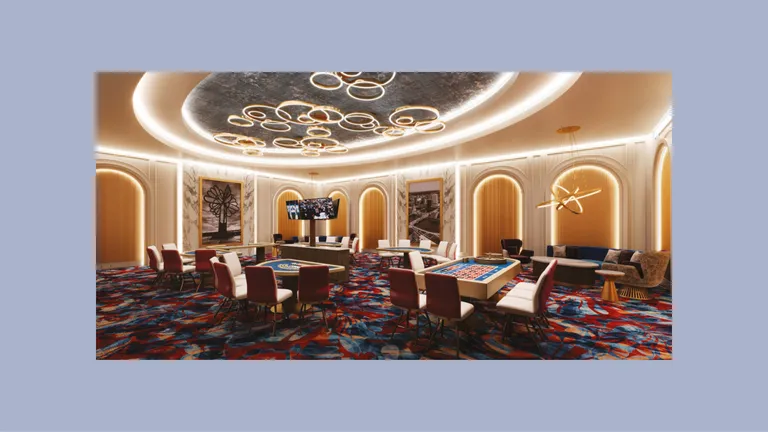
For example, we’re specifying more premium carpet than ever—not for aesthetics alone, but because it lasts longer, requires less maintenance and reduces long-term replacement costs. While the upfront investment may be higher, the life-cycle return is significant. We’re also designing infrastructure for technology that’s yet to come, ensuring flexibility to seamlessly accommodate evolving tech. Efficiency is no longer just about reducing cost, but protecting and extending value over time.
Elevating the Employee Experience
One of the most overlooked opportunities in casino design is also one of the most impactful: the employee experience.
Operational performance is directly tied to how efficiently teams move, communicate and work. The employee experience also shapes a property’s culture and personality, which translates directly to guests. Yet in many properties, back-of-house environments and employee comfort are still treated as an afterthought.
At Wawyé Oasis, for example, a full-service kitchen and utility corridor sit discreetly beneath the venue, enabling fast transitions between events while keeping operations completely hidden from guests. A dedicated loading area supports efficiency without disrupting nearby spaces. Design strategies gaining traction include distributed employee access points to reduce travel time, and more intuitive back-of-house layouts that mirror front-of-house efficiency.
Projects are being planned with future growth in mind, ensuring infrastructure with proper technology and adjacencies can support expansion without disruption. The result is measurable. Better back-of-house environments improve not only employee satisfaction, but speed, accuracy and overall service delivery. The bottom line: Happy employees in a friendly, efficient workspace will bring that positivity to guests.
The Next Era of Casino Design
The role of design in gaming is no longer just about creating compelling spaces or delivering efficiency in isolated ways. It’s about orchestrating performance across the entire enterprise—aligning guest experience, operations and long-term business objectives. The most successful properties moving forward will be those that:
• Treat design as a strategic business tool
• Align guest experience with operational efficiency
• Invest in environments that support both people and performance
• Plan not just for today—but for what comes next
The decisions made during design and development remain among the most powerful levers for influencing long-term success. The question is not whether design matters. It’s how strategically it’s being used.
Nathan Peak, AIA, is a principal and president of HBG Design.