
Collaboration Not Confrontation
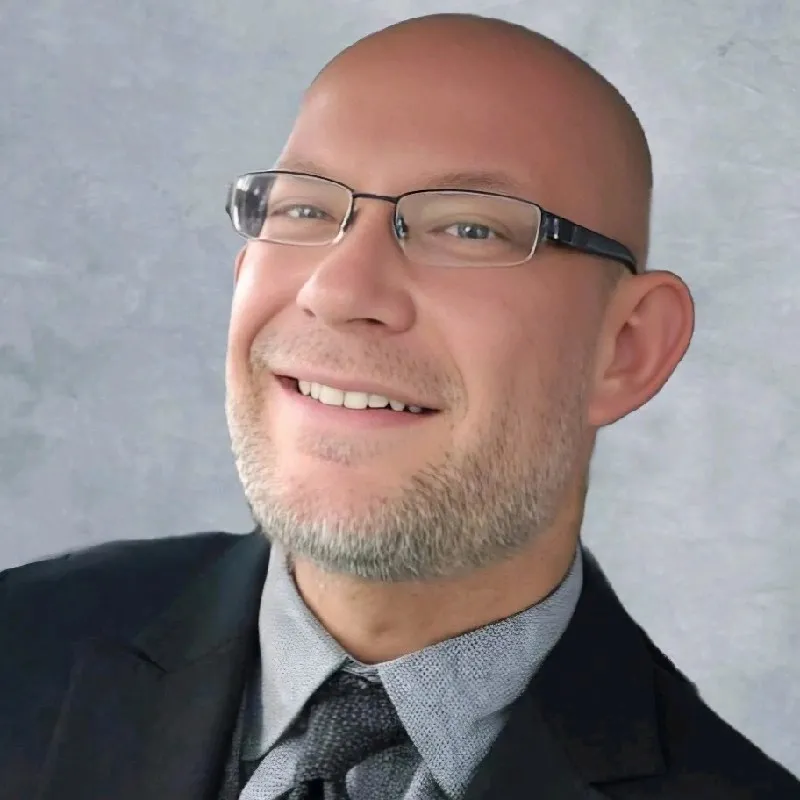
Nebraska recently joined the legal gaming industry with a full slate of casinos and sports betting to add to the lottery. But problem gambling isn’t a new issue for the state. Like many practitioners in the responsible gaming space, Mike Sciandra has a gambling problem. But now, as executive director of the Nebraska Council on Problem Gambling, he brings the lived experience to his clients.

As stakeholders from various roles within the gaming industry commemorate Responsible Gaming Education Month, I must admit that my viewpoint of RGEM likely looks different than most readers. My experiences give me a unique perspective and a sincere desire to make the most of the platform given to RGEM.
For those of you who do not know my story, I am a problem gambler in recovery whose last bet was December 14, 2020. After a year in problem gambling treatment, I began a career in the treatment field as an education and outreach coordinator as well as a peer support specialist.
In March 2025, I was honored to be named executive director of the Nebraska Council on Problem Gambling (NeCPG), where our mission is to reduce gambling-related harm through education, prevention, advocacy, and connection to treatment resources. These personal and professional experiences have given me the honor to collaborate with clinicians, researchers, preventionists, gaming operators, political leaders, recovery groups, responsible gaming leaders, and all other roles within the industry.
Whether speaking to a room of individuals with lived experience, a room of college students, a room of casino employees, or a room of bookmakers, I will always make two claims:
- Problem gambling is not just a “bad habit.” It is a public health concern that affects everyone in one way or another.
- All stakeholders need to work together to mitigate gambling-related harm.
Different Strokes
As someone who speaks to a variety of stakeholders, I hear a lots of thoughts on what responsible gaming should look like. Many clinicians are steadfast in their focus on complete abstinence from gambling behavior. Some advocates are busy demonizing the gaming industry, calling their RG efforts too soft, lacking meaning, or just offering the bare minimum. Others from all parts of the industry embrace harm reduction models. Differing opinions can create dissention amongst many individuals I respect.
So, what is the correct answer to what RG should look like?
In my opinion, all sides have valid points. But the one thing I do not hear often enough is a word I use often; collaboration. I fully believe that all stakeholders want to offer support to those at risk of struggling with their gambling behavior. Treatment professionals would be happy to see their client numbers decrease, preventionists would love to know their message is being heard, and gaming operators would like their players to enjoy their games in a fun and safe manner. With this in mind, my goal is to engage with all roles that have relationships with past, present, and future gaming consumers.
Our board of directors at NeCPG is indicative of this level of collaboration. My board currently consists of three problem gambling counselors, two higher education professionals, two gaming operators, and a retired casino security and compliance leader. Multiple board members have lived experience as problem gamblers, and all bring unique perspectives along with a passion to reduce gambling-related harm. They do not always agree with each other, but they always come to the table with valid reasoning and passion for helping others.
If I can cultivate a board with this level of diversity, passion, work ethic, and experience, we should absolutely be able to bring a similar level of thought leaders to the table to create impactful RG campaigns.
Rules to Live By
While I am far from an expert in developing effective responsible gaming campaigns, one thing I can do is view RG from a variety of lenses. To organizations creating messaging, activities, and programming based around RG, I give four pieces of advice:
- Do not think merely about the person already struggling with their gambling behavior. Think about how your messaging resonates with the “safe” players, and how your programming connects with the player at-risk for future problematic behavior.
If we all believe that, for round numbers sake, that 90 percent of all players are currently acting in a responsible manner, it stands to reason that many in this 90 percent know at least one person in the 10 percent of those who are struggling. If you can make RG messaging that catches the attention of the safe player, these players can help spot and support the players they know who might need to make behavioral changes.
Within the 90 percent of current safe players, there is another percentage of players who are vulnerable to becoming future players with problematic gambling behavior. This group is where effective RG messaging and activities are most needed. If we can offer realistic and destigmatizing ways to keep this group in control of their gambling behavior, then these players can remain safe and sustainable for years to come.
2. The effort your organization puts into RG is evident. We know when you are only doing the bare minimum.
Everyone understands that responsible gaming messaging and other initiatives do not drive operational revenue. However, it does not mean that RG can be ignored or completed haphazardly. In my experience, the organizations that view RG in a similar manner to customer retention are the ones who put concerted effort into ensuring tools and messaging are available for players. Viewing RG through a lens of maintaining players can be the shift needed to make RG an organizational priority.
3. Be genuine with your RG!
Find people within your organization who are passionate about responsible gaming, and give them the autonomy to show that passion. Just like with effort, many of us can tell when your organization actually cares about responsible gaming. Make it authentic.
4. Include community partners in your RG efforts
Do you have problem gambling treatment providers in your area? Is there a National Council on Problem Gambling affiliate or another non-profit willing to work with you? I am elated when my local gaming operators reach out to proofread RG messaging, bring in our organization for presentations or information tables, or just ask for input. Like I mentioned before, collaboration is a missing ingredient for many organizations who truly want to protect their players.
In a world of gaming ran by data, numbers, and predictability, responsible gaming activities are an inexact science. While the efforts of responsible gaming education are not quantifiable in the same way as many other activities, their importance to all players is significant. Responsible Gaming Education Month is the perfect time to reflect on your organization’s current activities, incorporate new stakeholders with increased passion and fresh perspectives, and build upon the excellent work of many to reduce gambling-related harm.
Mike Sciandra is Executive Director of the Nebraska Council on Problem Gambling, as well as the Education and Outreach Coordinator for Choices Treatment Center, an outpatient addiction treatment facility with multiple locations in Nebraska.
He also serves as a Certified Peer Support Specialist and trainer for a variety of national organizations. Sciandra has a Bachelor of Science degree from Bellevue University, a Master of Arts degree from Doane University, along with a Disordered Gambling Counseling Certificate, Peer Support Specialist Certificate, and an International Gambling Recovery Specialist Certification.
For more information about the Council, visit www.necpg.orgor contact Mike at [email protected].