5 Who Shine


It’s been a long road for women in all industries to get the recognition, respect and the salaries that match men who reach similar positions. Seven years ago, Global Gaming Business began this series highlighting five women in our
September issue who have reached the heights of their profession. Several years ago, we noticed a trend that iGaming and sports betting seemed to be more welcoming to women than traditional gaming companies. We can also add tribal gaming to that group as many tribes have a matriarchal heritage, so it comes naturally to them. This year, we include women from all segments of the gaming industry who have reached the pinnacle of their professions and who stand as role models to those that will follow them. We are proud of them and their accomplishments, so sit back and prepare to be impressed.
Zero to 60
Zoe Ebling Vice President, Interactive, AGS
 When Zoe Ebling arrived at gaming supplier AGS just over a year ago, she was coming off four years at well-regarded omnichannel gaming content supplier Design Works Gaming. Shortly into her stint as director of interactive sales, AGS CEO David Lopez recognized her potential to guide the ship for the company’s newest division.
The company’s interactive business had been growing since AGS acquired iGaming aggregator and content supplier Gameiom in 2018, but 2023 was the year it would begin a full-blown Interactive Division to join its slot division and still-young table-game business. Ebling was charged with building that division as vice president, interactive.
In its first year, the Interactive Division under Ebling has grown into a vibrant cog in the AGS operation. Ebling has been efficient at assembling a team that has doubled the output of AGS titles online, not only consisting of the biggest AGS brick-and-mortar hits, but expanding the reach of the division, R&D producing digital and land-based hits simultaneously.
In fact, in February, the division accomplished a milestone in staging the first-ever omnichannel launch of a new title, simultaneously launching the game Rakin’ Bacon Odyssey in person at the Caesars Atlantic City and online at the Caesars Palace Online Casino site in New Jersey.
Atlantic City and online at the Caesars Palace Online Casino site in New Jersey.
“We are the first to have ever organized a joint launch of a slot online and on land,” Ebling says. “We didn’t just do it once this year; we’ve done it three times already, and we have more launches planned for the rest of this year.”
She notes that while many of the top-tier slot suppliers have been talking about omnichannel launches for years, “we came in with this new team and did it in under six months. We set it up and we were able to get the data back, and we immediately saw how influential that was for both sides of the business.”
Ebling says the core of her first year with AGS has been to set up the Interactive Division to materially benefit the overall business of the company.
Part of that effort has been a careful move into new markets—beyond the relatively limited legal iGaming business in the U.S. “We want to be in markets that make sense for us,” she says. “There’s a ton of opportunities for us to expand in Europe, and then LatAm is also a really big focus for a lot of suppliers.
“We want to make sure that we’re able to get the return on investment.”
The cost-versus-ROI equation has been at the center of every expansion for AGS in the interactive space, including the most recent moves—an expansion into the Delaware online market and a partnership with FanDuel that will bring AGS content to sites that comprise some 43 percent of the legal online gaming market.
“We really designed our systems to be able to give us information to ensure that we’re not just entering as many markets as possible and then not generating revenue,” Ebling says. “That’s a big part of how we also contribute to the wider AGS business. We want not to just be performing well in the interactive space, but we want to be able to provide a lot of value to the wider business as well.”
The strategy is paying off nicely. The Eilers-Fantini slot performance report for July showed AGS as the No. 1 overall supplier in the interactive space, and the company has been high on that list for most of the year.
“If we look at last year compared to this year, we’ve more than doubled the game output, and what we were putting forward has shown to be really successful,” Ebling says.
All in all, not a bad year’s work. And Ebling’s just getting started.
Made for Vegas
Rikki Tanenbaum
Senior Vice President, Strategic Partnerships, FanDuel
 Rikki Tanenbaum may not have known what she wanted to be when she grew up. But as a teenager, she already knew where she wanted to be it.
“We went through Las Vegas when I was 15 or so and I told my parents, ‘This is what I want to do,’” she says. “It was the smell of the fake palm trees at the Mirage, the buffet at Circa … Every year, my family asked, like, ‘Do you want to go to Egypt?’ I was like, ‘No, I want to go to Las Vegas.’”
Tanenbaum, the senior vice president of strategic partnerships for FanDuel, is now on her third turn in America’s gambling capital.
Last year, FanDuel hired her to create a bridge into Indian Country after the industry’s spectacular failure at legalizing sports betting in California in 2022. For the last year, she’s spent her time visiting tribes across California and the nation.
She drew on her experience as the CMO and later COO for the San Manuel Band of Mission Indians. Her goal is to “do the right thing” by the tribes as sports betting is legalized.
The road to Las Vegas took her through Ohio, Mississippi and California. She worked in marketing, and did some event planning and project managing before she realized that “harnessing data” was her calling.
“I realized I was good at managing projects, but I had no idea how make money,” Tanenbaum says. “So I realized that I need to figure out how to ring a register… I knew I needed to have my own P&L.”
Tanenbaum’s timing couldn’t have been better. After working in traditional marketing roles with MGM and Viejas Enterprises, Tanenbaum said yes to a “big job” with Penn National Gaming. She thought the job was in St. Louis.
“I misheard,” she laughs. “The job was in Bay St. Louis.”
The beachfront town on the Mississippi Gulf Coast in 2010 was dotted with casino boats and live oaks. An hour’s drive from New Orleans, it was a weekend destination that opened a whole new world for the native New Yorker.
“Someone who has an eye for the data and can make it actionable is few and far between,” says Harrison, now the general manager for the Golden Nugget-Biloxi. “She brought a lot to the table in how to monetize that data. In 2010, we were just on the cusp of turning a website into dollars.”
Harrison was Tanenbaum’s manager at two Hollywood Casino locations in southern Mississippi.
It’s hard to keep up when talking to Tanenbaum. As a mom and a corporate executive, she’s always on the move. She talks fast, has a quick wit, and learns even faster. Harrison says that if he introduced a new subject Tanenbaum was an expert within 24 hours.
She got to Las Vegas early on in her career after turning down a job with a consulting firm because, well, “I didn’t want to do that job.” She worked for Bellagio and then MGM Resorts in the early 2000s and returned for a stint with the Golden Nugget 2015-18. And now she’s back.
“The summers are hot, but I love it,” she says. “I can get anything done with two phone calls… it’s an easy place.”
—Jill R. Dorson
A Mohegan Legacy
Kara Fox-LaRose
President and General Manager, ilani Casino Resort
 For Kara Fox-LaRose, being a member of the Mohegan Tribe meant that she was given an incredible opportunity to work for her family business. She started as an entry-level administrative assistant to then-Senior Vice President of Marketing Mitchell Grossinger Etess, and her career has really been a journey.
“I grew up in Massachusetts,” she says. “When Mohegan Sun broke ground in Connecticut, my father and (now) brother-in-law were among the first involved in the construction of the property, traveling 90 miles each way. As the project continued, they raved about it, and my father kept encouraging my sister and I to submit our resumes so we could all be a part of what ultimately became a legendary experience.
“My father passed away just after our major expansion, and the Mohegan Sun Arena concourse was dedicated to him—where his oil painting still remains. My sister is now on Tribal Council and my brother-in-law is still working at Mohegan Sun along with their children. He certainly would be proud of us all.
“Working for Mohegan has enriched my life in many ways for nearly 30 years. Mohegan always focused on their team members, knowing our team is the core of our success. I am grateful for having mentors that often saw my potential before I did.
“There were many visionaries at the table who always challenged the status quo, continuously innovating and pushing boundaries. But I would say most importantly, Mohegan is an organization that has always led with emotional intelligence.”
Fox-LaRose evolved the first part of her career in marketing as the property grew, claiming Mohegan executives Etess, Bobby Soper, Ray Pineault and Mike Bean as mentors, working at the flagship property for 14 years during its evolution and then moving to Pennsylvania’s first commercial casino, which is owned by the tribe, Mohegan Sun Pocono.
“Moving from one of the largest casinos in the world, I was a little nervous, wondering if I could handle it… I wasn’t sure,” she admits. “But I was well prepared, as it turns out. We spent many hours as we moved away from casting a wide net in marketing to database segmentation, reinvestment, and really understanding consumer behavior, and the business continued to thrive. We hit many record quarters and grew the business further.”
As Mohegan grew, they set a mission to help other tribes, sharing their success and sustainable growth, and that’s where Fox-LaRose’s life changed once again. The Mohegans had offered their help to the Cowlitz Tribe in southwest Washington. The tribe had plans to build a casino, and Mohegan offered to manage the process.
“Mohegan assembled a project team with many individuals that contributed to their success over time to weigh in on lessons learned from all of our projects that would be beneficial to the Cowlitz project,” Fox-LaRose explains. “I was now the assistant GM at Mohegan Sun Pocono, and during my tenure in that role, we evolved the property by adding a hotel, a spa and convention space. I knew it was time for me to raise my hand and show interest in continuing my career path, so I applied for the role I have now been in for more than eight and a half years.”
At the newly dubbed ilani Casino, just north of Portland, Oregon, Fox-LaRose had many challenges, all of which she has overcome with the assistance of her talented team, including recently adding an impressive 289-room hotel tower in 2023 and expanded convention space in 2024. Part of the master plan included acquiring additional land, and further expansion is expected as Cowlitz continues to persevere with ilani at its core.
But the time for the longstanding Mohegan partnership has met its conclusion. Marnell Gaming of Las Vegas is coming in as a new industry partner to guide Cowlitz as they are now poised to self-manage. Although Mohegan is part of Fox-LaRose’s roots, she remains at the helm and says the future is bright for ilani and Cowlitz.
“The Mohegans are now leaving the Cowlitz Tribe in a great situation with massive infrastructure, a great reputation and a strong financial position,” she says proudly. “We are here to continue to serve the mission of the Cowlitz people. There is so much to be proud of, and my team at ilani and the Cowlitz people are yet another highlight in my career.”
—Roger Gros
Governing Gaming
Dawn Himel
Director of Gaming, Louisiana Department of Justice
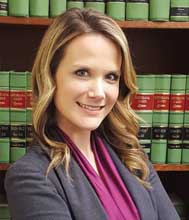 When Dawn Himel earned her juris doctor from Louisiana State University, she went to work in a family law private practice.
“After a few years, I realized I didn’t want to spend every day handling divorces or custody matters,” Himel says.
In 2010, she applied to several divisions within the Louisiana Department of Justice, one of them gaming. Despite knowing little about the industry, Himel accepted an appointment to that division, working in the licensing and compliance section, which included casino and video poker. She was named section chief in 2013, and deputy director of gaming in 2018.
“Gaming has become a part of me and who I am,” Himel says of her steady rise.
It took another six years to ascend to the top of the division, which occurred in July. “I do not take for granted the privilege of being appointed director by Attorney General Liz Murrill, as it is not always chosen from within.”
Himel praises her predecessor, Chris Hebert, now chairman of the state Gaming Control Board, for his loyalty, trust, and belief in her over the years.
“I think learning is critical to our success and development, not only professionally, but as people,” she says. “Even when I feel like I may have things figured out, I try to evaluate what I may not know or what I can learn more about to constantly improve.”
The selection of Himel to run the division represents the latest addition of women in high places in Louisiana, which includes the first female attorney general and secretary of state. “Studies indicate the percentage of women in the gaming workforce has risen substantially in the last few years, but women are still notably underrepresented in management and executive levels in the gaming industry,” says Himel, a Florida native.
Depending on the study, women represent approximately 49 percent of the gaming workforce, but less than 30 percent of the management and executive positions, she says.
Himel owes a debt of gratitude to a number of women who helped as she advanced in the division. “There are so many who have made an impact on me in some way by their words and conduct on panels, seeing them advance in their companies, and hearing them build up and fight for other women and underrepresented groups.”
But two in particular include Charmaine Moore and Trudy Smith.
“Charmaine, now retired, was extremely knowledgeable about Louisiana gaming, and I tried to learn as much as I could from her,” Himel says. “Trudy retired from the board a few years ago, after having been there since its inception in 1996, and now works with me part-time. She is a valued friend and an invaluable source of knowledge and wisdom.”
Himel sees her initial role as prioritizing outstanding projects for an office that provides legal counsel to an array of agencies such as the Gaming Control Board and the Gaming Enforcement Division, and its Indian Gaming Unit. Then there’s the need to revisit existing regulations given the innovations and technological advances in the industry.
“For the last four years, the majority of my time and efforts have been consumed with implementing fantasy sports and sports wagering. Now that those are more established, we need to evaluate areas of improvement for all forms of gaming,” she says.
Sports wagering presents an interesting dynamic in light of the few but well publicized events of college and pro athletes stepping over the line in the last couple of years.
While players may take risks for money, thrills, and/or addiction, “any risk to the integrity of the gaming industry or sports industry is a problem,” Himel says. “It is incumbent upon the sport’s governing bodies to ensure integrity of the game, player protections, and compliance with gaming laws and league rules.”
—Bill Sokolic
Stacie Stern
Vice President of Government Affairs & Partnerships
Underdog Fantasy
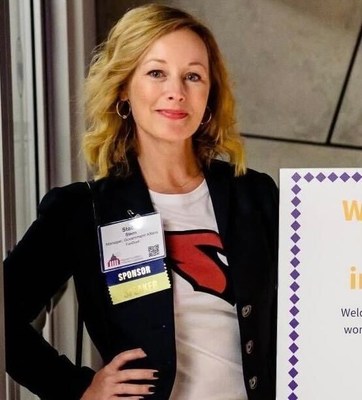
Today’s tip: Don’t play in a fantasy sports league in which Underdog Fantasy Vice President of Government Affairs & Partnerships Stacie Stern is participating. In her own words, she wins… a lot.
Stern, first a journalism and then a public-policy major at Arizona State University, tripped into the daily fantasy and sports betting worlds. She dubiously went on a job interview at Head2Head Sports in 2001 because she needed a job. And 23 years later, she still can’t get enough.
“I went in (for the interview) and I was like, ‘Wow, how did I never hear about fantasy sports? Why am I not playing that?’ What I loved was learning everything I could about how to play in a fantasy league and be competitive, in addition to the business side,” Stern says.
She spent 15-plus years at Head2Head in multiple roles, including CEO. She then spent five and a half years in government affairs at FanDuel, where she was a key figure getting sports betting legalized across the country after the federal sports betting ban was struck down in 2018.
Stern, who is raising two children and also manages a spouse and a dog, is now building out her own team at Underdog, which offers fantasy sports across the U.S. and sports betting in North Carolina.
“It was the opportunity to build out my own government affairs shop and team, and the ability to work with partnerships,” she says.
“That’s a side of the business that I didn’t have insight into at FanDuel. It was still in startup mode, and I had a trusted relationship with (founder) Jeremy Levine. I believe in the product, I believe in the leadership and I believe in my ability to go and build something with my vision.”
Stern was honored by her peers when she became the first woman to be elected into the Fantasy Sports Hall of Fame. She was inducted July 23.
“Stacie is almost definitely the most loved and respected person in our industry,” says Levine. “Just about everyone in gaming has a story about how Stacie has helped them at some point. Personally, Stacie welcomed me into this industry 15 years ago, and I’m so blessed to be able to work with her every day now.”
On the sports betting front, Stern is talented at educating lawmakers and brokering deals. Of late she has been on the forefront of legal and regulatory changes for daily fantasy products.
She’s a true mover and shaker, as it were, who counts the heads of several big gambling companies as close friends.
As a young woman growing up in the 1980s and 1990s, Stern never planned to get into the gambling industry. As a student entering ASU, she was a broadcast journalism major aspiring to be a college football or NFL sideline reporter.
Like many, she couldn’t embrace her quirks on camera. “I thought I had a face for radio, so I switched my major to political science.”
She’s still all about sports, just from a different perch.
She currently plays in five fantasy leagues—at the expert level—and besides the joy Stern derives from the competition, she says that fantasy sports levels the playing field between men and women.
“I think women playing fantasy sports, it’s the great equalizer,” she says. “I think it’s going to be the same for sports betting.”