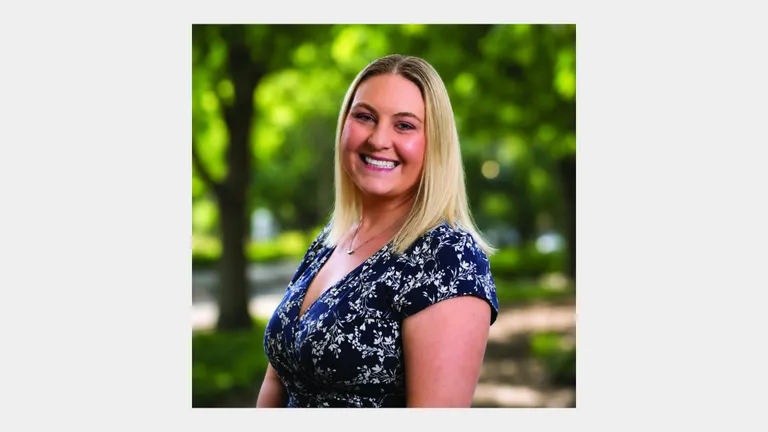
‘The Power of Showing Up’

Kaitlin Brown Senior Director of Programs and Services Connecticut Council on Problem Gambling
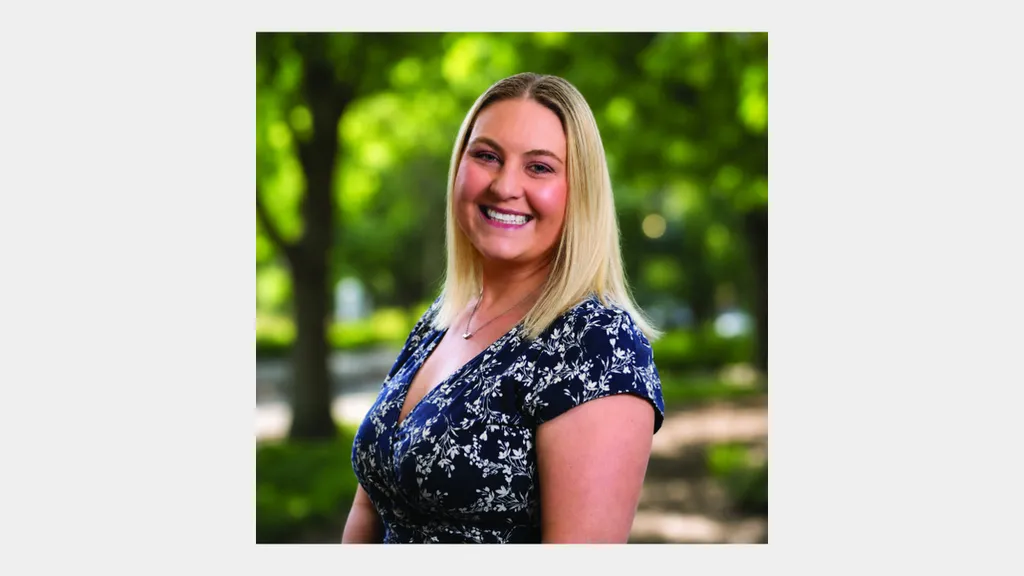
Early in her career, licensed addiction counselor Kaitlin Brown focused on drug and alcohol dependencies. But with the rise of legal gambling in Connecticut, she increasingly moved to the forefront of services for gambling addiction.
In 2018, the U.S. Supreme Court overturned a longstanding ban on sports betting, ushering in a new era of gaming with a ready market. Sports betting grew to include onsite betting and proposition bets on an endless array of individual plays. For eight states, the next iteration included online casinos—gaming in your living room. Connecticut was among them. In 2021, state lawmakers approved both sports betting and online gambling.
“I wouldn’t say one is necessarily more harmful than the other,” says Brown, now senior director of programs and services for the Connecticut Council on Problem Gambling. “The potential for harm depends on multiple factors: frequency, speed of play and individual susceptibility.
“Sports betting has received a lot of attention, particularly around younger males. But online casino gambling has flown under the radar—there often isn’t a natural stopping point, like the end of a sporting event.”
In Connecticut, she adds, “We’ve seen how quickly the landscape has changed since online gambling and sports betting became available. And we’re still learning about the implications.”
Brown’s background is in psychology, clinical mental health counseling and addiction. As an undergraduate at Sacred Heart University in Fairfield, she worked in an inpatient mental health and substance misuse program that also served people with gambling disorders. The subject wasn’t covered in her coursework, so she made an independent study of gambling harms to help treat clients. She discovered that many people understand how substance-related problems can develop, but often struggle to recognize that gambling can cause similar devastation.
After several years in that program, she worked as a therapist in two outpatient gambling treatment programs and became certified as an International Problem Gambling Counselor, providing direct services to individuals experiencing harm and affected family members. She obtained a master’s degree from Western Connecticut State University.
“After 15 years in the field I remain engaged, because there’s always more to learn,” Brown observes. “We now know more about risk factors, co-occurring conditions, gambling products, influence on behavior and approaches to prevention and treatment. This evidence has helped move the field toward more informed, evidence-based practices. But we still have much to learn.”
Among her mentors is Susan McLaughlin, former primary prevention service coordinator for the state Department of Mental Health and Addiction Services, who introduced her to the world of problem gambling prevention and helped her see the larger impact. “She taught me some of the most important lessons I carry with me in my career,” says Brown. “She showed me that getting people to talk about problem gambling often starts with finding the right door to walk through.”
Importantly, McLaughlin emphasized “the power of simply showing up, joining advisory groups and teams and making sure gambling is part of the conversation. A lot of the prevention work I’m passionate about today and the people I get to collaborate with can be traced back to my time spent with Susan and the time she invested in me. I feel incredibly grateful that this field has found its way into my life.”
The mother of three young children enjoys traveling, photography and being a dance mom. On the work front, she is fully committed to her advocacy role for those who struggle with gambling addiction.
“We may never eliminate the risk of harm entirely,” says Brown, “but continued research can help us inform people earlier, identify warning signs sooner, reduce risk and connect people with support before a problem becomes a crisis.”