The Contender


Consumers of a certain age may recall a ’60s ad campaign in which car-rental service Avis challenged market leader Hertz with three little words: “We try harder.” That simple slogan put Hertz on the defensive and Avis on the fast track, until the rivals were almost neck and neck.
Today, three brands dominate the gaming supplier landscape, and none of them are called Konami. But like Avis, Konami continues to challenge the ruling triumvirate through award-winning products and systems supported by a dedicated customer service team.
The strategy is paying off. For the 2024-25 fiscal year, Konami Gaming, Inc. saw a 7.4 percent increase in revenue, and an 18.4 percent increase in operating profit. CEO Steve Sutherland credits gains in Australia, Asia and Europe, though the North American marketplace was “basically flat” for the company. Konami’s focus remains on ”the design, development and distribution of highly competitive game and system products that provide us the opportunity to secure additional market share in this highly competitive marketplace.”
Threefold Focus
Konami Group Corporation originated in Japan as a manufacturer of video arcade games. Over time it moved into computer games, pachislot and pachinko games, amusement machines and of course, Class III casino games via Konami Gaming, the U.S. subsidiary established in 1997. Looking ahead, the gaming unit is focused on three core segments:
- Slot products, notably the new Solstice cabinet.
Building on the success of the popular Dimension series introduced in 2020, Solstice is equipped with a high-performance CPU to support advanced graphics, immersive audio and dynamic game mechanics to elevate the player experience. It’s the first joint hardware and platform development project of Konami Gaming, Inc. (Las Vegas), Konami Australia Pty. Ltd. (Sydney) and Konami Gaming Japan (Tokyo).
“As a consolidated global operation, this provides a number of efficiencies to maximize the utilization of our three major R&D/Studio Operation groups to fulfill the requirements of the markets we serve,” says Sutherland. “I expect that with the three groups working more closely together, we’ll deliver not only more compelling content but also a broader product offering, making us more competitive in the market.”
- Synkros, the advanced casino management system known for its reliability and 99.9 percent uptime.
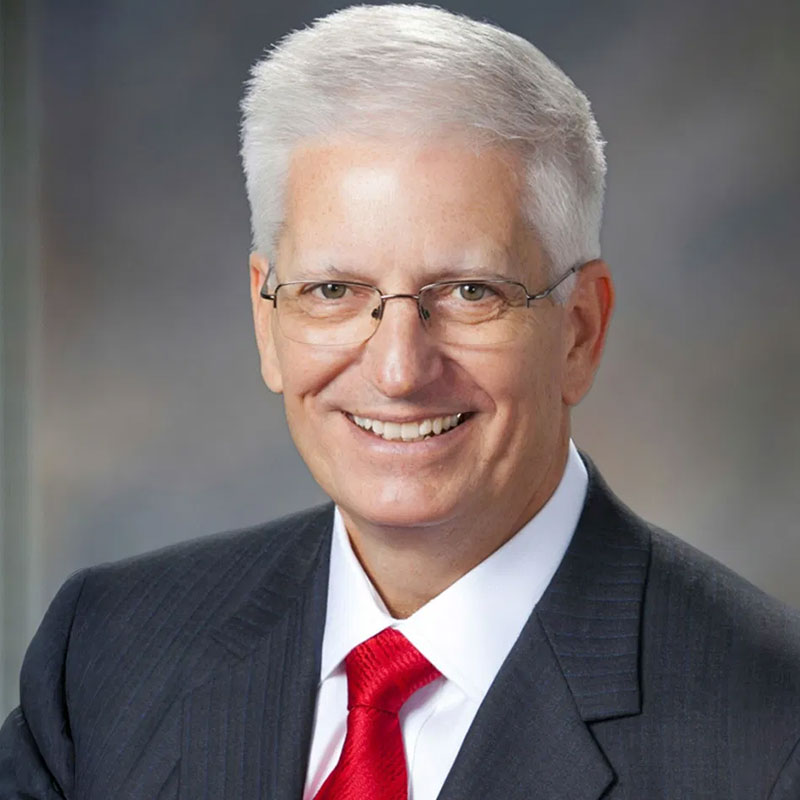
“We implement a single code base serving the industry from small routes to cruise ships to large, multi-site casino operators. Synkros provides the highest levels of award-winning service and continued product innovation,” says Sutherland. The CMS easily integrates with any EGM and third-party systems, “but over time, many customers migrate over to the systems we have to offer.”
- iGaming.
Konami is staking its claim in the fast-growing segment through Konami Online Interactive, a new brand representing its iGaming business segment. In 2020, Konami started porting its land-based library to its owned remote gaming server (RGS) for real-money and social players. Online is already “a key contributor to our bottom line,” Sutherland points out. Eduardo Aching, vice president of iGaming and international gaming operations, is fueling the omnichannel distribution.
Growing Footprint
“In 2024, slot players in Paraguay became the first outside the U.S. and Canada to play Konami’s real-money online slots,” says Konami Senior Vice President, Regulatory Compliance, and Chief Compliance Officer Lori Olk. “In October of last year, Konami’s real-money online slots landed in Mexico for the first time. In March of this year, we celebrated the official European premiere of Konami real-money online slots in Portugal.” At press time, real-money online games were about to go live in Brazil.
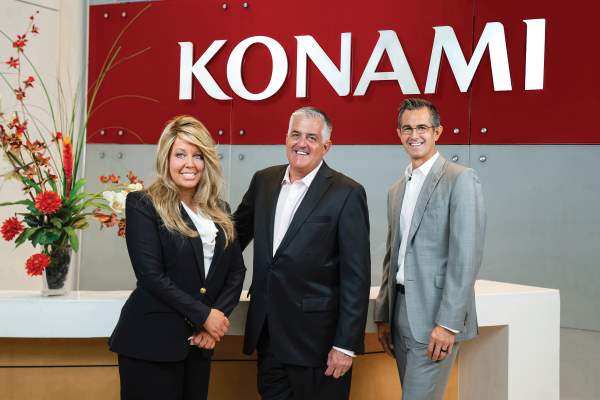 With seven offices across five continents, Konami is targeting regions like Asia, Europe and South America for growth opportunities, Olk explains. “We recently secured our license in the United Arab Emirates, a key emerging market for commercial gaming” and the soon-to-be home of Wynn Al Marjan. “Konami continues to develop and deploy a diverse portfolio of gaming content and systems technology for its land-based casino customers, expanding its presence in existing markets and exploring new ones.”
The unit is also presenting new titles for specialty markets like Class II, historical horse racing (HHR), New York lottery and Illinois VGT, to gratifying results, says Tom Jingoli, president and chief operating officer.
“Steve Sutherland and I have put together a program to grow in all those spaces. It’s taken a bit of time, leveraging some of our proven brands like All Aboard and African Diamond and porting them over into those verticals. Some of those markets have really grown, like HHR,” which launched in Kentucky and now operates in eight U.S. jurisdictions.
“Obviously, the Illinois VGT market has been immensely successful for us, and Konami has also seen incredible results in the New York VLT market,” says Jingoli. “We acquired our own Class II system and have started the rollouts. We’re really encouraged about the early results we’ve seen, similar to where we expect our online business to grow as well.”
The Toolkit
Konami’s award-winning CMS, described by Sutherland as “a tool to provide financial oversight for casino management,” provides functionality that runs the gamut from player tracking to slot and table management and data analytics, as well as marketing, fraud prevention and anti-money laundering.
Among the latest innovations is the Synkros Drink System, which enables casino guests to order their choice of beverage without having to flag down an attendant or interrupt their play. “Beverage ordering uses player tracking touchscreen menus at each slot machine,” explains Tom Soukup, senior vice president and chief systems product officer for Konami Gaming. “When the customer selects their choice of beverage, the order goes to the bar, the bar gets it ready and dispenses it to the attendant to deliver to the customer.” It saves time and labor for the operation by eliminating the manual drink ordering step, and enhances player convenience.
SYNK Vision, the company’s patented facial-recognition technology, is useful beyond identifying known loyalty-club players. “Using facial recognition, for example, players don’t have to remember to bring their player card to interact with their loyalty account,” notes Soukup. “Optionally, even an unknown player who’s not part of the loyalty club can be tracked as they are given a unique anonymous guest account via SYNK Vision, and then guess what? Operators can start analyzing and offering bonuses to these ‘tracked’ uncarded players based on their level of play.” By flagging self-barred or casino-barred players, operators may avoid legal consequences, including fines, by using SYNK Vision to detect barred players at the slots and lock the machines from being playable.
 Synkros Progressive Management “gives casinos the power to launch integrated, centralized progressive jackpots with no additional in-game hardware and no additional network connections,” says Soukup.
It’s all organic growth with Synkros, Soukup adds. “In 2020, Synkros’ installation base was about 100,000 connections across 384 locations. Currently, the Synkros installation base has grown to approximately 150,000 connections across 538 locations. Each year, Synkros is being installed or replacing other competitors’ systems at an average of 12 casinos, 10 cruise ships and 30 route locations.”
Legacy Titles
A Konami motto proclaims: “For every machine, game or system … we start with more than an idea—we begin with the experience in mind.”
Amen to that, says Gerard Crosby, senior vice president and chief games product officer at Konami Gaming. “Our roots are in digital entertainment—video games.” Since the company’s origins in the late 1960s, its R&D teams have been “hyper-focused on what entertains a player.”
That takes some study, much of it conducted the old-fashioned way. “We’ve done focus groups,” says Crosby, “but it’s always better to meet people in the casino environment. Our game designers go out and play competitors’ games. They talk to players. I wouldn’t say it’s a perfect science, but at the end of the day we know what players want—variety and entertainment.”
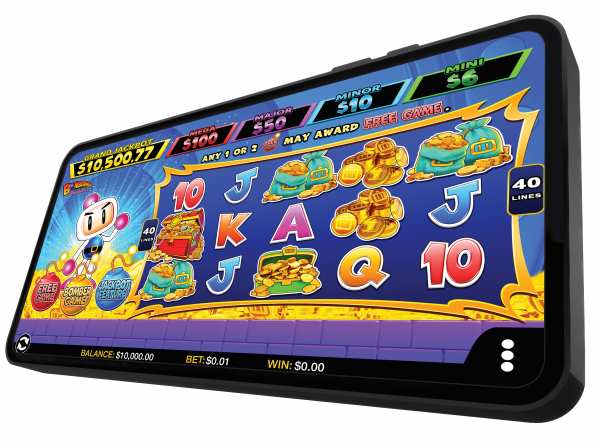
In some cases, familiarity and nostalgia count too. Among the first titles for the Solstice cabinet is Bomberman, a classic of the digital entertainment division first unveiled in the early 1980s.
“We’re bringing over the elements of that original video game into a slot game. It looks fantastic,” says Crosby. “With China Shores, a mainstay slot theme for 20 years, we’re bringing in new features with three-pot mechanics, a popular trend in the market… We’ve also tapped into that with our Dragon’s Law Fortunes series, Pots and Bags, Lucky Honeycomb and Charms Full Link. Metamorphic pots is a great example in U.S. markets. Most manufacturers aren’t releasing games today without that kind of feature.”
And that’s just Class III games, he says. “We’re also expanding content in Class II, VGT and even the COAM (coin-operated amusement machine) markets.”
Built to Last
History offers many lessons of brands that tinkered with success solely for the sake of change. One epic blunder was 40 years ago, when Coca-Cola changed its 99-year-old beverage recipe along with the logo and packaging. The “New Coke” caused a massive backlash among consumers, and like Hertz and Avis, enabled Pepsi to almost triple its market share.

While keeping pace with technological advances and player trends, Konami doesn’t fix what’s not broken, according to Senior Vice President and Chief Commercial Officer Jay Bertsch. “Innovation only matters if it leads to meaningful products and services. It’s really about execution, and that’s been a defining part of our story this past year.
“On the game side, we’re attuned to the market shifts and the type of products casinos’ end customers are looking for—games with the right mix of value and entertainment,” Bertsch says. “On the systems side, our growth has been nothing short of remarkable. The platform’s reputation for reliability and performance is well-earned.”
“Technology and innovation are great,” agrees Crosby, “but if you’re not making the operator more efficient and making their staff members happy, they’re not going to love or use your products and systems.” That’s why Konami invests in training, so customers can make the most of their investment in Synkros. “The easiest thing to do is sell a system. The hardest thing to do is keep somebody happy, to keep them using it and ultimately maximizing it. That’s our responsibility as a partner,” says Bertsch.
As for games, says Crosby, “We’ve got some incredible brands that players have loved for 20, 25 years. We can take that IP, morph it into the demands of what the customer is ultimately playing, and find a hybrid: a recognizable brand that’s consistent with market trends with respect to play mechanics.”
In recent years, Konami’s No. 1 title in Australia and the U.S. has been All Aboard. From its debut in 2020, the industry’s first train-themed series has been a hit, winning multiple industry and player awards. The latest iteration, All Aboard Diamond, includes the features players know and love, plus “some new multipliers to really enhance the winning experience,” Crosby says.

Winning titles like these should be agnostic, says Jingoli. “If you have a good game, then it should be a good game on a large format, on a portrait, on a slant-top or on a triple 27 like we have. We want to be able to put high-performing titles on all the cabinets, on all the floors at a property. That flexibility translates into greater opportunity for us and the operator base.”
‘ROI, Scalability, Long-Term Relevance’
Bertsch attributes Konami’s growth to “really basic things: our ability to listen to what operators are looking for and delivering on that. We try to be fairly grounded and purposeful in what we do. We focus on ROI, scalability and long-term market relevance.”
Konami “remains rooted to the core operating principles that have made us successful, in good times and bad, for the past 25 years,” according to Sutherland. “It’s the key to breaking into that Top 3 layer” now occupied by Aristocrat, IGT and Light & Wonder. “There’s great opportunity ahead of us, but for the foreseeable future, our core focus will be on the land-based side of the business. At G2E, I’m very much looking forward to seeing the response to both our new gaming cabinets and game content. We want our customers to have a high level of confidence in our new game and system products as they set their budgets for the upcoming new year.”
In a “relatively flat” industry, “we’re in a really good position to grow as a company,” adds Jingoli. “There’s not a lot of expansion into new markets, not enough to drive significant growth. So our business model is fairly simple. We grow by gaining market share, which has a direct correlation to product performance of our games and systems products.”
A la Hertz and Avis, or Coke and Pepsi, “that business grew by winning market share from our competitors.
“We may not have the number of resources the Big 3 have,” Jingoli says. “But with our strong gaming assets in the United States, Australia and Japan, and by working together, we’re set up for sustainable success.”