Sports Betting ‘Super Apps’ Expand the Playing Field

Even as operators and lawmakers debate the legality of prediction markets, sportsbook leaders including DraftKings are wading in with “super apps”
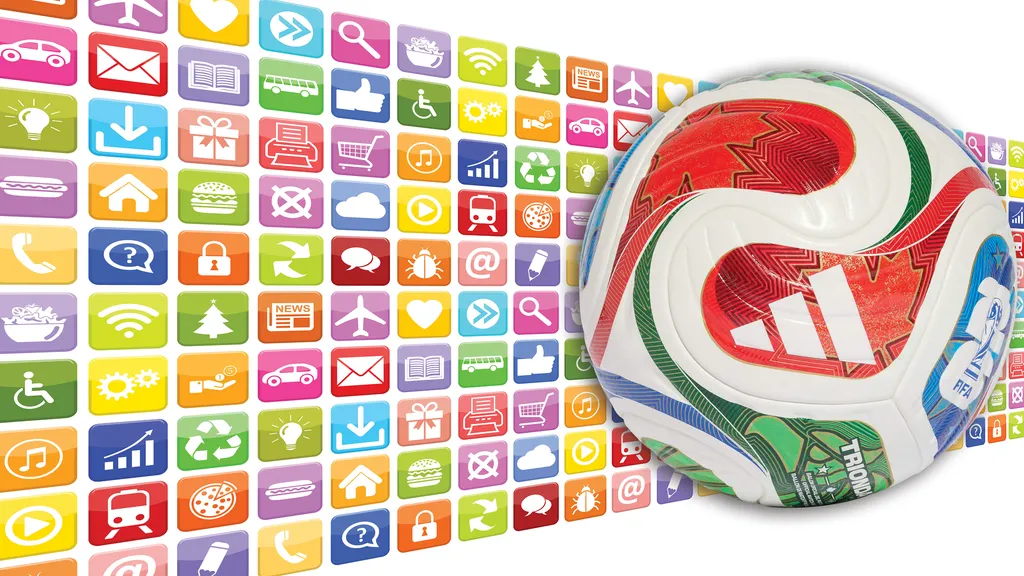
In late June, during the 2026 FIFA World Cup, DraftKings launched a new market-making division, completing the online sports giant’s rapid transition into prediction markets.
With billions available in trading fees, it’s not only critical but almost necessary for an operator to construct its own market-making platform. The rollout of DraftKings’ proprietary prediction market exchange DKeX coincided with the knockout stage at the World Cup, a quadrennial event projected to drive as much as $10 billion in trading volume, according to various estimates.
The rollout served as one of the final incarnations of DraftKings’ new “Super App,” which the company debuted last spring ahead of March Madness. During an annual Investor Day presentation, DraftKings touted the app as “one-stop shopping” for sports betting, event contracts, online casino and lottery on a single offering.
In a statement, DraftKings CEO Jason Robins said DKeX “provides a vertically integrated foundation for DraftKings Predictions, strengthening our prediction markets content and capabilities, giving us greater control over the technology that powers those offerings and enabling us to move faster as we continue enhancing our unified app.”
Robins believes the expanded app will enable DraftKings to scale its brand nationwide, rather than in a subset of certain states. Moreover, he views the app as a vehicle for integrating DraftKings Predictions with other products, providing new cross-selling opportunities with divisions such as the company’s online casino brand.
The concept of the Super App isn’t new. More than a dozen online gambling companies have offered some form of the product since the historic 2018 Supreme Court decision that struck down the Professional and Amateur Sports Protection Act of 1992 (PASPA). But the integration of prediction markets tilts the playing field drastically.
In less than five years, by 2030, the total U.S. addressable market for the asset class is estimated to reach $1 trillion.
If a controversial case on sports-event contracts makes it to the Supreme Court, it’s unlikely that the nation’s highest court will hear it until 2027 at the earliest. Thus, those who possess a version of the Super App may maintain a considerable advantage over those who remain on the sidelines—for at least a year.
Integration Plans
One of the most intriguing attributes of the app is the convergence of multiple gaming verticals on a single mothership. The rebranded app, DraftKings Sports & Casino, combines the aforementioned categories of sports, predictions, online casino and lottery verticals into a single app on a single wallet. The app is also customized by state to give users a different experience based on local sports betting regulations.
DraftKings expects the app to enhance the lifetime value flywheel, one the company believes it maintains in areas such as product, technology, trust and marketing. According to the company, the app offers “lightning fast, in-game experiences” that move at the speed of sports. DraftKings also touts the “authenticity” of the app in offering content and promotions that feel “natural, timely and connected to how fans consume sports.”
Finally, DraftKings promotes the communal aspects of the new app in describing the power of “turning individualized picks” to “shared moments” that bring disparate bettors together. A group of bettors in Spain can share their World Cup parlays with thousands on the app, whereas a bettor from an in-person sportsbook can only share a paper slip of the wager.
DraftKings shares jumped 9 percent on the day of the Investor Day presentation.
DraftKings also has high hopes for the iCasino aspects of the app. As of March, the company reported that approximately 62 percent of DraftKings’ casino handle had been derived from its embedded casino products inside the sportsbook app. A ubiquitous app with a common wallet may increase the company’s ability to cross-sell its products even more.
Due in part to the app enhancements, DraftKings expects to achieve at least a 30 percent adjusted EBITDA margin on a long-term basis, the company wrote in a March statement. As the company increases scale, it sees potential upside above the margin projections.
Robinhood’s ‘Financial Super App’
Around Memorial Day, Robinhood launched a new credit card and trading platform using agentic AI. Under the initiative, Robinhood now allows users to build credit purchases and manage various investments autonomously. Speaking with Fox Business, Robinhood CEO Vlad Tenev called the category “agentic finance,” in which an AI agent can assist a user in trading decisions.
With a vast menu of zero-commission stocks, exchange-traded funds, fractional shares, crypto trading and tokenized real-world assets, Robinhood boasts more than 27.5 million accounts, amounting to approximately $345 billion in assets under management. The latter makes Robinhood the second-largest online brokerage in the world behind Charles Schwab. Unlike Robinhood, Schwab has opted to avoid listing sports-event contracts—for now.
After a slow start on prediction markets in 2025, Robinhood has seen trading volume skyrocket this year. In April and again in May, Robinhood recorded volume of at least $3 billion through its prediction-market platform. Annualized trading volume by June hit $6 billion for the year. By comparison, it saw only a sliver of the total in 2025, ending the year with trading volume of $300 million.
Beyond predictions and the new agentic program, Robinhood also has premium options for customers through Robinhood Gold, which offers high-yield cash sweeps as well as APY and IRA contribution matching. Earlier this year, the company launched Robinhood Venture I, a publicly traded, closed-end fund designed to give retail investors exposure to late-stage private companies. Retail investors can gain entry into the fund for as little as $1.
In addition, Robinhood Securities LLC serves as the sole initial trustee and brokerage partner for Trump Accounts, a new Treasury-backed savings program for children. Through the program, every enrollee will receive $1,000 from the U.S. Treasury Department to kickstart their brokerage investing. Tenev sees a world where a larger percentage of the nation’s population is investing a percentage of their net worth while “investing, starting at birth.”
As a result, Robinhood has increasingly become a “financial Super App,” in Tenev’s estimations. “Our goal is to make it an irresponsible and irrational decision to have your money elsewhere,” he told Fox.
Tenev described Robinhood’s prediction-market division as the fastest-growing segment in the history of the company. Among the event contracts offered at Robinhood are ones that allow users to trade on monthly inflation figures, before the data is released by the federal government.
The “wisdom of the crowds” in clearly answering challenging economic questions is one of the most intriguing characteristics of the trades, Tenev noted. Still, it’s next to impossible to forecast how long prediction markets will be popular on Super Apps. In July 2024, DraftKings abruptly scrapped its NFT division after a federal judge allowed a class-action lawsuit to proceed. The case centered on allegations that the digital tokens were sold as unregistered securities.
The Comic-Con of Sports
Long before the advent of prediction markets, BetMGM CEO Adam Greenblatt spoke at length on the virtues of the Super App. On January 31, 2023, he sat down for a 45-minute exclusive interview with GGB. The interview took place in a café at MGM Springfield on the first day of retail sports betting in the state of Massachusetts.
Early in 2023, the state allowed three in-person casinos to offer legalized sports wagering, weeks before mobile sports betting went live. Greenblatt viewed the ubiquitous app as an absolute “game-changer” across the industry.
Another major operator, Fanatics, has used its app as a vehicle for users to utilize its FanCash rewards program. The program enables users to accumulate loyalty points for frequent betting that can be redeemed for hats, jerseys and other merchandise.
A bettor will also accumulate more FanCash for hitting riskier parlays. For instance, a bettor who hits a wager with odds of +610 to +2100 will receive a FanCash redemption of 3-6 percent on the amount that is bet. For parlays with odds of +2200 to +4600, the redemption rate increases to 6-9 percent. The real-time personalized offerings require a high-powered app designed by some of the most advanced technology teams across the industry.
On the same week of the MLB All-Star Game, the company held FanaticsFest for the third consecutive year. In many respects, the event has become the closest version of Comic-Con for sports. This year’s FanaticsFest included headliners such as LeBron James, Tom Brady, Mike Tyson, Jay-Z, Aaron Judge and Kevin Hart. Two days before the 2026 World Cup final, FIFA chose FanaticsFest as the venue to host the pre-match press conference. The Fanatics app served as a useful guide for fans to navigate the crowded Javits Center.
Legacy Players
Two industry players, MGM and Caesars, have opted to bypass prediction markets in 2026. Both companies maintain an outsized presence on the Las Vegas Strip, where traditional sports betting is threatened by the new asset class.
In April 2025, MGM Resorts CEO Bill Hornbuckle told GGB that prediction markets could be the cement that prompts the federal government to potentially intervene in the gambling industry, a task that has historically been left to the states.
Take a stroll through the expansive Mandalay Bay Sportsbook during the NBA Vegas Summer League. The massive facility contains plush chairs, ornate carpeting and a series of big-screen TVs with every sport imaginable. The top left corner of the theater also features an ad from BetMGM with an image of the app. As you leave Mandalay Bay for a short walk to the Luxor, a 10-foot banner teases a new player offer for up to $250 in wagers on the BetMGM app. The banner also contains a QR code that directs you to a sign-up page.
Apps from BetMGM and Caesars feature everything the casinos can offer—but not prediction markets. As the Nevada Gaming Control Board views prediction markets as unlicensed gambling, the state has obtained a preliminary injunction against several leading operators. Caesars CEO Tom Reeg has indicated that the company values its state licenses tremendously. Neither company wants to risk licensing restrictions by entering the prediction market game.
In June, a Michigan judge extended a temporary order that blocked Kalshi from offering sports-event contracts to state residents. A sports-event contract is a derivative contract that allows users to take a position on a binary option. While a futures wager on Spain to win the World Cup is considered a sports bet, an event contract is structured in the same manner as a futures contract on the price of corn.
Hours before a semi-final matchup versus France, Spain had a 20 percent probability to win the World Cup. But after a 2-0 upset over Les Bleus, Spain’s odds on Kalshi soared to 53 percent. The real-time trading on Kalshi mimics activity on a financial exchange, supporters argue. The U.S. Commodities Futures Trading Commission (CFTC) advised Kalshi not to cancel any orders in Michigan.
Shortly after the Fourth of July, the nation’s leading state legislators and regulators converged in San Diego for the 2026 Summer Meeting of the National Council of Legislators from Gaming State (NCLGS). As expected, prediction markets represented one of the most contentious topics. Three keynote speakers—former White House Chief of Staff Mick Mulvaney, Nevada Gaming Control Board Chairman Mike Dreitzer and prominent gaming attorney Nelson Rose—all made their case on why they believe sports-event contracts violate state gaming laws on legal sports wagering.
With billions at stake, however, more companies may turn to the Super App for ways to engage customers. Citizens analyst Jordan Bender noted that the Super App will support more efficient marketing for DraftKings as the company leverages national broadcasting rights through media partners such as ESPN. For his part, DraftKings CEO Robins believes that megatrends are exploding in digital entertainment. It’s still unclear if a major gaming app needs a prediction market segment to thrive.
As Robins said, “DraftKings stands to benefit from what will for many years be continuing engagement with sports, entertainment, interactive, mobile and many other things that are really, truly lined up for DraftKings to capitalize on this coming generation of consumers.”