Responsible Gambling Prevents Problem Gambling!

What’s in a name? Connie Jones, the director of responsible gaming for AGEM believes it’s a lot when considering the differences between problem gambling and responsible gambling and what those differences mean to the various participants in the gaming industry.
It still surprises me how many people confuse the terms “responsible gambling (RG)” with “problem gambling (PG).” I have found that by expressing the terms should mean different things to different factions.
Responsible Gaming Education Month (RGEM) provides an opportunity to raise awareness of RG as separate from PG. Simply stated, “problem gambling is when a player loses more than they can afford on a regular basis.” Responsible gambling (or “gaming” in today’s world) differs for what I view as four separate but connected aspects of gambling. Here is how I differentiate RG for those factions:
Operator—Operators engage directly with the player so may employ several RG measures that include but are not limited to the following: RG ambassadors who are trained to engage with players on the gaming floor; RG training for all employees; self-exclusion programs; RG/PG signage/messages on the gaming floor or within an online gambling game.
Technology/game provider—Typically game providers do not engage directly with players, but numerous lawsuits have identified certain game characteristics as contributing to gambling addiction. Consequently, many jurisdictions require RG tools on games to assist in safer play. As director of RG for the Association of Gaming Equipment Manufacturers (AGEM) I track the regulatory requirements for RG enhancements on games which vary considerably from jurisdiction to jurisdiction. Many technology providers have developed an RG program and require employees to take part in RG/PG Awareness programs.
Players—RG for players involves an understanding of the risks associated with gambling games and knowing their limits. Players can utilize the RG tools on games where available. These may allow them to set limits in time and money, to see a record of their play and receive RG information via the game. The AGA’s “Play Smart from the Start” consumer hub provides players with straight forward, actionable tools to help them stay in control and keep gaming fun.-
Regulators—I believe RG for regulators face the most challenges in today’s gambling/gaming environment. First, they must have a clear understanding of the difference between RG and PG. Most gambling jurisdictions require operators to post a 1-800-GAMBLER problem gambling helpline number. There often is confusion of what number should be required as there hasn’t been a national helpline number until recently and that is currently being challenged in the courts. Next, they need to determine what type of RG measures on the games are most appropriate. Are they supported by peer reviewed research? What has been the experience of other jurisdictions? Should they require operators to conduct training and post RG/PG signage? How much is appropriate? Should a formal RG/PG program be required and what are the basic elements?
I’m sure I’ve left out some elements in my above RG descriptions as it is evolving with the ever- changing gambling/gaming environment.
RG accreditation or certification has become an important addition to the programs of many gambling companies, both for operators and technology providers. Global Gaming Guidance Group (G4), based in Europe, has provided more accreditations than anyone in the world. The Responsible Gaming Council (RGC) based in Canada provides RG Check. They just partnered with ROGA (Responsible Online Gaming Association) to facilitate its new U.S. certification program for online operators. The World Lottery Association (WLA) also provides a robust RG/PG certification.
Several new entities are now offering RG/PG accreditation. The RG/PG accreditation provides a type of a “Good Housekeeping” seal of approval demonstrating that a gambling company takes RG seriously and can be trusted by regulators.
Artificial intelligence (AI) is playing a more significant role in RG today. Playtech’s BetBuddy offers a state-of-the-art safer gambling analytics platform designed to protect players and support responsible player engagement and operations. Powered by data mining and predictive analytics, it leverages the latest advancements in gambling behavior research and artificial intelligence.
Mindway AI partners with operators and leading industry organizations with a clear mission to improve player protection. By combining neuroscience, AI and human expert assessment, their safer gambling software helps operators meet and exceed player protection requirements. Their AI solution GameScanner ensures a fully-automated, early detection of at-risk and problem gambling, allowing operators to reach out to players before unhealthy gambling habits escalate. More recently RG/PG apps are providing a different approach to RG. One such app is called
EVIVE who has launched a new digital health platform aimed at helping individuals develop a healthier relationship with gambling. The platform is designed to provide support for preventing gambling harm, changing gambling behaviors or stopping gambling altogether.
There is an old saying that “no good deed goes unpunished” which may be applied to the RG elements on gambling games. Studies in Europe indicate that players migrate to online black-market games to avoid RG restrictions on legal online gambling games. This is one of the reasons I like the new RG apps such as EVIVE that provide players a fresh look at safer play without changing the functioning of the game. This app was developed by a recovering problem gambler (more appropriately, a person with “lived experience”) and it struck me as taking a more oblique approach to RG.
We are living in an exciting new world in the gambling and gaming industry. The expansion of gambling into online sports betting and casinos, the merging of gaming and gambling, prediction markets and challenges with black-market gambling have made RG education and awareness more critical than ever. With this in mind it seems only logical that RG awareness must begin with our youth. Some jurisdictions are, or are considering, adopting RG/PG programs in the schools. AGEM supports YGAM, the UK’s leading charity dedicated to preventing gaming and gambling harms among young people. I am hopeful that both industry and RG/PG organizations in the U.S. will direct attention to our youth who are the next generation of players.
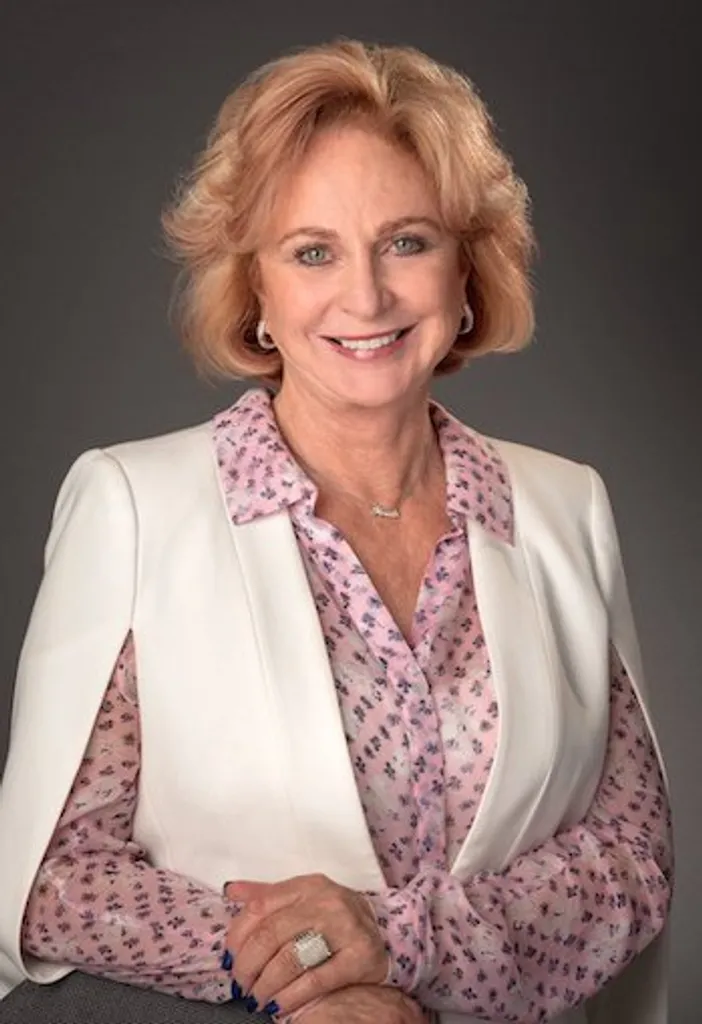
Constance Jones is director of responsible gaming for the Association of Gaming Equipment Manufacturers (AGEM). Her role has helped to strengthen the bridge of communication and understanding between the gaming industry, specifically that of a gaming technology providers, and the problem gambling communities. Jones, a 20-year veteran of the gaming industry, has presented at numerous conferences and events on the gaming manufacturer’s role in RG and the evolution of RG technologies. She currently serves on the boards of the National Council on Problem Gambling, the Nevada Council on Problem Gambling, the Problem Gambling Center in Las Vegas and was appointed by Nevada Governor Gibbons, then reappointed by Governor Sandoval to serve on the state’s Advisory Committee on Problem Gambling. She is also a member of International Masters of Gaming Law and chairs their Responsible Gaming Committee.