Jack Binion

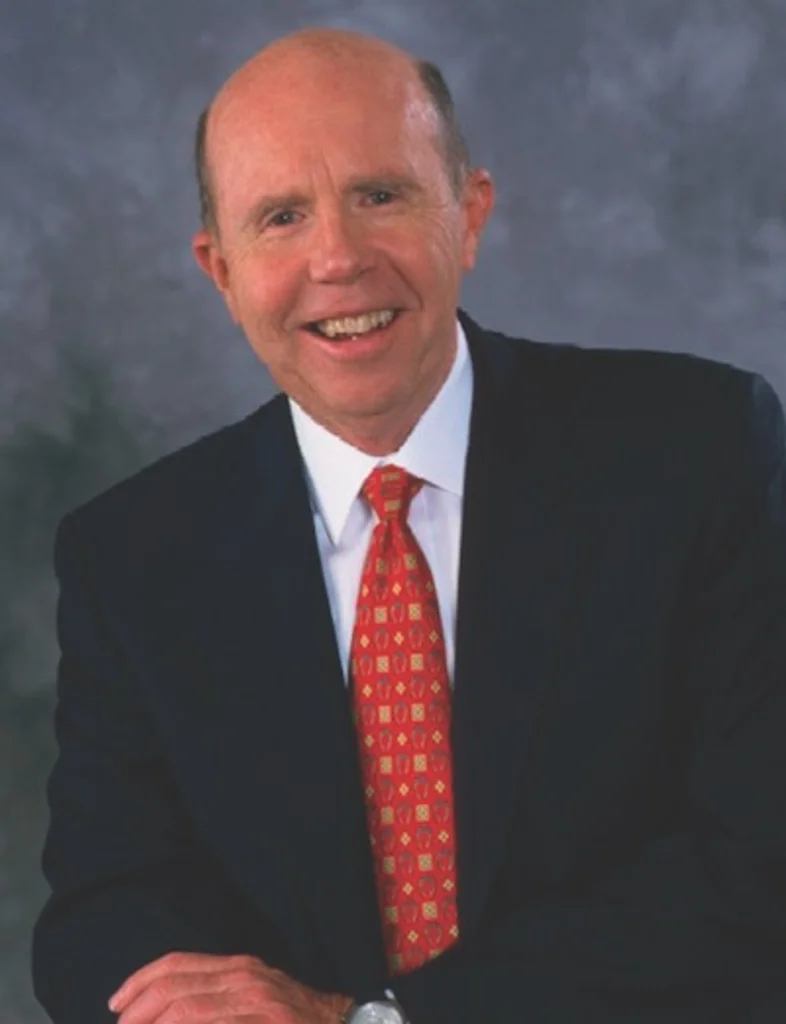
Jack Binion first arrived in Vegas with his father Benny in 1947. He eventually ran the Horseshoe casino there and helped to found the World Series of Poker, the seminal poker tournament held each year. He later started Horseshoe Gaming, one of the most successful regional casino companies. In every region, the Horseshoe casino was the market leader. He sold the company to Caesars Entertainment in 2000 and continues to advise casinos on how to run a gaming establishment and how to treat customers. He spoke with GGB Editor-at-Large Roger Gros for the first edition of the Gaming Legacy Podcast from his office in Las Vegas in April. Click here for the full podcast of this interview.
GGB: When and why did you first come to Las Vegas?
Binion: My father was involved in illegal gambling in Dallas, and a reformer administration came in and closed up everything. So we moved to Vegas in 1947 when I was 10 years old.
What was Vegas like in those days?
Well, it was only 21,000 people. It was so small, we only had one high school. Now, two and a half million people later, we have quite a few high schools.
How did you start working with your father?
Actually, I didn’t start working with him right away, because he got convicted of income tax evasion and went to jail.
I knew the people who owned the Horseshoe. And there was a guy named Joe W. Brown who had a lot of money. He’d been a gambler in New Orleans, so he was really doing well. And then he got sick and he sold it out to what I call the Fremont Bunch, who were the owners of the Fremont Hotel. And they bought three quarters of the Horseshoe and we had a quarter, and that’s when I started working with my father.
But I obviously had to work in the casino before that. I started off dealing blackjack. And then one thing led to another, and when the new regime came in, I was like a junior executive. I had a series of duties. And then they got in trouble and had to sell out. They came to us and they said, “Would you like to buy us out?” We said yes.
How did they get in trouble?
Listen, the only people that knew how to run a gambling house in those days were people that had been in illegal gambling. So the state tolerated it. But if you’ve had too bad a reputation, they didn’t tolerate that.
In fact, when I first got here, it was a great time, because the country was getting closed up. When I say closed up, they were really putting a lot of heat on illegal gambling. All these guys would close down and they would come to Las Vegas. It was really, at least for me, an exciting time.
You and your father used the same slogan—good food, good drink, good gamble. Where did that come from?
I don’t know who started that, but basically, then and even today lots of places still lead with food as kind of a loss leader. In fact, almost everything was a loss leader in those days, except for the gambling itself.
But you also gave them good rules.
Yes, we were very liberal with it. Looking back, he was a good operator who was kind of ahead of his time.
Let’s talk about poker. Before you started the World Series of Poker, you had a lot of head-to-head with some of the biggest poker players, so how did the WSOP start?
What happened? We were going to open a poker room. Now, poker is not a big moneymaker, and it wasn’t all that big of a draw at that time. So we said let’s do something to jump-start our poker room. We tried out the World Series of Poker and it worked out pretty well. So we started having a poker tournament every year, which was the World Series.
But actually, we got down to where we needed the space too much. We would only have poker during the World Series of Poker, not the rest of the time, because we wanted that casino square footage for slots.
You had some of the most renowned names in poker in those days—Johnny Moss, Doyle Brunson, Stu Ungar and others. What was it like to have them at your tournament tables?
One of the nice things about Vegas in those days, everybody was a Damon Runyon character. People that were in the gambling business really kind of watched a different drama. We’re very colorful people.
You stepped away from the original Horseshoe in the ‘90s and started Horseshoe Gaming. Why did you do that?
I’m going to tell you why. When the Indian gaming act (IGRA) came out in 1988, that kind of opened up the country, so instead of just having the Indians run it, the states started making it legal. So, I went with Mike Gaughan, and we looked at a place where it was going to be legalized. We weren’t going to be business partners—we were friends and he gave me a ride. I said, “This is going to work.” My father was deceased by then. My mother was very, very conservative. My brother Ted was in trouble. My sisters were minor players in the business anyway.
So I said I’m going to start my own company. Nobody was really interested in doing it, so I took the rest of the family—a bunch of nieces and nephews and grandchildren—and gave them stock in the new company. We used the same philosophy that we used in Vegas.