
How to Succeed in African iGaming

What works and what should be avoided when deploying platform tech in Africa? Commonalities exist, but homogenize Africa at your own peril.
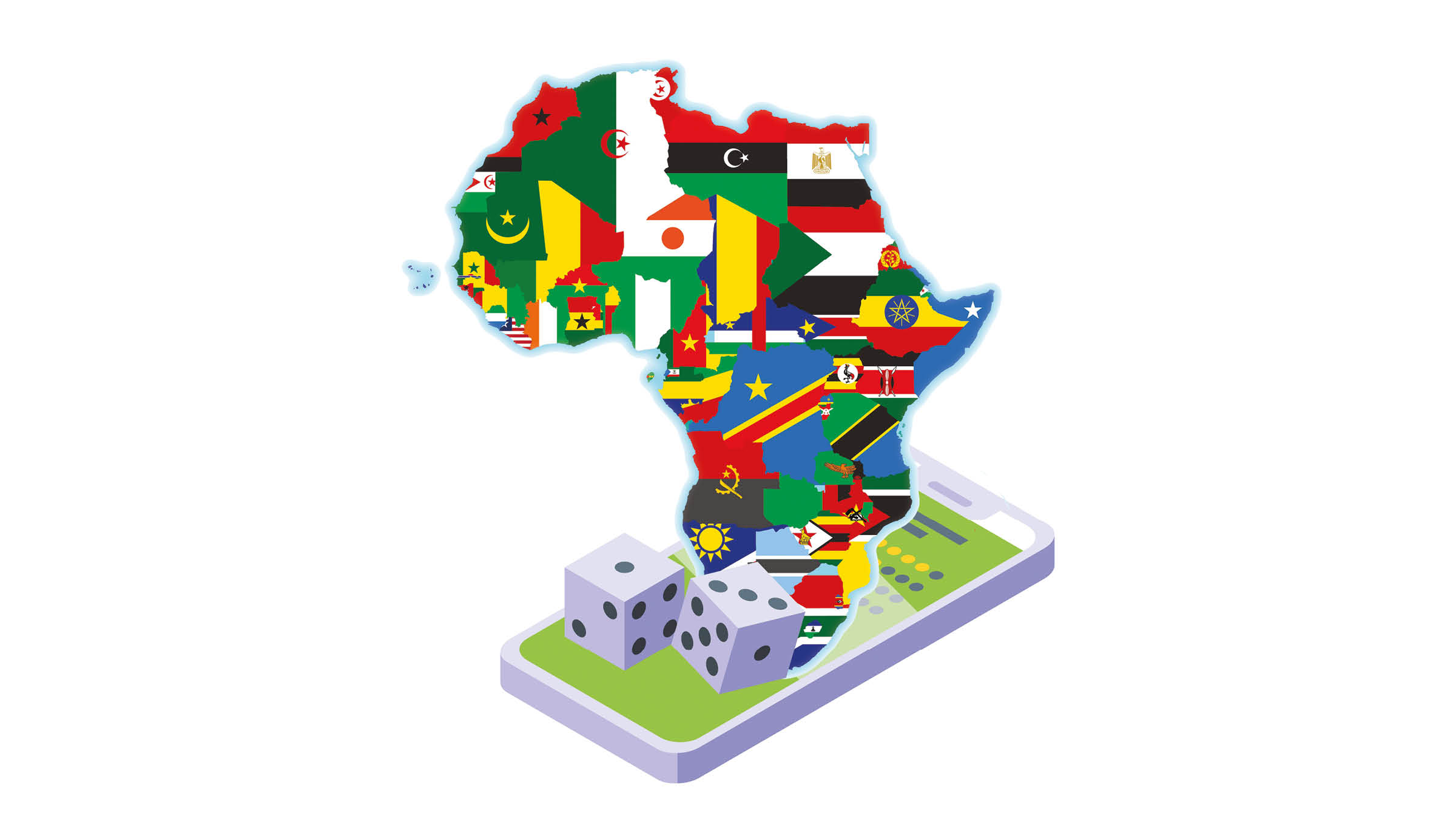
Africa is frequently touted as the biggest emerging opportunity in iGaming, and it’s easy to see why, with its young and rapidly expanding population.
Gambling participation rates across the continent are high, at least by international standards. Betting is widely normalized across adult populations in key markets like Kenya, South Africa and Nigeria—markets where bettor engagement is treated as mainstream consumer behavior, rather than niche entertainment.
However, whether out of ease or ignorance, Africa is often referred to as one market—a grouping that is wide of the mark and may come with hidden costs. When an entire continent is homogenized into one, much-hyped “growth opportunity,” nuance is invariably lost.
Aside from it being structurally unique and largely shaped by demographics and mobile penetration, entrenched behavioral habits in each African market differ from established counterparts across the world.
These factors make tailored platform technology design essential to success in African markets, a range of regional industry experts say. They collectively warn that treating the continent with an “off-the-shelf” approach is a barrier to successful deployment as operators scramble to deploy in unfamiliar territory.
What Makes Africa Different?
Gauteng-based Annalisa Emelia, the Africa sales manager for game supplier SYNOT Games, argues many platforms attempting to approach Africa need to rethink their strategy.
“The reality is that there isn’t a single product or platform approach that works across Africa.”
Annalisa Emelia, Africa Sales Manager, SYNOT Games
She notes that Africa is a collection of very different ecosystems, with each market having its own player behavior, regulatory framework, payment infrastructure and, of course, expectations. She stresses that while the fundamentals remain strong—a young population, increasing mobile access, and a clear appetite for betting and gaming products—treating the region as one market can scupper chances of real success.
“To understand this properly, you only need to compare three key markets: South Africa, Nigeria and Kenya,” says Emelia. “South Africa is one of the most mature and regulated markets on the continent. Players expect a structured, reliable experience with strong sportsbook functionality and a growing appetite for casino-style content. The regulatory framework shapes how this content is delivered.
“Nigeria operates very differently,” she continues. “It’s a high-frequency, low-stake market where football dominates. Kenya is one of the most mobile-native betting markets globally. The entire ecosystem is built around mobile money. Betting behavior is fast, often conducted in short sessions, with a strong focus on in-play and microbetting.
“So the reality is that there isn’t a single product or platform approach that works across Africa. If your platform strategy does not reflect these things from the outset, you will struggle to gain traction regardless of how successful you’ve been elsewhere.”
Africa certainly has its nuances. One of the most interesting is the extent to which social dynamics amplify engagement.
Betting decisions are heavily influenced by peer networks, community groups and informal tipster ecosystems across digital platforms, creating a highly networked and sentiment-driven acquisition-and-retention loop. This must be taken into account when building technology for the market.
African Bettor ‘Fundamentally Different’
Former Betway Africa Group Director Jon Russell further reinforces this point, maintaining that generic, plug-and-play strategies do not produce the best results. Russell, who served at Betway for more than 10 years, spearheaded the launch of the very first corporate spread betting operation in Africa, Superspreads, back in 1997.
“What my experience in Africa has taught me, and what the subsequent decades went on to confirm, is that the African bettor has a fundamentally different profile to the European or North American customer,” he says.
“This is a market that gravitates toward jackpot products, high-leg accumulators, and transformative payout structures rather than the price-sensitive, value-seeking behavior that characterizes mature European markets. Gross margins in the high 20s to 30 percent are commercially achievable and reflect genuine customer preference rather than operator exploitation.
“So most U.K. and U.S. operators who enter African markets expecting European margin profiles find themselves structurally misaligned with what the customer actually wants.”
Seasoned industry professional Felix Mulandi, who serves as the head of brand and marketing at Kenya-facing operator Pakakumi, echoes the sentiment of Emelia and Russell, weighing in with the discrepancies in user engagement and market divergence across the key regions of the continent.
“Supported by stronger banking infrastructure and more established formal operators, participation rates in South Africa are as high as 83-90 percent and a more diversified betting mix that extends beyond football into horse racing, rugby and higher-value wagering.
“If you contrast it with East Africa—particularly Kenya, which represents the archetypal mobile-native betting market, 80-85 percent of activity is sports betting, heavily enabled by M-Pesa, and characterized by micro-stakes, jackpots and high-frequency real-time engagement.
“West Africa, especially Nigeria, operates as a different scale-driven ecosystem. While participation is slightly lower at around 71 percent, the absolute volume is substantial. Behavior is more economically aspirational, with a strong preference for high-odds accumulator bets, aggressive bonus usage, and continued relevance of retail betting shops alongside digital channels.”
One Size Doesn’t Fit All
Most iGaming platforms started their lives designed typically for European or similarly mature markets. Technically they look strong when deployed, but usability in Africa is a different story. For Emelia, these global platforms can work only if they can improve on flexibility.
“Too often, localization is treated as a front-end exercise, adjusting language, currency or branding while the underlying platform remains unchanged,” she says. “In Africa, localization goes much deeper. It impacts many things (like) payments, connectivity, speed, product structuring, compliance, marketing. If your platform cannot adapt to these factors, it will not perform.”
Mulandi, who has garnered more than 14 years of continental industry experience including working as operations manager at 22bet and marketing manager at Sportygroup across several African markets, shares the same opinion.
“The biggest mistake global operators make in Africa is assuming the continent can be served with a ‘lift-and-shift’ model deploying a proven European platform with minimal localization,” he says. “For example, failing to integrate mobile money like M-Pesa, Airtel Money at the core, not as an add-on, or designing UX for desktop-first journeys, immediately creates friction in markets like Kenya or Ghana.
“Similarly, global platforms often over-index on casino, while in most African market sports, football particularly drives more than 60 percent of engagement, making a weak sportsbook a critical flaw.”
Emelia stresses the importance of seamless payments. “In Africa, payments are not just part of the user journey—they are central to it. If deposits are difficult or withdrawals are delayed, trust is lost immediately.”
Must-Have Features
Another important ingredient identified by regional experts is the need for more gamified content. The demand for gamification is by no means unique to Africa, but according to Emelia, it’s not always implemented effectively on the continent.
“Many different providers offer their own gamification tools. The problem is that these tools don’t always align, and they’re not always fully integrated when the platform launches. Additional development is often needed, which slows things down. What works better is a centralized approach—a single gamification layer that works across all products from day one.”
Operators should also be able to manage these tools themselves. They shouldn’t need to rely on support teams to launch or adjust campaigns, she warns.
“At the same time, platforms need to be more forward-thinking in how they build marketing capability into these tools. The ability to create new and creative campaigns directly within the platform is becoming more important. There is also a growing need for platforms to offer a complete ecosystem—product, CRM, affiliate systems and gamification—all working together from the start.”
Mulandi reinforces the idea that gamification and personalization are essential. He says successful platforms are leaning into ways to individualize recommendations, which is especially fruitful in Africa’s populous markets.
“The most successful platforms will be the ones that lean into gamification and personalization at scale including missions, streaks, and tailored offers driven by behavioral data, while also expanding into crash games and hybrid casino formats that are now gaining traction as complements to sports,” he says.
No ‘Scaled-Down Versions of Global Products’
Ultimately, there’s a general consensus that success in Africa largely hinges on a platform’s ability to localize and purpose-build for indigenous demands instead of watered-down global offerings.
“iGaming platforms that do well in Africa must be designed not as scaled-down versions of global products, but as locally optimized, mobile-native ecosystems.”
Felix Mulandi, Head of Brand and Marketing, Pakakumi
An evaluative look at the sportsbooks that tend to dominate African markets—Betway, Stake, Bet9ja, 1xBet and the like—reveals shared common traits. They are mobile-first, light on weight and designed for different levels of connectivity.
“iGaming platforms that do well in Africa must be designed not as scaled-down versions of global products, but as locally optimized, mobile-native ecosystems that reflect how users actually engage with betting across the continent,” says Mulandi. “The foundation is mobile-first UX with ultra-light performance, built for low data consumption and intermittent connectivity, combined with seamless mobile money integration at the core.”
Emelia concurs, sharing that alongside the obvious need for mobile-first design, simplicity and speed, it’s also important to eliminate friction in the registration process, deposit process and gameplay mechanics.
Again, much of this applies to iGaming globally. But it is perhaps especially important in Africa due to the level of choice players have in many markets. Close to 70 operators are licensed in Lagos alone—and that’s just the regulated market.
“Casino and crash games positioning must also be intentional,” Emelia adds. “Players do not want to scroll through large libraries. They want quick access to popular and relevant content. Crash games, in particular, should be easy to access and clearly visible.”
Future of African iGaming Platform Tech
Sector experts believe that winning in Africa for the long run—not just optimizing for short-term success—requires bespoke and flexible technology. As tech, regulations and trends continue to evolve across the continent, the platforms that thrive are the ones that remain adaptable and responsive.
“Africa is not a static market. With new technologies emerging and regulations evolving, player behavior changes with it,” Emelia says.
“Platforms must be able to adapt to regulatory changes. There is no fixed rule book across Africa. Regulators are continuously introducing new operational, marketing and product parameters.
“While this can be challenging, it reflects the need to manage risk in a growing industry. There is the need to design to accommodate these changes, not resist them.
Mulandi concludes that long-term success will “belong to operators with modular, payment-agnostic, data-intelligent and regulation-ready architectures built for constant change.”
If technology evolves as quickly as the market does, global platform tech providers can prosper in Africa—but only if they evolve from being globally standardized products to locally optimized ecosystems.
The winners will be those who treat Africa not as an extension of existing markets but as a fundamentally different operating environment.
Emmanuel Okpetim is a Lagos-based sports and gambling journalist.