Does The Gambling Industry ‘Walk Their Talk’ In Responsible Gaming?
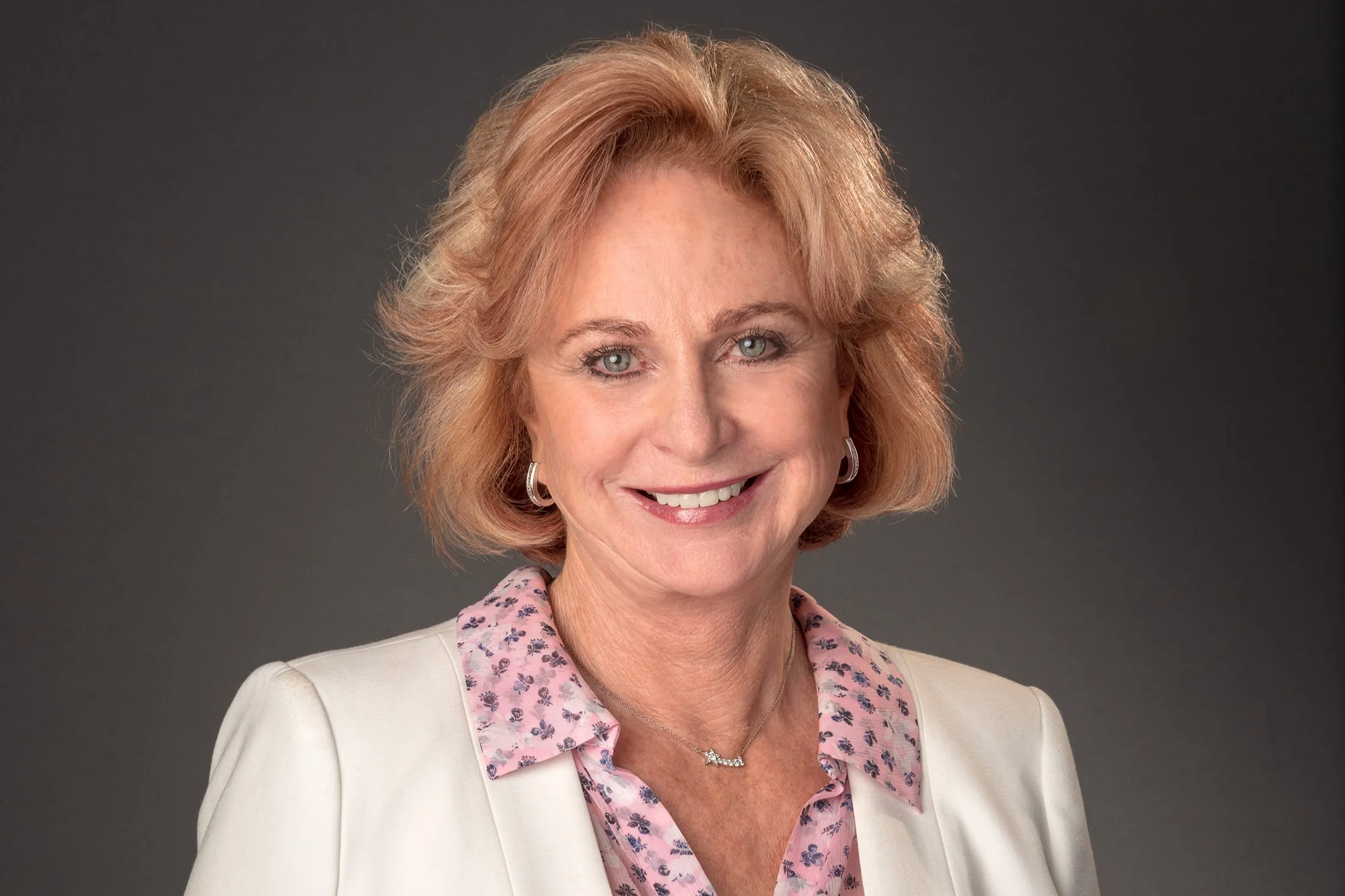
The history of responsible gaming efforts in the gaming industry stretches back almost 40 years. Connie Jones, the director of responsible gaming for the Association of Gaming Equipment Manufacturers (AGEM), explains how RG developed into one of the cornerstones of gaming.

The gambling/gaming industry is often accused of giving “lip service” to responsible gaming (RG) but not actually doing anything about it. I’ve been engaged in this dynamic industry for over 30 years and involved with RG for more than 25 years. During that time, I’ve observed remarkable advancements both on the operator side as well as from the supplier perspective. I’ve always participated on the supplier side, originally with one of the largest, if not the largest, slot machine manufacturers in the world—International Game Technology (IGT). Today I represent most of the game manufacturers as well as other suppliers through my RG role with the Association of Gaming Equipment Manufacturers (AGEM).
In this article I’ll provide a series of events that in my experience led up to industry engagement with RG/PG and you can determine if the gaming industry “Walks their Talk.”
1989
Caesars Entertainment (then Harrah’s Entertainment) was a pioneer in RG and to my knowledge was the first operator to adopt RG practices when they introduced the “Project 21” program in 1989, which educated employees about their responsibility to deter underage gambling and the service of alcoholic beverages to minors. Since 1993, all Caesars Entertainment employees receive RG training.
1996
The National Gambling Impact Study Commission (NGISC), a federal advisory group established in 1996, was tasked to investigate the social and economic effects of legalized gambling across the United States. The commission finished its work and issued its final report in June 1999.
Federal attention to the social impacts of gambling did not go unnoticed by the gaming industry. The National Center for Responsible Gaming (NCRG)—now known as the International Center for Responsible Gaming (ICRG)—was created as an independent 501(c)(3) charitable organization. It was originally established under the umbrella of the American Gaming Association (AGA) to serve as a dedicated funding source for scientific research on gambling addiction. Today it is the premier research body on RG/PG and oversees a grant program through their “Centers for Excellence.”
2001
Jean Brochu, a Quebec lawyer and recovering compulsive gambler, filed a landmark class-action lawsuit against Loto-Québec over addictions linked to video lottery terminals (VLTs). (VLTs can be described as a digital version of traditional slots.) The suit sought hundreds of millions of dollars (initially targeting up to $700 million) to cover therapy, medical treatments, and related expenses for an estimated 119,000 compulsive gamblers in Quebec. Allegations in this lawsuit closely paralleled that of the big tobacco lawsuit.
The operator, Loto-Quebec, claimed that the alleged harms were not their fault but instead a product safety issue and enjoined the three manufacturers who provided the VLTs, one of which was my company. The three manufacturers agreed to support Loto-Quebec with their defense going forward.
Initially it was believed that RG was primarily an operator responsibility since their employees interacted directly with gambling patrons. The Brochu case and others of a similar nature placed a spotlight on the game provider since many of the allegations related directly to game design.
After years of legal battles and a trial that began in 2008, Loto-Québec and the plaintiffs reached an out-of-court final settlement in 2010. Game providers had now been put on notice and began their involvement with RG/PG.
One of the most respected RG advocates at that time was University Nevada Reno’s (UNR) Dr. Bill Eadington who remarked, “as a result of their enlightened self-interest the gambling industry has embraced responsible gaming.” He had a point, but is self-interest necessarily a bad thing?
Game Providers Adopt RG
The Brochu case and others targeting game manufacturers raised awareness of the potential threat to business as well as the need to protect players. As a result, in 1999 I was named director of RG for my company. I was the first person on the supplier side to be assigned this role and had no idea how to proceed so began to attend problem gambling events where I wasn’t always welcome since media had identified VLTs as the “crack cocaine” of gambling. To my knowledge IGT developed the first RG program for a game manufacturer in the U.S. Others soon followed.
Lotteries later joined the RG movement. In 2006, the World Lottery Association (WLA) adopted the responsible gaming principles, and a responsible gaming framework aimed at protecting lottery players around the world. Then, as a member of the National Council on Problem Gambling (NCPG) board of directors, I nominated the first lottery representative to that body who was subsequently elected. Today lotteries in the U.S. and around the world are actively engaged in RG/PG.
Fast forward nearly 30 years and the growth of RG within the industry is astounding. Gaming companies not only support RG/PG financially but frequently have a position dedicated exclusively to RG. My colleagues in RG not only work to implement their company’s RG program but also serve on the boards and committees of RG/PG organizations and are actively engaged in activities and strategies to help reduce harms.
Financial Support
I attended the NCPG Annual Conference in Nashville, Tennessee last month. It is the oldest and largest national conference in its field. The event attracted close to 700 attendees from all aspects of RG/PG which is a dramatic increase from the first conference I attended in 1999 in Detroit, Michigan. These conferences as well as many other RG/PG events are only possible because of sponsorships from the gaming/gambling industry.
The 27th Annual AGEM & AGA Golf Classic presented by JCM Global raised $185,000 for the International Center for Responsible Gaming (ICRG) this year. Over the course of its history, the tournament has raised more than $3 million to help the ICRG continue its vital and groundbreaking research on gambling addiction.
Currently the U.S. casino gaming industry spends $471.8 million annually on RG initiatives. According to data from the AGA, this direct investment has grown by 72 percent since 2017.
More recent members of the RG industry are third party tech companies that specialize in RG technologies which can be incorporated into gambling products to ensure a safe and entertaining experience for player. Playtech’s Bet Buddy, Mentor and Mindway AI are only a few that come to mind.
Members of the gambling industry have worked closely with researchers to facilitate a greater understanding of RG/PG and how to best improve player safety going forward.
Although some jurisdictions are opposed to industry involvement in the creation of RG regulations, I believe that collaboration between the gaming/gambling industry and PG interests is instrumental in developing sound and effective player protection regulations. After all, who knows players better than gaming companies?
Perhaps one of the most frustrating aspects of the gaming industry’s efforts in player protections is the lack of public recognition. Old paradigms die hard and many still view the gambling industry as a predatory business that is taking advantage of the vulnerable.
Gaming companies have stated, “Responsible gaming is just good business.” By protecting players you protect your business.
The information that I’ve provided here is only a snapshot of the industry’s contributions and initiatives in RG. In conclusion it is apparent that the gambling industry not only “walks their talk” but has gone beyond what anyone dreamed of 25 years ago.