A Whole New Ballgame

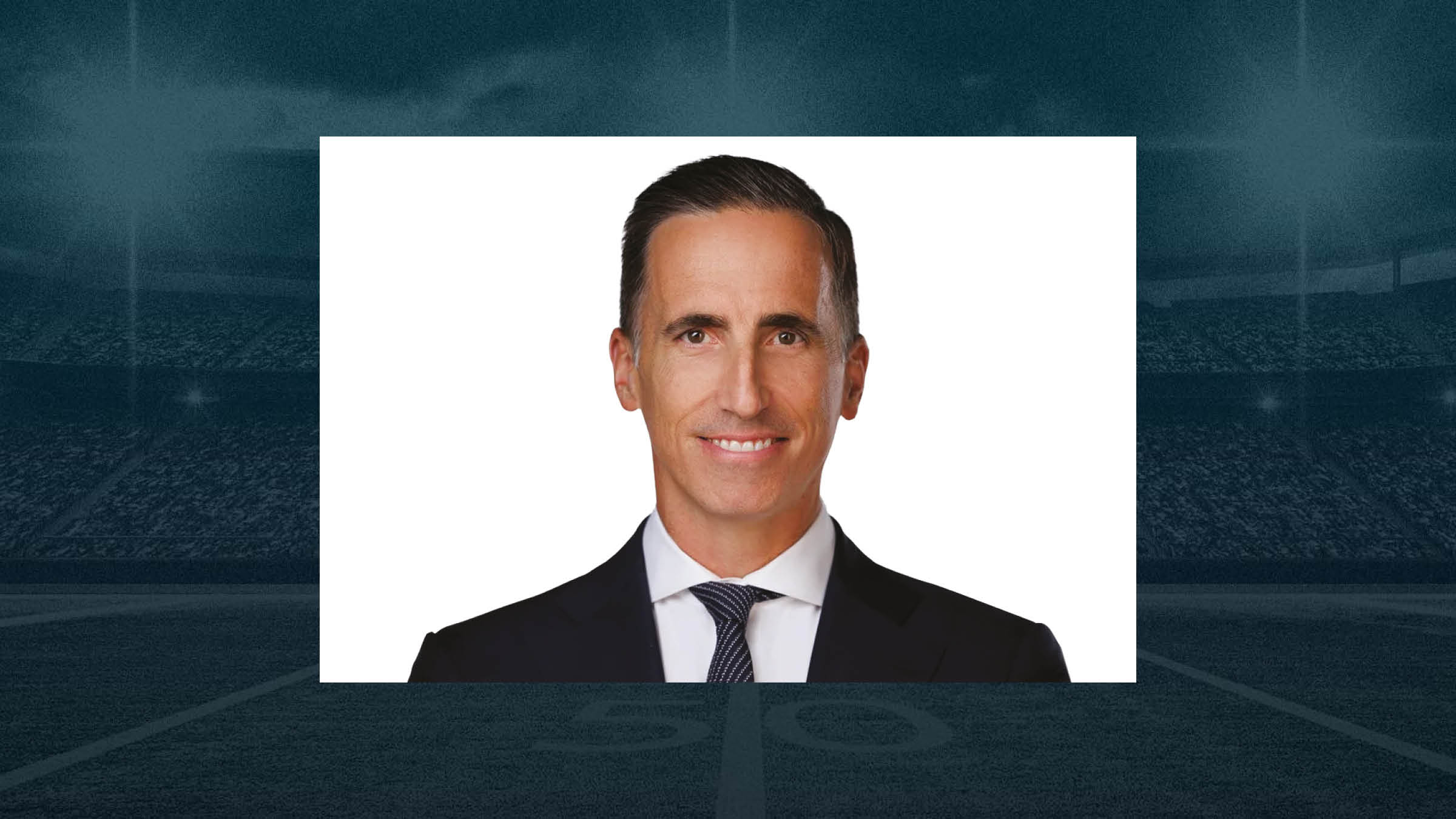
Diplomacy, advocacy and tactical planning are all in a day’s work for Joe Maloney, president and CEO of the Sports Betting Alliance.
Political campaigns aren’t glamorous. They don’t involve hanging out with movie stars, flying first class cross-country or swanky dinners, though movies and TV shows want to portray them that way.
No, political campaigns are often won and lost in small towns, driving a rental car past cornfields or knocking on doors with the hope that someone will open it—not to let their dog snarl at you, but to hear your passion for someone else’s vision.
The willingness to face constant rejection for 10, 12 hours a day, day after day, often in wilting summer heat, is not for the faint of heart. For a young Joe Maloney, a scrappy kid from Western Massachusetts, it was the sort of challenge he could really dive into.
Creston, Iowa—population a shade over 7,500—is in southwestern part of the Hawkeye State. The historic railroad town once housed the largest roundhouse west of Chicago. It is moderately conservative. Maloney, fresh off his work as a legislative assistant for U.S. Rep. Peter Deutsch of Florida, went to Creston as a newly-minted field organizer for the 2004 presidential campaign of Democrat John Kerry. David Barnhart, founding partner and CEO of LSG, an advocacy and public policy organization, hired him.
“I was managing the western 52 counties of Iowa, conservative rural counties that are very different than the eastern part of Iowa,” recalls Barnhart. “(Maloney) went in there and started organizing Creston, literally person by person. He convinced other people to come out and help him. He brought in these interns he played college football with, or that he’d met somewhere along the way. He was getting all this free labor to come in and work for him, because he was so charming and such a good field organizer.”
Kerry won the Iowa caucuses in January 2004, winning not only Creston, but earning 38 percent of the vote over a field of seven other candidates. No doubt, the charming, eager young field organizer played a role. You could say that was the start of Maloney’s success advocating for public policy, a passion since bolstered by his love of “The West Wing.”
It’s a role he continues to refine, in two years as senior vice president of strategic communications for the American Gaming Association and, since December 2025, as president and CEO of the Sports Betting Alliance.
The latter advocacy organization is dedicated to legal, regulated online sports betting and online gaming in the U.S.; member organizations include BetMGM, FanDuel, DraftKings, Bet365 and Fanatics Sportsbook.
Third-Child Mentality
Growing up the third and youngest child in the Maloney household, Joe looked up to his older brother and sister. He also used that spot in the family as a measuring stick, something to aspire to and surpass.
“Truly, there’s a throughline from all of that to the way I am today,” he says. “I continue to describe myself as hard-working and scrappy. And that attitude has persisted throughout my career.”
That scrappiness led to a big break for the former Dickinson College football player. He was studying constitutional law taught by a judge and adjunct professor when the class was invited to meet with U.S. Supreme Court Associate Justice Antonin Scalia in a small group. “It was absolutely fantastic,” Maloney says.
The trip to Washington, D.C. also included some free time, so he went out, had copies of his resume printed and walked over to Capitol Hill. There, he visited as many offices as he could, handing the resume to House and Senate members, letting them know he would be graduating soon. In the pre-cellphone era, Maloney used his parents’ home phone as his contact number.
“When I moved over to the AGA, I thought I knew the business. I did not know the business whatsoever.”
While wrestling with the career decisions—should he pursue his passion for football or politics?—fate stepped in. The day he packed up and moved back to his parents’ house, he checked their voicemail and heard, “Hi Mr. and Mrs. Maloney, this is so-and-so with Congressman Peter Deutsch’s office. I’m trying to track down Joe.”
That lucky break—a message on his parents’ answering machine— started Maloney on his public policy career, including the Kerry campaign.
“I never—really, truly, never—looked back,” he says. “It’s just been a number of lucky breaks throughout my entire career that led me to where I am today.”
Bigger and Better Things
In addition to showcasing his organizational ability, Maloney’s time on the stump for Kerry connected him to Barnhart. After the campaign, Barnhart joined the Dewey Square Group, a D.C. public relations and communications firm, and knew Maloney would be a perfect fit too. They worked together until Barnhart founded his own firm, Locust Street Group. Of course, Maloney followed.
But there was still the dream of working in football. Not long after Daniel Snyder bought the then-Washington Redskins, now the Commanders, Maloney got his chance, becoming vice president of public affairs and strategic communications.
“I was there at a very turbulent period, just after the previous name was retired. We went through the process of a temporary name. We went through a process to identify a new brand, to take the franchise into the future while honoring the past.
“What I found was an organization that was truly ruddered and a leader that was truly ruddered to long-term value creation for the fans and for the region. That permeated throughout the entire organization.
“Were there mistakes? Absolutely, in those moments where sometimes ‘short-termism’ created a little bit of fog. But it was important that we honored the past greats of the franchise, how we thought about revenue generation with sponsors and partners, how we thought about the entry of the club into the sports betting space and market access, and specifically to how those values really anchored our work, developing and building a process to identify the next home for the Commanders.
“It was all focused on long-term growth in service to the fans and the region as a franchise that wins championships and is welcoming to all corridors of (the District, Maryland and Virginia region).”
Always Learning
The 2023 move from the NFL to the AGA was one of the most challenging for Maloney. “My work with the Commanders, particularly overseeing our sports betting portfolio, is dramatically different on the league and team side to the operator side. That was a significant learning curve, because of the difference between those two experiences. I only had to be concerned about how legal regulated sports betting served the Commanders and the (NFL).
“Curiosity, grit and empathy. Those, to me, are the three qualities I try to embody as a leader, that I really try to pull teams forward on.”
“When I moved over to the AGA, I thought I knew the business,” he says with a chuckle. “I did not know the business whatsoever.” But curiosity drove Maloney to understand all sides of the gaming industry.
One of the things that has made Maloney successful across political campaigns to the NFL to advocacy roles with the AGA and now as head of the Sports Betting Alliance has been his curiosity and that legendary scrappiness.
“My experience across politics and then in the private sector helped me understand the types of people that I want to be collaborating with, that I really thrive alongside and under,” he says. “Over my 25- to 26-year career, I really boiled it down to curiosity, grit and empathy. Those, to me, are the three qualities I try to embody as a leader, that I really try to pull teams forward on.
“If we’re not curious, I’d argue we’re letting ‘average’ creep in. A truly curious person is continuing to identify new ways to do something, or is truly seeking out additional information to help them become a better practitioner, or is just someone interesting to be around. Because a curious person is going to reach out and is going to engage.”
Narrowed Focus
With the SBA, Maloney focuses on three key areas: expanding the map of legalized jurisdictions for online sports betting; expanding the map of legalized jurisdictions for iGaming; and then, where they’re already legalized, defending them against market restrictions.
“(Prediction markets) are targeting and advertising and marketing towards your constituents, your residents. So the choice for you is: Do you create and build a sustainable, durable, regulated framework?”
“I’ve been very pleasantly surprised at the ruthless prioritization that our five CEOs and (SBA Chairman) Jeremy Kudon really focus our organization on,” he says. “Our navigational beacons are just laser-focused. It feels like this exciting blank canvas that we can throw a ton of ideas against and say, ‘OK, how is it framed across these three core objectives, and what are we doing to stay tethered to those? How can we continue to be creative and continue to drive that imagination so we can continue to be successful?’”
With the explosion of prediction markets dominating the gaming space, Maloney and the SBA tactfully don’t have a position, as three of their members have launched predication market products, but two have not.
“I discuss this category of gaming as particularly dynamic, as it’s now surfaced across state jurisdictions where we’re seeking legalization, or where we’re defending against or talking about the benefits of legalization that’s already taken place,” he says. “It’s the number one topic across all of our key stakeholders, regulators, elected stakeholders and the media. Period, full stop. It’s all anybody wants to talk about.
“We try to do is communicate the benefits of the state and tribal regulatory frameworks where the Sports Betting Alliance is focused. We try to communicate and equip and be a resource, particularly in non-legalized jurisdictions.
“When we’re asked, ‘Hey, how are prediction markets working in our state right now?’ the answer is pretty simple: they’re working. They’re federally regulated and they are targeting and advertising and marketing towards your constituents, your residents. So the choice for you is: Do you create and build a sustainable, durable, regulated framework like 32 other states have with online sports betting, or 40 states have done in some form with in-person, retail or online sports wagering? Do you legalize it, regulate it, and tax that activity for critical priorities within your jurisdiction?
“Because at a federally regulated level, prediction market platforms are not under any type of duty or obligation to do that with your state’s residents.”
Sense of Optimism
Maloney is in a key position within the gaming industry, but still considers himself a bit of an outsider, a neophyte in this world. “I’m still continuing to learn what I think about when I think about the product that is traditional sports wagering and sports betting as we see it. I think there’s a lot of opportunity ahead with leagues and teams.”
No matter what the next big thing in gaming turns out to be, Maloney seems ready to do what he’s always done: get people on board. It’s no different from knocking on doors in Creston, Iowa or knocking on doors in the halls of Congress. Maloney does everything he can to be the best advocate for his organization.
“At the end of the day,” he says, “I think the greatest compliment anyone could ever say about me is that I am a very hard worker.”