Young Leaders

The Innovation Group and Global Gaming Business present the Class of 2027 for Emerging Leaders of Gaming 40 Under 40
The Emerging Leaders of Gaming 40 Under 40 program, presented by The Innovation Group and Global Gaming Business, recognizes executives under the age of 40 who have already made a significant impact on the industry and their profession.
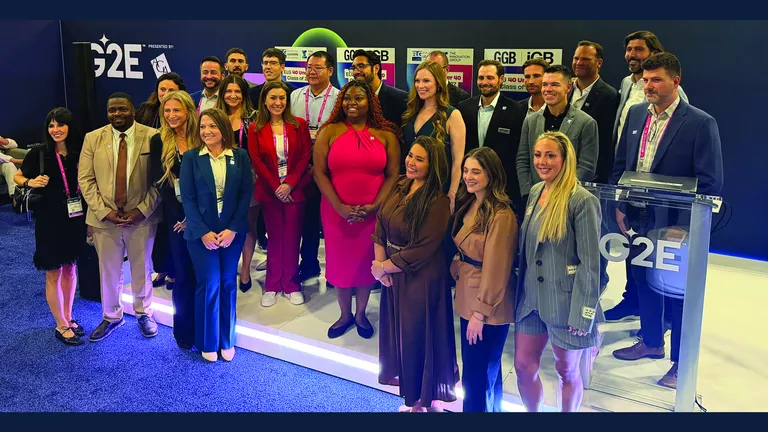
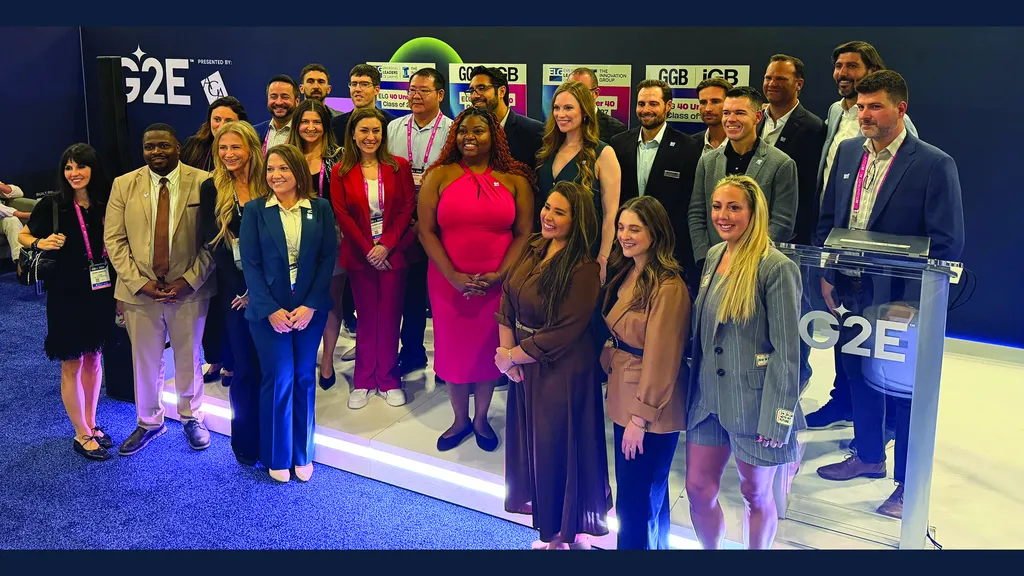
The Class of 2027 for the Emerging Leaders program was recognized on September 30 in a ceremony at the Global Gaming Expo. As usual, it is a diverse group of professionals who have distinguished themselves in a variety of industry disciplines, with each providing an example of excellence that is already benefiting the gaming industry.
Honorees were selected from a diverse, global cross-section of gaming professionals nominated through an open call to be recognized for their achievements and dedication to the industry. This year’s group includes operators, marketers, legal and regulatory professionals, manufacturers and suppliers, tribal gaming leaders, and specialists across iGaming, sports betting, fintech, and academia—reflecting the breadth and evolving priorities of today’s gaming industry.
With hundreds of nominations received from across the industry, the ELG 40 Under 40 selection process was as competitive as ever. “The lasting value of this program is evident in the continued contributions of the people it has recognized,” said Brian Wyman, president & CEO of The Innovation Group. “ELG alumni occupy C-suite roles at leading operators and suppliers, shape policy at regulatory agencies, and are among the most influential voices in gaming today. This year’s honorees join a remarkable community, and we look forward to seeing how they shape the industry in the years ahead.”
Nominations were reviewed and honorees selected by the ELG 40 Under 40 Selection Committee:
- Melissa Aarskaug, Independent Gaming Consultant
- Pam Buckley, Executive Vice President, Global Gaming Women
- Tracy Cohen, Director of Europe, Association of Gaming Equipment Manufacturers (AGEM)
- Alex Dixon, Senior Advisor, GMA Consulting
- Jason Giles, Executive Director, Indian Gaming Association (IGA)
“Looking down the list for the class of 2027, the breadth of leadership and talent is really striking,” said Robin Harrison, global content director for WorldGaming, parent company of GGB. “As gaming evolves rapidly across technology, regulation, customer experience and market expansion, these honorees are helping define the industry’s trajectory. We’re proud to recognize them at this stage of their careers and to celebrate the contribution they are already making across the sector.”
Nominations for the 2028 class of Emerging Leaders of Gaming 40 Under 40 will open in April 2027. Check GGBmagazine.com for details.
Emerging Leaders of Gaming 40 Under 40, Class of 2027
- Kaitlin Brown, Senior Director of Programs and Services, Connecticut Council on Problem Gambling
- Alexandra Clark, Director of Corporate Finance and Treasury, ECL Entertainment
- Desiree Dickerson, CEO & Co-Founder, THNDR
- Andrew Effiong, Vice President of Hospitality, Rivers Casino Portsmouth
- Josh Ellis, Senior Director, Content Capability – U.S. & Canada, Aristocrat Interactive
- Aaron Feinberg, Vice President & Assistant General Manager, The Nash Casino
- Danielle Finn, Director of the Indian Nations Gaming & Governance Program and Associate Professor-in-Residence, William S. Boyd School of Law at UNLV
- Charles Flood, Director, Product Management, DraftKings
- Jackson Floyd, Vice President of Slots, AGS
- Adam Glass, Senior Director of B2B Services, Rush Street Interactive
- Jeana Harper Day, Senior Director of Human Resources, Kentucky Downs
- April Herring, Director of Slot Systems, Choctaw Nation Casinos & Resorts
- Zach Kastelic, Vice President of Legal, GLI
- Michael Klimek, Director of Brand Strategy, Mesquite Entertainment
- Jeremy Kolman, Vice President, Deputy General Counsel, BetMGM
- CJ Landau, Vice President of Slot Operations, Seminole Hard Rock Hollywood
- Lauren Lemmer, Senior Director, Enterprise Compliance, Fanatics Betting & Gaming
- Marina Lima, Chief Social Media Officer, Clever Advertising
- Bethan Lloyd, Partner, Wiggin LLP
- Juan Mariscal, Vice President of Game Design, IGT
- Connor Martin, Attorney, New Jersey Racing Commission
- Brandon Mastromartino, Director & Associate Professor, Institute on Sports Wagering & Gaming, San Diego State University
- Hillary McAfee, Owner & Host, MaxBet Podcast
- Brendan Moore, Vice President, Game Performance & Analytics, Eilers & Krejcik Gaming
- Jasmine Moreland, Director of External Affairs and Responsible Gaming, Michigan Gaming Control Board
- Cíara Nic Liam, Managing Director, Gaming, Entain
- Vasiliki Panousi, Senior Manager, Regulatory Affairs, Kaizen Gaming
- Luka Pataky, Executive Vice President, AI & Innovation, Bragg Gaming Group
- Fiona Power, Founder, Power Room Éire, and CCO, The Unit
- Kyle Ridgeway, President, Wyoming Downs/307 Horse Racing
- Nicole Russo, Operations Director, UNLV International Center for Gaming Regulation
- Lex Scott, Vice President Gaming, ITV Studios
- Lawrence Shizhe Shen, Managing Director, Advantage Partners Consulting
- Todd Stender, Vice President, Product & Operations – Digital Gaming, Mohegan
- Kate Talamo-Hagan, Founder & CEO, Think Traffic
- Melissa Thevenot, Shareholder, Brownstein Hyatt Farber Schreck
- Kaleigh Thompson, Vice President of Business Development, Pavilion Payments
- Shane Thompson, Director of Sales, Corporate Accounts, Konami Gaming
- Alec Thomson, CEO, Arizona Lottery
- Daniel Vyravipillai, Global Head of Gaming, Managing Director, Morgan Stanley
Class of 2027—The first 10
Kansas City, Here I Come
Zach Kastelic, Vice President of Legal, Gaming Laboratories International

At the start of the decade, Zach Kastelic was practicing at a Kansas City law firm litigating workers’ compensation cases in Kansas and Missouri. It wasn’t necessarily what he’d envisioned doing—working in something sports-related—so he changed courses and enrolled in a sports wagering and integrity certificate program through the University of New Hampshire.
That decision ultimately launched Kastelic’s career in gaming. He went from that program to a sports betting startup for about a year, then moved to testing and compliance giant Gaming Laboratories International in 2022.
Less than five years later, Kastelic is an Emerging Leaders of Gaming 40 Under 40 honoree, serving as GLI’s vice president of legal.
It’s a wide-ranging role that includes oversight of “all legal and licensing matters for the GLI group of companies,” Kastelic says. With offices on six continents and a client list that includes regulators, operators and suppliers from more than 700 jurisdictions around the world, there’s no shortage of intrigue for Kastelic and the rest of the GLI team.
“A given day may include a combination of contract review/drafting, KYC/due diligence, litigation and intellectual property management, data privacy, regulatory compliance and other corporate matters,” he says.
“We have a great team and the variety makes it fun.”
GLI is one of the most diverse companies in gaming, and its labs test products from all facets of the industry, from land-based slots to online games, lotteries, race and sportsbooks and more. This has given Kastelic an extremely broad view of the industry in a relatively short amount of time, His goal is to “never stop learning and networking” by getting exposure to as many sides of the business as possible.
Kastelic is still in the Kansas City area, but his life has transformed completely from his early law days just a few years ago. He’s since become a father, with a new career trajectory at a company that’s also embarking on a new chapter.
In June, GLI announced a strategic partnership with CVC Capital Partners, the firm’s first external investor since its founding nearly 40 years ago. The partnership will create “new opportunities for growth and innovation,” according to GLI CEO James Maida, “allowing GLI to invest even more in the success of the future of the global gaming industry as well as investing in related and adjacent sectors.”
For those just starting out on their career journeys, Kastelic recommends finding new ways to become “more well-rounded and valuable to your current or future employer.” This may include sitting in on other department meetings, taking on new tasks or going to new events.
“Even if you’re not in your forever role at your forever employer, if you’re able to continue growing your knowledge base and network, both internally and externally, it’ll go a long way in your career development,” he says.
—Jess Marquez
Passing the Mic
Hillary McAfee, Host, MaxBet Podcast

Hillary McAfee has built her career on a simple idea: some of the most interesting voices belong to people nobody has asked to speak.
As host of the MaxBet Podcast, a writer for CDC Gaming Reports and an independent marketing consultant, McAfee spends her days finding those people and handing them a microphone. “I really just want to give people a microphone or a stage who don’t usually have it,” she says. “People who are typically operating in the background, who are still creating really cool things.” And her idea is resonating; she’s just been named Industry Influencer of the Year at the Global Gaming Awards.
Her own path started far from the casino floor. Raised in Stillwater, Minnesota, McAfee moved to Colorado on her own at 17, right after high school and right in the middle of the recession. She built a photography business and, as social media emerged as a powerful marketing tool, started using platforms like Instagram to build her own brand and audience.
What began as a way to market herself developed into a strong understanding of digital marketing, content creation and audience engagement. She turned that experience into a business, building a portfolio of clients and managing their social media marketing and digital presence.
During the pandemic, McAfee partnered with the Colorado Hosting Asylum Network to house asylum-seekers, mostly pregnant women who had arrived in the country alone. When she began sharing their experiences on TikTok, her videos gained viral attention, garnering millions of views and helping raise money globally to support the women as they worked to get on their feet.
Relocating to California, McAfee was looking for a break—what she describes as “a basic, boring job.” By then, she had already spent years working independently in marketing, running her own business and managing social media strategy, content and digital marketing for a portfolio of clients. She landed instead with a slots YouTuber, an opportunity that would introduce her to the gaming industry. Asked during her interview if she knew anything about gaming, she answered, “No, but I can figure anything out.” She recalls telling them, “I’m resourceful. I’m resilient.”
Hired to run social media, she quickly rose to lead marketing as the company launched several brands, and grew its newsletter to roughly 100,000 subscribers. Working with both operators and suppliers was, she says, “such a crash course in the industry.”
Surrounded by people with decades of experience, McAfee set out to build a network fast. She turned to LinkedIn and Global Gaming Women, which she calls the two biggest catalysts of her career. She later went out on her own as a consultant, drawing on what she calls a “niche little bridge view” of what players want, what suppliers need and what helps operators.
A shared panel at G2E led to a guest spot on MaxBet with Mike McKiski, then a co-host’s chair. When McKiski left for an executive role at Bluberi, McAfee took over the show. She wants it to be the conversation people across the industry choose for their commute, spanning land-based, iGaming, sports betting and international markets. Veteran land-based executives tell her they don’t recognize half her guests, then admit they’re completely fascinated by them. Brands have offered to buy the show as an in-house channel; she has declined. “I can’t be bought,” she says. “Remaining independent media is super important to me.”
She carries the same mission off the mic. On the Global Gaming Women Events Committee, McAfee’s favorite job is picking panelists—especially women who have never been on stage or don’t think they’re qualified. Her studio sits at UNLV’s Black Fire Innovation, where students can use the space. She also teaches Division I female athletes in the EmpowHER Rebels program how to build a professional presence online.
“You don’t have to solve world hunger,” she says. “If you can just add a little bit of value, that’s enough.”
McAfee credits a long list of people who have helped shape her career, among them Lauren Bates, Korbi Carrison, Stephanie Bruckner, Magnus Olsson, Brianne Niemic, Erica Kosemund, Mike McKiski, Pamela Buckley, Julia Weygandt, Fiona Power, Shawn Fluharty and Melissa Aarskaug. “I know I’m forgetting about a million other people I could list here,” she says. “I couldn’t pick just one.”
Some of them offered advice, introductions and opportunities without being asked. Others were people she reached out to for advice along the way. She’s grateful for how willing people in the industry have been to help, and hopes to do the same for others coming up behind her.
Her advice to young people, and young women especially, is to stop waiting to feel ready. “There’s for sure someone out there with half the amount of talent getting paid twice as much as you, so you’re probably fine,” she says.
Her mantra: “If anyone’s going to try, fail and try again, it might as well be me.”
As for what comes next, McAfee has no five-year plan and prefers it that way. She has a clear strategy, though, focused on steady growth, expanding MaxBet’s global presence and developing some exciting partnerships on the horizon.
“I love not knowing what the next six months is going to bring,” she says. “The minute I stop adding value is when it’s time to hang up the mic.”
—Brian Wyman, The Innovation Group
‘The Power of Showing Up’
Kaitlin Brown, Senior Director of Programs and Services, Connecticut Council on Problem Gambling

Early in her career, licensed addiction counselor Kaitlin Brown focused on drug and alcohol dependencies. But with the rise of legal gambling in Connecticut, she increasingly moved to the forefront of services for gambling addiction.
In 2018, the U.S. Supreme Court overturned a longstanding ban on sports betting, ushering in a new era of gaming with a ready market. Sports betting grew to include onsite betting and proposition bets on an endless array of individual plays. For eight states, the next iteration included online casinos—gaming in your living room. Connecticut was among them. In 2021, state lawmakers approved both sports betting and online gambling.
“I wouldn’t say one is necessarily more harmful than the other,” says Brown, now senior director of programs and services for the Connecticut Council on Problem Gambling. “The potential for harm depends on multiple factors: frequency, speed of play and individual susceptibility.
“Sports betting has received a lot of attention, particularly around younger males. But online casino gambling has flown under the radar—there often isn’t a natural stopping point, like the end of a sporting event.”
In Connecticut, she adds, “We’ve seen how quickly the landscape has changed since online gambling and sports betting became available. And we’re still learning about the implications.”
Brown’s background is in psychology, clinical mental health counseling and addiction. As an undergraduate at Sacred Heart University in Fairfield, she worked in an inpatient mental health and substance misuse program that also served people with gambling disorders. The subject wasn’t covered in her coursework, so she made an independent study of gambling harms to help treat clients. She discovered that many people understand how substance-related problems can develop, but often struggle to recognize that gambling can cause similar devastation.
After several years in that program, she worked as a therapist in two outpatient gambling treatment programs and became certified as an International Problem Gambling Counselor, providing direct services to individuals experiencing harm and affected family members. She obtained a master’s degree from Western Connecticut State University.
“After 15 years in the field I remain engaged, because there’s always more to learn,” Brown observes. “We now know more about risk factors, co-occurring conditions, gambling products, influence on behavior and approaches to prevention and treatment. This evidence has helped move the field toward more informed, evidence-based practices. But we still have much to learn.”
Among her mentors is Susan McLaughlin, former primary prevention service coordinator for the state Department of Mental Health and Addiction Services, who introduced her to the world of problem gambling prevention and helped her see the larger impact. “She taught me some of the most important lessons I carry with me in my career,” says Brown. “She showed me that getting people to talk about problem gambling often starts with finding the right door to walk through.”
Importantly, McLaughlin emphasized “the power of simply showing up, joining advisory groups and teams and making sure gambling is part of the conversation. A lot of the prevention work I’m passionate about today and the people I get to collaborate with can be traced back to my time spent with Susan and the time she invested in me. I feel incredibly grateful that this field has found its way into my life.”
The mother of three young children enjoys traveling, photography and being a dance mom. On the work front, she is fully committed to her advocacy role for those who struggle with gambling addiction.
“We may never eliminate the risk of harm entirely,” says Brown, “but continued research can help us inform people earlier, identify warning signs sooner, reduce risk and connect people with support before a problem becomes a crisis.”
—Bill Sokolic
Growing with the Industry
Jeana Harper Day, Senior Director of Human Resources, ECL Entertainment
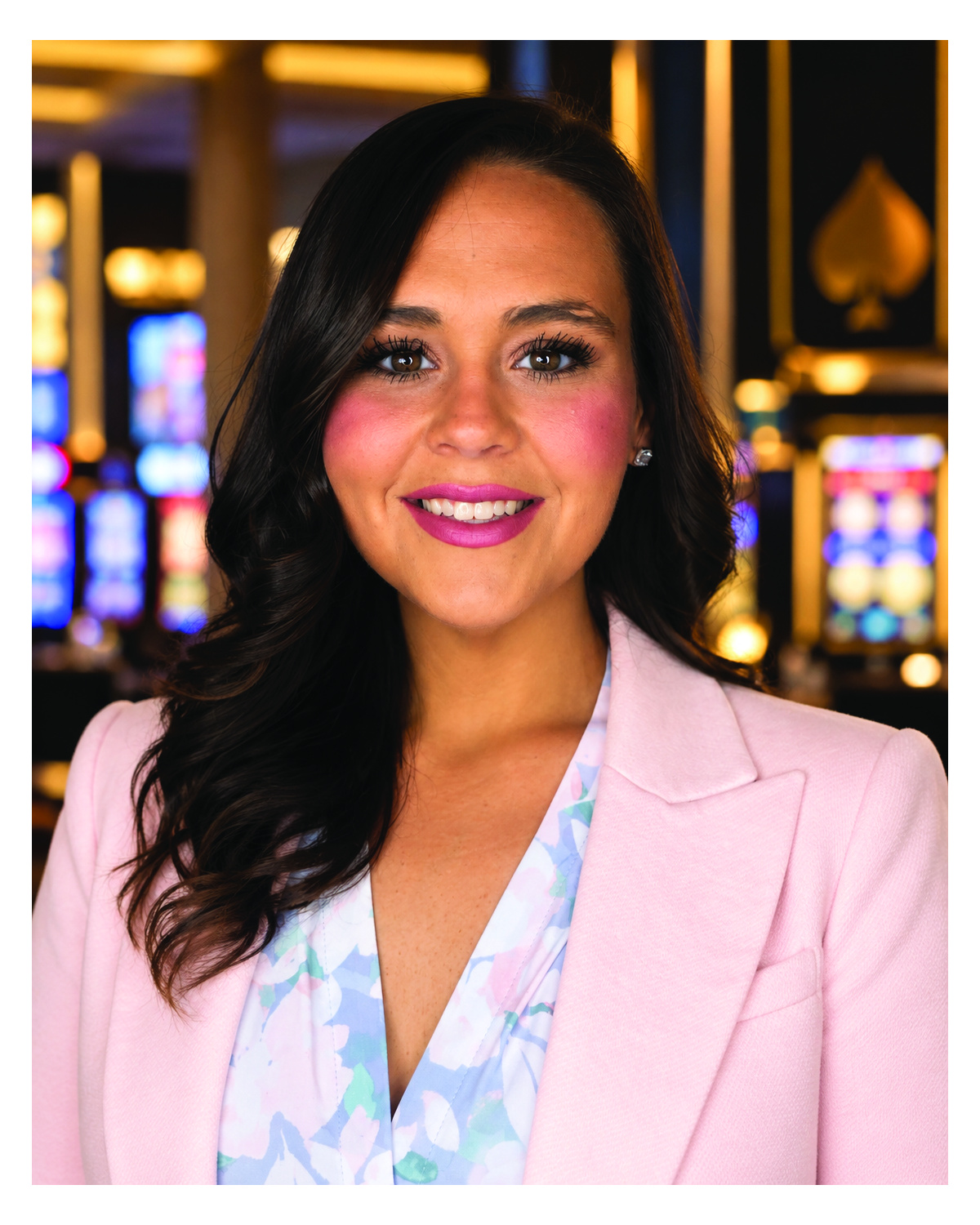
Growing up in small-town Kentucky, Jeana Harper Day never dreamed of a career in gaming. In her community of roughly 2,000 people, gaming was hardly an industry at all. When she arrived at Western Kentucky University, her sights were set on broadcast journalism and becoming a news anchor.
That plan changed, as plans often do. A move into business management eventually led her to human resources and a position about 20 miles down the road, at Kentucky Downs.
What began as a part-time internship between classes quickly became a full-time job, and ultimately a career. Day’s growth coincided with the transformation of Kentucky’s gaming industry itself. When she started, historical horse racing was still unfamiliar to many Kentuckians and a far cry from the gaming product it is today. As the industry evolved, so did her responsibilities.
That evolution came with an unexpected crash course in leadership. Still early in her career, when Covid arrived, Day suddenly found herself navigating issues that even seasoned HR professionals had never encountered. Almost overnight, shutdowns, layoffs, unemployment, safety protocols, return-to-work policies and constantly changing regulations became part of the job. Following the property’s reopening, she was promoted to HR manager and, for a period, effectively operated as a department of one.
The experience forced her to develop something no classroom can fully teach: confidence.
“One of the biggest challenges was learning to trust myself,” Day says. Working alongside executives with considerably more experience required her to find her voice while accepting that nobody had all the answers. Strong work ethic and adaptability helped, but she points equally to relationship-building, emotional intelligence and the ability to understand people while guiding them through change as critical to her advancement.
She didn’t make that journey alone. Former ECL Entertainment COO Dan Roy became an important mentor, recognizing Day’s potential and giving her opportunities before she was entirely convinced she was ready for them. Roy brought an operator’s perspective that helped shape how she viewed HR. Hilary McClain of McClain Resources provided another important influence, working alongside Day for six months after onboarding with ECL Entertainment and helping translate her education into real-world leadership. Day credits both with changing the trajectory of her career.
Their guidance also shaped the type of leader she wanted to be. Rather than allowing human resources to become what she calls a “paperwork administrator’s office,” Day has worked to make it a strategic partner that understands the operating business well enough to align its people strategy with where the organization is going.
For all the growth in her own career, Day says some of her greatest satisfaction comes from seeing others develop. Company milestones and expansions are rewarding, but watching the people who grew alongside her advance has become a greater measure of success. It’s also a continuation of the investment others once made in her.
Day’s advice to the next generation reflects that experience. Gaming has rich traditions worth preserving, but the workforce, customers and industry itself continue to change. Successful young leaders, she believes, need to be adaptable and willing to challenge the way things have always been done without losing sight of what made the industry successful in the first place.
For Day, being named to the 40 under 40 list is something of a full-circle moment—from college intern to senior leader in the same rapidly evolving sector. But she’s not finished evolving with it. Her next step is to continue expanding beyond the traditional boundaries of HR, influencing culture, leadership, growth and broader business strategy while continuing to build the people who will eventually follow her.
—Chris Irwin, The Innovation Group
Wise Counsel
Melissa Thevenot, Attorney and Shareholder, Brownstein Hyatt Farber Schreck

In 2014, when she entered the St. Louis School of Law at Washington University, Melissa Thevenot had not settled on a career path. But coursework on Indian gaming law sparked her interest, and soon led to a summer internship in the legal department of the Oglala Sioux Tribe in South Dakota. Her interest deepened with an internship at the Office of Indian Gaming in Washington, D.C.
“I left law school knowing I wanted a career working on issues that matter to tribal nations,” recalls Thevenot. “After graduation, I gained invaluable experience on Indian gaming law matters at Anderson Indian Law and Homer Law in D.C.” From there, she joined the National Indian Gaming Commission as a staff attorney, working in close proximity to her hometown of Brunswick, Maryland, a “small railroad town on the Potomac River.”
She feels her next step was a logical progression: Atlantic City, where she joined the firm of Brownstein Hyatt Farber Schreck.
“I believed then and still believe that commercial gaming can be a powerful way for tribes to diversify and build on the success of their gaming enterprises,” says Thevenot, now a shareholder with the firm, specializing in Indian gaming law and policy as well as corporate law. In 2020, she was involved in the Eastern Band of Cherokee Indians’ establishment of EBCI Holdings, LLC, developed to enable the North Carolina tribe to acquire interests in commercial gaming properties and sports betting partnerships involving tribal stakeholders.
At the time, in the aftermath of the Supreme Court decision that struck down PASPA, sports wagering was taking off across the country. That prompted the growth of the law firm well beyond Atlantic City and outside the U.S.
“Gaming regulation is intensely jurisdiction-specific, but our clients’ businesses and transactions are not,” Thevenot notes. “A big part of my practice is bringing those pieces together, coordinating regulatory strategy across jurisdictions so clients can move forward efficiently without losing sight of the larger business objectives.”
Take the 2025 acquisition of IGT’s Gaming & Digital business and Everi Holdings by Apollo Funds, valued at $6.3 billion. A deal of that size and complexity required regulatory approvals across numerous gaming jurisdictions, each with its own requirements and timing, Thevenot says. “I helped coordinate the multi-jurisdictional regulatory strategy and approval process, working with local counsel and regulators to anticipate issues and keep the various regulatory workstreams aligned with the transaction. The deal closed in under a year. It was a massive team effort with a great result.”
New York is now on the cusp of full-service casinos around New York City. Again, Thevenot will be there. “New York is already part of my practice, and I’m excited to see that work grow with the downstate casino expansion,” says the attorney, who relaxes in her rare down time doing Pilates and taking care of two energetic chihuahuas. “It’s one of the most significant land-based market openings in years, and I’m looking forward to helping more clients navigate it.”
—Bill Sokolic
Be Our Guest
Andrew Effiong, Vice President of Hospitality, Rivers Casino Portsmouth
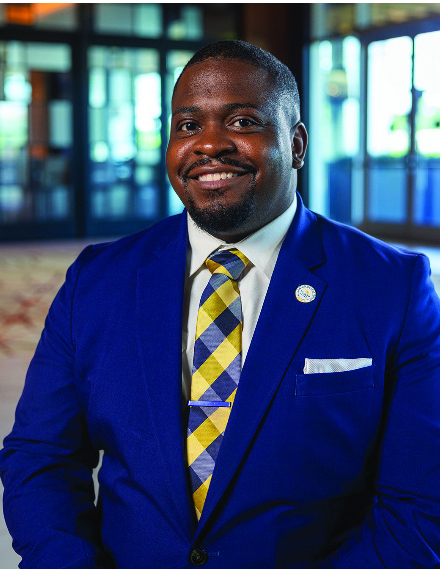
Chance plays a leading role in gambling, so it’s no wonder chance played a role in Andrew Effiong’s entrance into the casino resort industry. “My introduction to gaming really happened by chance,” he says.
While in college at Temple University, majoring in secondary education and social studies, Effiong worked at the local Apple Store. There he met Tom Reilly, then vice president of sales for Bally Technologies.
“Tom opened the door for me to enter the gaming industry,” says Effiong, “and that opportunity completely changed the direction of my career.”
Effiong immersed himself in the business, with all its complexity. “A casino brings together gaming, hospitality, technology, food and beverage, marketing, finance and entertainment—all under one roof. I realized pretty quickly that there was always something new to learn and another part of the business to understand.”
Hospitality is the heart of the experience, he believes. “Guests may initially come for gaming, but everything around that experience—how they’re greeted, what they eat, how quickly they’re served, the hotel experience, technology and how problems are resolved—determines whether they come back. My role is to connect those pieces and make sure the entire property experience feels seamless.”
In the early days another Bally’s veteran, Bill Bachman, now director of consulting and gifting for Light & Wonder, took Effiong under his wing and taught him about the marketing side of the business, including player reinvestment and the psychology behind player behavior. The two worked together on the first iteration of the gifting solution Player Boutique, launched at del Lago Resort & Casino in Waterloo, New York.
“Bill helped me understand gaming from a much broader perspective,” says Effiong. “He continues to be someone I’ve learned from throughout my career.”
Roy Corby, general manager at Rivers Casino, was also pivotal in Effiong’s advancement, urging him to think bigger. “Roy gave me the freedom and trust to implement changes that I believed could help the property grow,” says Effiong, now vice president of hospitality at Rivers Portsmouth in Virginia. “That confidence allowed me to stretch myself as a leader, take on bigger challenges and become more comfortable making decisions at an executive level.”
The growth of online casinos will make hospitality even more important, Effiong says. “Online gaming can make gaming more convenient, but it can’t fully replicate the experience of being on property.” Casinos must give guests compelling reasons to visit in person—great restaurants, entertainment, hotels, personalized service and memorable experiences, he adds. “The physical property becomes less about simply providing access to gaming and more about creating an experience guests can’t get from their phone. The winners will be the operators that figure out how to connect the digital and physical experiences. If a guest is interacting with your brand online, the property should be able to recognize that relationship and make the in-person experience feel even more personalized.
“I’ve always focused more on building a broad enough skill set that I could adapt as opportunities change,” Effiong continues. “My career has crossed technology, gaming operations and hospitality, and I think that versatility has been one of my biggest advantages. I’ve always tried to keep learning, stay curious and put myself in positions where I could contribute in more than one area of the business.”
It’s all been a series of challenges for a young man who moved to the United States from Nigeria with his father and siblings so the family could better itself. Clearly, Effiong has risen to those challenges.
—Bill Sokolic
Making an Impact
Bethan Lloyd, Partner, Wiggin LLC
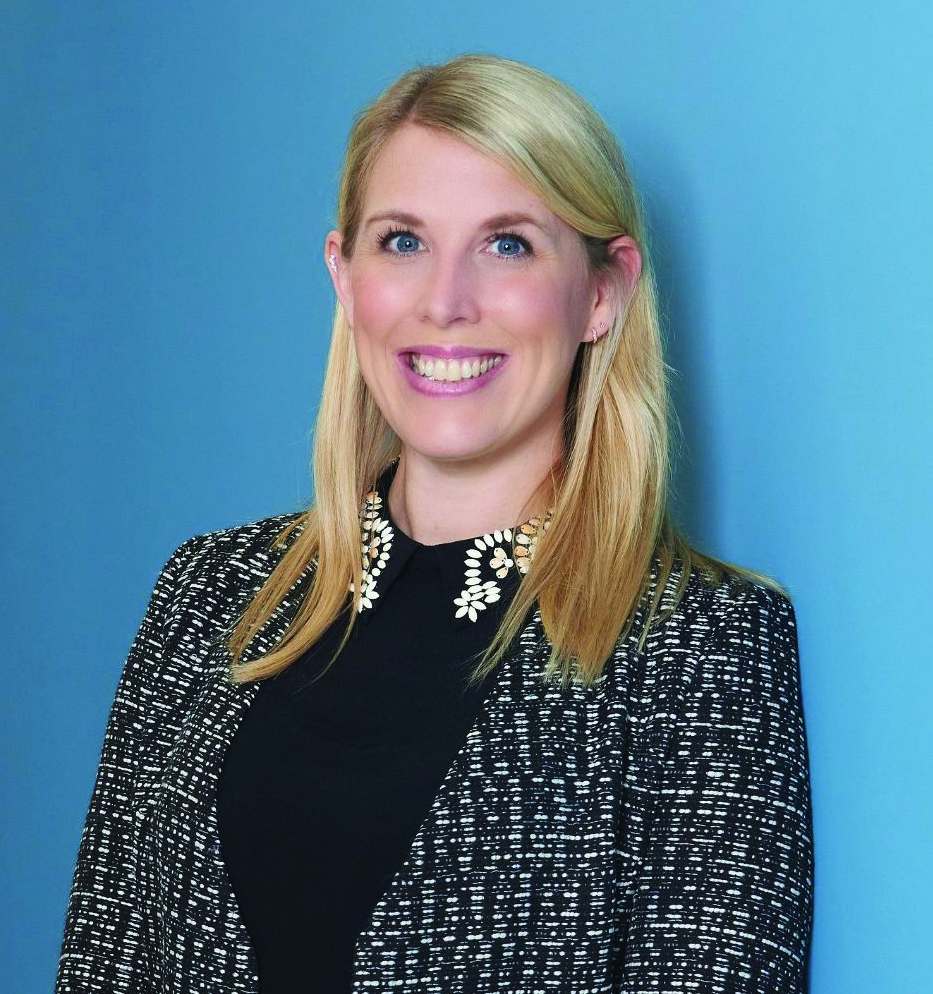
Bethan Lloyd has earned her place among the rising leaders of gaming.
She joined the industry in 2019 as group legal counsel at William Hill, later became senior group legal counsel, then moved to U.K.-based law firm Wiggin LLC in 2022. Lloyd was promoted to partner at the firm earlier this year, specializing in commercial and regulatory matters for the gaming, sports, media and digital infrastructure sectors.
In addition to her legal work, Lloyd was crucial in bringing Global Gaming Women to Europe, and now serves on GGW’s International Committee.
Despite her impressive rise, Lloyd says the gaming sector wasn’t a long-planned career destination. Her background is as a commercial IP and technology lawyer, having worked as a trainee solicitor in that field at DLA Piper. However, after a call from a friend at William Hill, she made the switch. And soon, she grew to enjoy the sector.
What made her stay? In her view, it’s the people.
“It’s a very close community,” she says. “It’s the biggest shame that gambling has such a bad rep in the public, because when you look at the people who are making it work and happen, for the most part they’re really good people.
“And legally, it’s fascinating, because we’re in a multi-jurisdictional environment,” she adds. “We’re subject to regulatory change, we’ve got black-letter law, we’ve got commercial agreements. There’s so much going on that I’m never bored.”
Lloyd’s work with Global Gaming Women offers a clear example of her efforts to make a wider industry impact. Her focus is on building networks, enabling peer support and providing access to mentors and senior women across the sector.
“There’s a real power in female relationships and being able to have a space where women can share their experiences, talk to each other, learn from each other,” she says. “That, for me, was one of the biggest aims for bringing GGW over to Europe, to create those spaces where women can come together and see what other women are doing, which they may not be seeing in their own organizations.”
While the proudest moment of her career so far is making partner at Wiggin, Lloyd fondly remembers an experience from her time at William Hill, when she participated in a workshop with the operator’s trading team in Leeds. That day, she says, was “transformative” in both understanding and finding enjoyment in the gambling sector. As a result, her top advice for aspiring lawyers is to find something they enjoy, then speak to those working in that field.
“My advice to all young lawyers who want to get into any discipline is to network—it’s the most important thing. Find something you love with people you want to deal with.
“I wouldn’t be selling gambling as a profession to somebody who doesn’t like it or want to do it. You need to have an interest. Then build your network—not just with lawyers. Build your network with people who also love it, who are doing it, who are designing the tech, who are doing the marketing campaigns, and build it up that way.
“My advice is, if you don’t want to be bored, and you want to have a multidiscipline practice, yes, gambling is definitely the right industry.”
—Kyle Goldsmith
Exerting Her Influence
Marina Lima, Chief Social Officer, Clever Advertising
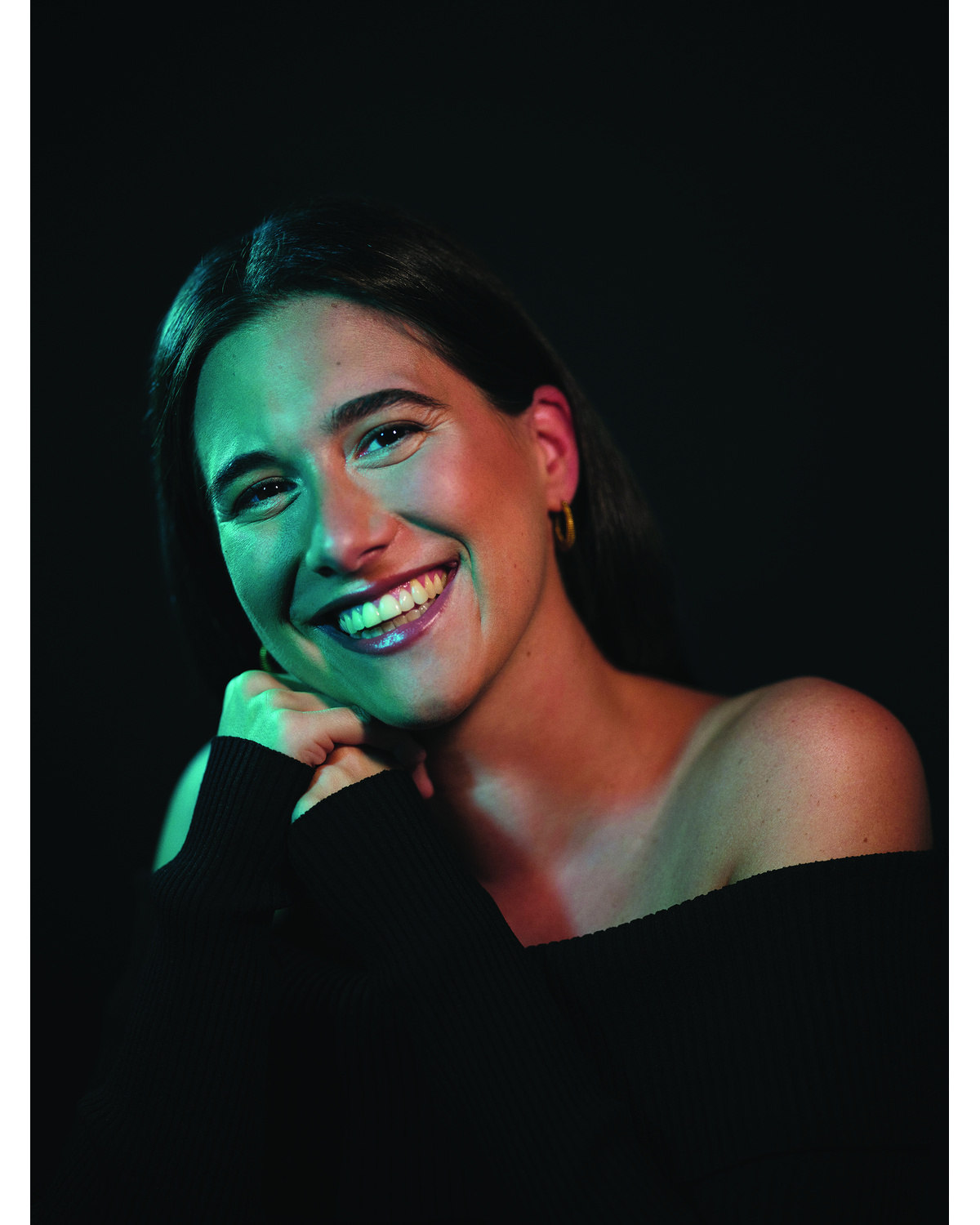
With a bachelor’s degree in international relations from Portugal’s University of Minho, Marina Lima developed a broad view of the world and how people, cultures and institutions communicate. But she always set her sights on a career in marketing. As she learned, the two interests are complementary.
“Marketing was always the area that attracted me most,” says Lima, now chief social officer for Porto-based Clever Advertising. “I was fascinated by how a brand could connect with people, change how they see something and make them act.”
Lima earned a master’s degree in marketing and strategy and wrote her thesis on “femvertising,” the use of female empowerment messages in advertising. Written in partnership with Professor Beatriz Casais, it “won the best paper award at the ICIEMC 2016 international conference,” she says. “The research taught me something I still use every day: How an audience reacts to a message matters as much as the message itself.”
Lima first encountered iGaming working as a sponsorship account manager for the SC Braga Football Club in Liga. “That was my first contact with the industry. I saw how fast-moving, data-driven and creative it was. And that is what eventually led me to Clever Advertising and work across the full affiliate ecosystem.”
The agency gave Lima the opportunity to see the whole picture, test assumptions, and take the helm, with ongoing support. “From early on, Clever trusted me with real responsibility, often before I felt completely ready for it,” says Lima. “That trust has been one of the biggest drivers of my growth. Any recognition I receive, including (the 40 Under 40 designation), is shared with them.”
Lima is proudest of her success with Solverde.pt, the online brand of Solverde, one of Portugal’s best-known gaming groups. “I’ve worked on the account since the very beginning, so I’ve had the chance to watch it grow and to grow with it.” She has worked in almost every corner of affiliate marketing: influencer partnerships, paid advertising, SEO and media buying. “Working on all those channels at once gave me a real 360-degree understanding of how they fit together and how each one drives results for the brand.”
Lima cites three mentors on her professional path. Clever COO Marcos Oliveira “taught me to be rigorous, to look at the data and to keep improving. José Panzina, our CEO, has always pushed me to think bigger, take ownership and trust my own judgment.” Chairman Luís Rodrigues “has given me a long-term, strategic perspective on the industry and on what it takes to build something that lasts. Each of them, in a different way, gave me room to grow and the confidence to take on more responsibility.”
In the fast-paced iGaming world, the Clever team strives to see around corners. “Markets mature, especially regulated ones like Portugal, where the main players are established and the rules are clear,” says Lima. “That’s exactly why you have to stay ahead.”
The sector will become more of a niche market in the next decade. Audiences will be more segmented, regulation will evolve, and the one-size-fits-all approach will lose ground to more targeted, relevant and responsible communication. “We’ll all have to adapt, but I see that as a good thing,” Lima observes. “It will reward the brands and partners who really understand their audiences and build trust with them.”
Some refer to Lima as an iGaming influencer. She says influencer affiliation is more correct. “I specialize in identifying marketing personas: understanding who they are, what they enjoy, where they spend their time online and, most importantly, who they trust. Once I understand that, I look for creators who already have that trust. That might be a streamer on Twitch or a creator on Instagram. Then we build content together that feels natural to their audience, because people can tell straight away when something feels forced.
Each creator has its own affiliate links and promo codes, so Clever’s team can see exactly which person and which campaign brings results. “That lets us invest more in what works and quickly adjust what doesn’t.”
Influence only exists because there’s trust between a creator and their audience. If that trust is misused, it’s gone very quickly, for the creator and for the brand.”
In an industry like this, that responsibility is even greater. “Compliance is the first step for me, not the last,” Lima asserts. “I only work with creators who respect the rules, and every campaign is checked before it goes live: proper disclosure, the right audience, content that follows each market’s regulations and the platforms’ own policies.”
The goal isn’t to push people into anything, she says. “It’s to reach adults who are already interested in this kind of entertainment through someone they already trust in a way that’s honest and responsible.”
—Bill Sokolic
Both Sides of the Line: Bridging Academia & Industry
Brandon Mastromartino, Director, Institute on Sports Wagering and Gaming San Diego State University; Principal and Founder, Experiential Insights

Brandon Mastromartino has made a career of understanding sports fans, first for teams and sponsors and now for the gaming industry. He’s an associate professor in San Diego State University’s L. Robert Payne School of Hospitality and Tourism Management, directs its Institute on Sports Wagering and Gaming, and runs Experiential Insights, a research advisory firm that studies sports fans and bettors for operators, teams and media partners.
The Canadian-born Mastromartino earned a degree in media and communications from the University of Western Ontario before heading to the University of Georgia for a master’s in sport management. There he focused on the consumer behavior and psychology of sports fans. He shared his graduate work with sports teams and companies he thought could use it, and the Florida Panthers took a chance on him, hiring him as a marketing analyst.
“As a kid growing up in Canada, to work for an NHL team—that’s kind of a dream,” he says. A year later, that role led to Octagon, where his crew researched how corporate sponsors could best activate their partnerships and engage fans.
Side projects from those years convinced him he didn’t have to choose between academia and industry. “I couldn’t really decide which one I wanted to do more,” he says. “I can go the academic route and build up a business on the side and tackle problems that I’m interested in.” He finished his Ph.D. in sports management and policy and taught at Georgia, Southern Methodist University and the University of North Texas before arriving at SDSU.
The move to San Diego brought him into gaming. Colleague Kate Spilde, a veteran of the tribal gaming field, saw a need for research where sports and gaming intersect. “It’s a whole different field, a totally different industry,” Mastromartino says. “But the legalization of sports betting has brought these two massive behemoths together.”
Since then, he’s published more than 30 peer-reviewed articles, joined working groups with the International Center for Responsible Gaming and the National Council on Problem Gambling, and partnered with the American Gaming Association and the Sports Betting Alliance.
His proudest recent achievement is launching the institute, now just over a year old, which has drawn interest from operators, regulators and faculty across law, economics and public health.
In his career development course, Mastromartino passes along the lessons that got him started. Many jobs are never posted, he tells students, so they need to share their work with the people it could help, framed around the problems those companies face rather than a request for a job.
“You can’t just knock on doors,” he says, and cites the Panthers story as proof. In that case, “Only one responded. But it only takes one.”
— Jack Goodin, The Innovation Group
Building Policy, People & the Future of Gaming
Jasmine Moreland, Director of External Affairs & Responsible Gaming, Michigan Gaming Control Board

For Jasmine Moreland, some of the biggest moments of her career have begun with a simple thought: might as well try. Saying yes to unfamiliar assignments has taken her from an unexpected start in public policy to helping shape Michigan’s gaming industry.
Today, Moreland is director of external affairs and responsible gaming at the Michigan Gaming Control Board (MGCB). Since joining the agency in 2020, she has led work spanning legislative advocacy, tribal relations, responsible gaming and communications. Along the way, she’s learned to trust her voice and help other professionals find theirs.
Her path began with someone recognizing potential she hadn’t yet seen in herself. Referred to the policy director at the Michigan House of Representatives for a receptionist position, Moreland instead found herself being considered for a policy advisor role after the director reviewed her resume and got to know her.
“The rest is history for my career in gaming,” she says.
On policy staff, Moreland accepted an assignment covering the House’s Regulatory Reform Committee, despite having no experience in the area. That decision led to her involvement in the gaming bills that became Michigan’s new gaming acts.
Later, an interview in the governor’s office resulted in an offer for a job she didn’t know existed. She nearly said no, but eventually accepted and helped get gaming legislation across the finish line. Those experiences also gave her an understanding of the MGCB’s work, making its legislative opening a natural next step.
When opportunities to become a manager and then a director there arose, Moreland again chose to try. Managing staff, responsible gaming and tribal relations presented unfamiliar responsibilities, but she was willing to learn.
That willingness didn’t always come easily. Early in her career, she was often the youngest person in the room, one of only a few women, and frequently one of the only African Americans. Imposter syndrome made her question whether her contributions were welcome.
Mentors helped her gain confidence. In 2020, when she started her new role as director of external affairs and responsible gaming for MGCB, she made a commitment to speak up. “I realized that staying silent wasn’t just a disservice to me, it was depriving everyone else of good ideas,” she says.
Moreland describes the qualities behind her advancement as “openness and persistence.” A rejection prompts her to ask questions rather than abandon an idea. She wants to understand the concern, work through it and find a way forward. Mentors also taught her to include the people affected by a decision, or find a way to speak on their behalf.
Helping people through policy is what drew her to pursue a master’s in public administration rather than a law degree. Her work has included helping draft and pass expungement, gaming, and Raise the Age legislation, along with legislation preserving Michigan’s charitable gaming structure.
She sees particular meaning in responsible gaming work, including education for parents and young people. As the industry grows, she believes emerging leaders will find opportunities in programs that connect policy, technology and player support. Spearheaded by Moreland and her team, Michigan’s partnership with Gamban, which provides residents with free licenses for gambling-blocking software, is one example of how technology can support that work.
Moreland’s current priorities include making self-exclusion easier to access, removing barriers to gaming research and strengthening protections against illegal gaming. She’s also helping refresh “Don’t Regret the Bet,” build out “Don’t Bet on Your Future,” and create grants and opportunities for youth education.
Moreland makes time to support colleagues too. She’s served as a mentor in the MGCB mentorship program and participates each year in its Cross Connect networking program. She encourages young professionals to take opportunities to job shadow, share a lunch or get coffee; those conversations can lead somewhere unexpected.
She credits her success with an agency culture at the MGCB that gives employees room to contribute. The executive director listens to ideas and supports staff as they try to implement them, creating the kind of encouragement she’s valued throughout her career.
Her advice to other young professionals includes finding mentors and developing self-care practices. Building teams and launching programs can be exhausting; she’s experienced workplaces where burnout came quickly. “Climbing takes strength and perseverance,” she says, “and self-care feeds both.”
The ELG 40 Under 40 recognition is encouragement to keep building and leading. Moreland is grateful to her team and executive director for nominating her, and excited to connect with her fellow honorees.
Asked what she hopes to have accomplished in five or 10 years, Moreland points to curriculum grants for high schools and colleges. Her ambition is for that education to reach institutions across Michigan, extending the work she considers most meaningful to more young people.
—Kevin Dennis, The Innovation Group