
Working the Hold & Spin

It’s been more than a decade since Aristocrat Gaming introduced the game Lightning Link and its signature “Hold & Spin” game mechanic, but the feature continues to dominate. Players look for this feature when they choose a game, and all the manufacturers know it, with most paying into a patent pool for the right to offer their own versions of what is now generically referred to as the hold-and-spin feature.
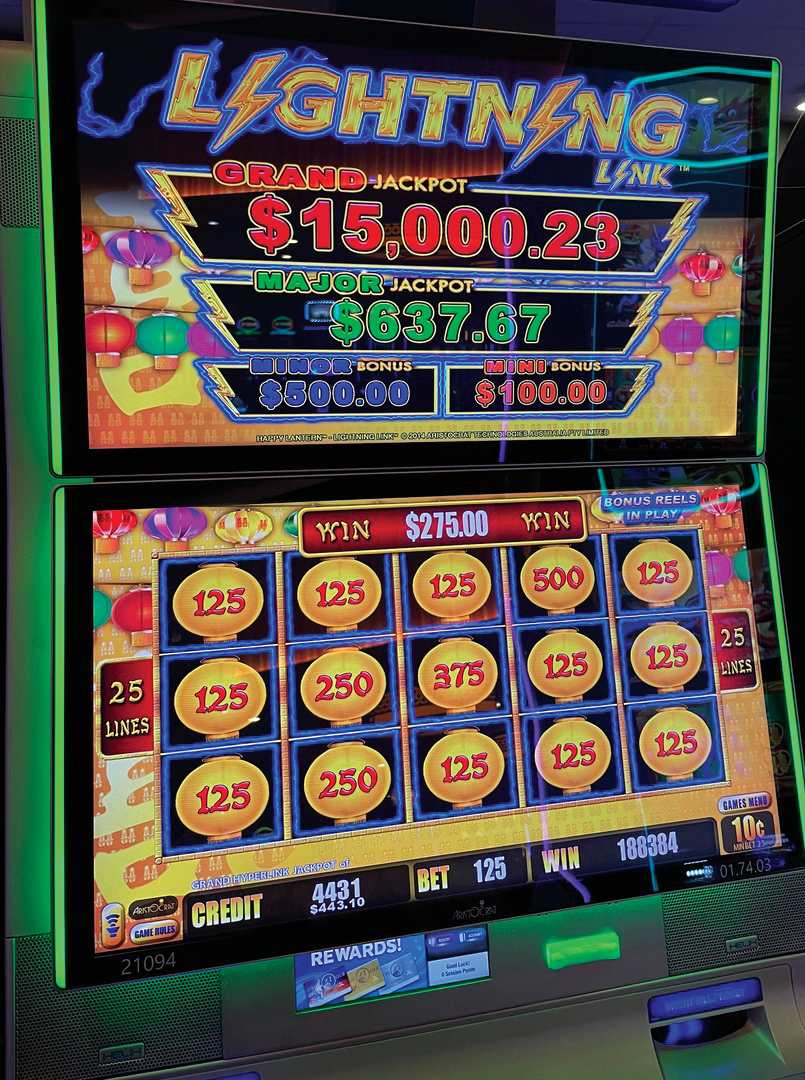
We all know the basic version of hold-and-spin: The player is given a certain number of free spins in which to collect icons of some value, the prizes for which accumulate. More often than not, the symbols involved are so-called “cash-on-reels” symbols—a symbol that simply displays a credit award.
If the number of free spins is three, every time one of those special symbols appears, it locks in place on that reel spot and the free-spin meter goes back to three. The rest of the reels spin, and every time an additional cash symbol appears, it locks in place for the accumulating award and the spin meter returns to three.
This type of bonus ends when either three spins yield none of the special symbols, or the entire screen is filled with the symbols. Filling the entire screen with special symbols has become known as a “blackout,” and for many games, it results in the game’s top progressive jackpot.
These days, the lower-level jackpots normally appear and lock in place along with the cash symbols during the feature. But the new trend among manufacturers is to tweak the hold-and-spin formula to make it their own. This often involves adding various enhancements to the bonus through a pot-collection feature in the primary game. Pots fill and trigger the bonus with one or more enhancements like multipliers, coin boosts and extra spins.
The new crop of games launched at this year’s Global Gaming Expo shows how the hold-and-spin feature itself is evolving. The feature’s originator, Aristocrat, launched Firecracker Fortunes, in which a special symbol triggers up to three reel sets for the hold-and-spin feature.
There also is a feature within the feature, another rising hold-and-spin trend. Landing a special symbol triggers a secondary three-by-three grid on which a mini hold-and-spin feature plays out, with higher cash amounts than the main feature. Once that plays out, the game returns to the main hold-and-spin bonus.
This feature-within-a-feature innovation shows up in slots from several manufacturers. IGT’s Eternal Link offers up a secondary jackpot for the secondary hold-and-spin feature. Other innovations from IGT include Wheel of Fortune High Roller Respin, in which pointer symbols land during the hold-and-spin feature that add pointers to the familiar wheel for a wheel spin with multiple awards.
Other variations on hold-and-spin can be found in games from most suppliers. In Ultra Werewolf Fury & Strike from AGS, the hold-and-spin feature plays out on the first four reels. If symbols fill those four reels, a fifth reel is unlocked that spins and awards either a multiplier applied to the accumulated cash (including minor jackpots) or the top Grand Jackpot.
Zitro’s River Gold Wealth features a hold-and-spin event played out on a three-by-five grid with three additional rows locked by festive strings of incandescent light bulbs. Special symbols unlock the additional rows, and unlocking the top row triggers a special River Bonus, a second-screen event that has barges of credit awards and jackpots floating across the screen and granting additional pays.
Bluberi’s “Slice & Dice” series includes an expanding hold-and-spin feature, starting on a two-by-two grid and growing to three-by-three, four-by-four and five-by-five, with bonus awards at each level. The hold-and-spin feature isn’t going anywhere. Players still love it, casinos still demand it, and slot manufacturers are obliged to provide it. But what’s interesting is that this trend is ever-evolving into clever new forms, as manufacturers strive to make it their own.