Unfinnished Business: ATG’s Plan to Revive Racing


The race for legal iGaming in Finland formally commenced in December as the gambling reform bill was approved in Parliament by a margin of 156-9. The decision came a year and a half after the government’s initial decision to shift to a liberalized online market, following in the footsteps of Nordic cousins Sweden and Denmark.
Of course, anyone familiar with Sweden’s and Denmark’s liberalization processes will recognize many elements in Finland’s fresh legislation. Leveraging its knowledge and expertise in both Scandinavian markets, Sweden’s former horse racing betting monopoly ATG has positioned itself for success in Finland via a joint venture with the country’s horse racing association, Suomen Hippos.
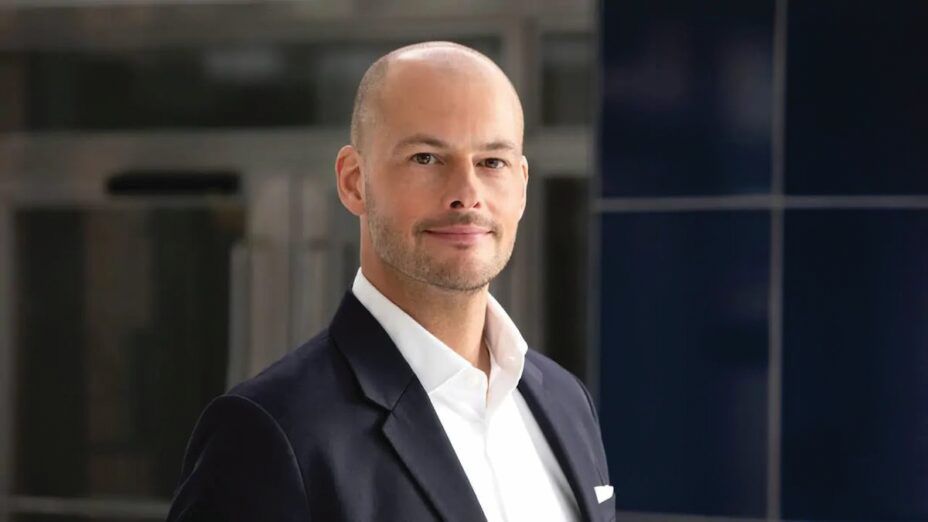
“(The current monopoly) has created a vacuum in the Finnish market, and it’s a great opportunity for both ATG and for Suomen Hippos,” says Hippos ATG Chief Executive Officer Mikael Bäcke. “The partnership is based on both parties providing the most valuable assets they have to make this company competitive. That means the strong anchoring in the local market that Suomen Hippos has and the very close relationship they have with the 200,000 horse racing customers.” He estimates Finland’s market for horse racing betting is valued at $69.9 million.
The operator called Hippos ATG forges the best of both partners, including ATG’s in-house gaming platform and vast experience in the horse race betting sector across Sweden and Denmark. Although it operates as a 50/50 joint venture between the two parties, ATG will earn a 40 percent share of profits, with Suomen Hippos taking 60 percent.
Bäcke joined the joint venture from ATG’s Danish business Bet25, which he helped establish in 2019 as an independent brand targeting Danish bettors. “We grew the business a lot and learned a lot about how to run a small or mid-sized gaming operation, which is quite different from the culture and the way that ATG had been operating before 2019,” he says.
ATG’s Swedish Legacy
ATG’s legacy Swedish business dates back to 1974 as a JV between the country’s thoroughbred racing association and the government. For decades it sat at the center of horse racing and trotting in the country after being established to support the sport’s long-term financial stability. It lost its monopoly in 2019, when Sweden liberalized online gambling and competition from private companies flooded in.
Since then, the government has relinquished much of its control of the operator, after years of lobbying from the sector calling for the state to distance itself from gambling. As of April 2025, the Swedish government no longer nominates ATG board members. Previously, it had the power to appoint six of the 11 board members. At the time the board’s nomination committee was instructed that independent members should represent a majority. ATG’s articles of association can also be changed without the government’s sign-off. Additionally, an increase in the amount ATG pays to the national foundation for the horse industry was introduced.
The state said this shift was a “natural continuation” of its plans to reform the Swedish gambling market. This followed an investigation into the current Gambling Act to plug a loophole that allowed offshore operators to target players in English, using non-local currency. The local sector trade body BOS has been very vocal about its contempt for the government’s role in funding former monopolies ATG and Svenska Spel.
“If there are any remaining special agreements between the government and ATG that do not apply to other gambling companies in the Swedish gambling market, it is of course our opinion that these should also be phased out,” BOS General Secretary Gustaf Hoffstedt said at the time. “We believe that it will (benefit) the gambling market if ATG becomes a normal gambling company side by side with its competitors, all regulated by the same rules.”
Platform Prowess
In recent years, the racing operator has struggled to maintain growth amid a 2024 gambling tax hike, which hit its margins hard. ATG CEO Hasse Lord Skarplöth has repeatedly called for race betting to be exempt from the tax rise, similar to the U.K.’s most recent tax reform, so it can continue to support the racing sector.
But executives are bullish on the opportunity in Finland. And with the input of the racing association itself, Bäcke is confident Hippos ATG can carve a niche in the market.
“Today ATG is very modern and very competitive and over the last few years we’ve been observing Finland and the Finnish process,” he says. “We will be commercially independent from ATG, but we will run the business based on ATG’s gaming platform. And that is different from Denmark because Denmark runs its own tech stack, its own platform and its own development team.
“ATG has a superior gaming platform when it comes to horse racing betting. It is efficient and runs on a centralized development, rather than multiple small satellites that operate and run its whole gaming platform.”
On competition, Bäcke suggests horse racing has been marginalized by the legacy monopoly operator Veikkaus, which is spinning out its own competitive iGaming business. “It’s long been proven that the state monopolies marginalize horse racing betting. We see that with both Veikkaus and Danske Spiel in Denmark,” he explains. “The effect of this is that markets for betting on horses are declining and the number of customers interested in horse racing is decreasing. That is a vacuum on the Finnish market, and it’s a great opportunity for both ATG and for Suomen Hippos to start this business with a main focus on horse racing betting.”
Veikkaus’ commitment to Finland’s open iGaming market has been significant so far, as the former monopoly has poured a huge investment into its competitive business, including improving operational systems and moving onto OpenBet’s betting platform. But Bäcke remains unfazed by Veikkaus’ bullish targets for market share. Hippos ATG will also offer betting on other sports and iGaming to complement its legacy horse racing offering.
“Looking at the Veikkaus business, they have a very strong brand,” Bäcke acknowledges. “They have established relationships with all of their Finnish customers and an existing established business. So they are going to be a tough competitor.”
Regulation Delay
It’s still early in the operator’s development, and a six-month delay in the government’s iGaming launch date (July 2027) has provided it more time to prepare for the liberalized market.
Leading Hippos ATG’s compliance business is seasoned Finnish legal analyst Antti Koivula. He joined last August after more than three years with industry adviser Legal Gaming Attorneys at Law in Helsinki. Of his move, Koivula said the opportunity to join Hippos ATG at ground level was too good to pass up. “It’s like the role was created for me,” he says.
Overall, Finland’s journey to iGaming legislation has been largely painless. Initial regulatory requirements released by the government last summer included restrictions across marketing, particularly the banning of affiliates and affiliate marketing. But stakeholders say policymakers have been very open to sector feedback, and the rules have shifted slightly to benefit the industry.
The launch delay stemmed from a few potential constitutional issues and disagreements in Parliament at the end of 2025. At issue was the timetable for the law’s implementation, consultant Jari Vähänen wrote in a blog post in December. “There was no significant political debate over the need to change the gambling system, but the parties’ views on the emphasis on responsible gambling and on business opportunities differed as expected,” he added.
Koivula says the operator was prepared for the possibility of the launch being pushed back, so it will have no direct impact. However, he believes it could benefit the sector to have more time to prepare for the launch.
Finland also has a pending general election in April 2027. Koivula notes that a change in government could see the focus shift toward further marketing restrictions and player protection policies.
“I am concerned that they will start assessment of the remaining inconsistencies in the system,” he says of the next administration, if the current governing coalition, led by the National Coalition Party, does not win a subsequent term.
Koivula says the new gambling regulator is yet to be formed, but he expects many of the staff from the current regulator, the National Police Board, will transition over to the new entity.
One uncertainty early on in Finland’s reform process was whether private operators would be able to offer horse race betting, or whether it would remain under the previous monopoly, a move that could have threatened Hippos ATG’s existence entirely. But Bäcke says Suomen Hippos’ lobbying efforts helped push the policy in the right direction.
“We are convinced that horse racing betting belongs and will flourish on the licensed side and not on the monopoly side. So going into the Finnish process, we worked closely with Suomen Hippos to help them convey the dynamics that could happen if horse racing was left on the monopoly side.”
The operator is now seeking to expand its team and grow out various departments, and Bäcke and Koivula are confident the opportunity to build and grow an entirely new entity will attract talent from hubs like Malta and Gibraltar to Finland’s beating heart of Helsinki. Although Hippos ATG is a startup, it is built on solid foundations with support from a well-established operator.
“We come well-funded by two very stable owners. We have a very clear objective and a very clear future position in the market. It’s a startup opportunity, but with reduced risk because we already know that we have product market fit,” Bäcke concludes.