Tough Transitions


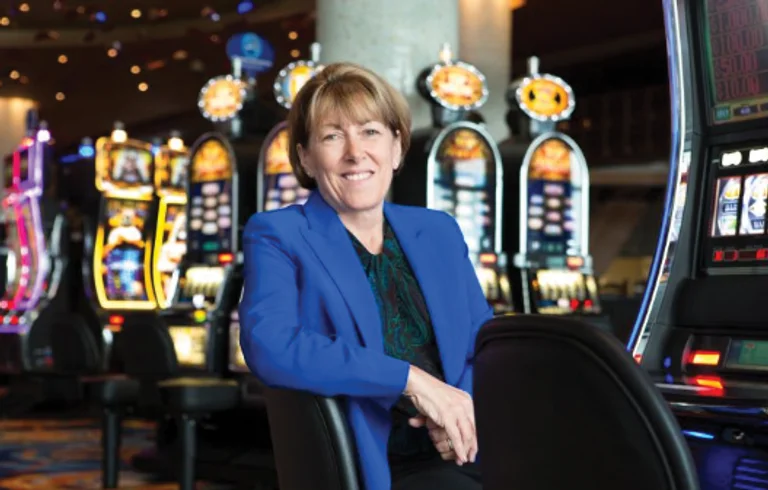
After more than four decades in the casino industry, I retired in 2018 from my role as executive vice president of casino operations for Wynn Las Vegas. My journey in Las Vegas had begun in December 1979 when I stepped into the dice pit as a dealer—one of only a handful of women in that role at the time. I built my career in an industry that demands stamina, strategy and unwavering focus.
I was fortunate to open The Mirage in 1989 and went on to enjoy an incredible 24-year career with MGM/Mirage. In 2000, I was promoted to vice president of casino operations and accepted that six-day work weeks were now the norm.
Late nights, high stakes and relentless expectations were constants. By 2013, I was ready for a change and joined Wynn Resorts as EVP of casino, returning to the company that had given me my big break. The role was both demanding and deeply rewarding. I struggled with the transition at first, often second-guessing my decision—but I eventually found my rhythm.
After 19 years in executive casino leadership, I assumed retirement would bring relief. What I felt instead was disorientation. In the year following my retirement from Wynn, I wasn’t ready to fully let go. I consulted with Wynn Resorts on the opening of Encore Boston Harbor and later joined Resorts World Las Vegas to support its launch.
These projects allowed me to stay connected to the pulse of the business and provided a sense of continuity. But when those projects concluded, the full weight of transition set in.
In 2019, I attended the Executive Coaching Institute at UC Berkeley, and I launched my coaching and consulting practice the following year. I quickly realized that succeeding as an entrepreneur required a completely different mindset. Without the structure of full-time operations, I struggled to find balance and direction.
The transition from a highly structured executive life to open-ended self-direction was far more challenging than I expected. I was certainly a novice at marketing and often felt I was in over my head.
To add to the complexity, I relocated from Las Vegas—my home of 50 years—to California, chasing the beach life I had dreamed about for years. It was the right move for personal reasons, but it distanced me from the community and rhythm I had known my entire adult life. That move, more than retirement itself, created a sense of disconnection—from my professional identity, my community and, in many ways, myself.
Eventually, I found a way forward. I returned to Las Vegas part time and joined the board of Everi Holdings. My coaching business began to thrive, and I leaned on the teachings from Berkeley to coach myself through the transition—rediscovering my purpose and learning to navigate the emotional landscape of change. More importantly, I gained the tools to help others facing similar shifts—whether retirement, career change or a post-pandemic pivot.
In the gaming industry, our identities are often deeply tied to our roles. Operators, marketers, hosts, sales teams and executives know the demands of the job are not just professional—they’re personal. When roles change or careers evolve, the psychological transition can be far more complex than the job change itself.
One of my clients—a gaming CEO—left his position and struggled with more than just career uncertainty. He felt as though he’d let down his family. Would his decision force them to relocate again? His internal struggle wasn’t only about his job—it was about what that job meant to those around him.
William Bridges’ framework in The Way of Transition explains it well: Change is external. Transition is internal.
Retirement, relocation, leadership changes and even promotions represent external shifts. But the internal adjustment—figuring out who you are without the routine, title or team—is where the real work happens.
Five Lessons for Navigating Transitions
- You’re not starting over—you are evolving. Experience doesn’t disappear—it adapts. The question isn’t, “What did I leave behind?” but rather, “How can I use what I’ve learned in a new way?”
- Loss is part of it. Letting go of a role, city or career phase can bring real grief. Acknowledging that loss is the first step to moving forward with intention.
- Purpose needs a new platform. For me, coaching became a way to lead and serve differently. Whether through mentorship, teaching or community service, purpose doesn’t end—it changes shape.
- Rebuild your rhythm. Executive life provides structure. Losing that can feel destabilizing. Building a new daily rhythm—through part-time work, wellness or creative pursuits—helps ground you.
- Connection creates clarity. Transitions can be isolating—but they don’t have to be. Talking about them helps. Coaching, community and peer support bring clarity and momentum.
In our industry, we prepare for expansions, market shifts, and new technologies—but we don’t always prepare for personal transitions. Yet, they’re inevitable. Whether it’s retirement, reinvention or returning to the business in a new capacity, these changes deserve attention and intention.
My transition from the casino floor to coaching wasn’t seamless, but it was transformative. It reminded me that growth doesn’t end with a title—it just begins again on a different path, with new purpose.
To anyone facing a similar shift: It’s OK to feel lost. Just keep going. You’re not starting from scratch—you’re starting from experience.