
The People’s Choice: Will Ecuador Bring Back Casinos?

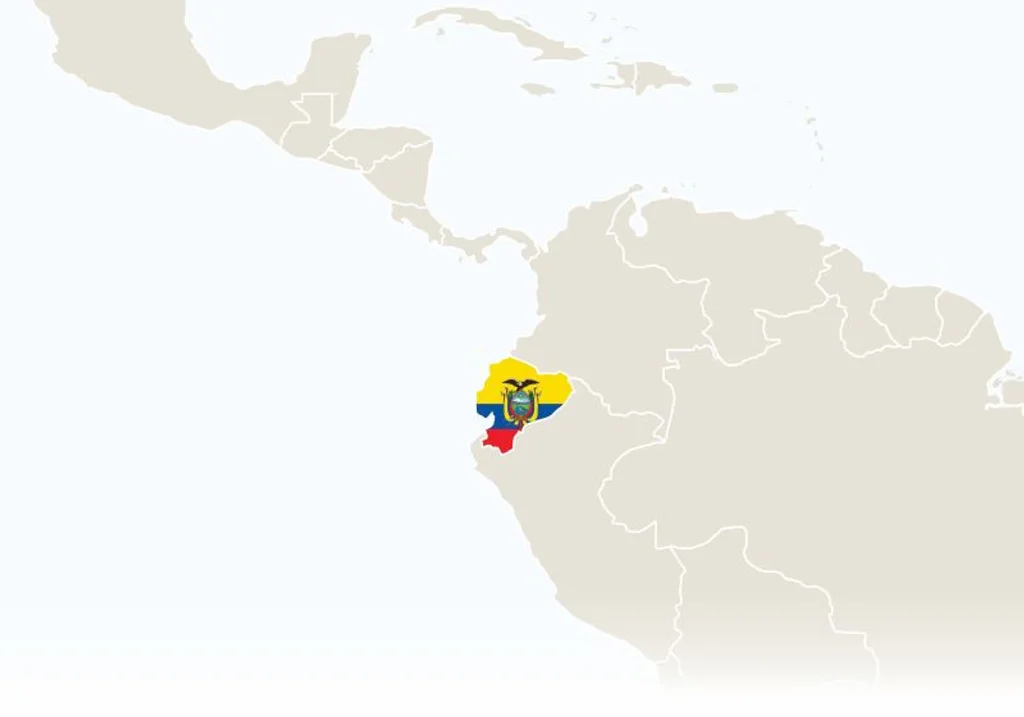
Land-based casinos, banned in Ecuador in 2011, could soon make a return to the country. But 14 years after casinos were prohibited, is there really the appetite required for them to be welcomed back in Ecuador?
Casinos were banned in a 2011 referendum, when 52 percent of those polled voted in favor of then-president Rafael Correa’s suggestion to prohibit land-based gambling.
Under President Daniel Noboa, discussions arose on whether the ban should be lifted. In January 2024, Noboa’s initial attempt to include a question on re-legalizing casinos was scrapped. But now, there appears to be real momentum behind his fresh proposal.
On August 5, Noboa proposed a question on whether land-based casinos should be legalized again. Specifically, the question centered on the proposed reopening of casinos within five-star hotels, taxed at a rate of 25 percent, with those revenues funding school food programs and efforts to combat child malnutrition.
The question was at first denied by the Constitutional Court of Ecuador.
But its reformulation led to its approval by the court in September, and it now appears set to be on the list of proposals included in the referendum, which is expected to take place later this year.
The question has been simplified to address just one thing: whether casinos should be allowed in five-star hotels.
The question asks: “Do you agree with allowing the operation of gaming rooms and casinos dedicated to gambling in five-star hotels, as regulated by law by the National Assembly, according to the annex to the question?”
Santiago Albán, managing partner of local law firm Heka, explains the question needed to be amended because the initial version combined “multiple unrelated issues.”
“The government subsequently reformulated the question to address only one matter, whether to authorize casinos in five-star hotels, in compliance with the court’s requirements of clarity and unity of subject,” Albán says.
Why Were Casinos Banned?
Perhaps the most pressing question to ask when assessing whether there is an appetite to re-legalize casinos in Ecuador is whether the desire to ban the activity was there in the first place.
At first, this may seem simple. Yes, 52 percent to 48 percent in favor of the ban was a narrow margin. But it’s a margin, nonetheless.
Ecuadorian betting specialist Luis Costales Figueroa suggests there’s more than meets the eye when looking at the 2011 referendum.
“The ban on casinos in Ecuador was more of a political issue,” Costales explains. “The argument was that it was for the health of citizens, but it would be the people who would decide whether or not to allow them through a popular consultation sponsored by the government.
“The government at the time promoted the ban along with other issues. And since it was widely accepted by citizens at the time, the people voted for the ban.”
Albán supports Costales’ points, saying the 52 percent vote in favor was more reflective of the popularity of President Correa at that time, rather than the desire of Ecuadorians to ban casinos.
Therefore, Albán says, the conversation has changed somewhat and is less black-and-white than simply a question of whether or not casinos should be legal.
“The current debate reflects a significant evolution in public perception,” Albán says. “Whereas opposition in 2011 was largely driven by moral and social considerations, the present discussion is more centered on regulatory control, fiscal transparency and responsible gaming.
“Although no official nationwide polls have been released regarding the 2025 referendum, public dialogue has become more balanced and pragmatic, with growing recognition of the economic and social potential of a well-regulated gaming industry.
“This shift suggests that a portion of the electorate may now be more receptive to re-legalization, provided that the new framework guarantees oversight, compliance and social protection measures.”
Online Reform Paves the Way
Perhaps one explanation for the shift has been the success of Ecuador’s online gaming sector, which has flourished since the Covid-19 pandemic.
Juan Carlos Loza Mendoza, head of LatAm gambling sales at ProntoPaga, explains how the online gaming sector capitalized on the gray market opportunity.
“Mainly after the pandemic, sports betting—not casino or online casino, but sports betting—arrived in Ecuador,” Mendoza says. “They found a gray space in these activities because they said, ‘This is not casino, this is statistics. There’s a probability that your team might lose.’”
Its performance has been “amazing,” he says. “It’s probably the only industry that is supporting other verticals, such as sports. Soccer teams especially are getting sponsored from the online casino or online sports betting sites. They’re performing great. They basically have $100 million per month average between the markets.”
Such is the sector’s success, the Ecuador government last year published Executive Decree No. 313, which established a 15 percent gross revenue tax for online sports betting operators, as well as a 15 percent withholding tax on player winnings.
Ramiro Atucha was CEO of platform provider Vibra Gaming between January 2020 and July 2025. He explains the online reform was more of an “opt-in” for operators, saying the government also lifted a ban on advertising of gambling last year.
While Atucha says it’s not a “formal regulation,” he believes it does show the Ecuador government is more open to regulating gambling, rather than prohibiting it outright.
However, he believes regulation must also be fair for licensed operators. “The first step to finish unregulated gambling is first by regulating, but second by allowing the regulated operators to compete.”
Albán says the government’s online reform is a step in the right direction toward a fully regulated gambling sector for both online and land-based.
“The online betting reform demonstrated the government’s capacity and willingness to integrate gaming activities into the formal economy, establishing clear taxation, reporting and compliance obligations,” he says. “This development not only reflects a shift toward a controlled and transparent model of supervision, but also serves as a regulatory precedent for the potential re-legalization of land-based casinos.”
Economic and Tourism Benefits
Mendoza states that Noboa’s position at the forefront of this movement to re-legalize casinos is due in part to being more business-minded than other presidents.
“He wants an Ecuadorian environment that’s safe for investment, which is great, and if the activity pays its duties and pays taxes and brings richness to the country, he’s open and willing to do it,” Mendoza says.
“The main idea is basically to bring the activity at its full level back to Ecuador for online and land-based. Hopefully it passes, because it brings a lot of investment in Ecuador, it brings a lot of new opportunities, it brings a lot of money to the economy.”

Economic benefits are clearly some of the strongest arguments for the return of legal casinos in Ecuador. As Costales points out, these range from the collection of taxes to direct investment from abroad. These benefits, he says, are more pronounced for land-based casinos than the online alternative.
“Online gambling does not boost the economy as much as a physical casino,” Costales says. “They are different markets, since physical casinos rely heavily on user experience.
“Ecuador is a country that relies heavily on tourism for its natural resources, such as its culture, beaches, mountains, gastronomy, etc. Having another alternative for visiting, such as casinos, creates opportunities for visiting the country, where the user experience must be guaranteed.”
Casinos would also foster job creation, with Atucha making the point that approximately 30,000 jobs were lost when casinos were banned in 2011.
“You look at Las Vegas,” he says. “All the shows we enjoy—the Sphere, Cirque du Soleil, you name it—it’s heavily subsidized by gambling. The big hotels that we have there, without that, it would still be desert, right?
“The benefit that companies have in the society is not just the tax they pay. It’s the people they hire, it’s the actions they do. If. If you see bet365 in Stoke-on-Trent, they are a very important actor for the good, in jobs, in supporting the local community.”
Black Market Prevalent Despite the Ban
It’s also important to note that just because casinos are outlawed in Ecuador, that doesn’t mean the activity isn’t happening. It just exists in the black market.
Albán notes a number of recent raids at informal venues that act without supervision in terms of player protection and also contribute no taxes. This makes it even more important to bring unregulated casinos into the light, giving the government more control over the activity.
“The ongoing existence of these informal and offshore markets underscores the limitations of the total ban and supports the rationale for establishing a regulated and taxable system,” Albán adds.
Regulation of casinos would also be beneficial from the perspective of tackling money laundering and terrorist financing—another positive that’s stemmed from Ecuador’s online gambling reform, Alban points out.
“The online sector provides a practical reference for designing future licensing, fiscal and hard AML/CFT structures applicable to the casino industry in order for the financial system to have better controls.”
Will Casinos Be Back?
With public opinion potentially shifting and political discourse turning to more constructive discussions on the importance of regulation, there does seem a real chance of legal casinos returning to Ecuador.

Mendoza expects a “yes” vote, believing the Ecuador population will focus on the benefits a regulated, tax-paying and job-creating legal sector can provide.
He believes the time is right, saying, “Society in the most part is willing to do it, because Ecuador needs job opportunities. We need the investment. We are a dollar economy, so we need dollars to come in.”
Costales also predicts a return of land-based casinos, again citing the greater acceptance of gambling in Ecuador indicated by the success of online betting.
“Gambling is accepted, as we can see from the evolution of online gambling in recent years,” Costales continues. Ecuadorians now must travel to other countries to gamble at land-based properties. “If the arrival of casinos is approved again, that money will stay in the country.”
In that case, “the revitalization of the economy will be immediately evident, with direct and indirect employment, as well as increased tax collection such as VAT. It will also benefit large hotel chains, where it could stimulate further investment in the country.”
However, Atucha says, the population’s decision could hinge on how the message is conveyed by gambling advocates. In his view, the Constitutional Court’s decision against the ballot question being able to provide information on how the tax revenue would be used was a “very strange” decision.
“It really depends on how it’s communicated,” Atucha says. “Because people don’t entirely trust the casino, but they don’t trust the politicians either. So the fact that the Constitutional Court is not (saying), ‘This is going to be useful for education or for health’ will limit a lot of support.”
Atucha is still optimistic. “I’m hoping that with the right communication and being clear on that communication, the result will be positive.”
Momentum Builds for a Casino Comeback
 After 14 years of prohibition, Ecuadorians now have a big decision to make. It’s a changed political climate from 2011, with a business-minded president at the helm. But it remains to be seen whether Noboa will gather the support required.
According to Mendoza, if the population does get behind the proposal, it could be just a matter of months until legal casinos are in five-star hotels in Ecuador.
He predicts it would prove a roaring success.
“The infrastructure is ready. The culture is ready,” Mendoza says. “Sports betting sites and online casinos are now working on it.
“The financial and the payment ecosystem is ready to receive it. They’re willing to because it’s a big amount of protection, a big amount of money that you will be processing. They’re ready.
“I believe it will be just a matter of couple of months, maybe three months,” he says. “It will be sensational. It will be a hit.”