The New Frontier

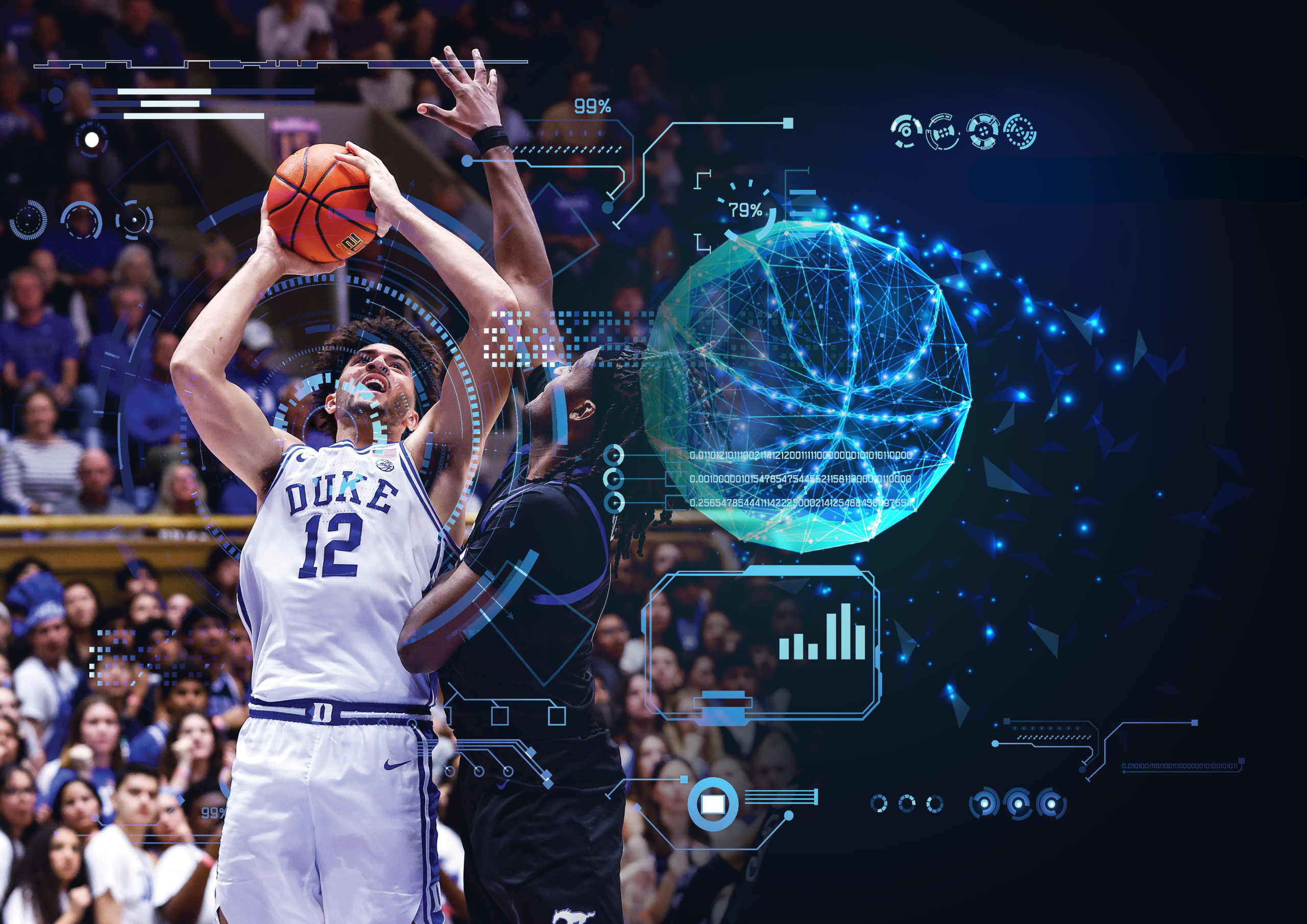
This month, members of one of the deepest freshmen classes in recent memory will display their dizzying array of talents at the 2026 NCAA basketball tournament.
March Madness, the largest month-long event on the annual sports betting calendar, will feature Duke’s Cameron Boozer, a chiseled battering ram who can bowl over double teams with the ease once displayed by Karl Malone.
Boozer, a favorite for Naismith Player of the Year, is not a lock to be taken with the first pick in the NBA Draft. Instead, the honor may go to Kansas sharpshooter Darryn Peterson or BYU forward AJ Dybantsa, a gifted swingman whose multi-faceted game reminds hoop junkies of a young Kevin Durant.
Nearly 20 years after Durant’s NBA start captivated the sport, the proliferation of analytics in basketball has transformed the way the game is analyzed. Most college hoops fans are familiar with KenPom, an analytics tool that uses advanced metrics to predict game outcomes. But other sites are just as valuable.
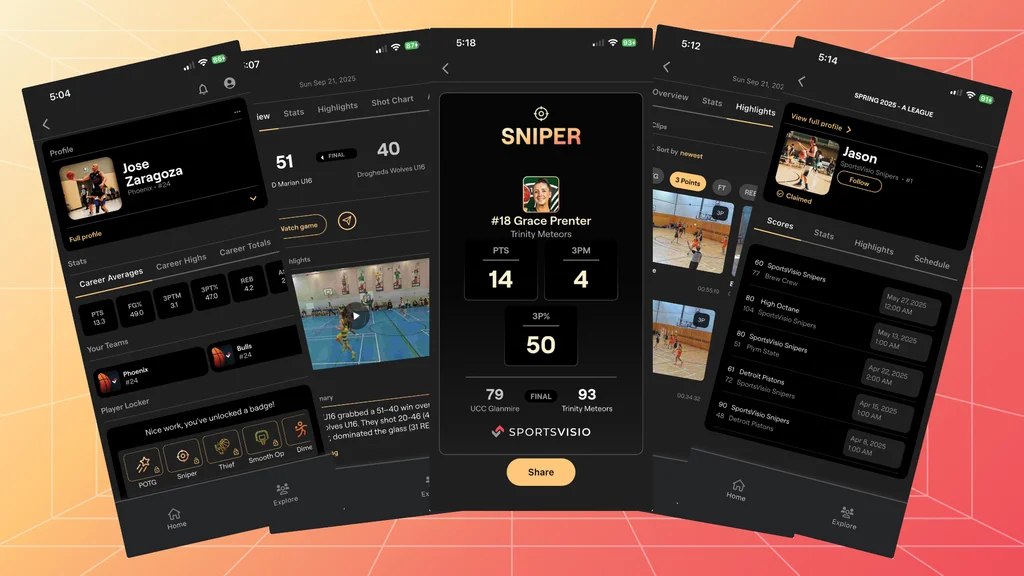
One app, SportsVisio, combines AI-powered sports video analysis with the world’s first large language model on sports. Another, ShotTracker, produces detailed heat maps of a player’s shooting performance from nearly every vantage point on the court.
ShotTracker, a company that counted the former NBA commissioner David Stern as a backer, has partnered with top NCAA conferences for years, dating back to the PASPA ruling. For prop bettors, platforms such as ShotTracker provide sharps with additional research for formulating their wagers. But as artificial intelligence continues to alter the speed of doing business from Silicon Valley to Main Street, the sports betting industry has found new ways to marry machine learning with analytics.
As with most things AI, some of the gambling industry’s foremost tech experts cannot predict how the computer-driven technologies will change the business over the next five years, let alone this one.
A bevy of industry stakeholders traveled to Barcelona in January for the ICE conference, one of the largest global gambling events each year. One panel, titled “Changing the Game: AI Transformation in Sports Betting,” examined the new AI capabilities at play in automating the wagering process. The hour-long panel also delved into how partnerships among sportsbooks, third-party data providers and media companies have been altered by automation.
The panel focused on “what it takes to run AI at scale in one of the most demanding data environments out there,” said Deloitte’s Kurt Rapinett, who served as the moderator. Rapinett was joined by an all-star cast that included Sportradar’s Behshad Behzadi and Entain’s Deb Lee, along with executives from Kaizen Gaming and BetConstruct.
Long before the AI craze of 2026, Entain designed an automated platform that identified major risks from problem gambling. As customers alter their behavior in pursuit of the big score, the platform has the capability to spot behavioral markers such as loss chasing, abnormal betting patterns and elevated deposit levels. Now, the platforms are customary.
Foundational Models
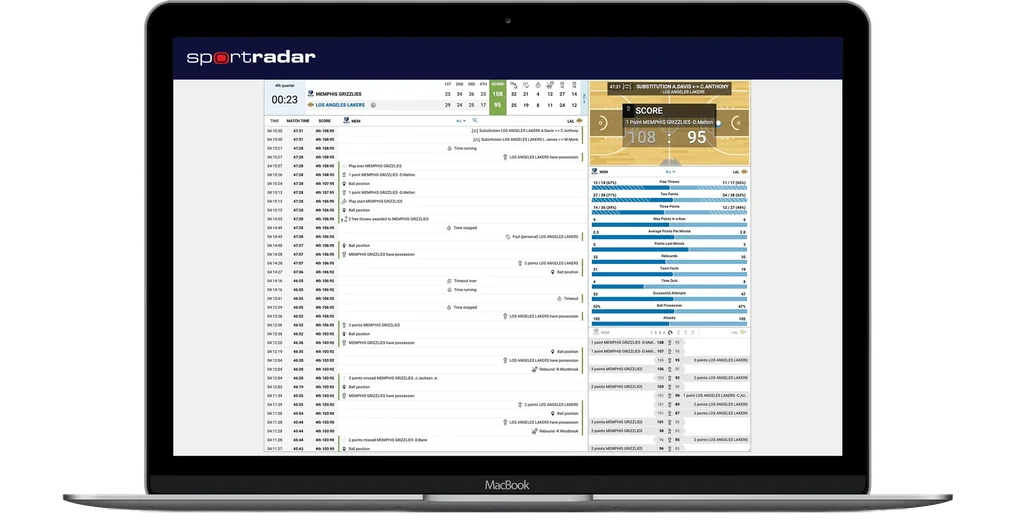
Sportradar, one of the world’s largest sports betting data providers, has an exclusive partnership with the NBA. Under the agreement, Sportradar serves as the gatekeeper of the league’s official betting data feed. In 2025, the NBA returned to NBC for the first time in more than two decades as part of a multibillion-dollar broadcast-rights partnership.
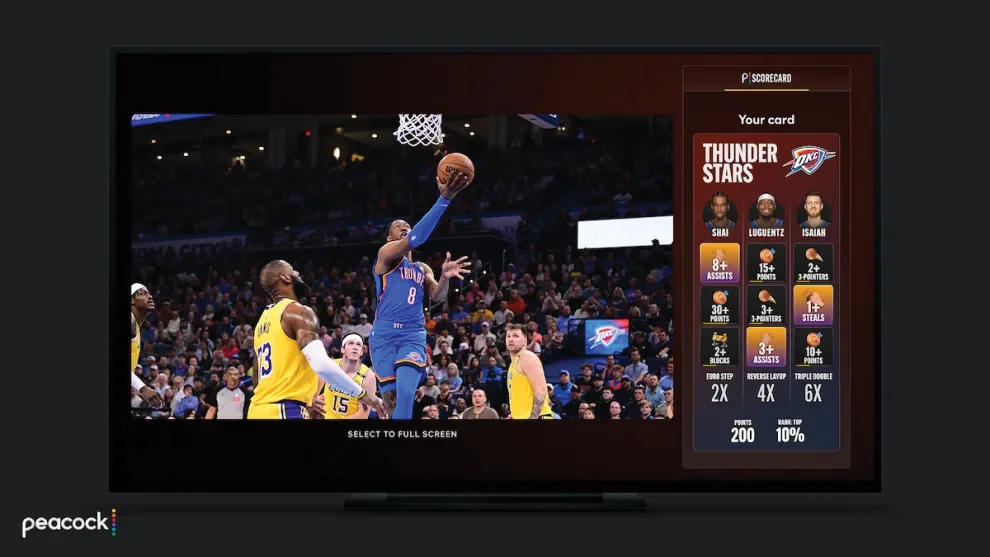
Working in collaboration with NBC Universal, Sportradar developed an interactive, data-driven feature called the Peacock Performance View. NBC viewers have become accustomed to the glitzy feature that spits out granular metrics for select players, on the game within the game. Already, the tool has been well-received by viewers, said Behzadi, who serves as chief AI officer at Sportradar.
The company has also developed a foundational model that evaluates thousands of data points during a game in an attempt to predict what will happen next. For instance, in Game 1 of last year’s NBA Eastern Conference Finals, the Indiana Pacers erased a 14-point deficit against the New York Knicks over the final 2:35 of regulation. Such comebacks appear nearly impossible, but the algorithm helps researchers optimize methods to determine the ideal pathway. Moreover, the model has been training itself for many months, Behzadi explained.
The model can analyze what could have been done to generate more scoring, how a play could have been run differently, and the positional value of every player. In the next game, Knicks center Karl-Anthony Towns appeared slow to react to switches in defending pick-and-roll sets. In Game 3, he was replaced by Mitchell Robinson in the Knicks’ starting lineup.
Before placing a wager, an astute bettor can study the analytics to inform their own decision-making.
On the eve of the NBA trade deadline, the Los Angeles Lakers acquired guard Luke Kennard from the Atlanta Hawks. At the time, Kennard had been hitting 49 percent of his 3-point attempts, a rate that ranked among the highest in the league. Data from Synergy Sports, a Sportradar division, can go way downtown. Through February 4, Kennard hit an astounding 70 percent of his attempts in transition, compared to his effective field goal percentage of 79 percent in spot-up situations.
In sets when coming off a screen, the former Duke guard also made 66 percent of his shots, the analytics showed. Armed with that data, bettors can consult with apps such as PlayerProps.ai, which instantly provides the most favorable Kennard odds across the market.
Potential Bans on Props
The state of prop betting and single-game parlays is under review following a slew of major scandals across the U.S. sports betting market. A congressional committee with oversight of fairness and integrity in sports met with the NBA last November to address offerings of certain bet types that are susceptible to match fixing.
Speaking with GGB magazine in February, Chris Christie, the former New Jersey governor who is now an adviser to the American Gaming Association, credited regulated sportsbook operators for providing data to law enforcement to help detect several alleged schemes. As the technology improves, Christie believes the market will receive information more quickly and that AI will play a role in the process.
In 2015, former English pro soccer player Moses Swaibu received a 15-month prison sentence in connection with a complex match-fixing conspiracy. Swaibu, a former Lincoln City defender, accepted bribes from a series of individuals associated with one of the largest Asian illegal sportsbooks in the world.
Motivated by the experience to turn around his life, Swaibu began working with FIFA and the English Premier League to educate players on the pitfalls of match fixing.
Since then, Swaibu founded Gamechanger360, a platform that provides players with modular learning on integrity in sports. In founding the company, Swaibu constructed detailed flow charts that break down the organizational structure of match-fixing gangs, as well as the world’s top football associations tasked with mitigating the risks of manipulation.
Swaibu told GGB that Gamechanger is the only platform in the world that addresses threats of match fixing from the vantage point of a player. With a keen eye for analyzing player movements, Swaibu can spot when a defender has his shoulders turned the wrong way, potentially leading to a goal. As a result, he is trained to spot markers for match fixing.
From there, Gamechanger has the capability to place a vast trove of data from years of match film into a large-language model. As an educational tool for younger players, the platform can assess certain tendencies that are indicative of manipulation in a hotly contested Under-17 match. At the same time, Gamechanger will instruct top teenage players how to fend off offers for bribes if they are approached by match-fixing gangs.
“You need to tap into athletes’ brains,” he said. “The only way to tap into athletes’ brains is through a machine which you need to develop every day—that’s what makes us quite unique.”
Vulnerabilities for Fraud and Manipulation
Beyond the panels, several companies on the ICE show floor showcased products aimed at combating fraud and manipulation. One company, U.K.-headquartered GB Group plc, specializes in global identity verification, fraud prevention and location intelligence.
Using sophisticated technology, GBG can conduct player identification checks in a quick and seamless manner. More recently, GBG has begun to employ AI-driven security measures for the detection of deepfake video attacks.
In offering the service, the company has partnered with many of the world’s largest sportsbooks, most notably FanDuel, DraftKings and bet365. Hypothetically, if one customer attempts to open a dozen separate accounts from the same IP address, GBG has the technology to identify the fraudulent attempts.
Back in the U.S., Prove, another anti-fraud specialist, excels at conducting identity stress testing across the sports betting ecosystem. Mary Ann Miller, fraud and cybercrime executive advisor at Prove, is concerned with trends of elevated rates of fraudulent activity through bonus abuse.
Through machine learning, Prove helps operators anchor their defenses in trusted identity signals, making it easier to identify patterns associated with account farming and bonus abuse even as activity becomes more automated. “AI will continue to accelerate both sides of the sports betting ecosystem, enabling greater automation for operators while also lowering the barrier for sophisticated, large-scale fraud,” Miller says.
“Over the next year, the differentiator won’t be automation alone, but whether those systems are built on accurate, trusted user identities that protect legitimate players and revenue.”
It is still too early to discern how AI will impact sports betting in 2030. Behzadi, the Sportradar executive, notes the humanistic element to sports that exists. Fans and gamblers alike would rather watch athletes vie for a rebound than wager on robots’ ability to do so. But inevitably, there will still be dramatic changes over the next several years. By then, maybe a panel on AI will even be moderated by a robot, Behzadi quips.