The Archangel
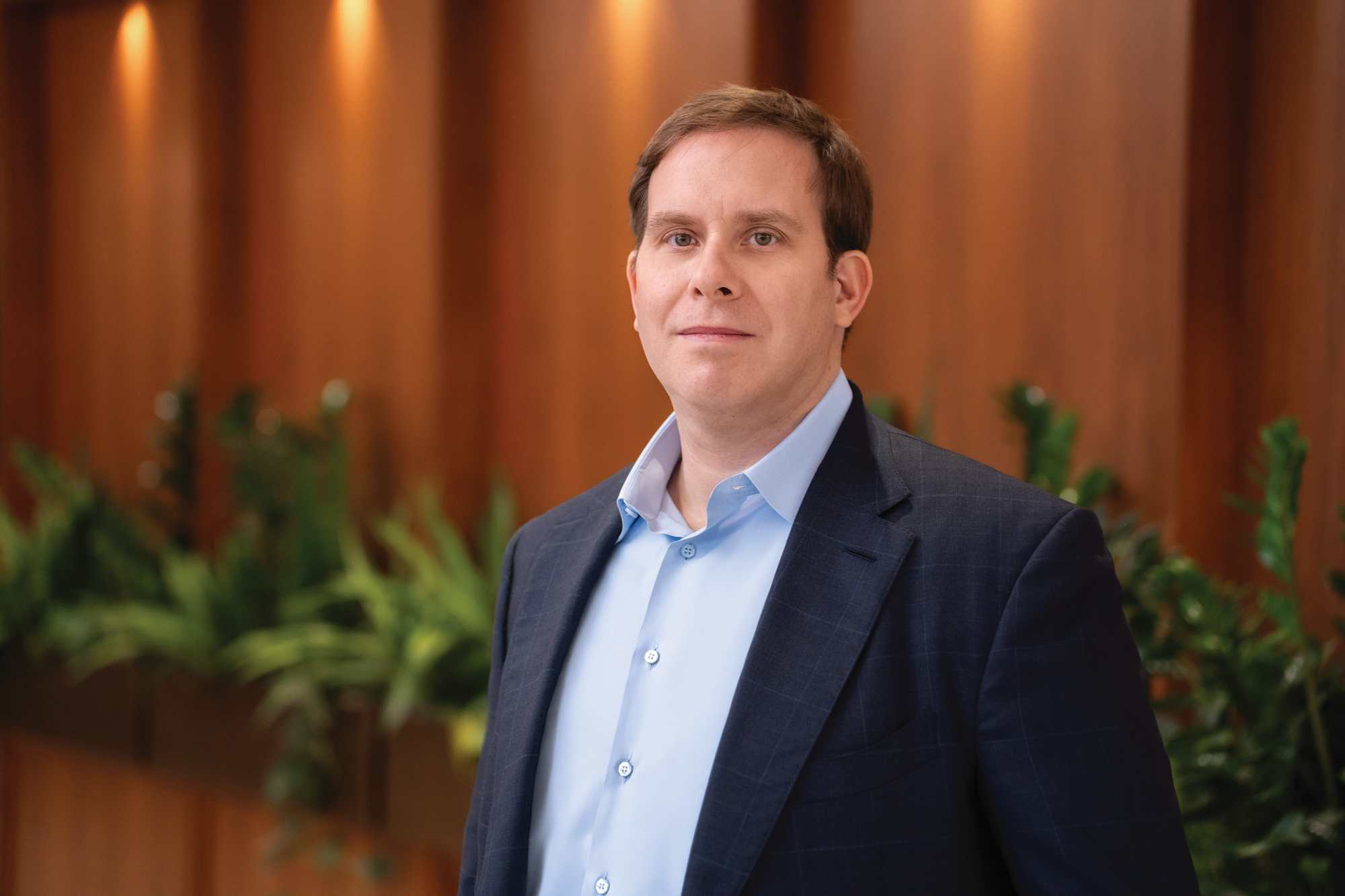
He’s the heir apparent, poised to become chairman and CEO of Las Vegas Sands.
When Rob Goldstein steps down from those positions in March, Patrick Dumont will assume the titles he was almost destined to take. And the “heir” part is quite literal. You see, Dumont is the son-in-law of the late founder of Las Vegas Sands, Sheldon Adelson.
He’s also the “governor” of the NBA’s Dallas Mavericks, the basketball team he and his family bought from fellow billionaire Mark Cuban. He sits on the NBA’s board of governors as representative of the team.
Currently president and chief operating officer of LVS, Dumont has been an executive with the company for 15 years. He spent another 10 years building a career that focuses on management, development, operations and corporate finance.
A graduate of Columbia Business School, Dumont became LVS’ chief financial officer in 2016. He was responsible for the company’s commitment to balance sheet strength, investment returns and financial controls. He’s been instrumental in orchestrating key financial and business initiatives, including enhancing the company’s investor relations function and negotiating strategic transactions to maximize shareholder value.
He joined the Sands board of directors in 2017 and undertook his current position in 2021, two years after Adelson’s death.
Dumont’s dual roles with the NBA and LVS came to a confluence when the NBA’s Brooklyn Nets and Phoenix Suns tangled for two preseason games hosted by the Venetian in Macau last October. Dumont said it’s part of a multi-year arrangement that will benefit both sides.
“It’s great for the NBA,” he told CNBC during the event. “It brings the best product, the top teams and the top players to a place where there’s lots of interest. It gives local fans a chance to see top-level basketball. At the same time, it’s great for Macau because it highlights what a great entertainment city it is. The buzz is really palpable. You feel it when you walk down the street. Fans start cheering when they see the players. It’s very special.”
Two years ago, Macau concessionaires agreed to spend billions of dollars on non-gaming amenities in return for license extensions. Dumont says LVS had no objection to investing an additional $4 billion over the next decade.
“We’ve done that since the company’s inception,” he explains, noting that LVS has invested $17 billion in the market over the past 21 years. “This was based on the vision of our founder, Sheldon Adelson, to invest in non-gaming amenities that allow people to have the best possible experience. That’s what we’ve done in Macau—invested in both gaming and non-gaming. We’re the leaders in both areas. This is nothing different for us.”
In both Macau and Singapore, gaming is a huge part of return on investment.
“Macau is the largest gaming market in the world, followed by Singapore,” he says. “As Asia continues to produce a growing middle class, as young people become more successful and want experiences related to tourism that include gaming and non-gaming, these markets have the advantage. And we have the advantage because of the scale of the assets. We’re the largest operator in Macau. But there are great competitors around and that adds to the high-quality offerings.
“Gaming is great and it’s very important. But it has a symbiotic relationship with the other experiences that you provide.”
In Singapore, LVS has plans to build a second resort adjacent to its iconic Marina Bay Sands. Dumont says the additional $8 billion investment makes good economic sense.
“Over the years, Marina Bay Sands has been integral in strengthening Singapore’s position as a major tourism powerhouse. By the time our new ultra-luxury development is complete, we will have invested more than $15 billion since we started operations in Singapore in 2010. This speaks volumes about our confidence in this region and the potential we continue to see in Singapore. We’re privileged to have benefited over the past 15 years from factors that make Singapore great—excellent infrastructure and a strong and supportive government with a forward-looking vision.”
As for the company’s current lack of U.S. properties, Dumont attributes that to the company’s investment philosophy.
“For us, these decisions were not emotional. They’re based on whether or not we think there’s a long-term investment return that’s attractive. So for us the atmosphere in Las Vegas, the questions about Japan, where we decided to not pursue development, the situation in New York and many other things we’ve considered over time are all done through the lens of, ‘Do the returns work on a risk-adjusted basis?’
“We’re a long-term focused player, so we invest in five, 10, 20-year increments,” Dumont told CNBC. “We’re a return-driven company. We’re very focused on capitalization and doing the right thing for our shareholders.”