
Service focused: How Renova is redefining gaming hardware support

As competition intensifies and technology cycles accelerate, casino gaming and lottery manufacturers face mounting pressure to innovate faster while keeping machines live on the casino floor. Here, Louis Pine, chief marketing officer at Renova Technology, explains how a specialty repair and logistics partner with deep technical insight is helping manufacturers protect revenue while shaping the next generation of gaming hardware.
The slot manufacturing sector is entering a new phase of development, shaped by both renewed growth and growing complexity. Following several years of post-pandemic recovery, suppliers to the global gaming industry are once again expanding, with industry analysis pointing to steady gains in economic impact, employment and investment across regulated markets.
At the same time, the competitive dynamics of the sector have shifted significantly. Where the US slot market was once dominated by a small number of suppliers, today’s landscape is far more fragmented, with a growing number of manufacturers competing for floor space and attention.
A recent Association of Gaming Equipment Manufacturers (AGEM) report reflects this broadly positive trajectory, with the supplier industry’s value-added economic impact rising more than 7% to $32 billion in 2023. However, the AGEM and its members also recognize that growth is arriving alongside a wider set of operational pressures. Rising costs, lingering supply chain constraints, cybersecurity concerns and shifts in consumer spending habits are all influencing how suppliers think about product life cycles and long-term support strategies.
Compounding this is a physical transformation of the casino floor itself. As GGB Magazine reporting has noted, today’s gaming environments are increasingly defined by larger, more visually distinctive cabinets, while the shelf life of individual platforms has shortened compared with earlier generations that once remained in service for decades. In this environment, manufacturers best positioned to succeed are those able to respond quickly, minimize downtime and apply real-world performance insight to future design decisions.
From aftermarket repair to strategic partner
That emphasis on real-world insight sits at the heart of Renova Technology’s evolution over the past three decades. The Atlanta-headquartered company began life as an aftermarket repair provider supporting one of the largest global manufacturers of point-of-sale and self-service hardware. According to Louis Pine, Renova’s chief marketing officer, the company’s remit went beyond simple break-and-fix work from the outset.
Early on, the company developed processes to capture detailed repair analytics and feed that information back to its manufacturing partners. Patterns of failure, regional trends, component weaknesses and environmental factors were all documented and analyzed. For manufacturers, these data insights proved invaluable, informing future product iterations and helping engineering teams avoid repeating costly mistakes.
That collaborative approach laid the foundation for Renova’s expansion into other verticals, including gaming and lottery. While the company continues to support industries such as parking, telecommunications, automotive, fitness equipment, surveillance, and physical security, gaming hardware has become a central focus. In each sector, the underlying philosophy remains the same: Repair and preventative maintenance are only one part of a wider partnership built around insight, transparency, and quality.
As Pine explains, that mindset fundamentally changes the relationship with manufacturers. “From the very beginning, the differentiation was about collecting data behind the repair, making inferences, and sharing it back with the manufacturer,” he says. “That’s what turned the relationship into a partnership rather than just a service.”
Inside the hardware
Within the gaming and lottery sector, Renova works with original equipment manufacturers (OEMs) and contract manufacturers, rather than directly with casino operators. As a dedicated repair services center, the company supports reverse logistics, RMA programs (request merchandise authorization) and tackles some of the most technically demanding hardware challenges OEMs face.
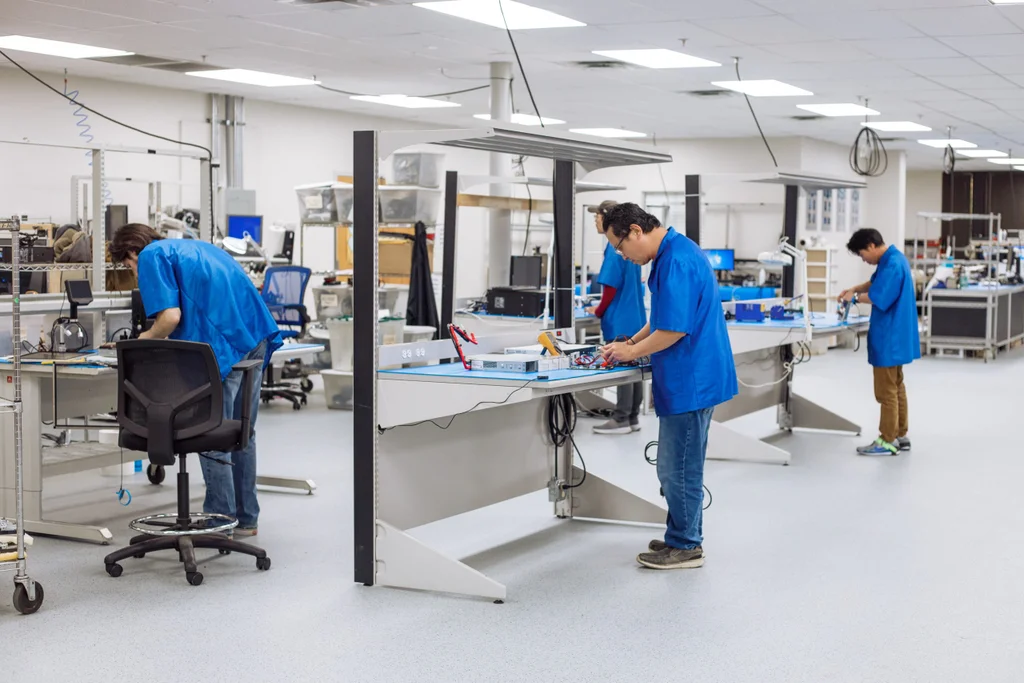
Its capabilities extend deep inside the modern slot machine from simple to complex hardware. Renova provides preventable maintenance, refresh, and repair of touch displays, LED panels down to individual pixels, CPUs, main boards, bill acceptors, and a wide range of internal peripherals. Both off-the-shelf components and proprietary manufacturer hardware pass through its facility, with all work conducted directly on behalf of OEM customers.
Critically, Renova specializes in troubleshooting at board-level including work on integrated circuits and individual components. That skill set has become increasingly rare as electronics grow smaller and more complex. Rather than swapping entire assemblies, Renova’s technicians test, diagnose, and repair equipment. This approach helps OEMs maintain equipment preventatively, reduce waste, shorten turnaround times, and control costs.
Renova utilizes data analytics, building up an institutional knowledge base that allows them to refresh and repair equipment even when a formal process has not yet been defined by the client. Repair profiles are developed for each device by Renova’s engineering team, allowing processes to scale efficiently across high volumes rather than relying on one-off fixes.
“Because of the proprietary nature of gaming devices, getting information can be challenging,” Pine says. “But with 30 years of experience and an average technician tenure of about 15 years, we’ve built the ability to overcome that with processes and repair profiles.”
Speed, scale, and reducing downtime
Operationally, Renova runs a centralized repair center located just north of Atlanta, a strategic choice given the city’s status as a major logistics hub.
The 40,000-square-foot repair facility employs around 60 staff and processes between 15,000 and 20,000 products each month, along with service programs such as forward logistics, reverse logistics, advanced exchange, configure to order, and inventory management.
For OEMs, the benefits of this domestic footprint are tangible. International freight, tariffs, duties, and expedited logistics can represent a significant portion of lifecycle service expense that multiply when equipment sits overseas for months awaiting support. Regional service allows manufacturers to manage inventory more efficiently and respond to field issues with greater agility. Renova changes that equation with repair and support inside of weeks.
In an increasingly competitive industry where every hour of downtime matters, that speed directly supports casino operators while protecting manufacturer relationships and brand loyalty.
Renova’s position within the supply chain proved particularly valuable during periods of disruption, when manufacturers were forced to rethink how they supported hardware already deployed on casino floors. With new components harder to source and replacement units delayed, repair and refurbishment offered a way to extend the working life of installed machines, avoid unnecessary write-offs and maintain continuity for casino operators while longer-term supply issues were resolved.
The company’s ability to scale output quickly, even while operating a single shift, allows it to respond to urgent repair programs without compromising quality. That flexibility has become an important differentiator for global manufacturers looking to strengthen their North American support capabilities.
“When downtime is mission critical, being a domestic repair provider makes a huge difference,” Pine says. “We’re repairing inside of five to seven business days, and that benefit flows all the way down to the casino floor.”

Feedback loops that shape future hardware products
Where Renova’s role becomes particularly strategic is in how repair data and insights feeds back into product development. Every item that passes through the facility is tracked by serial number, with failures logged, categorized and analyzed. Over time, those insights reveal patterns that manufacturers can use to refine designs, improve component sourcing and make informed decisions about future cabinet generations.
This continuous feedback loop helps reduce total cost of ownership across a product’s life cycle. By identifying recurring failure points early, OEMs can improve reliability in future platforms, reduce warranty exposure and avoid costly recalls or premature replacements. For casinos, the result is fewer outages and more consistent performance from machines already on the floor.
One case study illustrates how this approach translates into tangible results for manufacturers facing both technical and commercial pressure.
Pine says: “Working with a very large manufacturer of gaming, we were able to help them identify the nature of the failures of their proprietary product and get them through a very large backfill of testing, repairs and preventative maintenance so they can make that product operational again, which was a very expensive line item for them, had they responsibly recycled it.
“It was equipment that could be refurbished and redeployed, and we were able to do that inside of, you know, two weeks or so. We’re very agile – we’re only working one shift in our facility, but we have the ability to turn the gas up if we need to.”
Security and future growth
Looking ahead, Renova has spent the past several years investing heavily in infrastructure, technology, and people. The company has doubled its footprint, expanded its team, and invested close to $1 million to support increasingly complex repairs and logistics programs. Growth has averaged around 20% year over year, and the ambition now is to become a far more visible name within the gaming and lottery sector.
For gaming manufacturers dealing with repair logistics and advanced exchange at scale, Renova aims to be the obvious choice. The equation is straightforward: fast turnarounds, board-level expertise, and repair intelligence that feeds back into product development. While OEMs focus on designing what’s next, Renova handles what’s already deployed.
“As a marketer, I try not to frame what we do as simple repair, there is a lot more to it” Pine says. “We’re a partner helping shape future product iterations by giving that data back to OEMs. That’s what helps protect revenue today and into the next generation.”

Louis Pine, chief marketing officer, Renova