Scandinavian Success
Lessons on internet gambling liberalization from the Nordics
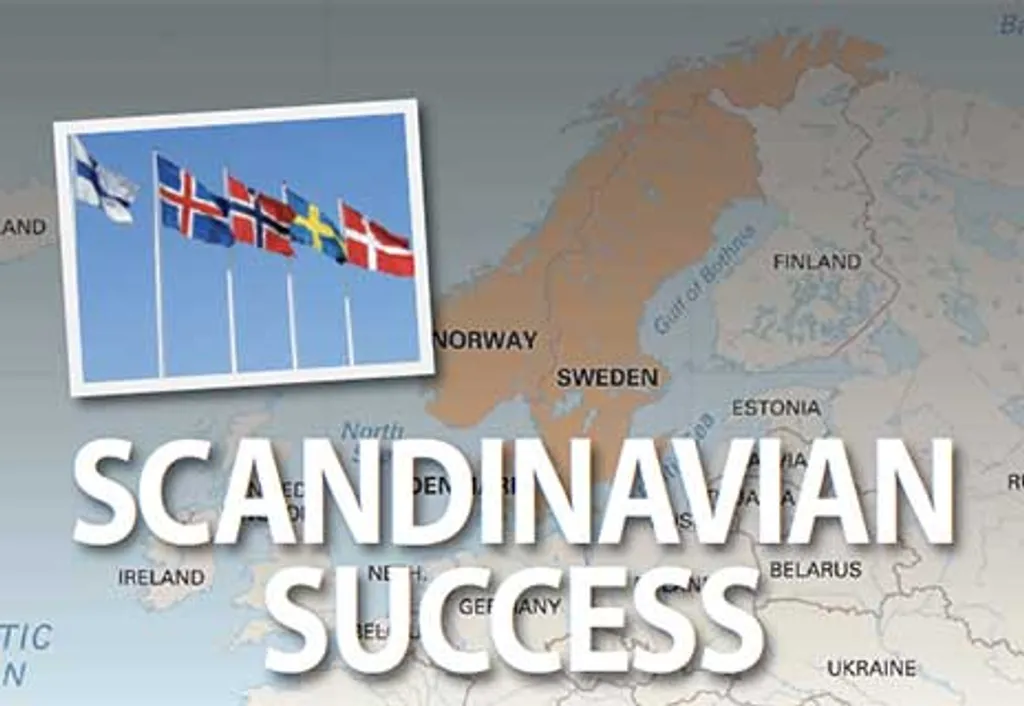
The Nordics have long presented a shining beacon of pragmatic and well-executed social and liberal policies. Think quality of life, gender pay and parental leave equality, work/life balance and better social benefits for everyone.
But the Northern Europe region’s approach to liberalizing its online gambling markets has been anything but pragmatic. Across Sweden, Denmark, Norway and Finland, a longstanding monopoly model has historically been in place, giving the state-owned operator exclusivity over lottery, horse racing and land-based gaming machines.
Sure, this model worked before the widespread adoption of the internet, but once gambling moved online, private operators started entering these gray markets to provide a service that the monopolies weren’t equipped, or competitive enough, to provide.
This went on in the background for years, until in 2012 Denmark became the first Nordic country to open its online gambling market, establishing a licensing system to encourage competition and protective measures for players. Overall, the launch of the open market was a success, and to this day, Denmark remains the Nordic country with the highest rate of channelization at 90 percent, meaning that’s how many players are using licensed operators versus illegal ones.
The Secret to High Channelization
When looking at channelization, Denmark is widely used today as a leading example of a successful open market. Morten Ronde, CEO for the Danish online gambling trade body Spillebranchen, says it’s the Danish regulator’s careful use of data on player behaviors and operator performance that has helped it to maintain a high rate of channelization.
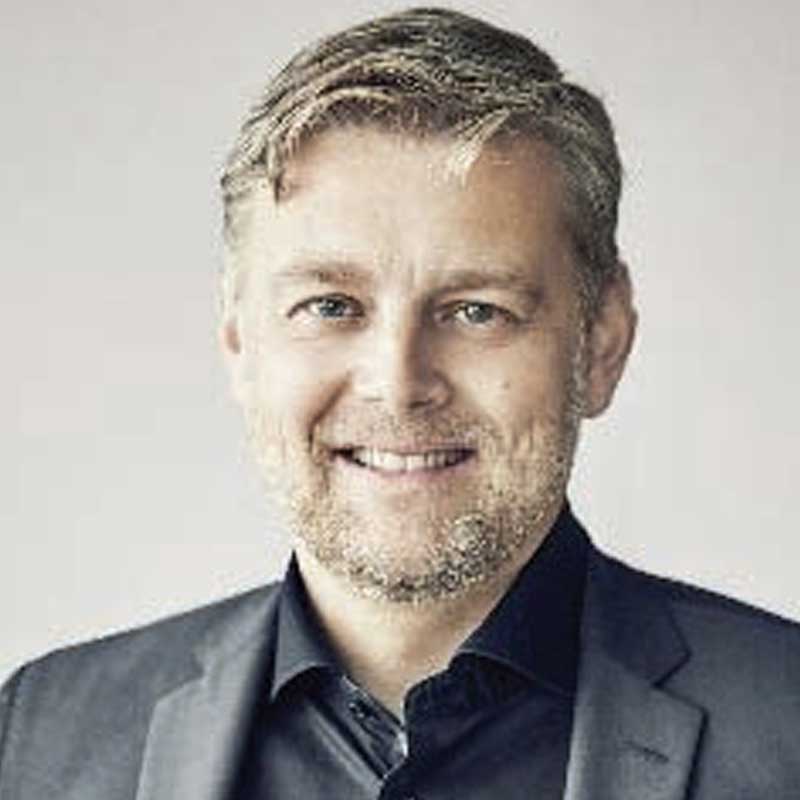
“One thing they have done really well is they use data a lot,” Ronde says. “From the beginning, a system was implemented where all the licensed operators needed to deliver transactional data to the regulator so they could monitor products and tax payments.
“It really enables them to investigate how the market is reacting to various measures or changes.”
A notable example was during the Covid 19 pandemic, when neighboring Sweden hit the sector with mandatory online casino limits to ensure players, who were locked down at home with little to do, did not overspend and overuse gambling apps. From July 2, 2020, players were also required to set time limits. These measures were in place until November 2020.
Meanwhile, Denmark’s regulator (Spillemyndigheden) saw from its tracking of player behaviors that gamblers weren’t drastically increasing their playing time, despite being stuck in a lockdown.
“That prevented the government from intervening and placing similar restrictions on players like they did in Sweden where they were only predicting there was going to be a problem,” Ronde adds.
As for channelization, Ronde believes the unwavering rate in Denmark is in part due to the pragmatic regulations in place. “I think it’s been the same for the last five or six years,” he adds. European peers like Sweden, the Netherlands and the U.K. face a growing black-market problem as new regulations to check player affordability, restrict gambling ads and enforce deposit limits are brought into action, and players are increasingly turning to illegal operators to avoid these new friction points.
But Denmark has largely maintained its original regulations. Ronde says a discussion around restricting gambling ads has rumbled on in Parliament for four years, with politicians considering anything from a whistle-to-whistle advertising cap to a complete advertising ban.
“Something will happen (eventually) and as a trade association, that’s where we try to ensure that it’s more of a soft landing for the industry,” Ronde explains.
Discussions around raising the gambling tax rate from 20 percent to 29 percent have also stirred in the past four years, but these conversations seem to have been put on hold for now, Ronde suggests. Politicians in Denmark are notably less concerned with the activity of the gambling industry than many of Europe’s neighboring regions.
It could also be the case that the Social Democratic Party, which has been in power for the past three terms, most recently as part of a three-party coalition, is largely neutral on gambling.
Competition Killer
But Denmark didn’t get everything right in its market liberalization. One area Ronde’s Spillebranchen argues against today is gambling monopoly Danske Spil competing against commercial operators to offer online casino and sports betting products, while maintaining its government ownership.
Denmark, Sweden, Finland, Norway and France all have gambling monopolies today, with the state owning a full or part share in the operator in each instance. Those operating in open markets (all except Norway and Finland until January 2027 when the licensed market launches) have exclusivity over the national lottery and land-based gambling, and in the Nordic markets’ case, horseracing.
Ronde and his Swedish counterpart, Gustaf Hoffstedt of the Swedish trade association (BOS), have fought tirelessly to bring an end to the monopoly model, arguing the state’s involvement in a competitive private sector like online gambling presents many conflicts of interest. But politicians are staunch in their support of the monopolies.
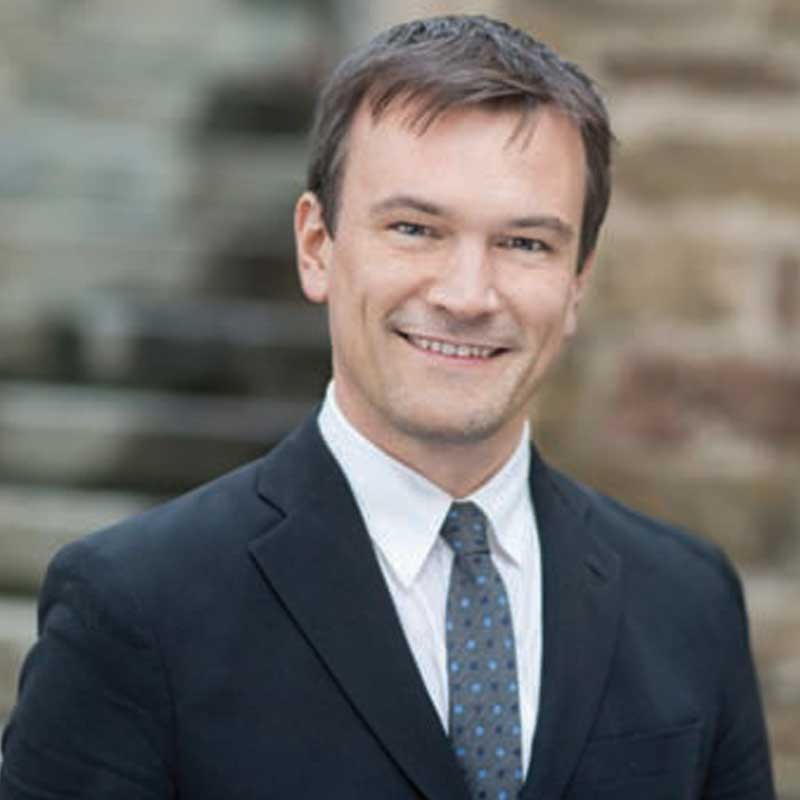
“I don’t see why (the state) has any role in a completely open and competitive market,” Ronde says. “It has become a money grab, and even the ministries of finance around Europe know there is going to be an end to this model, but they’re going to milk it as long as they can.”
In Denmark’s case, Danske Spil was allowed entry into the competitive online market when it was launched. The market was the first in the Nordics to open up and therefore did not have a model to follow and learn from.
“There was a real concern that no operators would be interested in taking a license, so there needed to be at least one licensee in the market and that would be the state-owned operator,” Ronde says.
“Danske Spil was not meant to have any advantages. It was written clearly in the law that there had to be arm’s length between the commercial entity and the lottery. But of course, the lottery did everything they could to circumvent that rule.”
Today, Danske Spil maintains a 25 percent share of Denmark’s commercial market, down significantly from around 60 percent in 2012. The theme of dropping market share among monopoly operators is also being felt in Sweden and Finland.
In fact, many of Finland’s stakeholders believe the market’s rush to liberalize online gambling is an effort to save the monopoly, Veikkaus, from continuing to suffer market share and earnings losses. Veikkaus’ latest figures suggest the operator has a 20 percent share of the Finnish market today, despite being the only licensed operator available.
Hoffstedt, a former politician for Sweden’s Moderate Party, expects the monopoly model will come to an end eventually, with governments eventually selling off their stakes to private operators.
“The normal way (a private sector industry runs in) Western society is private companies run businesses while governments and parliaments set and supervise the rules. But among the Nordic countries, the state is also quite an aggressive commercial operator. Neither Denmark nor Sweden has managed that process in a good way so far,” Hoffstedt laments.
Here We Go Again
The industry was particularly excited about Sweden’s market opening in 2019 as the country had become something of an online gambling hotspot and hub of gaming innovation. The market was notably quite lenient with the unlicensed market before it launched a licensed model, Hoffstedt says. Operators happily existed in the gray market, with channelization for the monopoly at only 50 percent prior to the 2019 market launch.
Legislators in Sweden largely followed Denmark’s process, including allowing Svenska Spel some competitive advantage over other operators. The monopoly was able to cross-sell its lottery players to online casino and betting in certain circumstances. It also used its widely known lottery and land-based branding to draw in customers.
To navigate competition law, Svenska Spel was split into two entities within a holding company, one monopoly entity and one competitive entity. Svenska Spel, Hoffstedt says, has experienced reasonable success in the open market compared to the private operators. “They are not very successful, just reasonably successful.”
Sweden’s Moderate Party and BOS called on the government in June 2022 to privatize Svenska Spel’s competitive business. These plans have not yet been put into action, even after the party took power that year. Its coalition partner, the right-wing populist Swedish Democrats, has since questioned delays in enacting this pre-election pledge.
Ronde has made similar requests of Denmark’s Social Democrat government, but he notes there has been no interest from them to sell their stake in the monopoly. “I think the market itself will dilute the monopoly model,” Ronde says. “In Denmark, the monopoly started with a market share of almost 60 percent—they’re down to 25 percent now, so I think the market will regulate itself over time.”
Sweden in July increased its gambling tax from 18 percent to 22 percent to bring in an increased tax revenue of $48.6 million each year. Naturally, the sector protested, and Sweden’s attractiveness as an online gambling market suffered.
“There is a growing concern regarding Sweden, but I don’t think that that large operators will abandon the region,” says Hoffstedt. But he insists the tax increase has encouraged an increase in black market usage in the country. BOS estimates the current channelization rate is around 72 percent, much lower than the Swedish regulator’s aim for a steady rate of 90 percent.
Learning from Mistakes
Hoffstedt and Ronde hope that Finland can learn from the mistakes made by Denmark and Sweden, particularly with regards to its own monopoly operator. Finland’s stakeholders have been extremely vocal about the unfair benefits Veikkaus could have against private operators upon market launch.
In one example, industry consultant and former Veikkaus executive Jari Vähänen warned the ministry of the interior in his response to the government’s public consultation in August that Veikkaus’ licensed business will maintain a major competitive advantage if it has access to its 2.5 million-strong monopoly customer base.
“If they can’t bring those customers with them, the value of Veikkaus’ licensed business will be much lower. But if they start operations with 2.5 million customers, they will dominate the market,” Vähänen says.
Finland’s draft legislation, released in July, laid out restrictive marketing measures, including the banning of affiliate marketing and customer bonuses. These two measures faced huge criticism from the sector as Mika Kuismanen, CEO of the Finnish trade body Rahapeliala Ry, called the government out for taking “reckless risks” in their draft plans by jeopardizing channelization rates in August.
“Marketing is unjustifiably limited, sponsorship is stifled, while bonuses and offers are prohibited. If it doesn’t change course quickly, the law reform will run into a wall and gambling on the gray market will continue,” he said in an opinion piece published in the Finnish publication Uusi Suomi.
But speaking to GGB, Kuismanen says the government has had extensive discussions with the industry and has since softened its stance on affiliates. “The law has bit by bit changed into a more operational and liberal one,” he notes. “We are very happy that the civil servants working on the law have contacted us and we’ve had an open and fair discussion with the lawmakers.”
Looming Black Market Risks
Including industry stakeholders in the regulatory process is key to a successful gambling market. But, according to Hoffstedt, the Nordic markets have very many stakeholders all wanting their perspective and views considered.
“There are so many strong stakeholders, from universities and nonprofits to government authorities, but none of them have the competence or are interested in creating a commercially attractive gambling market,” Hoffstedt says. With a heavy emphasis on social affairs, they are seeking to enforce additional regulations and restrictions to improve responsible gambling efforts.
This can ultimately be damaging to the market and push channelization into a tailspin, forcing players to turn to the illegal market for a frictionless experience. There is of course a very delicate balance between the safeguarding of players and ensuring they have an enjoyable and seamless journey when gambling online.
Europe overall faces a growing black-market threat as tightening restrictions are rolled out across multiple markets. We can hope the Nordics’ notoriously liberal and practical approach to society prevails in any future gambling regulations.