Reinventing the Wheel

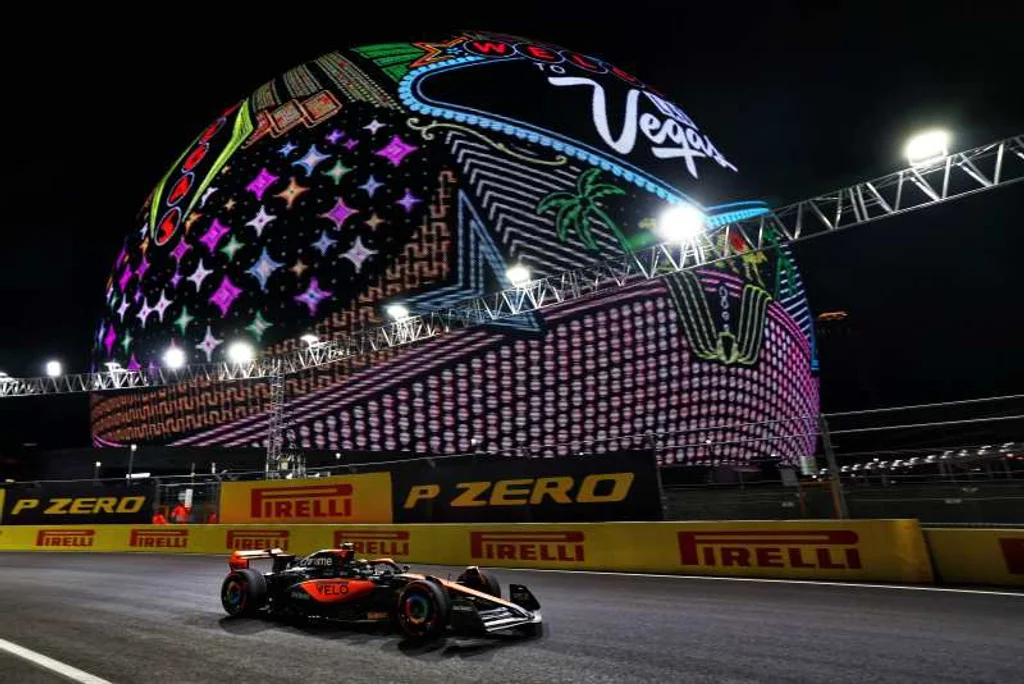
When Formula One announced the formation of the annual Las Vegas Grand Prix race in the spring of 2022, the news was like a squirt of lighter fluid on a running blaze. The city was in the early stages of a multi-year post-Covid bonanza, and a high-speed F1 race through the middle of the Strip seemed like a fitting symbol to define this all-gas-no-brakes era.
Bringing the F1 brand to Las Vegas was “as good as it gets for global exposure and marketing,” then-Wynn Las Vegas President Brian Gullbrants told the Nevada Independent in April of that year. Lance Evans, MGM’s senior vice president of sports, said in the same article that F1 was a “huge” growth driver for Las Vegas, adding that the event would be “incredible to watch.”
By the time construction work and other preparations started in earnest in 2023, however, friction started to arise. Immense traffic disruptions in and around the Strip plagued locals, tourists and casino workers alike. This in turn put immense strain on businesses throughout the region.
F1 itself also had a less-than-stellar introduction to the community—in July, organizers sent letters to venues situated along the 3.8-mile track route, asking them to pay licensing fees of $1,500 per person, multiplied by their maximum capacity. Any non-payers would have their race views obstructed or blocked. After much consternation, this was eventually resolved by lowering the fee to around $50,000 per venue, instead of the millions of dollars that some owners would have faced under the original demand.
To add to it all, some 35,000 non-gaming workers represented by the powerful Culinary and Bartenders unions across multiple properties were primed to strike in the days leading up to the inaugural race. This was averted by settlement of new five-year collective bargaining agreements with Caesars, Wynn and MGM. The agreements included 32 percent wage increases spread across the duration and several other benefits.
By the time drivers, cars and F1 fans actually made it to Las Vegas for the first race in late November, anticipation was sky-high. The city’s collective breath was held when the first practice session was canceled as sparks flew out from under Ferrari driver Carlos Sainz’s car after a manhole cover failed. Shots of track workers frantically scrambling to fix the cover made the rounds on social media. And onlookers questioned whether Sin City was really prepared for such a stage.
But when the rubber actually met the road, the event delivered on its lofty expectations.
Red Bull phenom Max Verstappen claimed the first-ever Las Vegas Grand Prix checkered flag in what was described by ESPN as “a race-of-the-year candidate.” Verstappen cruised through the finish line singing “Viva Las Vegas” with his pit crew, en route that season to his third World Drivers Championship.
The numbers from that weekend were eye-popping. According to data from Applied Analysis commissioned by Clark County, the race generated $1.5 billion in total economic impact, which included various infrastructure costs paid by F1 parent company Liberty Media. That was the best-performing single event in Las Vegas’ history, including Super Bowl LVIII ($1 billion), which was held the following February at Allegiant Stadium. The 2023 race generated $77 million in state and local taxes, the most by a single event ever held in the region.
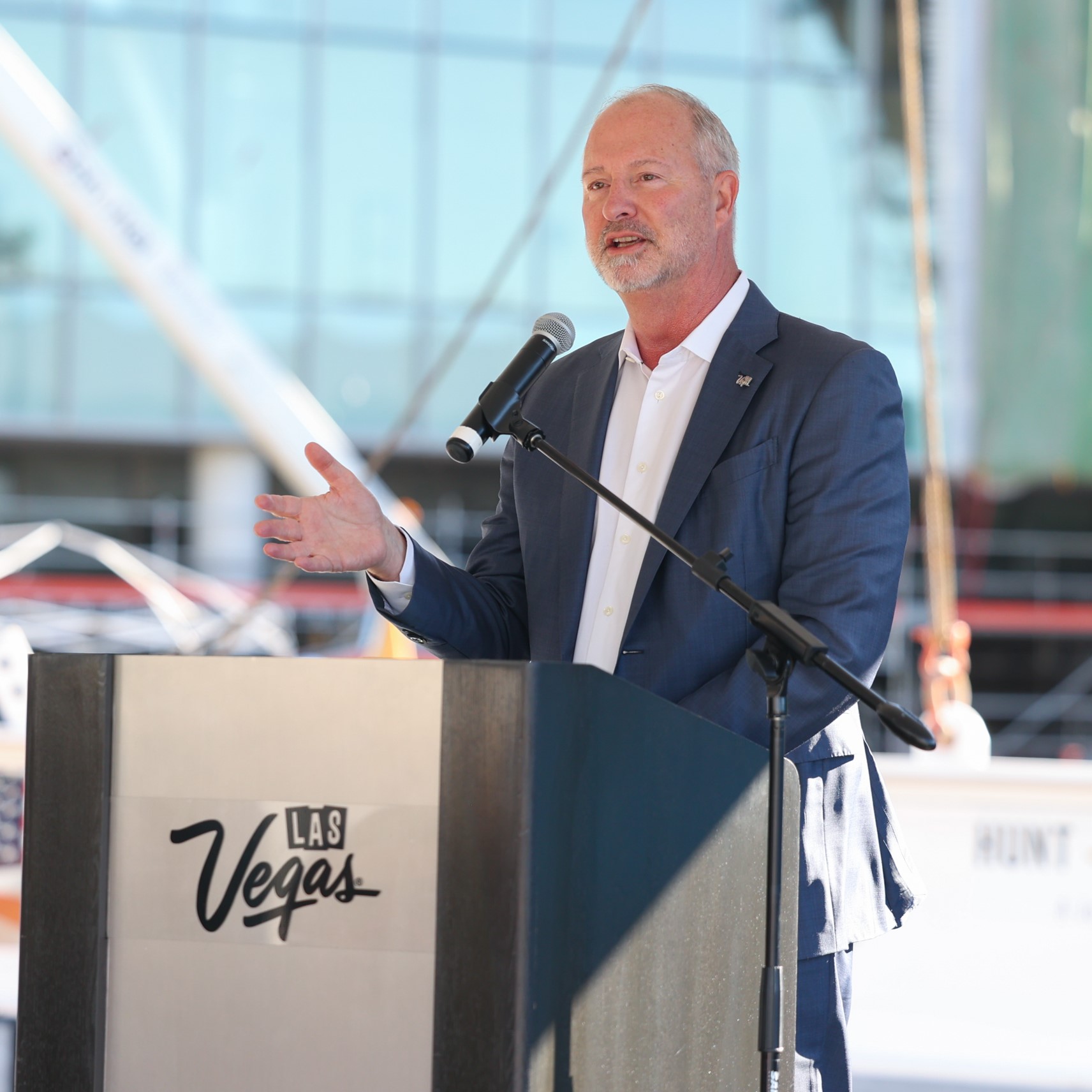
“Thanks to the Las Vegas Grand Prix, our city will have its best November in history, ” Steve Hill, president and CEO of the Las Vegas Convention and Visitors Authority (LVCVA), said in a release at the time. “We celebrate the successes of this inaugural race and look forward to what the LVGP has in store for years to come.”
Nevada posted statewide gross gaming revenue of $1.37 billion that November, which represented a 12.6 percent increase year-over-year. Both the state and the Strip would go on to post record performances for the year overall.
Comparing the Sequel to the Original
While the lead-up to the first race was slow and tense, it seemed as though the second iteration arrived in the blink of an eye. The city was still on a high from the aforementioned Super Bowl in February and the opening of the Sphere entertainment venue in September, and the construction buildup was significantly shortened from the first race.
The relative lack of drama and labor strife for the second edition seemed to be embodied by a somewhat ho-hum race. Mercedes’ George Russell won the race itself but the headlines again went to Verstappen, who finished fifth and claimed a fourth Drivers Championship despite never leading the field in Las Vegas. His winning season was all but clinched before the race began.
Applied Analysis reported that the second edition generated $934 million in overall impact, an impressive figure just about equal to the Super Bowl, but well below the first running. The state’s gaming revenue for November 2024 was $1.31 billion, down 4 percent from 2023.
Nevada still posted its fourth straight annual revenue record in calendar year 2024, but the Strip declined about 1 percent.
In hindsight, this was perhaps the first sign of a lull that has now spanned from late 2024 through much of 2025 and sets the stage for the event’s third installment.
LVCVA data show that Las Vegas visitor volume has posted year-over-year declines in every month in 2025 through August. Beyond that, the city has still not seen a monthly increase of more than 1 percent since September 2024, before the second race even took place.
Statewide gaming revenue saw YoY declines every month from February through May this year, and the same was true for the Strip. Zooming out, the Strip had actually been down for eight of nine months from September 2024 through May 2025, with January being the only exception.
President Donald Trump took office for his second term in late January, and his aggressive stance on tariffs and foreign policy has created headwinds for the hospitality sector writ large, Las Vegas included. Trump’s comments on Canada as a 51st state earlier this year was particularly irksome for Canadians, who have historically represented the city’s largest international feeder market. Canadian airlines WestJet and AirCanada have seen passenger traffic to Las Vegas slip 25 percent and 17.5 percent year-to-date, respectively, per Harry Reid International Airport data.
On top of this came effects from a federal government shutdown, which began October 1. Overall economic effects of previous shutdowns have been minimal, but the longest shutdown record spanned 35 days from late 2018 to early 2019. This year’s race takes place November 20-22, meaning if the shutdown were to stretch until then, it would be the longest in history at that point. From a tourism perspective, the U.S. Travel Association has estimated that the shutdown costs the country’s hospitality sector $1 billion per week.
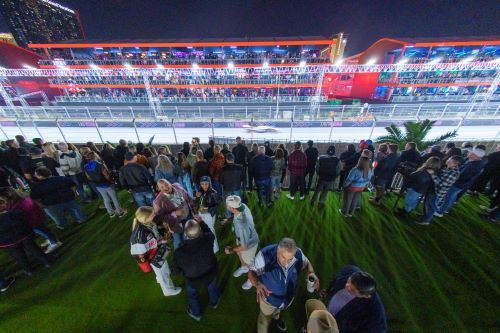 Hill and the LVCVA have done a lot of heavy lifting this year to restore the narrative that Las Vegas remains a value proposition for all comers, from non-gamblers to penny slot players and the highest of rollers. F1 is a critical piece of those efforts, at a critical time.
“Since the inaugural race in 2023, we’ve learned a great deal about balancing the excitement of a marquee event with the needs of our community and workforce,” Hill says.
He notes that the F1 team has helped make the event more accommodating by “expanding ticketing options and moving the 2025 start time earlier to enhance the overall experience.” The first race started at 10 p.m. local time to try and accommodate various time zones around the world, but that was changed to 8 p.m. starting last year.
There is also an emphasis on expanding the number of events in the city beyond just the race weekend, including the Neon City Festival, a free, all-ages concert series held in Downtown Las Vegas. This year’s headliners include Good Charlotte, Deadmau5 and Breaking Benjamin.
“We’ve refined access and mobility plans, strengthened communication with residents and employees, and expanded transportation options,” Hill says. “The Las Vegas Grand Prix team also listened closely to feedback from the community, resorts and fans, resulting in a more collaborative and responsive approach to hosting the race.”
The race has grown in a short time to become Las Vegas’ biggest annual event, Hill asserts. This is not only due to its performance, but also because of its timing—what was once among the slowest periods of the calendar is now “the most successful,” he says.
Casinos Prepare for Year 3
For casino operators big and small, finding a way to navigate and profit from F1 has been tricky. The highest-tier Strip properties have seen meaningful gains from hosting the race, but that hasn’t exactly trickled down, even for companies like Caesars that operate both large- and small-scale venues.
Caesars CEO Tom Reeg said on an earnings call after the first race that the event was “a huge lift for the high-end properties, including Caesars Palace and Paris. For our mass-market properties, it was less so.” Keith Smith, CEO of locals-focused operator Boyd Gaming, said his company saw no meaningful benefits from the race weekend.
F1’s post-race press release from 2023 featured quotes from the CEOs of MGM, Wynn and Caesars—the 2024 release featured no quotes. This year, MGM was the only one of the three to put out a release detailing its race weekend offerings, which include F1 fan zones, food deals and art exhibits at its Strip resorts.
 “The Las Vegas Grand Prix captures the world’s attention, and no one brings it to life like MGM Resorts,” Ryan Abboushi, MGM’s president of entertainment, said in the release. “With our properties only steps from the track, we’re creating an unmatched collection of food and beverage experiences, art, fashion, nightlife and fan zones that only Las Vegas can deliver. This is where the energy of Formula 1 meets the spectacle of The Strip.”
Off the Strip, perhaps no casino symbolizes the evolution of the F1-Las Vegas marriage better than Ellis Island Casino & Hotel. Things got off to a rough start, as the casino was one of multiple businesses to sue F1 in early 2024 for damages related to business interruptions from the 2023 race.
But instead of continuing legal proceedings, the two sides came together and announced a partnership, which was renewed and expanded this May. Ellis Island is an official venue of the race, with both live track views and F1 closed-circuit feeds. The partnership also allows Ellis Island to utilize F1’s Grand Prix Plaza facility to host the annual Candlelighters Childhood Cancer Foundation of Nevada Halloween Bash.
“Over the last two years, we have committed to working with the community and local businesses to ensure they are part of the race week excitement,” Emily Prazer, president and CEO of Las Vegas Grand Prix, Inc., said in a release. “Ellis Island is not only a great partner for us but also offers fans another exciting viewing location along the circuit.”
Anamarie Ellis, vice president of operations at Ellis Island, says each of the first two races have provided “something new to incorporate into planning for the next year.” The property opened the first phase of a $35 million expansion this summer, which will be featured prominently in festivities.
“This year we are introducing our newest venue, the Deck Rooftop Bar, with amazing VIP viewing experiences of the Koval Straightaway and Las Vegas Strip,” Ellis says. “We are also offering a free viewing platform for members of our Players Club with unobstructed views of the race from Koval Lane.”
Other changes for this year’s event include “streamlined entry points for all activation areas,” single-day ticket packages, improved sound and visibility and more. Overall, both the casino and the city are hopeful that 2025’s race can be a catalyst that drives another strong era of growth.
“Historically, F1 hasn’t necessarily been our largest event of the year,” Ellis says, “but as appetite for F1 in Las Vegas continues to grow, as it has in the past three years, we’re excited to continue to develop new offerings and see how we can continue to grow the event on our property.”