Pennsylvania Online Casinos Drive January Gaming Revenue Surge

Pennsylvania’s gaming market opened 2026 with a marked uplift driven by online casinos.
Key Takeaways:
- Online casinos led Pennsylvania’s gaming revenue growth in January 2026
- iGaming saw an 18.6% increase, contributing significantly to total earnings
- Shift toward digital channels and higher-margin sports betting outcomes highlighted in the report
Digital Channels Power January Gaming Revenue Growth
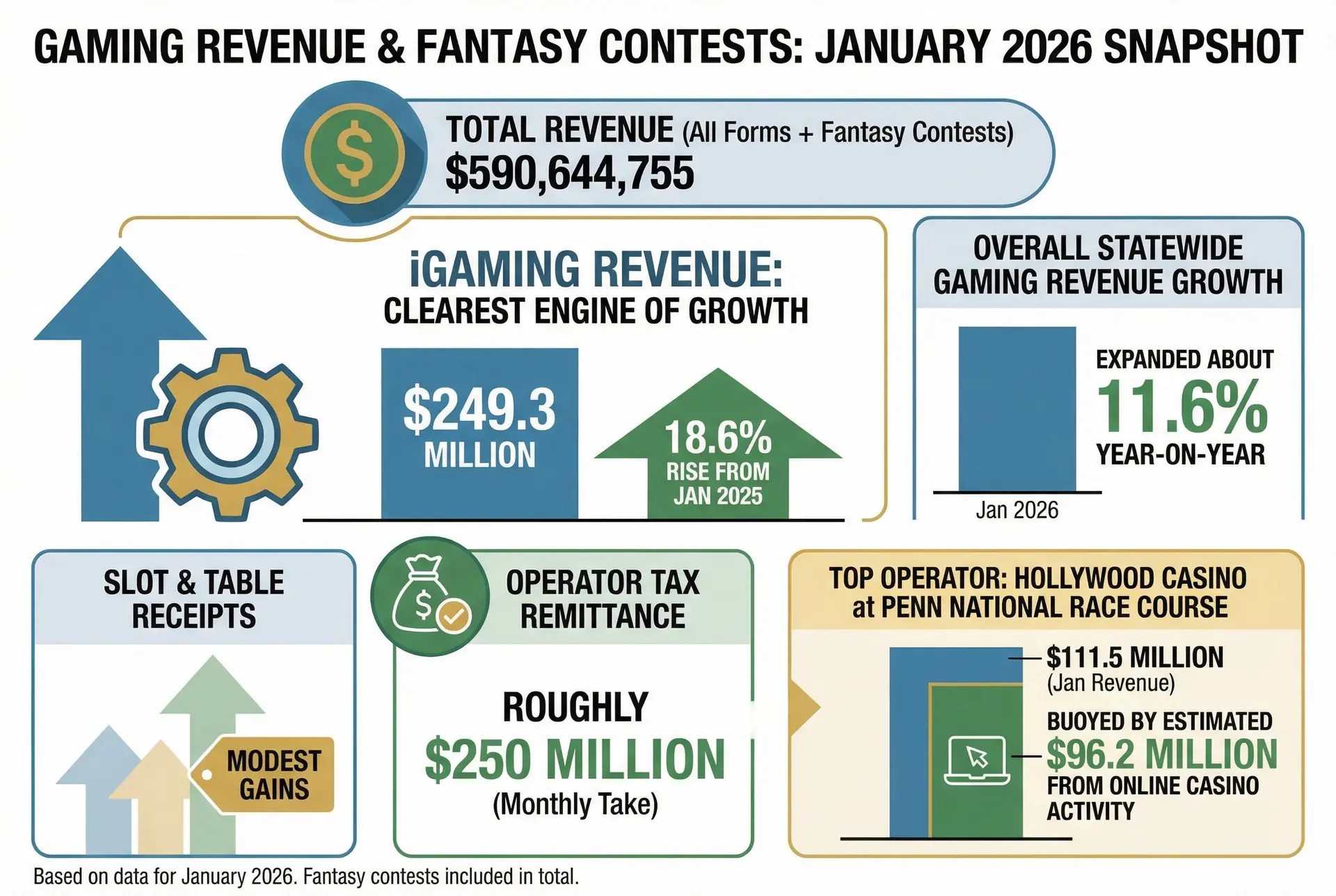
According to the Pennsylvania Gaming Control Board, online casino were the clearest engine of growth, climbing to $249.3 million, an 18.6% rise from January 2025. Overall statewide gaming revenue expanded about 11.6% year-on-year.
Slot and table receipts showed modest gains, and operators remitted roughly $250 million in taxes on the monthly take.
Sports betting handle contracted but taxable sportsbook receipts increased sharply, underscoring a shift toward higher-margin outcomes.
Hollywood Casino at Penn National Race Course and its partners led operators with $111.5 million in January revenue, buoyed by an estimated $96.2 million from online casino activity.
Valley Forge and Rivers Casino Philadelphia followed, with Valley Forge topping sports betting handle due to its partnership with market leader FanDuel. Smaller properties recorded the largest percentage swings, with Presque Isle posting a notable rebound and Mount Airy declining.
Online poker and fantasy contest segments lagged, with double-digit drops in fantasy revenue.
Oversight Tightens as Digital Mix Expands
The January performance aligns with a broader trend toward digital channels observed in 2025. Statewide online gambling reached multibillion-dollar levels, while brick-and-mortar growth remained muted.
The results reinforce the strategic priority for operators to invest in iGaming platforms and cross-channel marketing as regulators and tax authorities monitor revenue mixes.The strong online start to 2026 comes amid heightened regulatory oversight. The PGCB imposed penalties on video gaming terminal operators for compliance breaches. The enforcement action highlights the regulator’s focus on maintaining standards across all licensed verticals, even as digital channels accelerate.