Only the Beginning
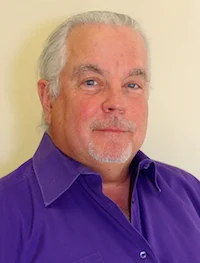
For 30 years, Rob Goldstein has worked alongside some of the most impressive executives in the industry, but most importantly Sheldon Adelson, the founder of Las Vegas Sands. When Goldstein was appointed chairman and CEO in January 2021, he reached the pinnacle of his career. While the company has announced that Goldstein will step down in March 2026, he believes he’ll leave LVS in better shape than when he assumed the role, with confidence that the company will survive and thrive.
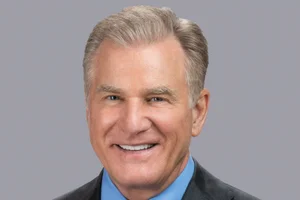
“It’s a very challenging environment outside Singapore and Macau; what the growth is, I’m not sure,” he says. “But we’ve got the best buildings and the best talent. This company will be fine for years to come.”
Bringing Up Father
Goldstein was born in a small town outside Philadelphia. His entryway into gaming came through his father.
“My dad was a dyed-in-the-wool small businessman, running everything from diners to hot roofing—you name it, he did it. He had one bad habit. He gambled on everything from golf to poker to craps. He got in trouble in the late 1960s with too much debt in Las Vegas. His nickname was the ‘Philadelphia Flash.’”
One day, some men came to visit. Instead of demanding money, they asked him to recruit other gamblers to come to Vegas. Suddenly, the Philadelphia Flash was in the junket business.
“Within two years, he was running a planeload a month from Philadelphia to Las Vegas,” recalls Goldstein. “Occasionally, I’d go with him. This went on for a couple years, then I went to college and kind of lost track of the business.”
In Goldstein’s second year at Temple University, his father had a massive heart attack. He asked the 19-year-old to help out. “I spent the better part of that year going back and forth to Las Vegas and going to college. It was pretty hectic. But I learned something I could do.”
When his father passed away, he didn’t leave much money. The bank foreclosed on the family home. Goldstein took over the junket business and was so successful he bought back the house for his mother. He started to attract attention.
Brighton Bound
In the early 1980s, the struggling Brighton Hotel in Atlantic City was looking for a comeback. Goldstein, by then in law school, wasn’t interested. Even so, he agreed to meet with investor Michael Milken.
“In those days, you got about $12,000 a year as a law clerk after passing the bar. (Milken) was talking about a lot more money than that. I thought, ‘Could this be something I should do?’” He took the job and met his new boss, Bill Weidner. “It was just an epiphany. Thirty, 40 some years later, I’m still at it.”
The team included Weidner, Brad Stone and Steve Hyde, who would later die in a helicopter crash when he was leading the Trump hotel organization.
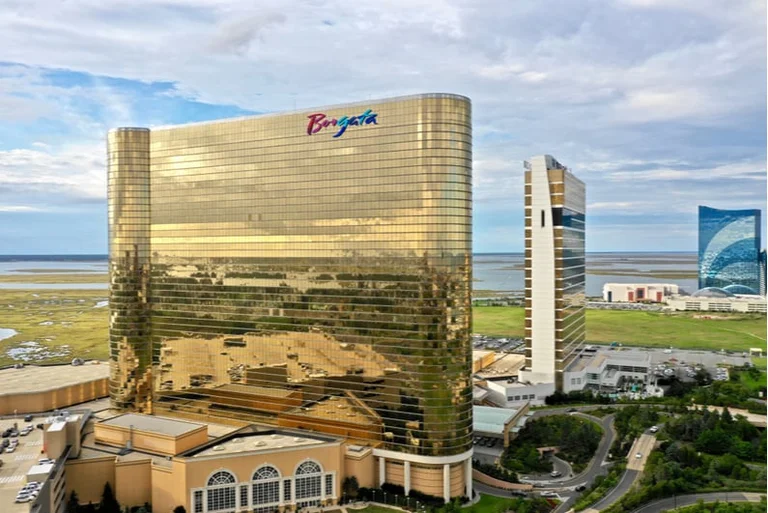
The Brighton was owned by the Pratt family of Hollywood casinos, now Penn Entertainment. The Pratts leased the Sands name from the Las Vegas hotel, and the revival began.
“The Sands name gave the property great authenticity—maybe more than it deserved,” says Goldstein. “We repositioned it, and in no time at all, it became one of the great turnarounds I’ve ever been part of.
“I was given too much credit, though. Bill and Brad were just masterful.”
Sands Connection
Sheldon Adelson was in the convention business before he got into gaming. He developed the Computer Dealers Exposition (Comdex) and later the Consumer Electronics Show (CES), both wildly successful events. In 1989, he bought the Sands Hotel and Casino in Las Vegas with an eye toward adding a convention center. A year later, the new Sands Expo and Convention Center became the only privately operated convention center in the United States.
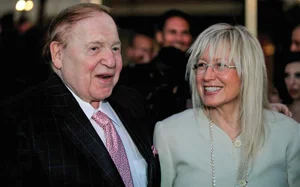
But Adelson had no experience running a casino hotel. He recruited Weidner to join him in Las Vegas.
“I’ll never forget: Bill said, ‘How bad do you want to be rich?’” Goldstein laughs. “I said, ‘I’ve always wanted to be rich, what do you have in mind?’ He says, ‘Do you want to go to work for Sheldon Adelson?’” They met Sheldon and Miriam Adelson at the Four Seasons in New York. While impressed, Goldstein wasn’t committed until Adelson made a personal pitch: “Listen, invest in your future.”
“He said there’s a lot more money to be made with non-gaming than gaming. To me that was very confusing. But I called my wife and said, ‘I think I’m gonna bet on this guy. He’s got a vision.’”
Rough Start
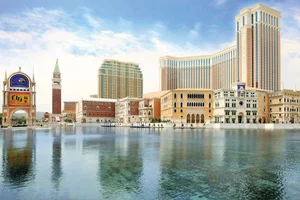
The Adelsons’ Italian honeymoon inspired the Venetian Las Vegas, complete with canals. With Steve Wynn’s Mirage across the street, it had to be spectacular. Adelson “was laughed at, dismissed and derided,” says Goldstein. And success wasn’t immediate.
“When we opened, we had no rooms. We had no retail. We had one or two restaurants. Sophia Loren cut the ribbon, but we had to put her up at Caesars. (But) at least we were open.”
Then the money started rolling in. “I got a call from someone who was very recognizable,” says Goldstein. “He says, ‘You guys aren’t playing fair! You’re making way more than us, but it’s not really a casino. It’s a hotel.’
“When I told Sheldon, he started laughing. He said, ‘Tell that idiot when you go to the bank, the teller doesn’t ask did this come from the casino or from the food and beverage. They just say give us the money. Tell that guy to stay in his little casino world while we print money.”
Meeting Macau
In 1999, the Chinese government took over Macau as a special administrative region (SAR) and opened up the gaming business to include three licenses—one for the man who ran gambling in Macau for 20 years, Stanley Ho, through his firm, SJM. The world’s major gaming companies bid on the other two licenses. Sands wasn’t expected to win.
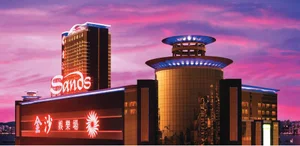
“Sheldon again used the convention card, which helped us immensely,” says Goldstein. “The success of the Venetian in Las Vegas gave us the credentials. But we were still a little nothing company compared to MGM, Wynn and Caesars. We were still seen as a mom-and-pop company. We weren’t public.”
But they were in, and Sands Macao was built at the foot of the ferry terminal. “I always joke, we built that in 14 months and got the money back in 14 minutes,” Goldstein says. “The Sands Macao was truly a brilliant stroke.”
Adelson’s genius became clear when he persuaded Macau to sell him marshland in the Cotai region, now home of the SAR’s major casinos.
“Sheldon made a lot of great decisions in his business career, but that just may have been the best,” Goldstein says. “I won’t tell you the names of people who said he was out of his mind. There were some very graphic comments about institutionalizing him.
“Once again, Sheldon said, ‘Let’s go nuclear and build all the components of Las Vegas in Cotai.’ Once he lit the fuse, everybody had to come. And today, $50 billion to $60 billion has been invested (in Cotai). Talk about a visionary decision.”
At the same time, Goldstein was principal in a deal to sell the mall at the Venetian in Las Vegas. Adelson balked until he heard the offer: $600 million.
“Two weeks later we sold it for $800 million, more than we spent on the entire building.”
Singing in Singapore
When Singapore opened the bidding for two integrated resorts, Las Vegas Sands was no longer a longshot but the odds-on favorite. However, another Venetian just wouldn’t do.
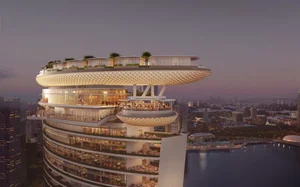
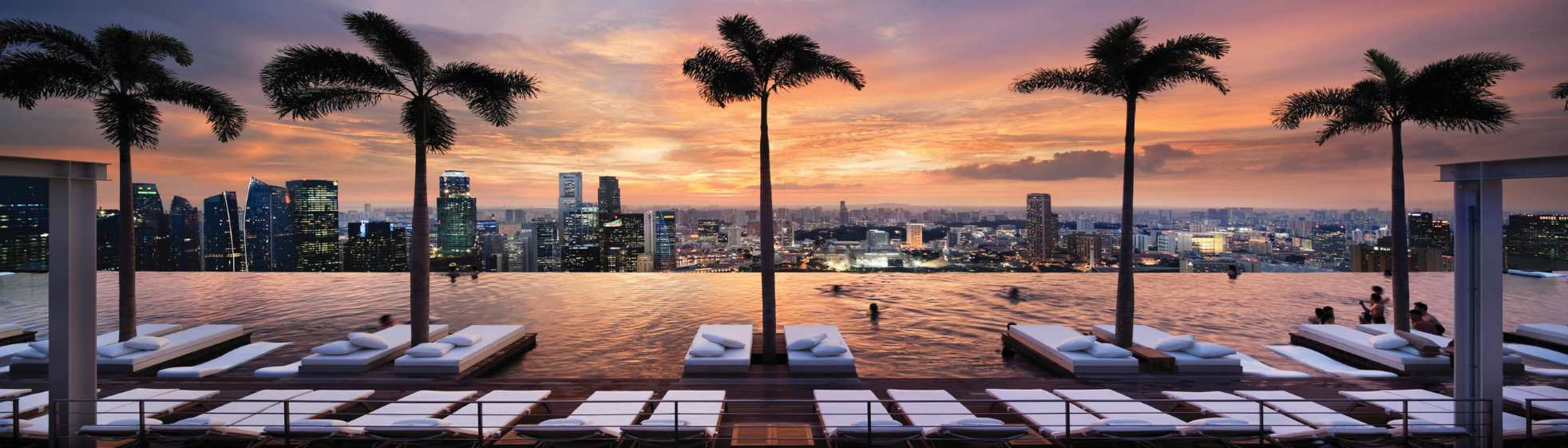
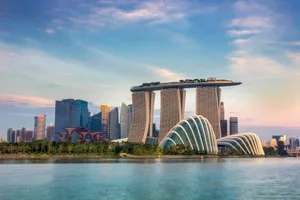
“The bid was certainly convention-based, but also design-based… Singapore didn’t want another themed property. They wanted something new and authentic.” Moshe Safdie’s architecture for Marina Bay Sands “really delivered that.”
More than 30 companies submitted bids in Singapore. A victory for LVS wasn’t without risk. “A lot of people thought Singapore wouldn’t work because of the distance from China and Hong Kong. A lot of people didn’t believe Singapore had enough people (population: 5 million).”
Moreover, the government wanted to charge citizens S$100 just to enter. LVS execs laughed. But Larry Chu, LVS head of sales and marketing, said, “No problem. It’s like going to movies. It’s like buying a candy bar or pack of cigarettes. It doesn’t matter.”
“And he was right,” says Goldstein. “It never did matter.” Today, LVS is embarking on a spectacular $8 billion stand-alone project in Singapore that will complement Marina Bay Sands.
Deadly Serious
Las Vegas was humming. Macau was expanding. Singapore was under construction. With a share price of more than $150, LVS was the envy of the Strip. But the recession that started in 2007 hit hard. Adelson’s net worth dropped by more than $13 billion. LVS stock cratered, and Adelson invested$1 billion of his own money to keep it afloat. It was a perilous time.
“We stopped construction in Macau and Singapore,” says Goldstein. “Many other companies went under. We went from the highest of highs in 2004-2006 to 2007, ’08 and ’09 becoming a test of staying power. I went from being very wealthy to not very wealthy. Our stock fell apart. We were a development company and we stopped development.”
Then Bill Weidner split with Adelson. He resigned, soon followed by Brad Stone. Many people expected Goldstein to exit too.
“I thought about going with them,” he admits. “But I felt the company had better days ahead. My good friend David Solomon from Goldman said, ‘Sheldon’s going to come through this. I wouldn’t abandon it.’
“What we did was catch lightning in a bottle. We caught Vegas. We caught Macau. We caught Singapore. So I decided to stick around. And I’m glad I did.”
America the Saturated
When LVS sold the Venetian and Palazzo in Las Vegas to Apollo Global Management and VICI Properties for $6.25 billion, it marked the end of the company’s U.S. business. Sands Bethlehem had been sold two years earlier to the Poarch Nation of Alabama for $1.3 billion. And just when it seemed LVS had a lock on a potential New York casino license, it pulled out. Goldstein says it’s difficult to operate in the country today.
“Saturation is an issue. Think about it: When we started 1,000 years ago, there was one place in the entire United States to make a bet—Nevada. Atlantic City happened in the late ’70s. Today, between Indian, land-based casinos and online, it’s almost impossible. And with Kalshi, sports betting, lotteries… there are endless ways to gamble.
“What we grew up doing is probably irrelevant today. I don’t think you’ll ever see large casino hotels built again, except for Las Vegas. It’s too much competition for the gambling dollar and the capital spend is too great. Most casinos built are going to be smaller, regional, if at all. We’re dinosaurs, and that era is over.”
When Adelson was chairman, LVS was decidedly anti-online gaming. Once he passed, the company dabbled in it but ultimately concluded it wasn’t a good fit. Goldstein says Adelson came at the issue with a real concern.
“Sheldon’s thought was, if you could have a telephone in your hand and make bets 24 hours a day, it would prey on people who couldn’t afford it, younger people. He may have been right. He didn’t question the importance of online gaming. Just the opposite. He worried about it. And I think it’s going to cause more pain.”
What’s Next?
Goldstein began his separation from the company last month, selling 400,000 shares of LVS stock. He still owns more than 4 million shares, representing a stake of under 1 percent. So what’s next for Rob Goldstein?
“Man, I need a job,” he laughs. “If you know anybody looking for an old guy that wants to work, that’s me. I have a little consulting thing with a company. But I’m really hoping to find more things to do. I like to work—very much.”
Lots of people in his situation become members of boards of directors. That’s not for Goldstein. “I’ve been talking to boards for 30 years. I prefer to be on the talking side versus the listening side.
“My wife doesn’t want me home. My kids don’t. They’ve got their own world, their own businesses. Both my kids are wildly successful. My wife is too. She’s an incredibly successful and talented marriage family therapist. I’m the only unemployed guy in the house.
“So I’ve got to find a way to make a living.”
You can listen to and watch the full interview on the Gaming Legacy Podcast with Rob Goldstein here.