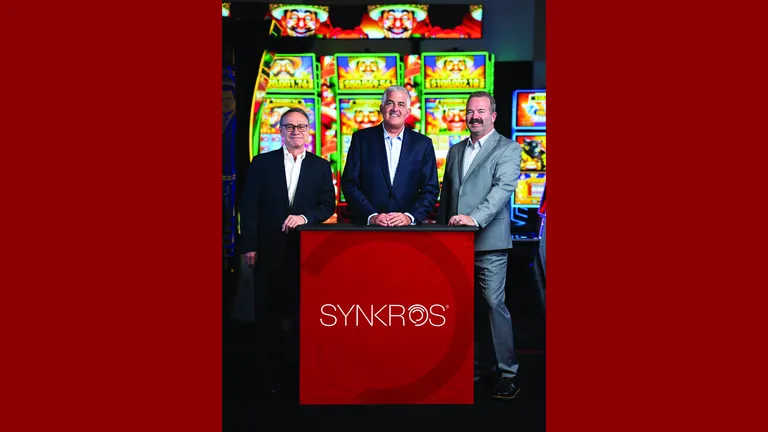
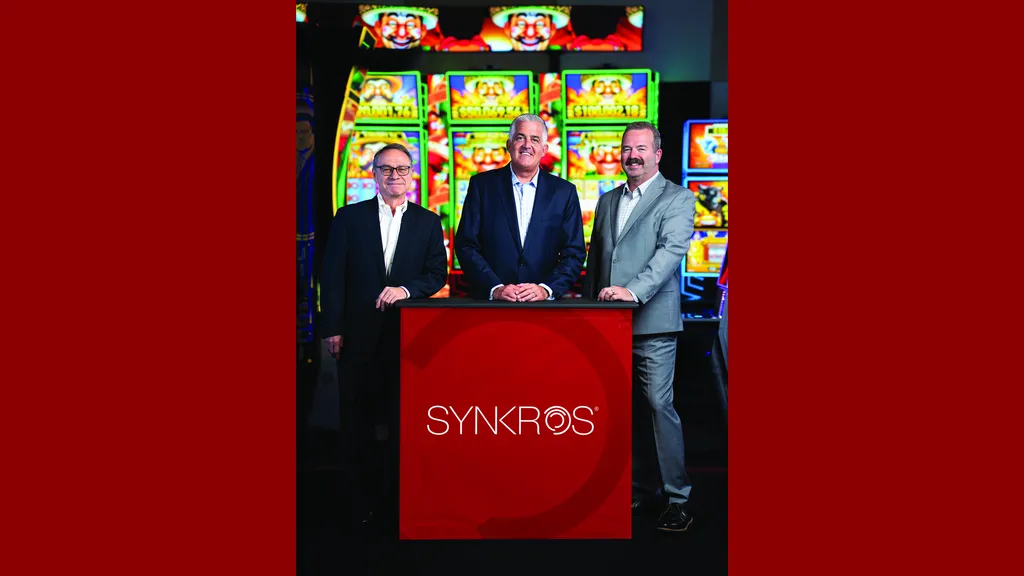
One Size Fits All

Konami rides the flexibility of its SYNKROS casino management system to new milestones
In the 1980s, one of the most important developments in a casino industry nearing the end of its first century was the emergence of the casino management system, or CMS. It was first known commonly as a player tracking system, because its central function was to record the wagers, wins and losses of each player engaged with the system.
It was all comparatively simple back then: the players with a loyalty card inserted who were wagering the most and generating real revenue for the casino were rewarded with various perks that would keep them coming back to the casino. Those perks would reflect the overall value of each player to the operator.
Almost from the first emergence of casino management systems and player’s clubs, system suppliers have been improving the capabilities of the systems. Data collection has improved vastly, and system suppliers have created myriad ways to corral that data to improve marketing functions, build strong relationships with customers, and in general, foster a level of loyalty that translates into repeat business.
For Konami Gaming, Inc., it was SYNKROS that brought it all together.
Rebranded from the former Konami Casino Management System (KCMS) in 2012, SYNKROS is known for its adaptability to any size of gaming operation, and its integration of real-time data capture and analytics to create a 360-degree view of patron activity. Its many modules provide real-time data on either slot or table game players—not only on the casino floor, but elsewhere throughout a resort.
“Konami acquired the systems group in 2001,” recalls Tom Soukup, Konami’s senior vice president & chief systems product officer. “Subsequently, it was marketed under several names, which included the Konami Casino Management System. Following the acquisition of the system, Konami spent a couple of years making sure it was robust, strengthening and enhancing the system, adding capabilities like advanced incentive bonusing and enhancing the table games and other core modules.”
With 57,000 installations across 140 casinos and route locations, Konami rebranded the system as SYNKROS.
“The reason we rebranded it as SYNKROS is that it reflected Konami’s core value proposition,” says Soukup. “It is a fully integrated casino management system built on a single code base that synchronizes data and casino operations including player tracking, marketing, table games, cage and credit, slot and table games accounting, analytics, and a bunch of third-party integrations across touchpoints within the casino.”
Today, the SYNKROS casino management system links more than 155,000 EGMs and 4,500 table games across 819 locations, including 224 casinos, 80 ships and 514 route locations, and its footprint is still growing fast.
Growing and Competing
That growth is gaining a larger foothold in a market still crowded with CMS solutions from at least four major manufacturers. According to Randy Caron, vice president of systems sales for Konami, the company’s systems division worked to educate operators on how SYNKROS differed from the legacy solutions on the market when it was introduced.
“It took quite a bit of time, and meetings with the casinos to educate them on what we were bringing to the market,” Caron says. “Many people didn’t even know we had a system at the time.”
What set SYNKROS apart was what Caron describes as “capturing more of a granular level of ratings,” noting that multi-game bartop pokers feature groups of games with vastly different return-to-player percentages available for every wager.
“A poker machine might have 10 active games on it,” he says. “Each game has its own different hold, and all the systems out there would just report the average hold on that box. Konami came to market, and recorded every game that was being played. If you’re playing a 94 percent keno or a 99 percent poker, the game you’re playing is the rating that we’re capturing in the SYNKROS system.”
Caron adds that SYNKROS has been differentiated by its support model for customers. “Konami placed great importance on the system as part of our business, and we’re continuing to invest in the system year over year,” he says.
“No. 1, we would typically provide the servers with the system.
Most of our competitors would tell the casino, ‘Go buy your own servers, and then we’ll install the system on those servers.’ We provided the servers, we provided an extended warranty on the servers, plus the in-machine hardware, and we included annual software upgrades. Every time there was a new version coming out on SYNKROS or KCMS back then, we made it available to those customers, and we’re still doing all this today.”
Caron says these factors distinguished SYNKROS “for IT directors who didn’t necessarily want to get their hands into the details of running the system and taking the calls through the weekend and late at night. Konami was basically supporting the system from Las Vegas remotely through the network, and providing a wholly managed solution.”
Konami officials also point to the reliability of SYNKROS when discussing what distinguishes it from other solutions. The system has consistently logged extremely high uptime. “Some will note how they’ve had downtime every month because of the platform they’re using, but SYNKROS customers go years without downtime,” Caron says. “System downtime impacts revenue, and SYNKROS has been designed to minimize outages; it’s super-reliable.”
Soukup credits the system’s reliability to its underlying technology, mainly the Oracle database on a Linux operating system. “We started out with an Oracle database because of the transaction loads,” Soukup says. “By doing multi-game and multi-denomination, we’re probably doing about 10 times the transactions that other systems are doing.
“We started out with a Linux operating system, not Windows, and a complete Ethernet floor that went all the way to the in-machine hardware SMIB (Slot Machine Interface Board, aka SYNK Box). We can actually flash the floor remotely if a new version of software needs to be updated on the in-machine hardware. These proven commercial technologies helped deliver the exceptional uptime and reliability.”
“Tom and his team did a really good job, making great decisions up front,” says Caron. “They selected an Oracle database. They put it on a very scalable, modern platform, which is still best in class.”
Switzerland of Systems
That scalability, along with the ability of SYNKROS to interact with and incorporate modules enabling everything from cashless funding to facial recognition, means the system is flexible enough to fit the needs of a variety of casino locations.
“We don’t have a small version of the system for taverns and cruise ships, and a separate system product for larger casinos at 5,000-plus machines,” says Caron. “This is the same SYNKROS product for all sizes of customer, including Golden Entertainment, Osage Casinos and other multi-site casinos that have 10 or more locations.
“It’s the same solution, scalable based on the servers and how you set them up. You can have five casinos running on one server, or you can have five casinos running on five servers, all connected through Oracle replication.”
Soukup says the capabilities of SYNKROS are in constant flux as the needs of the market change. “We’ve continued to enhance and develop complementary products based on feedback from our customers,” he says. “We do quarterly advisory sessions where all customers dial in and we may bring up a topic or take one of the topics we’ve heard from a customer and then discuss it among all the properties.
“SYNKROS also has a very robust API layer. There are hundreds of interfaces to point-of-sale, and other third-party systems. Our philosophy is that we’re Switzerland, and we let the casinos decide what third parties they want to use. We don’t dictate.”
Those customer suggestions become additional functionalities within the SYNKROS ecosystem. “One of the products we’ve added within the last few years is SYNK 31, which is an integrated Title 31 and anti-money laundering solution that helps the casinos track, collect and review and complete requirements like the MTLs (Multiple Transaction Logs) CTRs (Currency Transaction Reports), KYC (Know-Your-Customer) and other functions, since most of the data is already inside SYNKROS,” Soukup says.
“It made sense to create an AML product that’s pulling those transactions directly into it so that they could report and compile the AML information that’s needed.”
Other SYNKROS revisions stemming from customer feedback include mobile applications, cashless payments and, most recently, facial recognition.
“Customers wanted Konami to offer an employee mobile application so they could do slot dispatch, ticket redemption, attendant pays—you can actually do the W-2G processing right there with the employee instead of having to go back to the cage and print the W-2G slip,” Soukup says, adding that the mobile applications allow enrollment at the machine or table for identified hot uncarded players (another function of the system).
“They also can do progressive monitoring,” adds Soukup. “We’re launching a SYNKROS Progressive Management system that allows you to run a system-based progressive on the floor. By integrating it with SYNKROS, we can also do mystery jackpots to carded tier members, with different must-hit-by levels according to the tier.”
On the cashless play front, Konami has had a head start by way of its extensive partnerships with cruise lines, which typically have casinos that are 100 percent cashless. “We’ve been doing that since 2013 when one of the cruise customers selected SYNKROS as their CMS,” Soukup says. “Cruise ships do a lot of folio charges directly at the slot machine or at the table games, and we’re continuing to collaborate with other third-party payment processors and our customers to hopefully get a little more cashless adoption from land-based customers.”
The latest SYNKROS addition is SYNK Vision, a facial recognition system that can allow customers to engage the CMS by simply sitting down at a machine. It also can be used for Title 31 functions and issues such as recognizing banned players. “It’s validating that I am who I say I am, without carding in with someone else’s card,” says Soukup. “If I’m self-barred or I have a limit associated with me, with facial recognition, you can prove it is that person sitting down.”
Soukup says SYNK Vision is entering a beta testing phase in Australia. “Australia has a lot of regulations where they’re almost putting mandatory carded in place,” he says, “so for the regulators, it really makes a lot of sense. Once that gets done, then we can see what the appetite is for the U.S.”
Konami Gaming owns a patent on the SYNK Vision facial recognition technology.
Milestones
The SYNKROS story is still being written. In September, the company held a party to celebrate the milestone of 150,000 live connections. They’ve already added another 5,000 to that total.
“It was a huge accomplishment for the team,” says Tom Jingoli, president and chief operating officer of Konami Gaming. “If you step back and think about where we were four years ago, we had roughly 40,000 connections. That’s an amazing amount of growth in a relatively short period.”
Jingoli adds that the growth has been organic. “It’s not like there were a bunch of new markets or jurisdictions that came online or a lot of new casinos being built around the world,” he says. “The growth came because of the success we have doing product integrations with other customers. A majority of installs were replacements of the other system providers out there.
“To me, that says two things. One is that our technology is really solid, and two, that the operators have a lot of confidence in Konami as a partner. A system deal is a long-term commitment.”
As the SYNKROS footprint increases, so does the number of verticals deploying the system, including Class II, historical horse racing, distributed gaming and others. That goes back to its scalability, says Jingoli.
“You can use SYNKROS in a restricted location with 15 machines, a convenience store with five, or an integrated resort property with 2,000-plus machines on the Las Vegas Strip.”
In addition to continued organic growth, Konami is exploring opportunities for SYNKROS in emerging markets across North America and select international regions.
Jay Bertsch, Konami’s senior vice president and chief commercial officer, says this was the year Konami built its systems future.
“The Global Gaming Expo this year was a great testament to the team, not only on the new capabilities we have, but where the business is going,” Bertsch says.
“SYNKROS Progressive Management is a fully integrated solution with no additional hardware required. It’s a pure software play to add progressives to a bank, a zone, or even the whole casino.”
Bertsch says more technological advancements are coming that will improve and add to SYNKROS.
“Moving forward, we think artificial intelligence will bring many more features like this,” he says. “We feel there’s a real opportunity, with the substantial amount of data we collect, to be able to leverage that data to bring benefits to the operator.
“Most importantly, new capabilities will be things operators need and want. Konami has done a good job of listening to what our customers want and balancing that with new innovations.”