
On the Side

There are still old-timers who remember when table games were king when it came to casino revenues. Before the 1980s, the pit was the center of the casino, with slot machines occupying the fringes.
Virtual-reel technology in the slot machines, of course, changed everything. Slot jackpots became huge, and players flocked to the slot floor. Casino operators quickly realized that the house edge on slot machines dwarfed that of table games. They began cramming as many machines onto the new slot floors as they could, to the detriment of the shrinking pit.
Before long, revenues had flip-flopped, and slots suddenly were accounting for 70 percent or more of casino gaming revenue. As some casinos eliminated table games altogether, there were those who wondered whether the days of table games were numbered.
The problem casino managers faced was how to make labor-intensive table games profitable—how the hold in the pit could be improved. The answer for many was the side bet.
The earliest side bets appeared in the late 1980s in house-banked card games like Caribbean Stud, where the player could place a progressive bet before the deal and win a progressive jackpot with a royal flush.
A variety of blackjack side bets soon appeared. Those included 21+3, which features a pay table with awards for various poker hands formed by the player’s first two cards and the dealer’s up card; Perfect Pairs, paying when the player’s first two cards form a pair (unsuited, suited, or two identical cards from a multi-deck shoe, the “perfect pair” that pays 25-to-1); and Lucky Ladies, paying for 20-point blackjack hands with a top payoff of 1,000-to-1 for a queen of hearts combined with a dealer blackjack.
In 1999, a blackjack side bet called Streak first appeared in Atlantic City. Streak is a simple bet on winning a specified number of consecutive bets. If the player splits, then it is the net win that counts toward whether the hand as a whole wins or loses. The player may bet on a winning streak from 2 to 5, or as many of these as desired.
For players, the appeal of many of these side bets lies in turning a potentially losing hand into a winner. Others pay for an outcome for which the table is already rooting—for instance, Buster Blackjack, which pays when the dealer busts, or with Streak, for consecutive wins.
For operators, side bets meant table games would continue to be viable.
“In 1999, when MAO Gaming received its first approval to beta-test Streak bets with blackjack in New Jersey, table game managers were talking about the atrophy of the department budget, and how everyone was predicting that table games would soon disappear from the casino floor,” says Stacey Perry, founder and CEO of Streak creator MAO Gaming. “Streak introduced paying out bets on multiple outcomes in table games. … There were four more betting options for the player and four for the dealer toke bets, all to help cover the expense of operating the casino.”

More recently, table game side bets have borrowed from the slot floor with slot-style progressive jackpots won for a particular hand. This has enticed more players to make that extra wager in hopes of a jackpot. For the operator, the extra wager on an unlikely outcome raises the house edge, and thus, the table hold.
“Side bets began gaining traction over 25 years ago, with progressive systems following closely behind,” says Steph Nel, senior vice president of global sales for Galaxy Gaming, producer of 21+3 and Lucky Ladies. “Their growth has been steady, evolving alongside player preferences and technological advancements. Today, they’re a staple in table game innovation, offering enhanced engagement and new layers of excitement for players.”
“Over the past several years, we’ve definitely seen a surge in side bets and progressives across the tables landscape,” says Robyn Brewington, executive director of tables, commercial strategy & execution for Light & Wonder, which offers an extensive library of side bets. “These features have evolved from being occasional add-ons to becoming standard components of most table games. Operators are looking for ways to drive more engagement and value from each table, and side bets and progressives offer that.”
Brewington adds that table game managers have embraced side bets and progressives to raise their hold in a variety of table game offerings. “Managers clearly understand the value of side bets and progressives as a revenue driver,” she says.
“We’re seeing operators introduce multiple progressive options on a single table, including different denominations like $1 and $5 progressives, giving players more choices. These additions don’t just boost hold, they also create more energy around the games, which helps with both player retention and table occupancy.”
One of the more recent—and most successful—suppliers of side bets and progressives is AGS, which jump-started its table game division in 2014 by acquiring Blackjack War. In it, the player makes a “War Bet” in addition to the blackjack bet and receives an even-money payout if his up-card beats that of the dealer. The player can then choose to parlay his winnings with his blackjack bet.
The following year, AGS acquired Buster Blackjack.
“These are things that resonate with players,” says John Hemberger, senior vice president and general manager, table products for AGS. “You may have a side bet on blackjack that uses the player’s two cards and the dealer’s up card. And what we’ve noticed recently is that this is something you can implement elsewhere.
“Side bet growth has been steady, evolving alongside player preferences and technological advancements. Today, they’re a staple in table game innovation, offering enhanced engagement and new layers of excitement for players.” —Steph Nel, Senior Vice President of Global Sales, Galaxy Gaming
“You can add that to a hold’em-style game, like we’ve done recently, and boom, the players know the mechanic. They’re familiar with it, and they’re off and running. What works in one area of the pit very likely has a chance to be successful in another area or another game type.”
In the case of War Blackjack, in addition to adding to the overall house hold of blackjack, its 40 percent hit frequency has encouraged very large side bets. “It’s a bet that generates quite a good high average bet for players,” Hemberger says. “Players will really stack their chips up in that bet circle, because they feel like they have a good opportunity to win.”
He adds that it is a game within the game of blackjack that doesn’t impact hitting, standing, splitting, etc. “It’s seamless, in the sense it does not impact your betting strategy… but it supercharges the table performance on the operator side.”
Product Proliferation
The benefits to profitability in the pit have spawned a variety of side bets and progressives in the industry, with several suppliers continuing to push the envelope in creativity to appeal to players and benefit the operators.
“Light & Wonder is very active in the progressive and side bet space,” says Brewington. “What sets us apart is how we integrate those features into a full ecosystem. We’re not just adding another device or progressive to the felt. We’re looking at the entire player and dealer experience and building solutions that streamline game play, reduce clutter and enhance the overall feel of the table.
“Our progressive options have been performing well, and we continue to innovate with new configurations and experiences based on customer feedback. With one of the most robust content libraries, we have a side bet for almost every felt game.”
She adds that L&W will demonstrate new twists to the genre at next month’s Global Gaming Expo. “We will be showcasing exciting new content as well as a major announcement and reveal in the progressives space,” Brewington says.
For Galaxy Gaming, 21+3 and Lucky Ladies have sustained long-term success. “21+3 and Lucky Ladies have long been recognized as industry standards for blackjack side bets, consistently performing across both land-based and online environments,” says Nel. “In recent years, titles like Heads Up Hold’em and High Card Flush have gained strong momentum.
“Additionally, our new Galaxy Operating System (GOS) Sapphire platform is making a significant impact in the market. A standout feature of GOS Sapphire is Dynamic Progressive, which introduces random pay multipliers of up to 10X, adding thrilling unpredictability to a wide range of our most popular games.”
At G2E, Galaxy will launch new table games developed in partnership with Hasbro—casino-ready versions of Monopoly and Yahtzee.
“This year, 26 years after we first introduced Streak Blackjack in Atlantic City, we will be introducing Streak with Pai Gow Poker. We include Chinese- and Vietnamese-language Streak-branded marketing materials as part of our standard licensing package, because Asian gamblers are known for tracking streaks.” —Stacey Perry, Founder and CEO, MAO Gaming
MAO Gaming will launch a new Streak product this year. “When a player sees the Streak logo and asks what it is, he grasps the concept immediately: You are betting on your own winning streak,” says Perry. “Streak asked the player to do nothing but play the best blackjack or baccarat that he could to win the Streak bet. It doesn’t change the base games rules, or payout requirements.
Ultimate Progressive
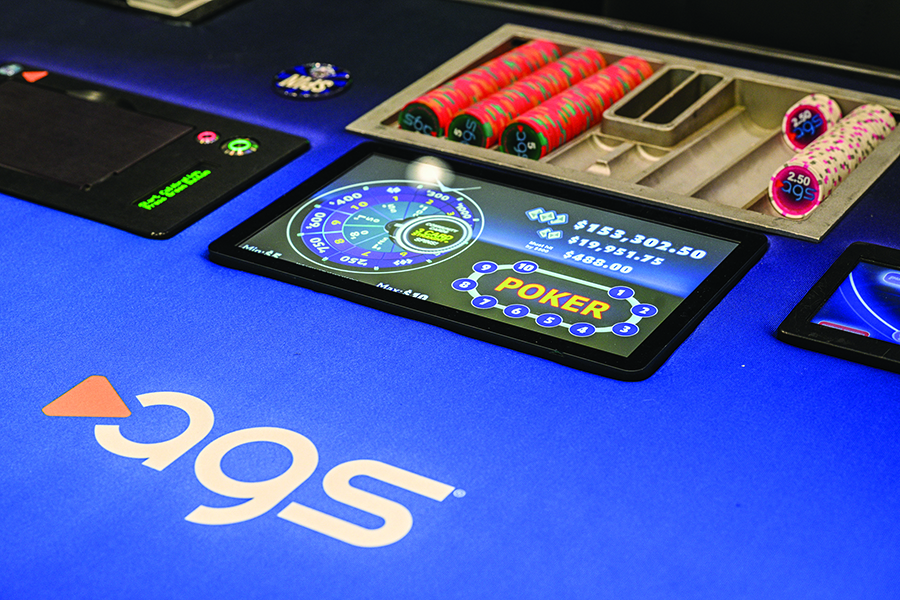
AGS will use G2E to display the latest additions to its mega-hot Bonus Spin Xtreme progressive.
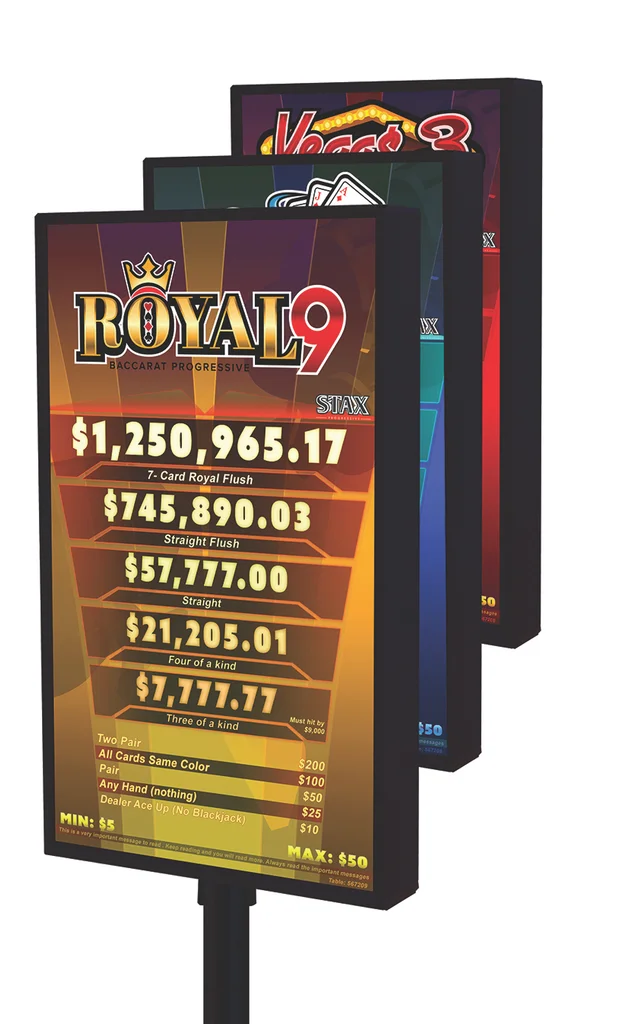
AGS has two main progressive side-bet products. The first, STAX, is fully card-based. A designated card combination triggers the winning progressive meter. “You could be playing a hold’em-style game and it may be a royal flush with your two cards,” says Hemberger, “or a three-card flop in a particular suit that awards the top award, but it’s going to be some card combination during that round of play that’s going to trigger a jackpot.”
Bonus Spin Xtreme, on the other hand, was designed to apply a single progressive jackpot to different table games, allowing a single jackpot across tables, up to the entire pit.

The system, developed by AGS Senior Director of Table Game Content Jamie Abrahamson, accomplishes the cross-game jackpot through a mathematical formula that identifies a community-based event in each individual table game that happens at approximately the same frequency—namely, 5 percent, or a one-in-20 chance of happening.
For poker derivatives, the 5 percent trigger is three of a kind or better among the community cards. For blackjack and its derivatives, it’s the dealer getting an “extreme 16” on the deal—a six with a 10 or a picture card. For baccarat, it’s a four-card tie on the deal. For roulette, it’s zero or double zero—or any two single numbers (as determined by the casino). In pai gow, it triggers if the dealer has a king-high pai gow. In craps, it’s 11 on the come-out roll.
On Texas Hold’em in the live poker room, the wheel is triggered through a three-card straight or three of a kind on the flop.
For the first time, Bonus Spin Xtreme extends the possibility of a progressive jackpot and bonus to community games like roulette, craps, baccarat and live poker. But it also adds a first-ever community feature to those and other games—when triggered, everyone seated at the table gets a bonus payoff. A multi-layered wheel spins for the community prize, followed by identification of a “Hot Spot” position at the table that, if occupied by someone who has made the side bet, can trigger the progressive jackpot.
Pai gow, where the STAX product awards the progressive for a seven-card straight flush, is one of the games on which the Bonus Spin Xtreme product is a hit with players. “We could go our entire lives being a pai gow player and never get a seven-card straight flush,” says Hemberger. “But with Bonus Spin Xtreme on a pai gow table, we don’t need a seven-card straight flush to win the jackpot. We just need the triggering hand to happen.”
The most recent push with Bonus Spin Xtreme is its use in poker rooms, which always have been at or near loss-leader status in casinos, with some of them having closed in recent years across the industry. The progressive has brought new profitability to the poker rooms, allowing some to maintain a low rake or eliminate raises to the rake.
While some poker rooms establish a jackpot dedicated solely to the poker room, many casinos are linking the poker to the progressive already linked across games in the pit, which has resulted in seven-figure jackpots.
At G2E, AGS will show a new wrinkle to the system—the addition of the STAX-style individual-hand progressive to the meter. “Merging the two platforms together and incorporating the high-hand feature on Bonus Spin Xtreme makes sure that if the one or two most rare hands in the game are hit, it’s still going to deliver a jackpot to the player,” Hemberger says.
Saving the Pit
While some believe side bets and progressives have saved the pit from extinction, there’s widespread agreement the products have given table games a new breath of life.
“While I wouldn’t say they ‘saved’ the pit, side bets and progressive systems have certainly played a key role in its evolution,” says Galaxy’s Nel. “They’ve added variety, increased engagement and helped shape the direction of future table game development.”
“Side bets give table game operators the maximum number of channels to be profitable,” says Hemberger at AGS. “One thing I love is that the customers use these side bets and progressives as a tool to be able to keep their minimum bets low.
“These products also offer a way to make sure the table is performing at a level that allows them to afford to staff it with a dealer and have a shuffler on it, and all the different things that go into offering these games from a cost perspective, but that they still have the opportunity to be profitable.”