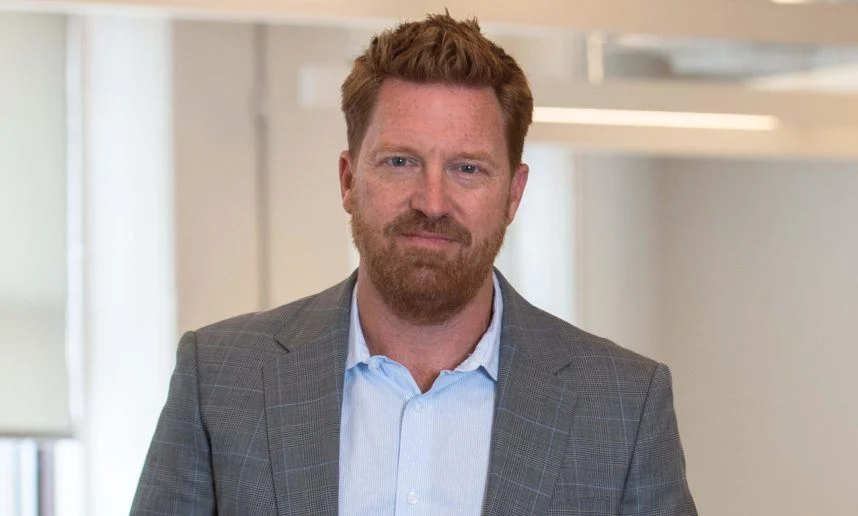
Kip Levin
GeoComply was one of the first companies to experience success when online gaming and sports betting were introduced. Founded by David Briggs and Anna Sainsbury, it offered technology that could geolocate any gambler to within feet of where they were playing.
Last year, Kip Levin joined as CEO. Levin has vast iGaming experience in the U.S. and plans to take the company into new and innovative directions. He spoke with GGB Editor-at-Large Roger Gros at the Global Gaming Expo in October. To see and hear a full version of this interview, check the GGB Podcast.
GGB: You’ve been with GeoComply for less than a year. What attracted you to the company?
Kip Levin: I came into the business in 2014, when I was brought in to run Betfair’s U.S. business, sort of the predecessor to Flutter Entertainment. At the time there were just two businesses: the TVG television network for horse racing and Betfair Casino, which had just launched. So I was a day-one client of GeoComply.
I’ve known Anna and David for many years. When I left Flutter at the end of 2023, I got the call that they were looking to bring in an outside CEO for the first time. It was a really exciting opportunity for me.
Tell us how you launched Betfair in the U.S.
Betfair was one of the major operators in Europe. They bought into the U.S. in 2009; they wanted boots on the ground if there was any sort of seismic change in the legislation around online sports betting.
When we went live in 2014, it was tough. It was early days. We were learning the market. But we were able to actually grow the Betfair Casino brand to about 15 percent of the market before 2018, when we launched with sports betting in the U.S.
We ended up acquiring a majority stake in the FanDuel business. We closed the deal in July and, by end of August, launched the FanDuel sportsbook at the Meadowlands in time for the NFL season.
From the beginning, GeoComply was an important part of the industry. What was your partnership like?
It was pretty eye-opening. Obviously, the casino business in the early days was relatively small. One day I got a call from the general manager of the casino business in New Jersey, saying, “I have good news and bad news. The bad news is we just got hit with a $25,000 chargeback. The good news is we were able to use GeoComply data to prove that it actually wasn’t a chargeback.” We were able to challenge it and win.
It was the first time I realized that GeoComply is more than just a compliance provider. It’s really critical in our fraud prevention efforts.
GeoComply could pinpoint exactly where a player was located—along the Hudson River, for example. Players would drive over the bridge to play in New Jersey, but you could see if they were on the other side. Why was that important?
Obviously, goal number one was to stay compliant. But we’d see people coming across the bridges and the action coming from parking lots. You’d see huge amounts of activity on the borders. It helped the online businesses really understand what was happening. It also helped legislators in other states see where tax dollars were leaking out.
When they were considering legislation to enable sports betting, you just had to look at the state’s borders.
How does the fraud protection work? Does it protect players as well as companies?
There are different levels of fraud. Obviously, there are people who try to take advantage of the high-level generosity that a lot of operators use to either acquire or retain customers. Unfortunately, there are a lot of stolen identities on the web. That enables people to buy identities, get through KYC and somehow start to play. But the one thing they can’t do is spoof their location. If all of a sudden a home, even in a legal jurisdiction, has 50 different accounts trying to take advantage of a $200 deposit bonus, we can flag that for our clients. That’s a lot of value, but it’s just one level of fraud.
Now we’re seeing sophisticated cybercrime groups using very sophisticated techniques to spoof their location. They can actually spoof the Wi-Fi network in your home and come in through that. Because of the scope and scale of the data along with our investment in machine learning, we can now predict if something is off. Our models can detect that this is an attempt to run money through the system to launder it.
Anna and David are literally family, so GeoComply has always had that family-owned business feel. Is that something that attracted you?
Absolutely. A lot of people have been there since the early days. There’s a really strong culture. We’ve got people in a lot of different locations, but the culture stays consistent throughout.
I just spent time in our office in Vietnam, which is where our machine-learning teams are. We’ve got a team in Warsaw, Poland, doing a lot of our technical operations work. Vancouver is our hub, but with close to 500 employees, it still feels like an early-stage startup. It’s a testament to the leadership over the years. I’m just trying to uphold that and carry the torch from here.