iGaming Growth Trajectory

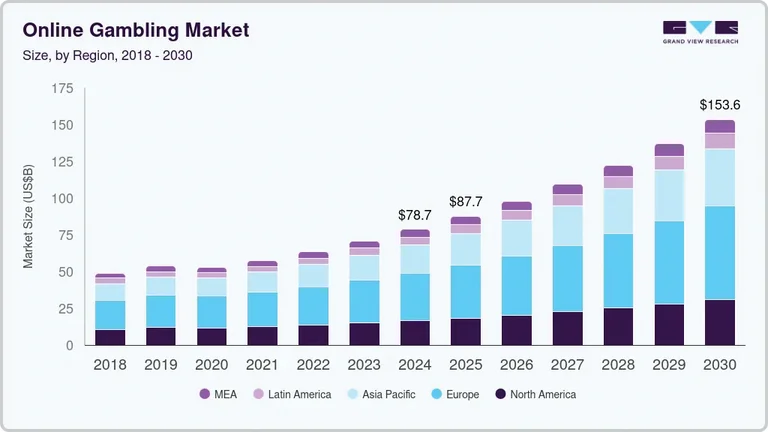
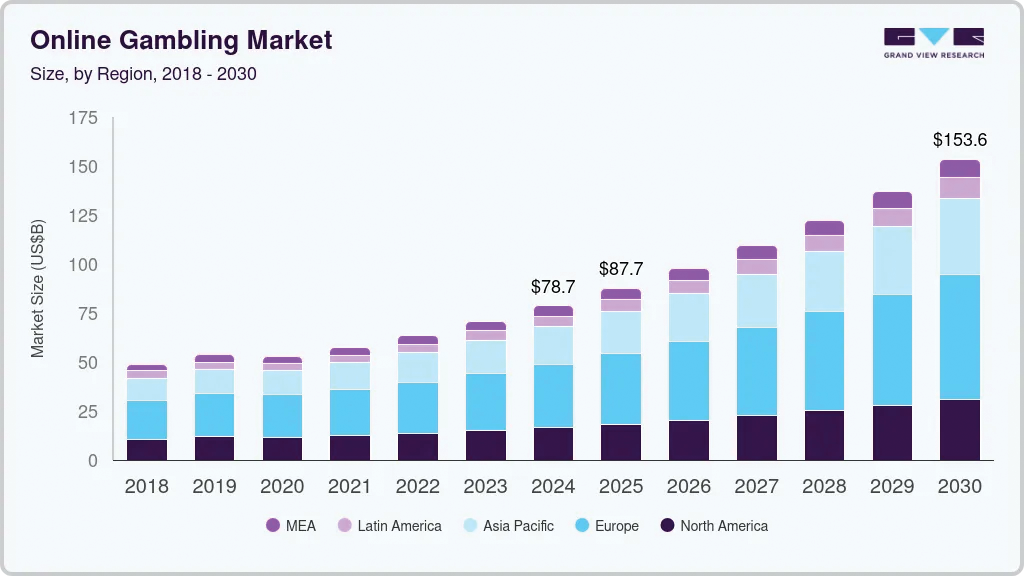
The global online gambling market, estimated at $78.66 billion in 2024, is projected to reach $153.57 billion by 2030, growing at a CAGR of 11.9 percent from 2025 to 2030, reports Grand View Research.
Key market drivers include growing penetration of high-speed internet and the general adoption of smartphones for gaming.
Trends & Insights
• The European online gaming industry dominated globally in 2024, accounting for more than 41 percent of the global share.
• The U.S. industry grew rapidly in 2024, fueled by mounting state-level legalization, growth in mobile betting adoption and technology innovation.
• By product, the consumables, reagents and kits segment accounted for the largest revenue share in 2024.
• By type, the sports betting segment dominated the market with a revenue share of more than 50 percent.
• By device, the desktop segment dominated and accounted for significant revenue in the same year.
Moreover, regulatory developments, the increasing popularity of online betting and strategic partnerships between industries are driving market growth. For instance, in March 2024, Betsson AB diversified its worldwide presence with a majority stake in a sportsbook business in Europe, consolidating its B2B business.
Integrating 5G tech and growing consumer adoption of AI-based gaming experiences are primary drivers for growth. State-of-the-art smartphones now offer AI, VR and AR features for more engaging gambling applications. Access to low-cost smartphones and accessible gambling apps is further fueling market expansion.
The online casino sector is growing with the advancement in virtual reality (VR) and blockchain technology. VR-based gaming provides an interactive gaming experience with a realistic casino atmosphere and live dealer interaction. For example, SLTM Ltd.’s SlotsMillion continues to be at the forefront of VR gaming experiences. At the same time, blockchain technology is changing payment security and transparency.
Cryptocurrency-based online gambling platforms such as BitStarz now have more than 5 million active players, underlining the rising adoption of decentralized transactions in the industry.
The sector is also favored by freemium business models and in-app ads, recruiting new players using free-to-play options while earning revenue through advertising and microtransactions. As governments around the world launch revised legislation, additional markets are opening to legalized online gaming, positioning the sector for steady growth over 2030.
Sports Bets = More Sports Viewership

A new Ohio University study indicates that increased sports wagers contribute to greater sports viewership.
Professor Jim Strode looked at the 2026 Winter Olympics, which took place in Milan-Cortina from February 6 to February 22. He found that this year’s games drew the most U.S. viewers in more than a decade: an average of 23.5 million per day, the most-watched by a stateside audience since 2014.
One explanation for the surge: a rise in wagers. It makes sense, says Strode: “If people have money on the line, that’s creating more eyeballs on the television.”
Ice hockey is the fan favorite, he adds, attracting more wagers than any other sport.
The 2028 Summer Olympics are likely to beat this year’s event for viewership and handle, especially as legal sports betting expands in the United States. Moreover, the 2028 summer games will take place on home turf: in the City of Angels, Los Angeles, California.