Home Means the Sage and the Pine

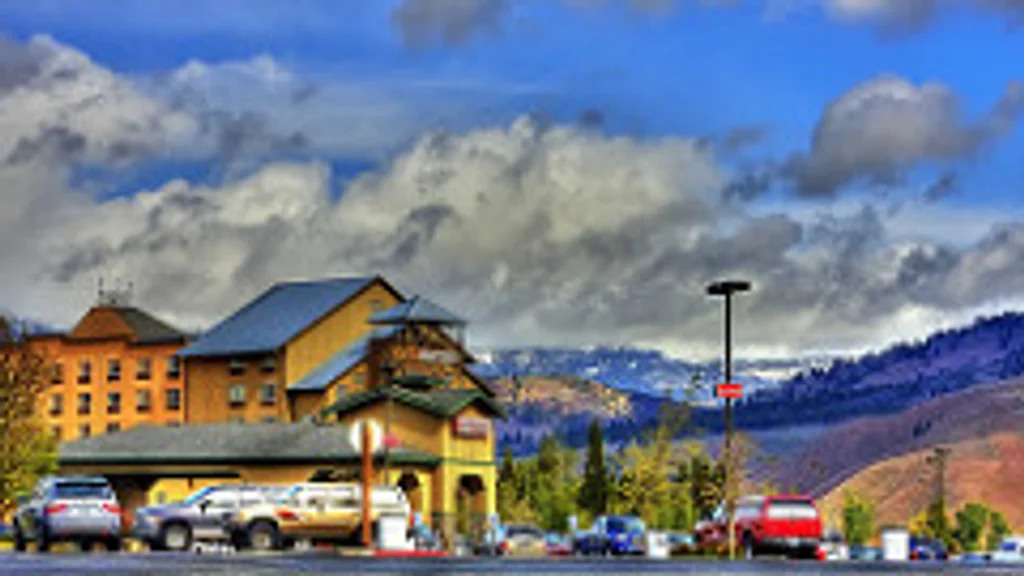
Since its inception in 1868, the city of Reno, Nevada has had many chapters in its evolution, as well as a number of monikers. In the beginning, it was simply a way station for Gold Rushers headed further west; then at the start of the 20th century its lax residency requirements made it the “Divorce Capital of the World;” afterward came its title as the “Biggest Little City in the World” in 1929. It also famously was where Johnny Cash later shot a man, just to watch him die.
But soon after Nevada legalized gambling in 1931 in the midst of the Great Depression, Reno became what it historically has been and, in some ways, what it always will be: a casino town. Nearly a century later, the market stands as perhaps the most mature casino market in the U.S., a quaint, more homely version of the glitz and glam of Las Vegas and a full 45 years older than Atlantic City.
This maturity means that evolution and growth have been slow for several decades—few new significant players or projects have come to market since the beginning of the 1970s. Conversely, the performance of the region has remained impressively consistent.
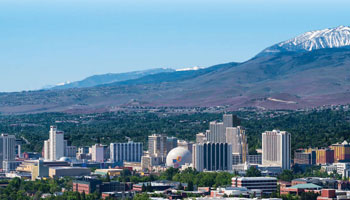 According to figures from the Nevada Gaming Control Board, Reno produced $742.1 million in gross gaming revenue (GGR) across the 2004 calendar year. A full 20 years later in calendar year 2024, the market posted $758.8 million in GGR, and with four fewer reporting locations. Neither the 2008 financial crisis nor the 2020 Covid pandemic closures could derail the market’s performance, and future prospects are looking more promising than in past years.
According to data from Macrotrends, the population for the Reno metro area is estimated to be at least 545,000, up from about 375,000 in 2008 and 500,000 in 2020. The region over the last decade-plus has seen an influx of investment and development, led by several new projects such as the Tahoe Reno Industrial Center, touted as being the largest industrial park in the world and home to giants such as Google, Tesla, Wal-Mart and others.
There has in recent years been some effort to rebrand and reshape the city’s image from strictly a gambling hub to a more diverse urban landscape akin to Portland and Seattle, but casinos remain at the heart of Reno’s cultural experience, and established players and newcomers alike have shown a willingness to evolve and help shape this new identity.
Decorated Veterans
As with any mature marketplace, Reno’s casino industry is heavily influenced by a select group of stalwarts.
Perhaps chief among them is Monarch Casino & Resort, Inc., operator of the Atlantis Casino Resort Spa. The Atlantis’ roots in the area go back to 1972, when it was a 142-room motel purchased by David Farahi. Over the course of the 1980s and ’90s the property grew under the Farahi family. It eventually became Atlantis in 1996 after Monarch had gone public three years earlier.
Now, the Atlantis is a pillar of Northern Nevada gaming, with more than 800 redesigned guest rooms, 61,000 square feet of gaming space, and award-winning dining and spa amenities. It is consistently a top finisher in local gaming and hospitality polls such as the Reno News & Review’s annual “Best of Northern Nevada” series, and on the national level it has the only four-star ratings from Forbes in the area.
As a company, Monarch has also proved to be a model performer, with its stock climbing steadily from below $5 in the early ’90s to above $70 as of writing. The company has significantly outperformed the S&P 1500 Casinos and Gaming Index in each of the previous five years, according to its 2024 annual report.
Longtime Monarch CEO John Farahi stresses that there have been three simple keys to Monarch’s and Atlantis’ success over the years: people, product and location.
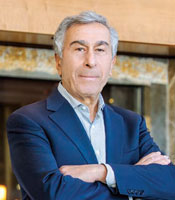
“When you bring the right people on board and give them the tools, then they are happy and willing to take care of our guests,” he says. “And then of course for the company, it’s important to keep up with the times, and the guest expectations can change. You have to know what those expectations are for your guest and change your property to reflect that.
“Location is also key. We are in an excellent part of town, next to the (Reno-Sparks Convention Center)… So those three are crucial: location, people being on board and the quality of our product.”
Atlantis earlier this year completed its latest round of significant renovations, which Farahi describes as a “total gutting of the rooms, not just remodeling” or changing carpets. As the property has evolved, many of its key executives have remained in place, as he notes that “we have many people who have been with us for over 20 years.”
This continuity and cumulative expertise is what has kept the property at the top of the market for many years, and what positions it well for the future.
“I think we see modest growth (in coming years),” Farahi posits. “Those properties that have invested in product, service and location are going to be able to grow more than those who haven’t. There will be a difference for those who have those three elements from those who do not. We compete with any product in Northern Nevada, or I would honestly stick my neck out and say, compared to Las Vegas.”
Aside from Monarch, Caesars Entertainment is another high-profile fixture in Reno, having formerly operated as the Carano family’s Eldorado Resorts before that company acquired Caesars in a $17.3 billion megadeal that closed in July 2020. To date, Caesars is the biggest-name U.S. operator with a presence in Reno, and it is headquartered there.
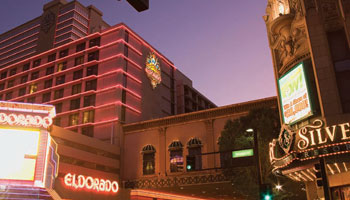
The company has effectively cornered the downtown area by combining its three resorts—the Eldorado, Silver Legacy and Circus Circus—into one entity that is marketed collectively as The Row. Among them, the casinos feature more than 200,000 square feet of gaming space, 2,500 slots and 80 tables, Caesars says. As with Atlantis, the three properties are decades old, but have had several iterations over the years.
“Our roots are in Reno, so this market is incredibly important to us at Caesars Entertainment,” says Regional President Stew Massie. “This is where our founder, Don Carano, started our business in 1973 with our flagship destination, the Eldorado. We’re consistently working to create the best experiences for our guests at all three of our Reno resorts and create a better community in the place that many of us call home.”
The Row has invested heavily in hosting live local events, “like the Great Italian Festival and the Biggest Little Latin Festival,” as Massie notes.
When the city has been at its lowest points economically, downtown neighborhoods have struggled, but significant efforts from Caesars and others have helped tremendously to revitalize the area.
“We couldn’t be more proud of our efforts to create experiences not just for our players but for our friends, and we look forward to continuing to build upon the legacy Caesars and the Carano family have built in the Biggest Little City in the World,” Massie says.
Flashy Newcomers
In recent years, the evolution of the city has presented new opportunities for newcomers with big plans and big wallets. Perhaps the biggest such wallet to enter the market has been developer Jeff Jacobs of Jacobs Entertainment, which has operated the locals casino Gold Dust West for years but has significantly expanded its footprint in the last decade.
Jacobs in that span has snapped up several commercial and residential properties in and around downtown in addition to spending $300 million to renovate and rebrand the former Sands Regency into the J Resort. Similar to what Caesars has done with The Row, Jacobs is hoping to lead the revival of downtown and take it a step further by combining its gaming and non-gaming development efforts.
Jonathan Boulware, Jacobs’ vice president of Nevada operations, says that the reopening of the J Resort “is a part of a bigger picture of revitalizing that entire (downtown) area.” Instead of starting from scratch to build a pricy resort-quality casino, Jacobs opted to invest that capital in an existing property in the hopes that the upgrades can help it “transition from the value market to the higher-end market,” Boulware says.
Late last year the company announced another $130 million worth of expansion projects for J Resort. Those plans include a new entrance, a 10-acre outdoor Festival Grounds space, and Rolling Art, a banquet hall and meeting space adorned with over $50 million worth of European luxury cars from Jeff Jacobs’ personal collection. Those are expected to debut by early next year. Further upgrades down the line call for additional gaming and meeting space as well as a rooftop pool.
“The people that come in, especially the people that had been in the old Sands, can’t believe what they’ve seen here,” Boulware says. “They don’t believe that it was that property. And the new folks that have been introduced to J Resort for the first time just love the property, love the experience, and we’re just getting started. We’ve got some big plans for the property, and we’re excited about the opportunity to develop an area that for decades was known as a place to avoid at all costs. But that has changed.”
Between its gaming and non-gaming holdings, Jacobs has pledged to invest over $1 billion in the area, and so far it is about halfway there. In addition to J Resort, the company in March opened the nearby 245 North Arlington, a five-story, 60-unit residential complex that was also years in the making. Such grandiose plans are likely to be met with pushback in a small market like Reno, but Boulware explains that Jacobs has always tried to underpromise and overdeliver.
“We wanted to build the confidence of people that we were going to do what we say we’re going to do,” he says. “So we started with (J Resort) because people of all generations love entertainment. People of all generations love art. We’ve started to see people really start to have confidence that we are going to follow through on what we say. And then of course, once you start the process, then people get excited about, ‘Well, what’s next? What are you guys going to do next? We can’t wait for the new announcements.’”
Speaking of new announcements, perhaps no gaming development has captured the attention of the region more than the $1 billion GSR Arena project, a sprawling multi-phase expansion of the Grand Sierra Resort that was first announced in September 2023.
The project, if fully fleshed out, would center around a 10,000-seat arena that would become the new home of the University of Nevada, Reno men’s basketball team. The arena itself is projected to cost $380 million. Later phases would add a new hotel tower, a Top Golf-style waterfront golf driving range and more.
Owned by Cuban-American billionaire Alex Meruelo and his subsidiary Meruelo Gaming, the GSR is somewhat of an anomaly in the Reno market. Its 1,990 rooms and 80,000 square feet of gaming space make it the largest casino-resort in the market. Despite this, the property has changed hands several times since it opened as the MGM Grand in 1978, and several proposals tied to the property have never come to fruition.
Meruelo bought the GSR for just $42 million in a 2011 fire sale and has since invested heavily in the property—he also notably enacted a similar turnaround for the Sahara Las Vegas. The arena project is among the most ambitious in the city’s history.
“The precipice of an extraordinary transformation is upon us,” Meruelo said at the time of the original 2023 announcement. “This will not only redefine Grand Sierra Resort but also elevate Reno to new heights in the realm of entertainment and sports. We recognize and value the community’s support and enthusiasm as we commence this journey together.”
Local officials gave the project a lift forward in early April by granting GSR a conditional use permit from the Reno City Planning Commission. However, stakeholders are now seeking $97 million in public funding for the project via tax increment financing. This has drawn opposition from a coalition of other operators—Caesars included—who argue that the areas surrounding GSR are not blighted and therefore should not qualify for such funding.
It is unclear as of writing if or how the project will materialize. But if nothing else, the proposal is an indication that Reno is perhaps more attractive as an entertainment and gaming destination than it has been in several decades. And even with the opposition, the arena would likely boost visitation and spend for the region overall.
“In Vegas, there is a mentality that something built near the Strip, whether it’s Allegiant Stadium or the Sphere, benefits everybody,” Andrew Diss, senior vice president of Meruelo Gaming, told the Nevada Independent. “We’re building a 10,000-seat arena, and we only have 2,000 rooms at (Grand Sierra). So people coming in for concerts or anything else are going to be staying at all these other properties.”