History of NCLGS: 1995-2026
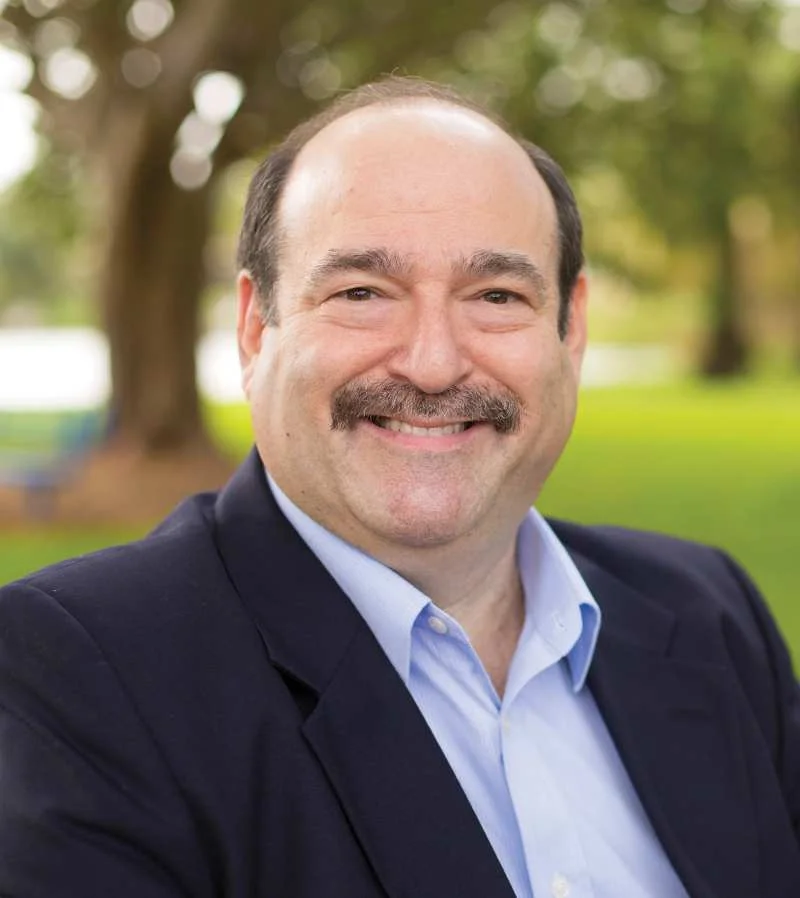
From 1994 to 1996, I served as chair of the Florida House of Representatives Committee on Regulated Industries, in charge of gambling legislation. I already served on the Insurance Committee of the Florida House and was in line to become president of the National Conference of Insurance Legislators (NCOIL). Seeing the similarities between gambling and insurance, I proposed a group similar to NCOIL concerning the gambling industry.
I directed House staff to compile a list of gambling committee chairs across the nation—no simple task, as some state legislatures oversaw gambling in revenue committees while others assigned it to commerce or “state affairs” committees. In some states, gambling was regulated by more than one committee. For example, a state might assign lottery to a state affairs committee and horse racing to an agriculture committee.
We did our best under trying conditions, and in early 1995 letters were sent asking state committee chairs to join a national legislative organization that would educate lawmakers about gambling issues. At least 15 states expressed interest, and the first meeting took place in summer 1995 in Dallas. Seven state gambling committee chairs and the staff director of the Kentucky committee attended.
I proposed that our organization be named the National Council of Legislators from Gaming States (NCLGS). Importantly, we would be neither pro-gambling nor anti-gambling, but seek to ensure that state legislators would hear all sides of an issue (frequently there are more than two sides), then determine their own policies.
We made clear that if a state authorized gambling, it should be fully and properly regulated at the state level, except when federal assistance was required, such as regarding interstate or international wagering. These policies were adopted, and we chose NCOIL’s executive director to be our executive director. The first full NCLGS conference, held in summer 1996 in Denver, attracted several hundred attendees. We were on to something.
In the early years, we accomplished much. For example, we noted that in many states, charities received few profits from charitable bingo and other forms of gambling, while vast quantities of cash were being paid to “volunteers.” In response, we developed a model bingo and charitable gaming bill.
We also discussed adopting a model Indian gaming bill, but the tribes made clear this would not be workable, as conditions varied widely across different states. We instead changed this to an Indian gaming checklist of issues.
Our most notable success was in 1999-2000, after Congress created the National Gambling Impact Study Commission. Many groups of elected officials asked to participate, including NCLGS, but none were appointed. Instead, the appointees were a mixture of anti-gambling people and those with Nevada and New Jersey gambling interests. The only public-sector representative was Nevada’s casino regulator, who resigned shortly after his appointment.
In response, NCLGS created the National Public Sector Gaming Study Commission (NPSGSC), comprised of three regulators, three legislators, a mayor, an attorney general, a governor, the president of the Association of Major County Sheriffs and the chair of the National Indian Gaming Association. In 1999, the NPSGSC issued a comprehensive report that is still the only nationwide public-sector study of gambling ever conducted in the U.S.
NCLGS canceled only one meeting during the Great Recession and two during the pandemic. The recession was particularly painful, as attendance dropped from as many as 250 people to between 50 and 75, while attending legislators declined from as many as 60 to no more than 12. Today, attendance has returned to and exceeded pre-recession levels.
About 15 years ago, NCOIL stopped having an outside executive director and the organization that managed both NCOIL and NCLGS stopped running conferences. NCLGS needed a new executive director. Spectrum Gaming Group proved a successful choice.
The organization continues to grow, addressing increasingly complex legal and regulatory issues. We recently drafted model iGaming legislation for states to consider. Our officers are regularly invited to speak at gambling law conferences and legislative hearings. Our most recent Winter Meeting attracted more than 340 attendees, including 180 legislators and regulators from 30 U.S. states and territories.
This continuing saga of success demonstrates that NCLGS has met its founding goal: to be the primary national forum for gaming policy and the unquestioned leader in gambling law among public-sector representatives. We look forward to the next 30 years, and beyond.