Generation Next
Stability is the word as Las Vegas Sands changes chairman/CEO.
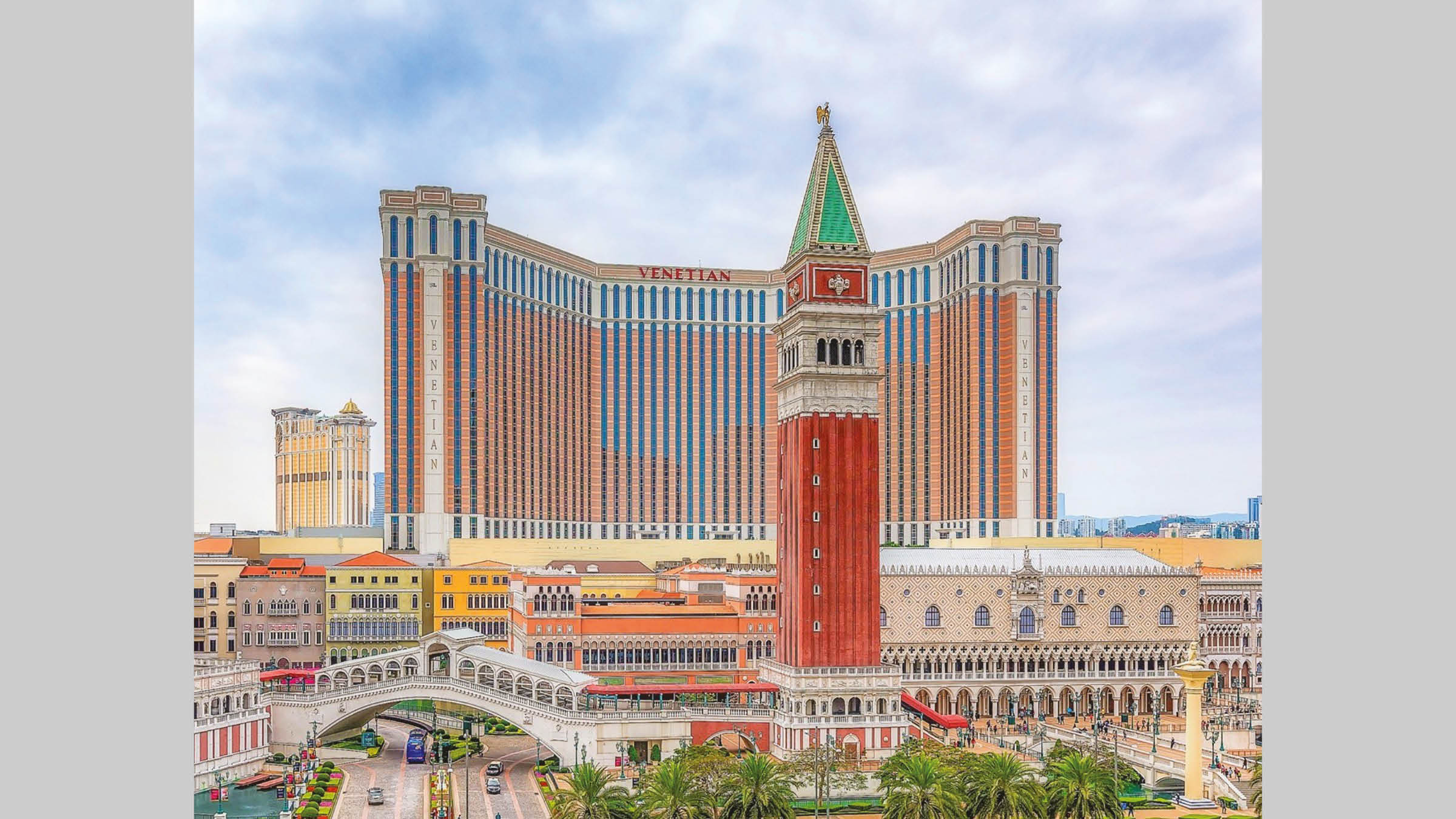
The seeds of Las Vegas Sands were rooted in the nation’s largest consumer electronics show, COMDEX. Owned by entrepreneur Sheldon Adelson and his partners, COMDEX gobbled up every available room in Las Vegas when it held its convention every year.
That wasn’t lost on Adelson, who had a vision for Las Vegas. He sold COMDEX and bought the property where the legendary Sands hotel stood. He imagined building a huge convention center and a new hotel that would be fueled by meetings and conventions—the MICE business, as it became known. First came the Venetian, which opened in 1999, and then the Sands Expo Center a year later. Las Vegas Sands Corp. went public in 2004, and became a trailblazer for gaming development.
Adelson had invented the integrated resort, a blueprint that could work in many places around the world. When the company surprisingly won one of the three available licenses in Macau and later one of two in Singapore, the race was on.
Adelson was chairman and CEO of the company until his death in 2021, when longtime executive Rob Goldstein replaced him, steering the company through the treacherous waters of Covid, while continuing to improve the company’s bottom line.
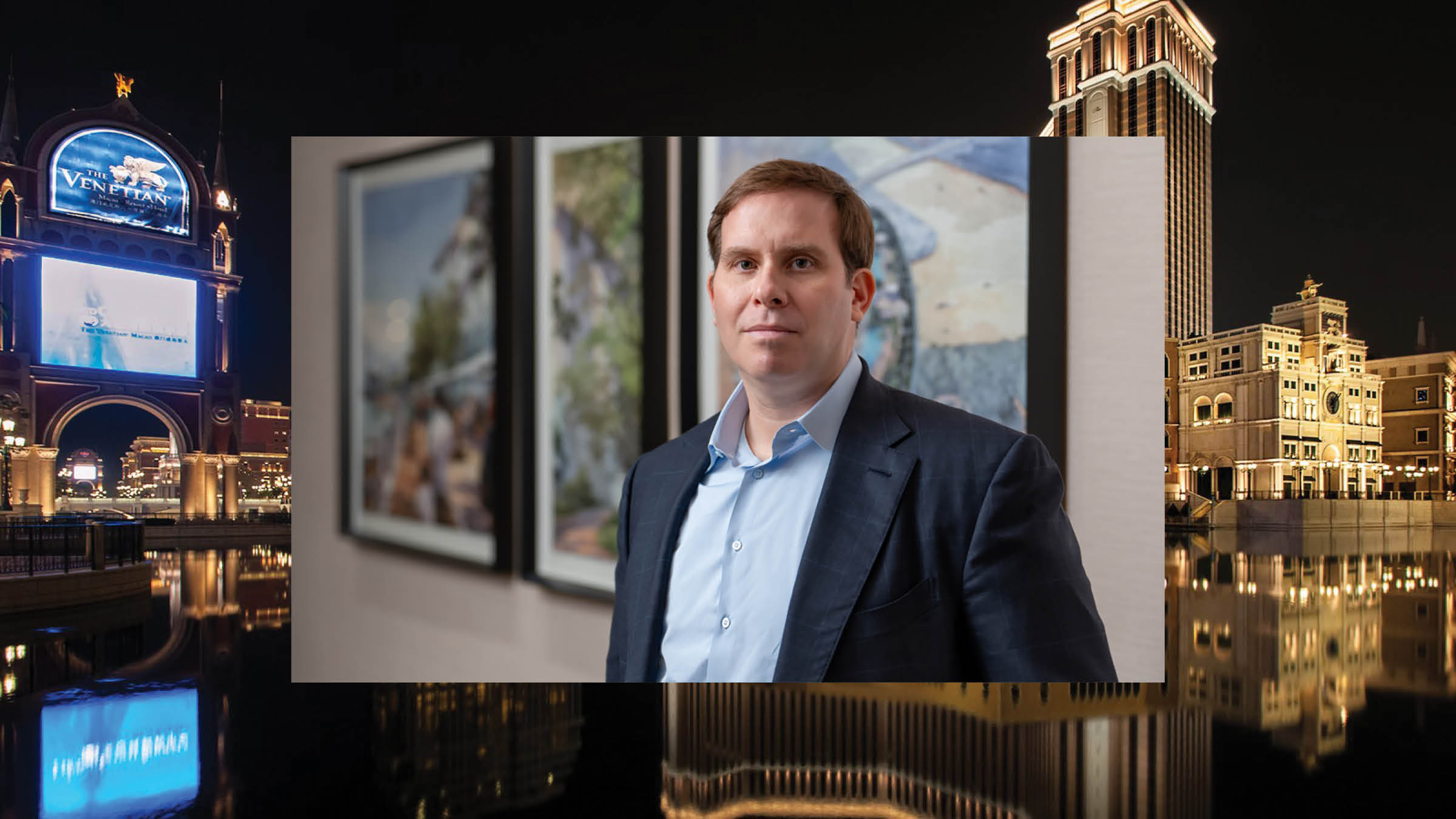
Patrick Dumont is Adelson’s son-in-law and joined LVS 16 years ago. He’s held virtually every title and worked with almost every department in his corporate career, groomed to become Adelson’s successor. He took over as chairman and CEO in March upon Goldstein’s retirement.
Dumont credits his predecessors for the wisdom they imparted during his time with LVS.
“Sheldon blessed us with incredible assets,” he says. “And we have the benefit of Rob’s leadership and his experience setting the company up for the future. If you look at our company’s history, our success comes from investment, from taking risks and from being entrepreneurial. That’s what we’ll continue to do.
The American Face
When the company sold its Las Vegas properties, the Venetian and the Palazzo, to Apollo Global Management in 2022, it completely exited any U.S. jurisdiction. LVS had sold its Pennsylvania casino, Sands Bethlehem, in 2019 to the Poarch Band of Indians from Alabama.
Apollo has been able to recreate the magic at the Venetian and Palazzo by maintaining and improving the facilities. The MICE formula continues to work and the properties remain jewels of the Las Vegas Strip. Since the opening of the adjacent Sphere, now one of the icons of Las Vegas, the properties are thriving. Dumont says he has no regrets about selling.
“It was a wonderful asset for us,” he says. “It was something that was very emotional to consider selling, but it was the right decision for us to do it. And we’re very happy that Apollo is doing well. It’s good for Las Vegas. I live here, my family lives here, so it’s nice to see their success. And even though we don’t own the Venetian anymore, we still have a lot of care and love for it. We’re happy for Apollo’s success, and we’re happy for the success of the Sphere.”
Even though the company now lacks any U.S. properties, it remains in the hunt for a jurisdiction in the states.
The New York City region was the obvious location. LVS had reached a deal to develop an integrated resort on the site of the Nassau Coliseum on Long Island, the former home of the NHL’s New York Islanders. There was some local opposition that could have been surmounted, but Dumont says the numbers just didn’t work.
“We’re very familiar with the New York market,” he explains. “We operated in Bethlehem in Pennsylvania for many years, which was the closest legal table games jurisdiction to New York City. We felt like we understood the market there, which is the reason why we were so interested. So we felt very strongly that New York would be a great opportunity on the customer side. I think the difficulty was the framework around the investment. What was needed to be successful in New York didn’t really match with what our company felt was an appropriate investment, so we decided to pass on it.”
Texas is, of course, a very real target, so much so that in 2023 LVS purchased the Dallas Mavericks of the NBA from none other than billionaire Mark Cuban. During the second year of ownership, the Mavericks reached the NBA Finals. Unfortunately, gaming hasn’t followed suit.
LVS planned to erect a new arena surrounded by a massive integrated resort surrounding it in the Dallas metroplex in the event of gambling being legalized. Dumont isn’t encouraged about recent legalization efforts.
“I think the legalization of gaming in Texas seems to be pretty far away right now,” he says. “Early on I thought it’d be great if the Mavericks and Las Vegas Sands could somehow have a development that would be adjacent to each other and get the benefit of synergy and proximity. But it doesn’t look like that’s possible now. So the Mavericks will go do what they need to do in terms of arena development and get done what needs to be done in the city of Dallas. But I think Las Vegas Sands is just thinking really long-term. Maybe over the next five or 10 years, it might be something that happens, but it doesn’t seem likely in the near term.”
Dumont says Texas could model itself after Pennsylvania, where a limited number of licenses were available.
“The state could set up a framework,” he says, “to maximize the investment to increase the economic multiplier effect for the number of jobs created by allowing a fixed number of casinos in each city but not so many that it’s dilutive. And that could be done through minimum investment criteria. There are certain ways to scale it. If you look at Pennsylvania, they were very successful. They had 12 licenses. We were one of them. And it was done in such a way so that the investment could create jobs and further investment, be protected and have a consistent source of tax revenue for the state.
“Texas obviously is a much larger scale state, much larger population, larger regional economies in each of the major cities. Is there a way it makes sense for the state and the industry and creates the opportunity? We can find a way.”
Making Macau
When Sheldon Adelson and LVS applied for a license in Macau, they were the decided underdogs. But the success of the Venetian, the integrated resort in Las Vegas, was the springboard for their approval in Macau. Officials in China’s Special Administrative Region (SAR) wanted to use gaming to develop non-gaming attractions and a more diverse tourism base, and a replica of the Venetian would fit that model very well.
The problem was, there wasn’t a lot of room for a big project like that in the city. The Peninsula—downtown Macau—was completely developed except for some small parcels. Other regions were off-limits residential neighborhoods. And Cotai was swamps and wetlands. But Adelson had a vision. Fill in the wetlands and create space for multiple IRs, starting with the Venetian.
The project was wildly successful. Soon all the other Macau licensees followed suit and joined Adelson in Cotai. Macau generates more revenue than any other gaming jurisdiction in the world, even after the serious downturn that came with Covid and lasted several years.
“Macau is the largest gaming market in the world,” says Dumont. “But it’s really changed over its history since I’ve been with the company. It’s evolved many times. Different market segments can mean more or mean less over time.
“I think right now the resurgence of Macau is really coming from the higher end. There are a lot of high-value patrons coming into Macau. The GGR growth is really being driven by the higher end of the market.”
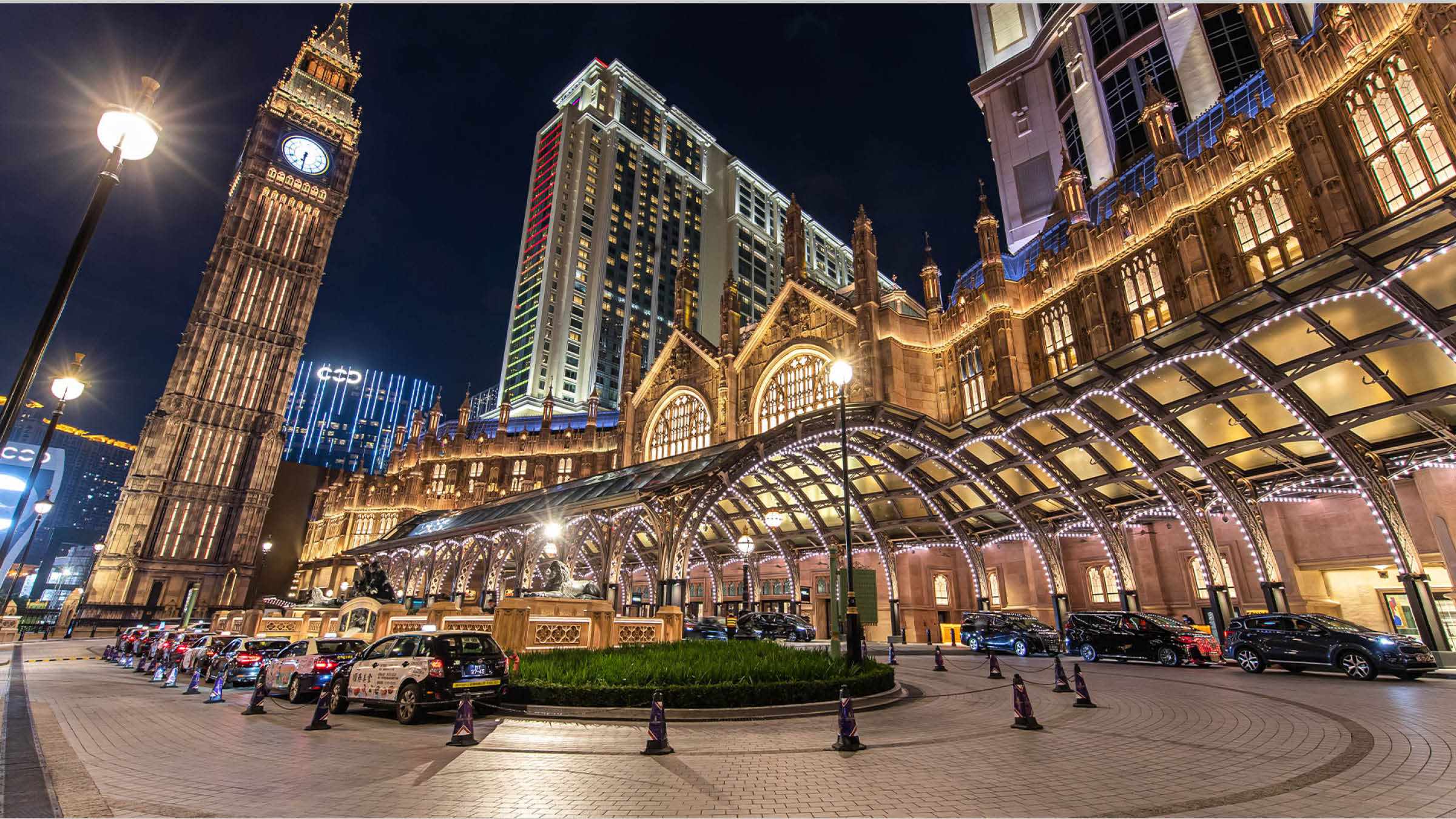
The Venetian was just the start in Cotai for LVS. Other properties have been developed in the footprint owned by LVS, including the Londoner, a themed resort to match Paris, which opened 10 years ago.
“The Londoner replaced what we called Cotai Central (two large hotels branded as Sheraton and Holiday Inn with a single casino) that we opened in 2012,” he says. “That was something that needed to be reconsidered, rethought. So we invested a lot of capital into that project to try to create something that would really appeal to a higher-end customer. And it’s been working very well. We’re very happy about the results there.”
In 2024, the original 20-year LVS license was extended for 10 years, with the promise that LVS would invest almost $4 billion in non-gaming attractions. Dumont said that condition was easy to comply with.
“We wanted to add things that would actually create tourism appeal to the Macau market and benefit the diversification of the economy there,” he says. “And so some of the things we’ve invested in have really benefited us and benefited Macau. These were things that we were looking forward to doing anyway. So we ended up having a nice result in terms of the investment categories that we ultimately agreed to. Some of the things we’re doing are enhancing some of our MICE offerings. We’ve been doing a lot of programming in support of some of these things that we’ve agreed to do. So I think it’s been going well so far.”
Singapore Sings
When Singapore decided to legalize gaming and offer two licenses for IRs, LVS was no longer the underdog, but the prohibitive favorite as a benefit of its success in Macau. The resulting project, Marina Bay Sands, has become one of the most iconic resorts in the world—and one of the most profitable. With three 60-story towers topped by a floating platform above, the Infinity Pool has become one of the most photographed destinations anywhere.
“When you think about Marina Bay Sands as being the most important integrated resort in Asia—its iconic architecture, its service levels, the gaming area—this (expansion) will take it to a new level.”
True to its reputation, regulations in Singapore have been very strict and demand complete transparency. Singapore residents must pay S$150 (US$118) to enter either of the casinos (Genting operates the other, Resorts World Sentosa). Junkets were prohibited from the start, so the casino companies developed very strong casino marketing departments.
“We have very large teams that are actually all over the different regions,” he says. “The catchment area for Singapore is really all over Southeast Asia. So we have a large series of teams that support different marketing efforts of different player types. The other thing is we’re very experienced in providing direct services there. So the functions the junkets provided in Macau, we actually provide ourselves in Singapore. We think that’s a better experience for our customers, and we’ve always been able to work through that in a way that we think is helpful and so evidenced by the fact that we have really strong VIP play there.”
LVS has broken ground on an $8 billion project adjacent to Marina Bay Sands that will cement its reputation as the most successful hospitality company in Asia. The name and the details remain closely guarded secrets but Dumont believes it will be a game changer for his company and for Singapore.
“The idea is to create the No. 1 integrated resort in the world with an arena. And so when you think about Marina Bay Sands as being the most important integrated resort in Asia—its iconic architecture, its service levels, the gaming area—this resort will take it to a new level. It is something that we’ve worked on for many years to get to this point, and now we have the opportunity to create a new development next door where we can add a 15,000-seat live performance arena. It will have a really unbelievable gaming area and a hotel that we hope will be the best hotel in the world. It gives us an ability to grow and to bring more high-value tourists into the market.”
The project has been on the drawing board for almost a decade and has gone through many changes and evolutions.

“We signed the development agreement in 2019,” says Dumont. “Then we went through the pandemic, went through a couple of redesigns and evolutions of what we were trying to accomplish based on our goals, what we saw in the market, and what the Singapore government wanted to achieve in terms of high-value tourism. We got to a point now where this development is going to be something really special and it will be additive to the existing Marina Bay Sands. It will be additive to Singapore as a tourism destination, and we think it’ll really grow our business and grow our cash flow. Unfortunately, it’s going to take a couple years to build.”
Dumont believes that the new project, combined with Marina Bay Sands, will give LVS an advantage over all its competitors.
“We compete with every other integrated resort in Asia,” he insists. “Every one of our customers could go to any one of the other ones. So we have to be our best every single day to ensure that we’re competitive.”
He’s comfortable with the closest competitor to MBS in Singapore, Resorts World Sentosa.
“We are sort of in different segments of the market,” he says. “We’re a city-focused building in the central business district. We have a huge MICE component to our business. We have a lot more business tourism that comes through our facility and our placement is maybe a higher level of luxury than where they’re focused. They’re more of a resort. They have a theme park and a lot of more family-friendly things. So I think we’re complementary and I think we approach the market with a little bit of a different focus.”
Flirting Online
When Sheldon Adelson told his partners at the American Gaming Association in 2013 that he opposed online gaming, he didn’t get a lot of support. In New Jersey, iGaming had just been legalized and most of the bricks-and-mortar casino companies were enamored with the potential of a new business vertical.
“What we do best is physical assets … I think that’s what we’re going to stick to.”
But Adelson wasn’t opposed to it as a business. He objected to it on moral grounds.
“For all intents and purposes, everyone has a cellphone,” Adelson told a packed audience at G2E in 2014. “Even my grandchildren can take an iPad, hit the buttons and figure out how to use it. They can operate it better than I can. We’re talking about a generation that will be using these for everything. It’s not a states’ rights issue as the proponents say because the internet is all over the country. Any kid could get online and bet if they wanted to.”
While Adelson’s fear of unfettered underage online gambling largely never came true, his prediction that online gaming would become almost universal certainly has to a large extent. And as a business, it has certainly exploded.
Even Las Vegas Sands tried its hand at it for a few years after Adelson’s death. LVS purchased a company called QBet in 2021 and eventually had more than 150 people working in a division it called Sands Digital Services. But last year, the company shuttered SDS saying it wasn’t a “strategic fit” for LVS. Dumont explains what went into that decision.
“It’s a really hard market because of the competitive nature of the promotion and the low barriers to entry,” he says. “And so it makes it really hard to scale a business over time from what we can see. There’s a lot of moving parts, a lot of regulatory challenges in both the sports wagering and the iGaming sides. In addition, there is a lot of competition from overseas unregulated operators. So our decision to get out was strictly a business decision.
“I think what we do best is physical assets. If you look at the core of our company and how we compete, we’re the leading operator in both markets we operate in. And we invest to continue to try to innovate and keep that lead. And so I think that’s what we’re going to stick to.”
While Dumont isn’t supportive of the recent surge of prediction markets, he understands why they are so popular.
“It seems that people really like it,” he says. “I think it’s something that really surprised people, with the adoption rate, and it feels like it’s here to stay. If you look at the growth and where it’s going, it seems like it’s something that has really captured a lot of customers.”
Future Logic
Dumont has a lot on his plate with expansions in both Macau and Singapore, but he’s mostly concentrating on being careful with the investors’ money. Since his mother-in-law, Miriam Adelson, is the largest shareholder in LVS, he takes that job seriously.
“I would love for us to have another jurisdiction. It would be great to be in Texas so we could have a U.S. operation again.”
“I work for my mother-in-law,” he laughs. “And I also work for the other shareholders of Las Vegas Sands. She’s seen me do this job for 16 years. Most importantly, I think she trusts me because of the work that I’ve done to date and because I have the support and the faith of the board members and of the people who work here.”
Dumont says he’s looking forward to the next five years, for which he’s set a few attainable goals.
“I’d like to see us grow and continue to invest in Macau,” he says. “I’d like to see us continue to innovate in that market. I think there are some things we can do that will continue to keep us hopefully ahead of the pack. We’re excited to start investing in those things.
“I would love to see us continue to grow Marina Bay Sands. And I would love to see our new development open with a flourish, because I think it will introduce some things to the market that people haven’t seen before and will be excited about.
“There’s been a lot of evolution in the markets in which we operate, so we have to adapt and we have to invest based on customer preferences and what we’re seeing. So I’m excited about the future, and my preparation really has been working with some of the greatest people the industry has ever seen. That’s really been a great learning ground for me.”
He adds, “I’d love to have a new jurisdiction. I don’t know if that’s possible but it’s been something we’ve been pursuing—for example, when Rob and I were going to Japan in the early days. It’s something we’ve been trying to pursue for a long time. I don’t know what that jurisdiction will be. Maybe it’ll be Texas, maybe it’ll be Thailand. I don’t know. But I would love for us to have another jurisdiction. It would be great to be in Texas so we could have a U.S. operation again.”