
Carrying the Torch

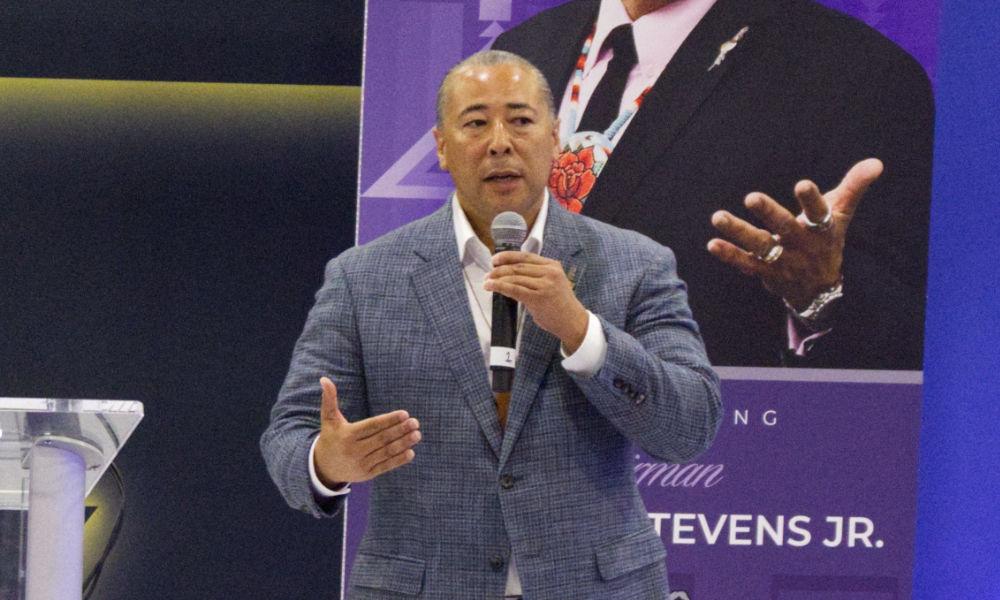
David Bean steps into 2026 as one of the most consequential voices in tribal and U.S. gaming—not because he sought the spotlight, but because the moment demanded it.
When longtime Indian Gaming Association Chairman Ernie Stevens Jr. died in September, the organization’s bylaws elevated Bean, then vice chairman, to serve out the remainder of Stevens’ term as chairman. It instantly placed him at the center of nearly every high-stakes fight over the future of tribal gaming.
“As chairman, I am hitting the ground running,” Bean said in the announcement. “Our mission remains clear: to protect sovereignty, honor our treaty rights and ensure that tribal voices are heard in every policy conversation that affects our people and our governments.”
Bean enters the year both as the caretaker of Stevens’ legacy and as the de facto face of tribes’ national gaming agenda. Among the key fights ahead are the growing threat from prediction markets and need for Indian health care funding amid federal budget challenges.
As acting chair, he has framed his mandate as safeguarding the economic base built by earlier generations of tribal leaders while adapting to unfamiliar threats different from traditional brick-and-mortar casinos.
At industry events and in media appearances, Bean has stressed that prediction markets and sweepstakes operators are not just novel fintech products or social casinos, but unsanctioned workarounds to the carefully negotiated system of tribal state compacts that underpins a multibillion-dollar sector across Indian Country.
Nowhere are those battle lines more sharply drawn than in California, where large tribal interests and the California Nations Indian Gaming Association backed Assembly Bill 831 and related efforts to shut down unregulated sweepstakes models. The tribes argued that those models threaten compact exclusivity, undercut hard-won regulatory standards and siphon play from tribally controlled operations.
Bean’s IGA cannot dictate California policy, but in his new role he is expected to push for unity around core principles. The association asserts that any new digital product touching gambling must respect tribal exclusivity, sovereign jurisdiction and the right of tribes to be first movers in their own territories.
Prediction markets pose an even more nuanced, national challenge. Platforms like Kalshi and partnerships with major brokerages have pushed event-based contracts, including sports event contracts, into a gray zone. Tribes argue that those compete directly with Class III gaming while sidestepping state compacts and geofencing obligations required of licensed sportsbooks.
Tribal leaders used the 2025 Global Gaming Expo stage to hammer prediction markets as the “biggest current threat” to tribal gaming, because they can reach tribal citizens and non-tribal players alike without tribal consent, regulatory reciprocity or revenue sharing.
For regulators, operators and lawmakers, Bean represents a generation of leaders steeped in compact negotiations and retail casino projects who now must navigate an ecosystem defined by apps, tokens and cross-border platforms that barely existed when Indian gaming hit its first boom. In 2026, Bean’s challenge is to make sure the next chapter of gaming innovation is written with tribes at the table, not reacting from the sidelines.