Breaking the Bank


Over the course of the next 18 months, three new tribal casino developments will open their doors in California, which has already established itself as the largest tribal market in the U.S. by revenue.
Two of the projects—the Ione Band of Miwok Indians’ Acorn Ridge Casino in Plymouth and the North Fork Rancheria of Mono Indians’ North Fork Mono Casino and Resort in Madera—will open in 2026, joining a crowded list of more than 60 existing properties from 62 tribes throughout the Golden State. The third, the Dry Creek Rancheria Band of Pomo Indians’ Caesars Republic Sonoma County resort in Healdsburg, is expected to follow in mid-2027.
The casinos are somewhat standard in their offerings but their behind-the-scenes details represent a new wave of innovation, one that could spark further tribal growth around the country.
All three tribes secured financing through real estate investment trusts (REITs), a funding mechanism that is increasingly popular among commercial operators, but which until recently had been unavailable to Indian Country. Acorn Ridge and Caesars Republic were funded by Gaming and Leisure Properties (GLPI), while North Fork Mono is a collaboration with VICI Properties.
Together, GLPI and VICI are the two most prominent REITs in the gaming industry. Over the last 10-plus years, big commercial operators like MGM, Caesars, Bally’s and Penn have opted to sell and then lease back their real estate holdings in exchange for big cash influxes that can be used to finance other projects, pare down debt, repurchase shares, or for other, similar purposes.
The two REITs have thus come to accumulate a fair number of the most prominent casino real estate assets in the U.S., from the Las Vegas Strip to Atlantic City and everywhere in between. But as traditional casino assets become increasingly scarce, the firms have had to adapt by finding new growth avenues, with tribal projects being a big example.
Tribes could not previously access REIT funding because of issues related to sovereignty and compliance. Under the Indian Gaming Regulatory Act (IGRA), tribes must maintain sole proprietary interest in any gaming operation, which can become tricky with regard to financing and lending terms, especially for smaller groups that don’t have a lot of existing capital or collateral. All financing agreements for casinos on tribal lands must be approved by the National Indian Gaming Commission (NIGC).
It took several years of back-end work to make the loan structures compliant under IGRA, and the tribes involved endured much uncertainty. But with the deals secured, the roadmap looks to be forming more solidly than ever.
Acorn Ridge Makes History
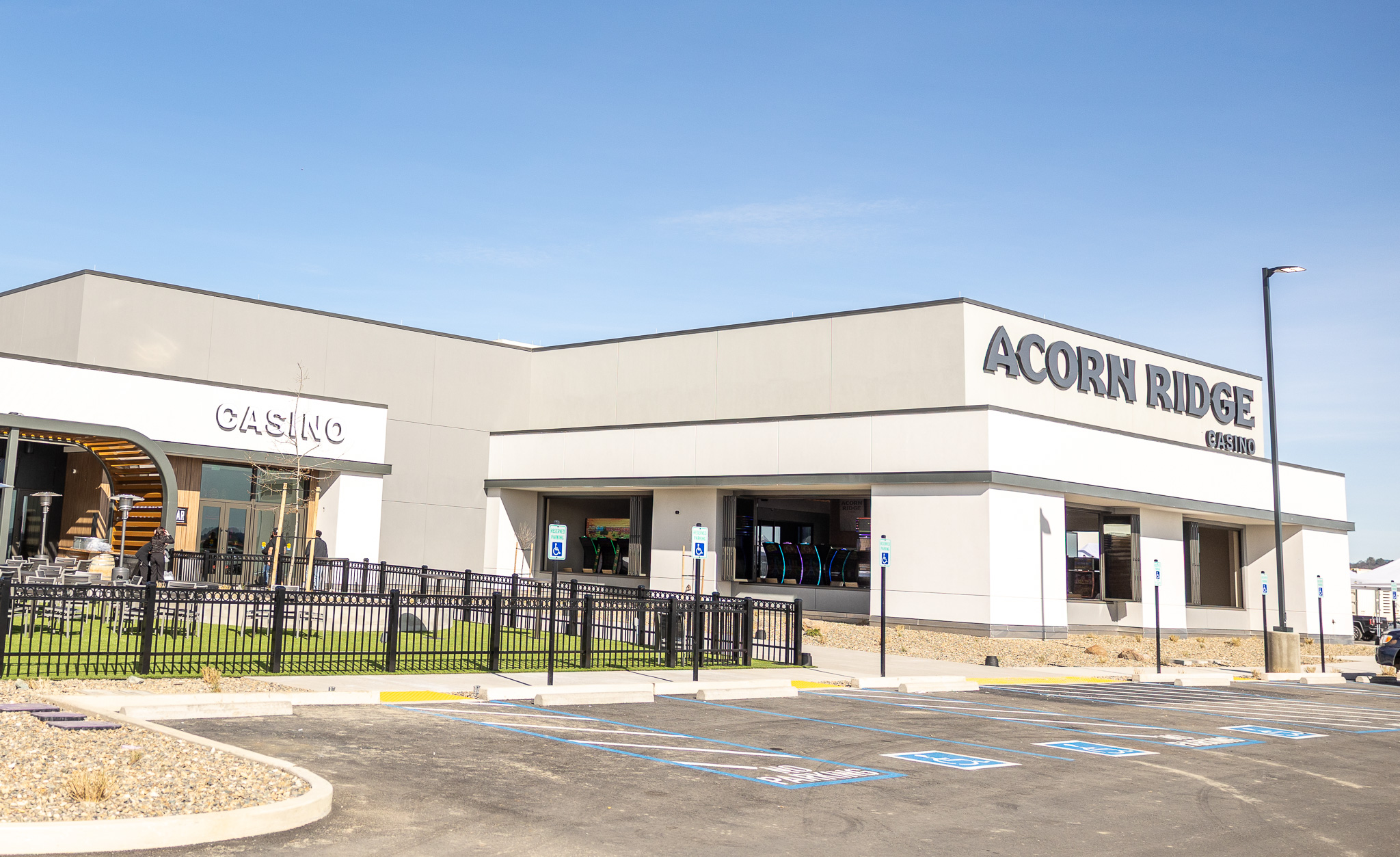
The 60,000-square-foot Acorn Ridge opened February 24 with just under 500 slots and 12 tables. Announced in September 2024, Acorn Ridge was the first of the three tribal-REIT deals. It’s the culmination of many years of work on behalf of the Ione Band and Chairwoman Sara Dutschke, who spoke at length about the agreement at the Indian Gaming Tradeshow and Convention in 2025 on a panel alongside GLPI President and COO Brandon Moore.
Dutschke said it took a lot of back-and-forth and hand-wringing to finally obtain NIGC approval, as the commission had never analyzed an agreement with those terms. But in the end, GLPI’s partnership and willingness to collaborate under the framework was a big factor in making it successful.
“GLPI was great about letting the tribe take the lead there,” she said. “That was really important to demonstrate to NIGC that these were the tribe’s decisions supported and backed by GLPI.”
The terms of the agreement include a $110 million delayed draw term loan with a five-year term at a rate of 11 percent, but there are certain lease elements that make it unique. According to a GLPI release, “Ione has an option at the end of the Ione loan term to satisfy the loan obligation by converting the outstanding principal into a long-term lease with an initial term of twenty-five (25) years and a maximum term of forty-five (45) years.”
William Newby, president of TFA Capital Partners, said on the panel that the lease element in these deals “serves as a surrogate for tribal nations to issue equity,” instead of issuing stock like a commercial operator could. That equity “provides a mechanism for growth and diversification,” he said. Dutschke added that the agreement allows the tribe to “monetize our trust land in a way that hasn’t been done before,” without “actually having someone come and utilize that land.”
For Moore and GLPI, the success of the Acorn Ridge deal was about a decade in the making; they just needed the right partner like the Ione Band. Growth prospects are agnostic, and REITs are inherently adaptable to all types of new lending avenues.
“We have the capital, we have the balance sheet,” Moore said. “Tell us what you need it for and how you plan to use it. For us, if you’re putting that money in a way that is accretive to your business and we can underwrite it long-term, the capital will be available.”
VICI Enters the Fray
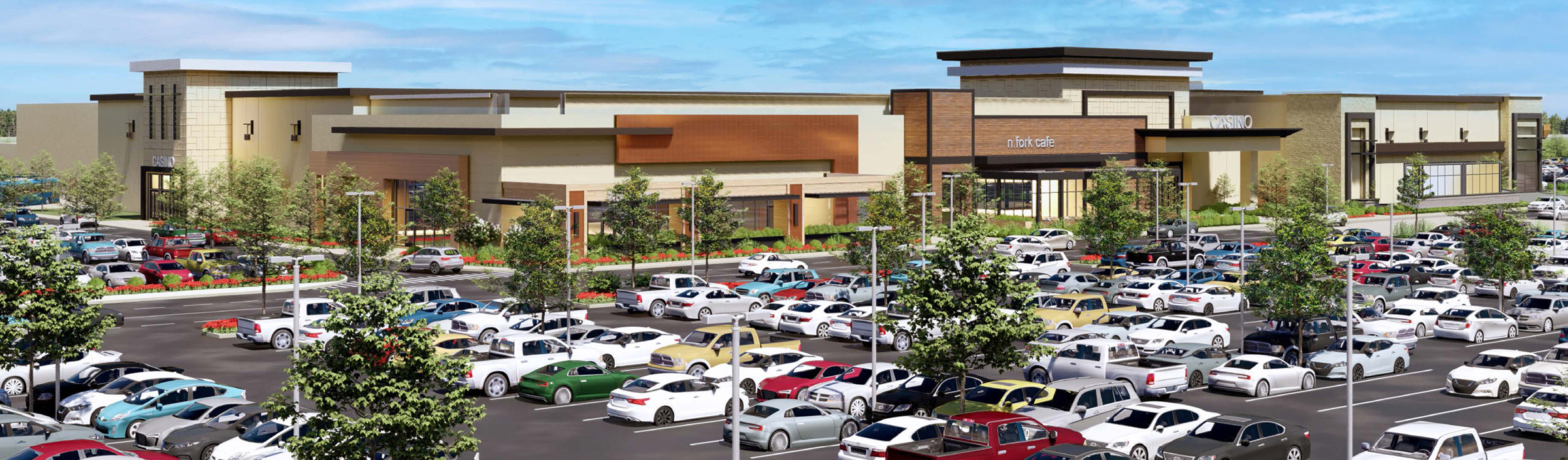
Shortly after the Acorn Ridge announcement, VICI made waves of its own in April 2025 by announcing a deal to commit up to $510 million toward the development of North Fork Mono Casino and Resort, a North Fork-owned casino built and managed by Red Rock Resorts.
VICI had struck tribal casino deals in the past with the Seminole Tribe, Cherokee Nation, Eastern Band of Cherokee Indians and Canada’s Indigenous Gaming Partners, but those centered around existing or non-tribal properties. There was also a waterpark financing deal for the Mashantucket Pequot Tribal Nation, but North Fork represented VICI’s first ground-up tribal casino financing agreement.
VICI’s commitment will be split into two tranches—the REIT will allocate $125 million in the first tranche and $385 million in the second, with five- and six-year maturities for the respective loans. In a statement, VICI CEO Ed Pitoniak said his firm “take(s) pride in our ability to build deep relationships with dynamic growth-minded operators that will help to contribute to our long-term growth goals and objectives.”
When completed later this year, the casino is expected to feature 2,400 slots, 40 tables, two restaurants and other offerings. As with the North Fork tribe, the deal also represents Red Rock’s first foray into the REIT sphere.
“Few tribes and communities have worked as diligently, respectfully and collaboratively as North Fork and Madera to create jobs, business opportunity and community investment,” said North Fork Treasurer Maryann McGovran at a topping-off ceremony for the project last March.
GLPI Goes Big with Dry Creek, Caesars
Following the success of the Acorn Ridge deal, GLPI made another significant tribal investment last September by allocating a total of $225 million toward Caesars Republic Sonoma County, which is being built on the site of the current River Rock Casino.
That total is split between a delayed draw term loan of $180 million and a secondary loan of $45 million, and the blended interest rate on the two is approximately 12.8 percent. Also included in the terms is a similar lease structure to the one featured in the Acorn Ridge agreement.
“Upon, or prior to, maturity of the six-year term loans, Dry Creek will lease the property to an affiliate of GLPI for a 45-year term, for an amount no less than $112.5 million, and GLPI will sublease the property back to an affiliate of Dry Creek,” the company said in a release. “Annual rent on the sublease will be based on a cap rate of 9.75 percent.”
The new Caesars Republic Sonoma County, expected to be completed in mid-2027, will feature 1,000 slots, 28 tables, a 100-room hotel and a range of other amenities, while the existing casino remains in operation during construction. Back on the IGA panel from early 2025, GLPI’s Moore said the company wouldn’t blink in pursuing hundreds of millions of dollars’ worth of funding in tribal deals, and CEO Peter Carlino echoed those sentiments in the announcement of the Dry Creek deal.
“The unique transaction structure that GLPI was able to provide delivers a lower-cost financing option to Dry Creek while ensuring a long-term lease guarantee for GLPI,” Carlino said in a statement. “Second, it leverages our multi-property relationship with Caesars Entertainment, which shares a similar commitment to tribal casino relationships.
“This project further validates the tribal opportunity for GLPI, beyond just new greenfield developments, to include redevelopment and rebranding. Finally, it provides GLPI with a unique opportunity to expand our presence in the California market, in a prime location.”