Beauty & Purpose: Smart Resort Reinvestments

On a fall day in 1996, 40,000 people turned out for the opening of Connecticut’s second casino resort. The debut of the $302 million Mohegan Sun capped a years-long campaign for federal recognition by the Mohegan Tribe. In 1994, the federal government finally confirmed the tribe’s sovereign right to self-governance, which was followed by its pursuit of a gaming enterprise.
Mohegan Sun was an instant success. Within a year, the tribe earmarked $400 million for a new hotel tower, convention center and 10,000-seat arena. It has since invested millions more in the Uncasville property, supporting ongoing prosperity for the 2,400-member nation.
But all resorts operate in environments of change, and 30 years after Mohegan Sun opened, competition is keener than ever. Almost 1,000 tribal and commercial casinos dot the continental United States, all vying for their share of a crowded, if not saturated, market.
As hotelier JW Marriott once noted, “Success is never final.” Tribal operators are responding proactively, both with periodic upgrades and multi-year capital investments.
The Sky’s the Limit
Over the years, the Mohegans have expanded their influence with gaming properties in Pennsylvania, Canada and, briefly, South Korea. But their quest for licenses closer to home, in New York and Massachusetts, were not successful. So they looked homeward, to the flagship in Connecticut, commissioning a “hotel within a hotel” atop Mohegan Sun’s 1,200-room Sky Tower.
The elite enclave called Aspire offers a dedicated entryway, butlers on 24-hour call and dramatically transformed upper-level suites. It has earned a five-star Forbes rating, based on an 800-point checklist for fine amenities and “virtually flawless service.”
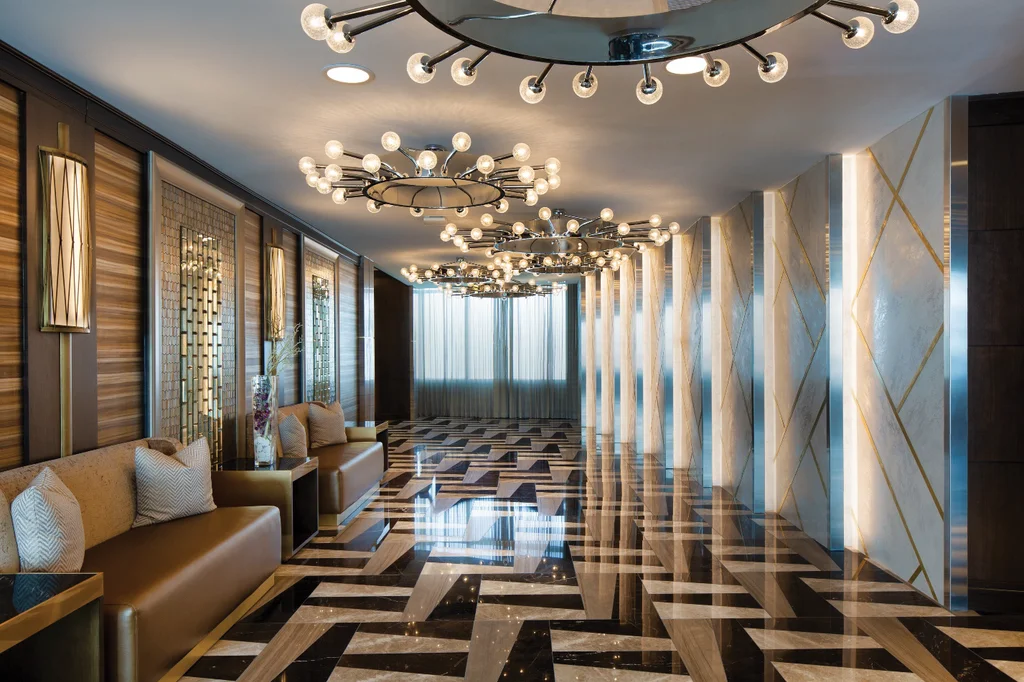
On arrival, guests are whisked by private elevator from the ground floor to the 33rd, where a speakeasy-style lounge awaits. The exclusive retreat, aptly named Thirty Three, offers private gaming tables and bespoke service along with matchless views of the Connecticut countryside and Thames River. Conde Nast Traveler called it a “sleek, sophisticated aerie” that “truly feels like the top of the world.” The house champagne? Moët & Chandon.
Such refined yet comfortable accommodations were designed to meet and exceed rising guest expectations and fend off competitors.
Periodic, proactive remodels can be the difference in maintaining a competitive edge. R2 Architects principal John Ruiz, who led the Aspire project, likens it to a firewall, designed to captivate and retain “the top 1 percent to 2 percent of clients who really move the needle financially”—high rollers.
A Sense of Place
Many commercial casino resorts, especially in Las Vegas, have relied on exaggerated theming to attract guests, from pyramids to castles to the circus big top. Tribal properties are better known for design that artfully reflects the land and culture.
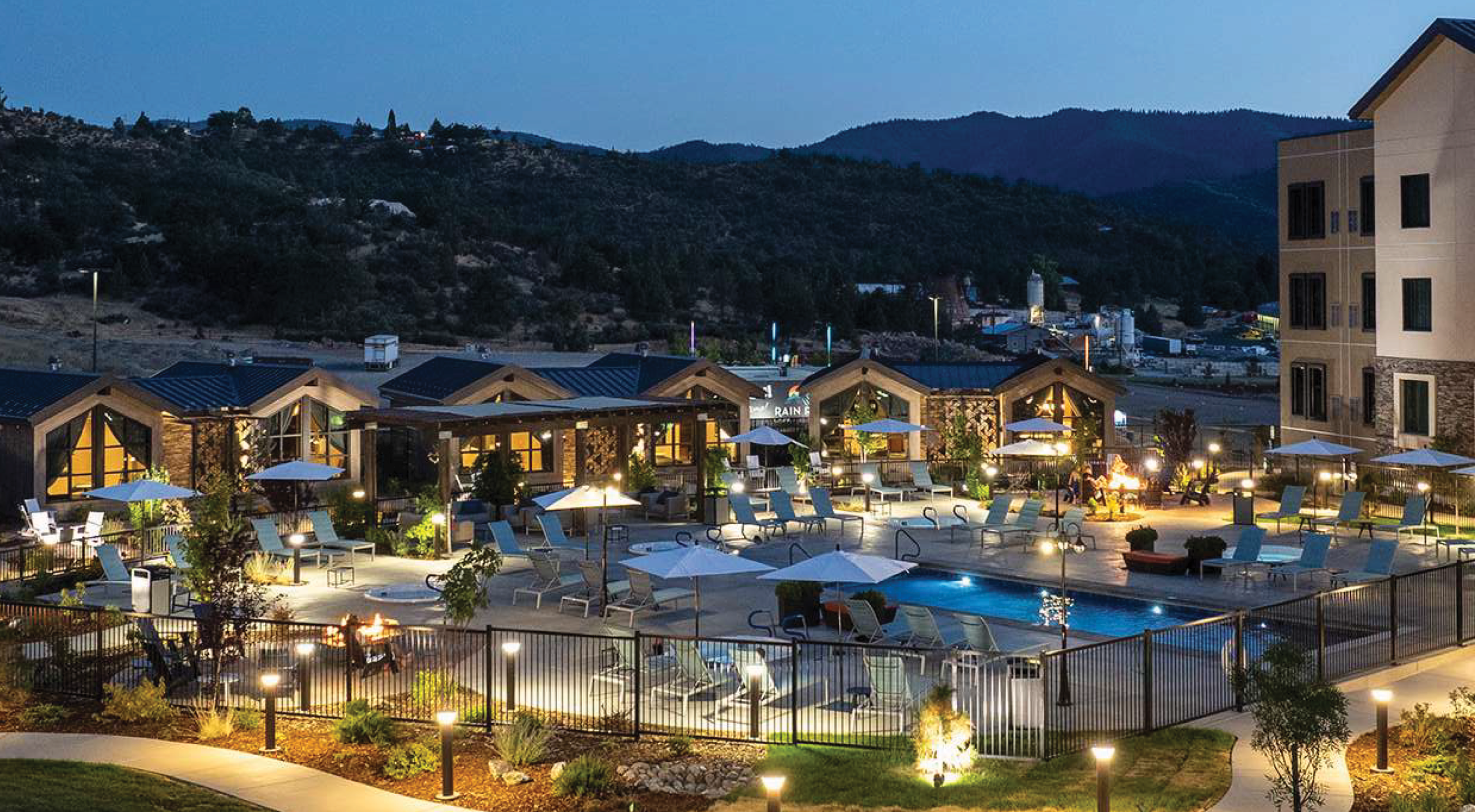
In 2022, four years after opening the Rain Rock Casino & Hotel, California’s Karuk Tribe undertook a $40 million expansion of the property in the historic former mining town of Yreka.
Completed in 2025, the project added hotel rooms and more gaming space. But the standout is a cluster of rustic cottages rich with Native American design elements, surrounding an outdoor lounge pool with fire pits and a pergola (see main image above).
The eight lodge-style sanctuaries “feel authentic to Northern California, while offering a level of comfort and luxury that’s a little unexpected for a casino property,” says Joe Baruffaldi, principal of HBG Design, which led the project. “They were inspired by a deep connection to ecotourism and the Karuk Tribe’s relationship to the Klamath River and Siskiyou landscape.”
In the planning stage, one tribal member said, “We want the design and amenities to resemble the land and river—like what salmon might see on their journey upstream.”
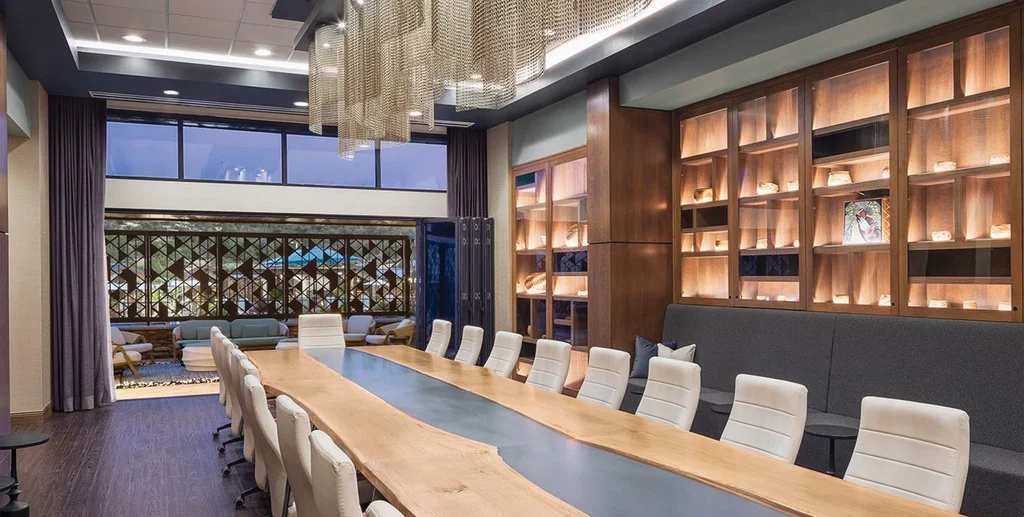
“That insight became a guiding principle for the entire project,” says Baruffaldi. The vision continues in a new Tribal Council Boardroom, which is also strongly representative of Karuk culture. A custom-built table subtly references the movement of water, and a mix of light and dark woods reflects the surrounding forests and terrain. Full display walls showcase tribal artifacts. The result is a sense of place that is also educational.
It’s vital to do renovations in a timely manner, and just as important to do them in a way that doesn’t disrupt business, especially on the gaming floor. At Rain Rock, “shutting down large portions of the casino wasn’t an option,” observes Baruffaldi. Construction took place in strategic phases, with work sequenced around active areas.
That approach allowed the property to introduce 175 new gaming positions across roughly 20,000 square feet, renovate the sports bar and bring in a new ballroom-style event center, all while staying open and serving guests.
View from the Top
In 2022, 4 Bears Casino & Lodge in New Town, North Dakota broke ground on a $95 million expansion, adding a seven-story hotel, more gaming space, an upscale steakhouse and a sports bar.
TBE Architects, which has served 123 tribes and First Nations on hundreds of casino and hotel projects, took a novel approach to the project, situating conference facilities on the topmost floor. “That truly gets you the million-dollar view” of Lake Sakakawea and the surrounding landscape, says TBE President and CEO Luke Jumper.
The building form is intentionally simple, important in a climate that veers from bitter cold in the depths of winter to long, temperate summers.
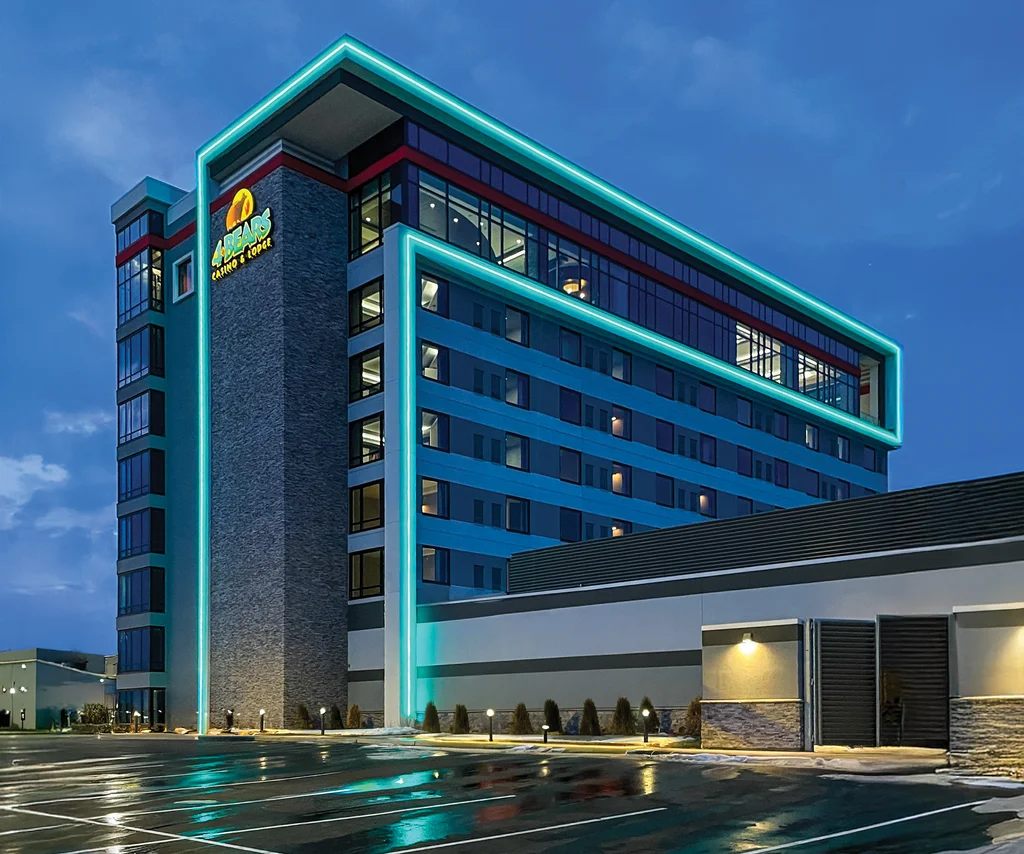
“When you’re trying to retain energy, the simpler the profile the better,” Jumper explains, “but you don’t want a boring box.” Designers reinforced the verticality of the tower with visual elements including LED lights to make it “visible for miles, this beacon in the prairie.”
FireKeepers Casino Hotel in Battle Creek, Michigan has just completed a multi-phase renovation of its original hotel tower, which included a complete replacement of its plumbing system. Despite the complexities of the project, commissioned by the Nottawaseppi Huron Band of Potawatomi, it was completed on schedule and under budget.
Along with updating hundreds of guest rooms, suites, corridors and lobbies, the project also included makeovers of the two Presidential Suites, with themes of fire and water. They feature open layouts, custom finishes, floor-to-ceiling fireplaces and in-suite bars, complemented by natural stone, metallic accents and special appointments like private shuffleboard tables.
Opulent bathrooms offer illuminated Himalayan salt walls, freestanding soaking tubs and private dry saunas. All combined to put FireKeepers on USA Today’s 2025 list of “10 best casinos that aren’t in Las Vegas.”
Ongoing Relevance, Returns
In a recent analysis for Global Gaming Business, gaming industry advisory firm GGHM looked at examples of transformational casino investments that led to growth and renewal. They included tribal entities like Hard Rock Northern Indiana, which took a declining riverboat complex, redeveloped it at a nearby land-based location, and went from a market also-ran to the top performer in the region.
Hard Rock Atlantic City, likewise, turned the shabby former Trump Taj Mahal into a contender. Following an initial investment of $400 million, the Boardwalk property reopened in 2018 with 2,000 rooms, 20 restaurants, a 120,000-square-foot gaming floor, 2,200 slot machines and 125 table games, as well as a 400-seat Hard Rock Café and 150,000 square feet of event space.
The upgrades continue, with $50 million allotted this year for new restaurants and room renovations. In a challenging market and in the face of looming competition from casinos in New York City, Hard Rock AC has recorded a 21 percent revenue increase so far this year, following a 20.9 percent lift in 2025. The brand is owned by the Florida-based Seminole Tribe.
In the Pacific Northwest, meanwhile, the Tulalip Resort Casino of Washington recently completed a 70,000-square-foot expansion that added 400 new slot machines and other amenities including a full-service bar and an outdoor covered and heated patio. Inside, new art and design elements include subtle references to the Oregon landscape, such as water currents, fishing nets and piers.
“It touches your heart, how beautiful the designs, which can be shaped for future generations,” said Tribal Chair Teri Gobin when the addition debuted last summer. “Our casino was beautiful and gorgeous, but it was time for an upgrade.” Gobin added that the resort has been “very important” to the tribe, funding education, health care and other resources.
‘Handle to Handle’
With rising competition for guests, the gaming industry is ever more focused on revenue from non-gaming amenities as a growth engine. But the gaming floor is still a pillar of the operation.
R2 Architects’ John Ruiz recalls a term from the 1990s that he says still applies when it comes to casino redesign and renovation—“from the handle to the handle,” or the distance from a patron’s car handle to the slot machine handle.
“That was back in the day when slot machines had a handle—the shorter the distance from handle to handle, the greater the success of the gaming floor,” he says.
“So every time we’re working, altering, renovating or master planning, we’re looking at that handle-to-handle distance, strategically locating entrances to create energy and momentum and opportunity for retail and food and beverage for a fully immersed end-to-end experience.
“Handle-to-handle was super important decades ago,” says Ruiz. “It’s super important today. And it’s still a big part of how we plan facilities to make them better.”
Destination of Choice
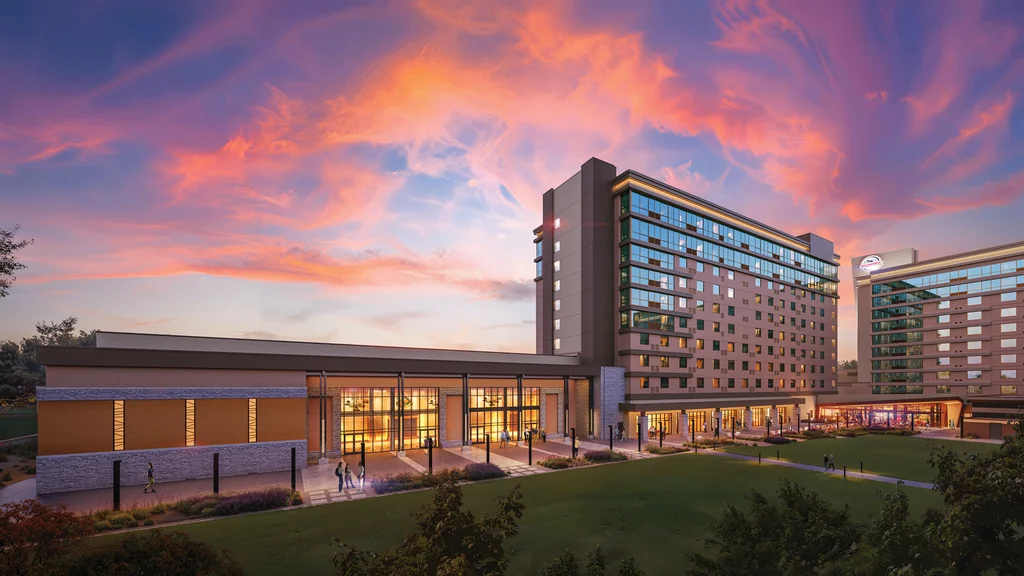
Wildhorse Resort & Casino, Pendleton, Oregon
The Wildhorse Resort & Casino in Pendleton, Oregon already boasts a hotel, two 18-hole golf courses, restaurants, a movie theater, bowling alley, RV park and a casino with more than 1,100 slot machines in addition to table games.
Now Wildhorse is going the distance to ensure guests never have to leave the resort property for fun, entertainment or to do business.
Working with Cuningham Architecture & Interior Design, the Confederated Tribes of the Umatilla Indian Reservation are working to complete a $130 million phased expansion that will add a second, 10-story hotel and a new three-meal restaurant. A 15,000-square-foot event space with leading-edge technology will triple the resort’s current capacity and make Wildhorse a flexible, attractive option for convention and meeting planners. The project will also update the existing property, refining and simplifying guest flows and shifting from heavy, block-like forms to softer, more neutral tones, introducing patterns inspired by the region’s iconic Pendleton blankets.
“We want to create more memorable experiences through forward-thinking investments in areas that impact our guests as soon as they walk in our doors,” said Wildhorse CEO Gary E. George when the expansion was announced last May. “A consistent, high-quality casino experience is the difference for consumers and the region.”
Brett Ewing, AIA, NCARB, Cuningham principal and project executive for the Wildhorse project, spoke to Tribal Government Gaming about the significance of the expansion.
TGG: These additions will give guests a more complete experience and really turn Wildhorse into an all-purpose powerhouse. How were these decisions made in the planning phase?
Ewing: The planning for this expansion evolved as the next bold step in an overall master plan and vision that Wildhorse has shaped over several years of strategic growth and expansion. Already established as a leading destination resort, this development is intended to push the property into the next tier of attraction and performance capabilities.
The new event center is powered by Gala Systems’ automated technology, allowing the venue to shift between multiple configurations in minutes. That speed and flexibility unlock the ability to stage more events, with more variety and with more revenue potential while reducing turnaround time and operating costs.
It’s a high-impact investment that delivers both operational efficiency and market momentum to keep guests on the property and returning to the property regularly.
How does the design reflect the tribe’s cultural identity?
Our design approach thoughtfully weaves together culture, place and guest experience to elevate the distinctive identity of Wildhorse Resort & Casino. From bold architectural gestures to carefully curated materials and meaningful artwork, every element is intentionally crafted to create a cohesive experience that celebrates the Wildhorse brand.
Can you estimate the potential economic impact of the expansion, including how many jobs it will create?
Wildhorse currently employs more than 1,100 full-time and part-time team members. The expansion is expected to create approximately 72 new jobs at its opening, contributing to long-term economic vitality and reinforcing the property’s role as a key regional employer.