
The New Table Games


Table games inherently have a built-in sense of agency and tactility. Players choose their bets, cards, dice and side bets, all while interacting with a felt surface.
There can be a certain level of strategy applied that is often not possible with other casino games, particularly slots.
However, over the last 10 years, the table game space may not have seen the same type of fast-paced innovation that has been occurring in the online sector.
“This isn’t to say these traditional games are stagnant,” says Nicci Smith, managing director of U.K. and Europe for TCSJohnHuxley. “Evolution often occurs through subtle rule changes, the introduction of side bets for extra winning opportunities, or faster game-play variations, all while respecting the core format.”
Suppliers and developers have released several new variants of well-known table games to draw in players. These games have also been augmented with technological innovations such as progressive jackpot systems and digital tools for dealers.
 Galaxy Gaming VP of Product Development Steve Cvetkoski notes that over the last few years in the table game space, there has been a focus on quality over quantity.
“I think the sort of days are over where you can just crank out new games because they either haven’t been seen in the market or there is this just gaping hole that needs to be filled in the market for certain game types,” Cvetkoski says.
Table Game Variants
Table game developers have looked to old felt classics for inspiration and have tweaked the games for modern palates, which often seek more betting options.
Galaxy Gaming acquired the distribution for EZ Baccarat more than a year ago. However, the company has not just put it out on-license on distribution agreements with a hands-off approach.
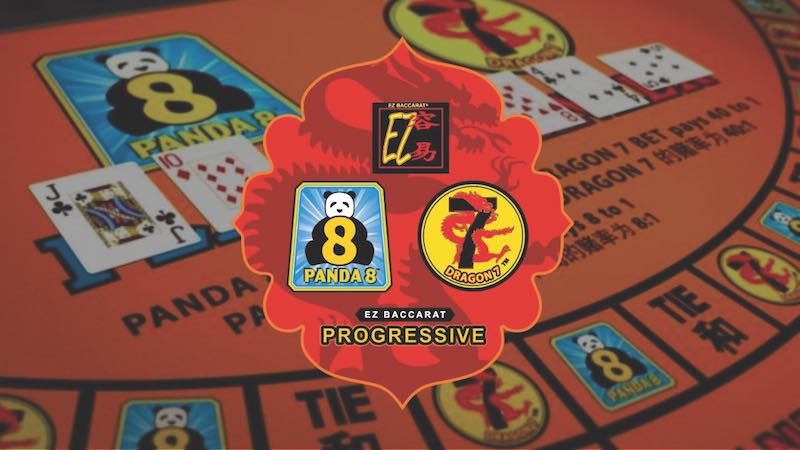
“We introduced more optional wagers to it. Most recently, the ‘divine nine golden talons’ wager to go along with the ‘dragon seven’ and the ‘panda eight’,” Cvetkoski says.
EZ Baccarat’s panda eight and dragon seven offer gamblers a chance to win on three-card outcomes that pay out 25-to-1 and 40-to-1, respectively. Additionally, the game is tied to a progressive jackpot that pays out to corresponding player seat placements and designated three-card flushes.
Looking at poker variants, Robyn Brewington, Light & Wonder executive director of tables commercial strategy and execution, says the company rolled out Ultimate Texas Hold ’Em a few years ago to success.
However, while that became a model moving forward, there was not a major innovation for content on the felt side at Light & Wonder until a year ago, when it brought out its blackjack variant Double Down Madness.
“It’s rolled out internationally. We have it in multiple jurisdictions throughout the U.S. We have it in Canada, Mexico, and we’ve recently placed it in Egypt,” Brewington says.
“So it’s certainly getting a very wide reach, to the level that I think even we were very surprised. We’ve not seen this kind of response or reaction, but I think what it speaks to is the real desire for some new games in the pits.”
Brewington says Light & Wonder has worked with the creator of Double Down Madness, designer Matt Booth, on its new game Double Hook Poker.
 Discussing the yet-to-be released poker variant, Brewington says making new games is always challenging, and the company is excited to release new content from the designer of Double Down Madness.
Brewington notes a past ruling that you cannot patent any form of math. As a result, companies have to shore up brands and customer loyalty.
“When you can’t patent or trademark any of the true mechanics of the game, it makes for a little bit of a challenging space, for sure,” Brewington says.
“What we’ve done at Light & Wonder is really making sure that we’ve shored up those brands and that we have done some great cross-platform pollination.”
In creating its games, Light & Wonder has a customer advisory board made up of eight different operators from varied jurisdictions, tribal and commercial.
“We really utilize that customer advisory board as a sounding board for different content that we’re developing,” Brewington says.
Restrictions on Making New Games
It would be an easy world if game developers could dream up revolutionary ideas for new table games and have them executed by casinos.
In reality, that is just not practical. If a game has a radical new design or strange mechanic, the first barrier is that players simply wouldn’t understand it.
Compound this with the need to train staff on its mechanics, as well as ensuring the security of the game and casino margins. Then you actually have to teach it to players, many of whom could be intimidated by a new game and just pass it by for more familiar and comforting tables.
“You can’t just go out with something that uses a completely new deck of cards and think, ‘Yeah, this will sweep through the nation.’ There are factors in the industry that make that a little bit more challenging,” Cvetkoski says.
“You could have the greatest game out there, but it might just not be given the chance.”
The Intimidation Factor
Tried and tested traditional games have the benefit of broader appeal and working knowledge.
Additionally, experienced players want games they are sitting at to keep moving. While some veterans may have patience for inexperienced players, there can be an intimidation factor by those wishing to keep it rolling. It’s more inviting for the less experienced to play what they know, either from games with friends or electronic variants.
Light & Wonder’s Brewington says that intimidation factor affects some gamers when they look at table games.
“If you’ve ever sat down at a blackjack table, and it’s a table that’s got a lot of great energy, people are making money, you sit down and the whole table just turns and looks at you, and kind of gives you that look like you’d better not mess up,” Brewington says.
“It’s intimidating, and I really think that’s where electronic table games have gotten their foothold. It allows that player that might be intimidated by the traditional table to play their beloved table games in an electronic format.”
Electronic table games have an additional benefit for casino operators if they’re struggling with labor shortages.
Additionally, ETGs allow casinos to better utilize floor space, as these systems allow multiple players to participate in table games across individual terminals. If optimized, this will often require less physical space per player compared to traditional tables. This can allow operators to offer more choice within limited settings.
TCSJohnHuxley’s Smith notes that the company’s popular Roulette Xtra game that was operating in live casino and iGaming spaces has spawned an ETG variant.
“Building on this success and recognizing the growing demand for versatile gaming experiences, we have now developed Roulette Xtra for our next-generation electronic table game platform, Qorex 2,” Smith says.
“This marks a significant step in making this popular game accessible to a broader audience and leveraging the efficiency and multi-game capabilities of the electronic table game.”
Qorex 2 also touts the company’s Supernova Progressive Jackpot System. Casino operators can link the progressive jackpot with other games.
“This convergence not only enhances the player experience with the potential for substantial wins, but also provides operators with a compelling tool to drive engagement and revenue across their entire table game offering,” Smith says.
Progressives and Side Bets
Table games at their core are just a table and felt. While some innovation can be applied to the felt aspect of the game, at the end of the day felt is still just a matted textile.
However, innovation can be brought to the game itself, whether mechanics from other games that have proven popular or from movement into new mediums.
A good example of this was the introduction of a side bet, Blackjack 21 plus 3, which first hit the Las Vegas Strip in 2001. Essentially, it’s just a quick bet that your cards and the dealer’s will make a three-card poker hand.
“The beauty of a lot of blackjack side bets is they’re done right away, upon the initial deal—it’s done, taken out, and you just move on,” Cvetkoski notes. “It’s a quick-hitter. There’s some volatility. It’s exciting. You can win regardless of your hand, whether you make a good choice later on or not. You win just because of what you were dealt.”
Technology creates a means to integrate side bets and progressive jackpots. The system can account for the action on the table, and players can watch as the jackpot grows and place side bets in the hope of increasing and ultimately winning that jackpot.
For developers, this opens new ways to jazz up traditional table games.
“That accounting, or that technology piece, gives you the opportunity to have a lot more innovation and creativity than just a felt,” Cvetkoski says.
He believes that the majority of table games are moving towards enhancing the progressive and technology side of the games.
“Technology is just pervasive, and I don’t know that a player has said, ‘I need more technology,’ but certainly they are accepting of it, and it’s sort of the way of the world, and it provides vendors like us the opportunity to be innovative and creative and offer things that are maybe more on the revolutionary side,” Cvetkoski says.
New Table Games
The table game market is a mature market. As a result, successful innovation is invention based on the needs and desires of the players and casinos.
Suppliers are in a constant battle to balance new design and game formats in a manner that does not alienate players and operators.
 Table games may have inadvertently been seen as lacking in innovation due to the craziness occurring in the online space. Suppliers and developers are adamant that there have been a lot of changes, but these have been done in increments so players’ learning curves are brought along in line with the changing mechanics.
Yet developers still run the risk of making games too complex too quickly.
Light & Wonder’s Brewington notes that over the years, table games have “gotten really complicated” with the advent of multiple side bets and multiple progressives.
“I think that adds to the intimidation factor,” she says. “You can walk up to a table and see multiple side bets, and then they throw a single or dual spot sensor for progressive on it. And I think that’s really taken the casual or recreational player away from the traditional table side.”
However, she thinks that the industry is going to see a bit of a return to the core of the table game business.
“I think folks really enjoy table games. It’s great camaraderie when you get a fun table and all that energy,” Brewington says.
While slots may be the main moneymaker for casinos, the energy associated with table games could still see them greatly enhance casino business moving forward. When a group of people hit it big on a table game, that energy—and often, noise—can be felt across the casino floor.
The prevalence of table game variants online is also acting as an additional education tool for gamblers. Even if people are not playing the games online, they may have watched several videos made by influencers that give in-depth insight and basic knowledge of the games.
Technology and table games may be melding together, but the core traditional element of felt, card, dice and chips will remain in table games of the future.