The Golden Rules


Walking through the elegant Aria casino in Las Vegas, a roulette player settles in at a table for a session. The $25 minimum doesn’t scare him, so he’s comfortable with the limits—both low and high.
Reviewing the attractive gray table top, he notes that at the top of the layout, there is the usual 0 and 00, but right above that there’s another option that is represented by the logo of Aria. Curious, he asks the dealer what the story is with that space. The dealer tells him it’s a replacement for the 000.
The knowledgeable player immediately understands this is not just another way to win, as some of the rookie players seem to believe. It actually adds to the house edge, raising it from an already high 5.26 percent on a 00 wheel to 7.89 percent. Ideally, the players would like to play a single 0 wheel, with a very reasonable house edge of 2.63 percent. But it’s hard to find a single 0 wheel anywhere in Vegas unless you’re playing in a high-limit pit for at least $100 per spin.
The 000 phenomenon has taken over the Strip much like the 6-5 blackjack payoff on the ubiquitous blackjack game, which adds almost 1.4 percent to the house edge for a player using basic strategy. It’s now difficult to find a 3-2 blackjack game with a minimum under $50 a hand. Add that to increasing holds on the slot machines, and you begin to understand the casino operators that embrace these rules are definitely not giving players the best of it.
Binion Basics
 Roger Wagner has a long history in the gaming business, but his entire career was influenced by the Binion gaming philosophy, which was essentially “good food, good drinks and a good gamble.” Now retired and author of the book No Work and All Play: Audacious Chronicles of a Casino Boss, Wagner believes casino gambling has changed.
“I call it the evolution of casino gaming from a value proposition to a pure retail entertainment option,” he explains. “Las Vegas in particular, but all of the bricks-and-mortar destination gaming locations, are trending away from that value proposition for their patrons.
“For Jack Binion, everything was market share. He was willing to lose a little on the low end to make sure the floor was full and exciting. But today the strategy seems to chase off that real low end, because one, it’s not profitable, and two, it also competes with your better customer for space at the tables, restaurants and everything else. So maybe there’s some merit to it, but nickel-and-diming is what we call it.”
Wagner says that when he talks to Binion these days, they agree that they’re glad they’re not working now.
“I don’t think it’s as much fun anymore,” he laughs. “The focus on a good hotel experience with inexpensive food and beverage, and then the best odds and the highest limits you could get anywhere in the industry was the way to go. Jack always believed that a fast nickel was better than a slow dime. He always said he’d rather have 10 percent of a big drop and handle than 20 percent of a small amount.
“But not everybody can operate that way. Times are changing. The younger people, they’ve grown accustomed to unlimited comps. They don’t appreciate the cheap casino discounts and the free or cheap entertainment that we all grew up with.”
John Mehaffey, the founder of Vegas Advantage, a website that surveys all gambling in Vegas, particularly blackjack, says it’s almost impossible to find a low-limit 3-2 game anywhere on the Strip. He explains that in the last 20 years, there has been a dramatic reduction of blackjack games in Nevada, going from approximately 3,350 in 2003 to just under 2,000 last year. But the revenue from those games has risen from $1.1 billion to $1.3 billion during that period.
“When we first started doing this, there were several $5, 3-2 blackjack games on the Strip,” he says. “New York-New York had one—they used to advertise it right outside. Circus Circus had one and Stratosphere had one before Covid. So Covid killed the $5 3-2 blackjack. Today, they have $15, 6-5 and now they’re winning three times faster.
“And recently, El Cortez got rid of their single-deck blackjack game that paid 3-2 and was the last one in the market of its kind. But they watched the players at that game like nothing I’ve ever seen in my life. There were people out there playing $5,000 a hand that didn’t get watched as closely as those $15 single-deck blackjack players got watched.”
Rational Reasons
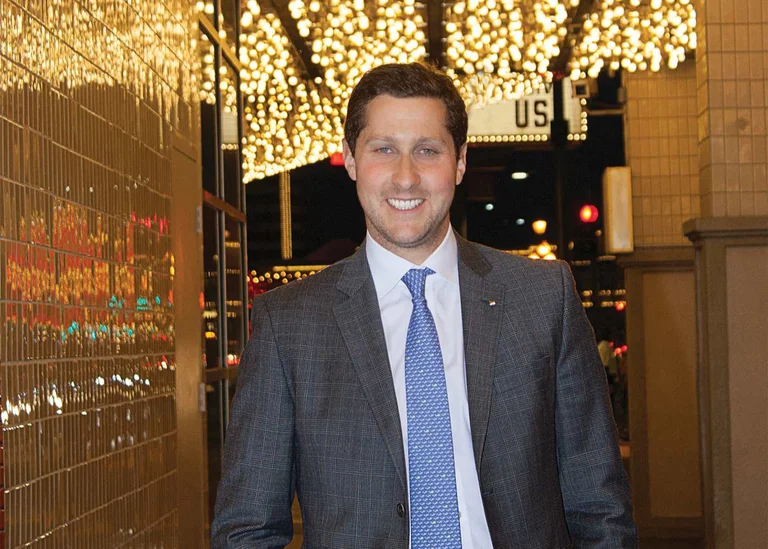
 Jonathan Jossel is the CEO of the Plaza in Downtown Las Vegas. While his casino offers only 3-2 blackjack and no 000 roulette, he understands the current trends in table games and slots.
“Places are probably needing to tighten up for three reasons,” he explains. “One is the cost of product labor, and inflation has definitely driven up the cost of food and labor to the extent where you can no longer offer the same prices that you used to. The other thing is gaming has proliferated all over the country, and people have had to find ways to become more creative here in terms of attracting customers. They’re spending way more on these resorts than they used to, and they need a faster return.
“And the third thing, which I think is maybe the biggest problem with the internet, all this information is so widespread, whether it’s card counting or advantage players on slot machines, people are much more savvy than they used to be. They understand best odds on a crap table in terms of how to play it.
“At the same time, there’s the vast majority of players that have no idea about any of this stuff. And then there are the ones that are diligently researching and reading all of this, and they’re taking advantage of those better odds and those better opportunities. And so, somewhere in the middle, you have to find the balance of who your customers are and how you cater to them.”
Bill Zender, an innovative table game expert, author of seven books on the subject and a highly respected consultant, believes that rising labor costs play a big role in the decision to change the limits and the rules.
“After Covid, everybody has had a hard time with labor,” he says. “So when they opened everything back up, there were not as many gaming employees as before, and this is nationwide. Everybody that I talked to said they didn’t have the labor. So it’s supply and demand. If you’ve got the demand, you can actually play with the limits.
“Now, I’m a full believer that you need to bring the minimums up. And what that does is bring up your average bet and you should bring it up until a point where you see diminishing returns. And the same thing with the rules. You can raise the house edge on a table game to a point where you have diminishing returns. Players usually don’t know the math.”
 Mahaffey agrees that the increasing labor costs have forced casinos to get rid of some games altogether.
“You certainly can’t deal a $5, 3-2 blackjack game and make any money off it these days,” he says. “Especially on craps or roulette, because you need more than just that one dealer to run it. And the poker rooms too—I think these small poker rooms failed because you couldn’t justify paying the salary to the dealers, because you weren’t making much money to begin with. It was already a kind of loss leader. And as time goes by, you end up with more and more labor expenses.
“So when you look at the bottom line, they just think they have to cut things—particularly after Covid. Places like Silver Nugget and the Lucky Club got rid of all their tables. There’s just no reason to run a little gaming pit. At some point you just have to think, well, this isn’t worth it.”
Wagner says the constant search for $5 minimum games is nothing new.
“People have been looking for a $5 game since 1965 when I got into business,” he says, “and they’re still looking for a $5 game. But you’ve got to keep up with inflation, and one of the things the casinos have done, they’ve compressed the spread. So you see that $25-$500 limit in a lot of these casinos, which controls their exposure to a good player or even a lucky player.”
Slot Sensations
In the past 20 years, the hold percentage on slots has risen dramatically in Nevada and in jurisdictions around the country that report such numbers. In Nevada, probably the loosest state in this regard, hold percentage has risen from 5.5 percent to 7.2 percent. But this could be deceiving, according to Jossel. Downtown Las Vegas is now about even with the Strip in this regard, when 20 years ago the casinos in Downtown were very loose.
“If you look at the mix Downtown,” Jossel explains, “video poker is a fraction of what it used to be. At the Plaza today, video poker is holding 1 percent to 3 percent depending on the game and where it is. So when you remove 80 percent of the video poker games that used to be Downtown, whereas the Strip hasn’t had that many to remove, I don’t think that Downtown’s hold is worse than the Strip as some people are reporting. It’s just that the mix of games Downtown has changed.
“And so you have way less video poker than used to be down here, which brings me onto my second point. You can pretty much see where all the money’s going. It’s all this new SLU product that Aristocrat, Light & Wonder, and IGT are coming out with—their Buffaloes, their Dragon Links and the like. What you’re seeing with those games is people are chasing much longer, playing much longer, playing more, and Downtown never had those games back in the day. Now you’re replacing video poker with those unbelievable new slots, and people love it.”
Mahaffey says the rules at the Plaza are relatively player-friendly because Jossel understands the gambling psyche.
“He is pretty receptive to players, and he at least asks more questions about it,” Mehaffey says. “Sometimes I’ve had discussions with these executives, and they’ll blow me off or they’ll just try to take advantage of me. But I think (Jossel) genuinely wants to hear all the ideas and then bring it to his management people and have them decide on what’s best.
“He has the best video poker games in all of Las Vegas. He still has one machine of full-pay Jokers. It’s the only one, because there’s no more anywhere else. Just like there’s no more full-pay Deuces.”
Zender explains about a recent Las Vegas client who brought him in to evaluate the table games. At the same time, he was shown the hold percentages on the slots, which were far lower than other Strip properties.
“Their floor average on slot machines was about 6 percent,” he explains. “I told them you’re not a locals casino. While you do get a lot of local play, you also get a lot of Strip action. You should have your floor percentage higher. They had a lot of video poker machines, but no penny machines. I showed them at the time, the Strip was 8 and a half percent. I can maybe fine tune your table games and I’ll make you a couple hundred thousand dollars more next year. But if you pay attention to this and bring that floor percentage up, this will make an additional million or two next year.”
One of the more disturbing aspects of today’s slot section is advantage players scouting progressive jackpots and then monopolizing all the machines when they are in a positive expected value mode.
“I think they’re probably the scourge of the industry,” says Jossell. “I think it’s terrible for the casinos. There’s an argument of, why do you care? That jackpot will pay out whenever it’s paying out. Who cares who wins it? The answer is because it’s taking away the thrill and excitement from the recreational players. There’s no way to really stop it, but I do believe that casinos need to be smarter about identifying them and then making sure they’re not getting free play and other offers. It’s a very ugly thing that’s come up due to the internet and making this information so readily available.”
Mahaffey can see both sides of the advantage play ploys.
“I don’t think the casinos really care if somebody educated comes in and and beats them on a big progressive jackpot,” he explains. “What they don’t like is team play. I can see their side because it’s everybody’s money in there and if you come in and hog all the machines on a team play effort, the people who contributed to the jackpot have no opportunity to get it back. Whereas these players had nothing to put into it. If they hit the jackpot, they’ll leave with it and you’ll never see that money again.”
Marketing Advantage
Can a casino use better odds, lower hold percentage and more innovative promotions to succeed? Wagner says the time is right.
“If I were younger and had access to several millions of dollars,” he says, “I’d start an all-electronic casino with electronic table games and a really low hold percentage. I’d advertise it for real high-frequency play to make sure we’d have a lot of volume. Sometimes you have to build a church for Easter to get the volume, but when you don’t have the people a smaller place is better.
“Vegas, with all these increased rates, we’re as expensive of a food and beverage proposition as San Francisco or New York in many cases. And people from those cities expect to pay for parking. But if we have a recession or we have some tough times, you’ll see them quickly move to discounts, get rid of the resort fees, cut the parking rates and use a lot of tools to give to the customers a reason to visit.”
While Jossel says the Plaza has a great program, he believes it’s just an extension of the Downtown Las Vegas philosophy.
“Downtown has always been known for having better gaming conditions,” he says. “And it’s something we wanted to preserve. We’ve recently added a single 0 roulette table. That’s probably the most aggressive thing we’ve done. And why? Because I want Downtown to be known for a good gamble. I want people to come here and feel like their money lasts longer.”