Second Mover Advantage

Brandt Iden, V.P. of Government Affairs, Fanatics
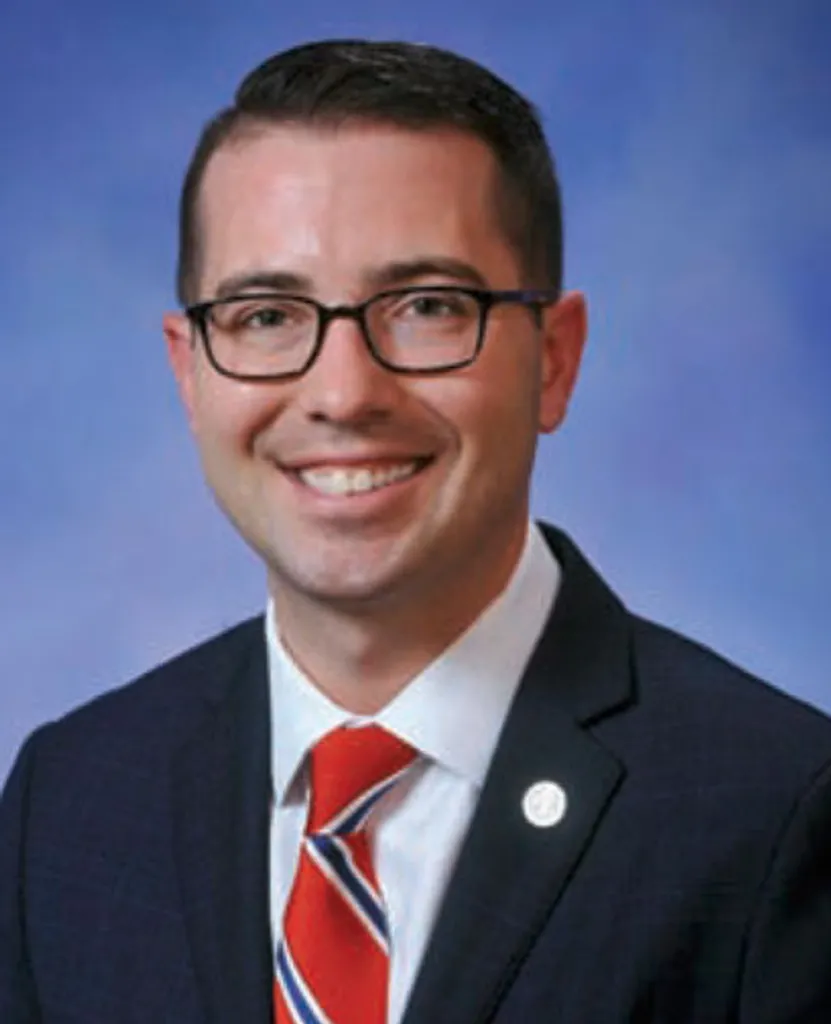
In a year where gaming expansion largely stalled in the U.S., Fanatics V.P. of Government Affairs Brandt Iden played a key role in one of the few industry victories. He served as the driving force behind efforts to finally replace Washington, D.C.’s sports betting monopoly with an open, competitive market.
“I’m very proud of D.C.,” he says. “I really believe that (the opening) was because of Fanatics-led effort there.
“Obviously, the other operators in the market that weren’t already there were a big driver as well. But the narrative is now playing out exactly the way that I testified, which is a competitive, robust market makes more sense from a tax perspective for these jurisdictions in the long run.”
The figures from D.C.—handle was up 305.5 percent year-over-year in September—can act as a proof of concept for other states with limited sports betting markets, he says. “The industry can go to these states and say, ‘look at the success of a competitive market.’”
But 2025 brings with it the challenge of unlocking new sports betting and iGaming states. After no progress in 2024, what will make 2025 more successful?
Iden, a former legislator in Michigan who passed the state’s betting and iGaming legislation in 2019, has experience from both sides of the debate. In his eyes, starting the conversation with lawmakers focusing on the potential tax revenue from gaming expansion is the easy approach. But not necessarily the right one.
“When I went into the caucus room and I talked to my colleagues about this, I started with consumer protections,” he says of his successful legislative effort in Michigan. “This is about allowing your consumers in your state to participate in a fun entertainment product that they were doing illegally offshore, being taken advantage of and where there were no protections.”
And having shepherded betting and online casino through the Michigan legislature in one bill, Iden admits a level of frustration more states didn’t follow suit in legalizing both verticals. “If you’re going to push the boulder up the hill, you might as well push both of them up at the same time,” he says. “Because it’s just as difficult to get that second boulder to the top of the hill.”
But in a year where the legal sports betting and iGaming maps have remained largely static, that at least afforded Fanatics the opportunity to make up ground on the competition. It even secured a podium position in Illinois in September.
It begs the question: Did Fanatics benefit from a relatively stable year? Iden says Fanatics has had time to refine and enhance its product offering. It’s had time to get things right, and it’s reaping the rewards now that the NFL season is under way.
“Am I disappointed from a lobbying perspective, that we’re not seeing new states go live? Absolutely. But has that been good for a second mover in the market? Absolutely.”
Fanatics had a year to establish its place in the U.S. sports betting market, something other second movers have struggled to do. Next year, Iden must clear a path for expansion.