
Rank Group on Gaming Reforms

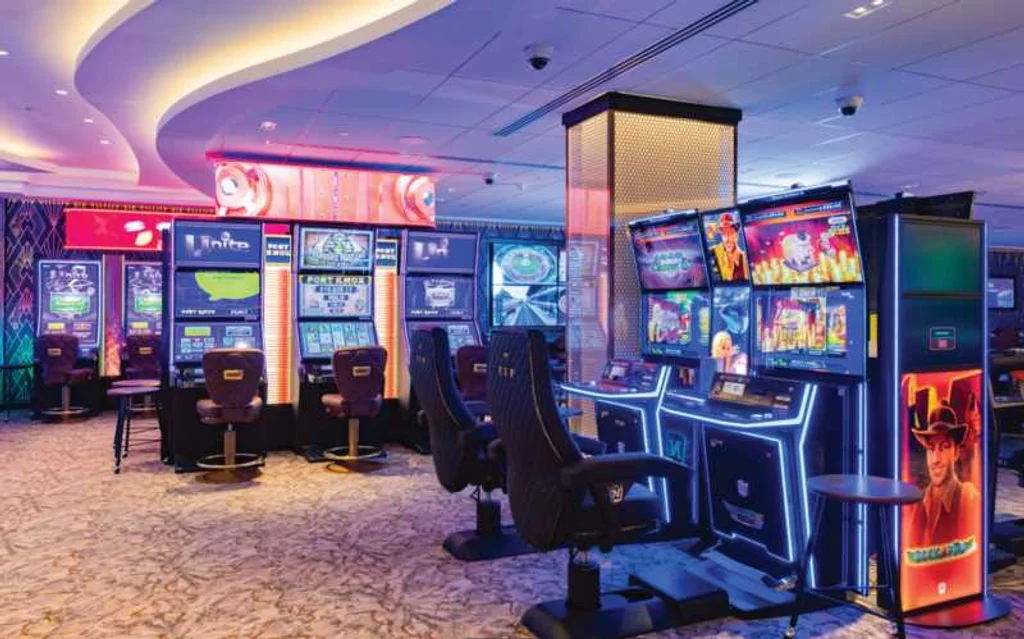
Land-based gaming in the U.K. is on the cusp of a seismic revival thanks to new regulations that will enable all casinos to increase their number of gaming machines and let converted casinos provide on-premises sports betting for the first time.
These new measures took effect July 22 after a lengthy parliamentary process. Casinos Regulations 2025 passed through both houses of Parliament in May before hitting the committee stage in June. It was approved later in the month.
During a House of Lords debate on June 17, Gambling Minister Baroness Twycross vowed the new regulation would “give casinos greater freedom about what they offer customers.”
“This is a sensible package of measures that will update the outdated restrictions that currently apply to land-based casinos,” she said. “It strikes the right balance by supporting the sector to grow, while still ensuring that those who visit these venues will be protected from gambling-related harm.”
 First proposed as recommendations following the 2020 Gambling Act review, the majority of gambling reforms, including those relating to the land-based sector, have only come to fruition this year.
Largely, the changes aim to uplift a sector that in recent years has been dampened by the proliferation of mobile gaming and of course, the Covid pandemic, from which many venues were unable to recover.
Then came the sudden influx of adult gaming centers (AGCs) across the U.K., venues much smaller than traditional casinos but offering players a packed floor of gaming machines. These are typically found on main streets and in seaside towns, alongside children’s arcades.
Such has been the impact of AGCs that online operators have lamented a loss in revenue due to players turning to these easy-to-access venues. During Entain’s Q1 earnings call, Chief Financial Officer Rob Wood said he suspected AGCs were taking gaming market share. “AGCs have flown under the radar and don’t have the same approach to monitoring players,” he told analysts at the time.
Legacy casino and bingo hall business Rank Group is leaning into the land-based reforms. It’s investing heavily in its core venues to leverage allowances for increased gaming machines and the introduction of retail betting.
Lots to Gain
Mark Harper, managing director of Rank’s Grosvenor Casinos, describes the new regulations as game-changing for the business.
“There is no doubt the land-based reforms will be transformational for our sector, and particularly for Grosvenor,” he says. “Because of our scale, our location and our square footage, we will be able to maximize the opportunity of increased slots to satisfy customer demand at the same time as we introduce sports betting.
“Land-based reform provides the catalyst to satisfy customer demand and broaden the appeal of casinos,” he adds. “We’re using that at the same time as a way of modernizing and creating warm, welcoming, compelling, exciting environments.”

Rank is one of very few U.K. operators to provide an omnichannel experience for users, enabling them to play both online and offline with the Grosvenor casino brand. The introduction of retail betting machines in converted casinos could help introduce a new player segment to its venues, as it can cross-sell bettors from online to in-person.
The changes in law have “triggered investment within our business during the last 12 months,” Harper explains.
Breathing New Life into the Vic
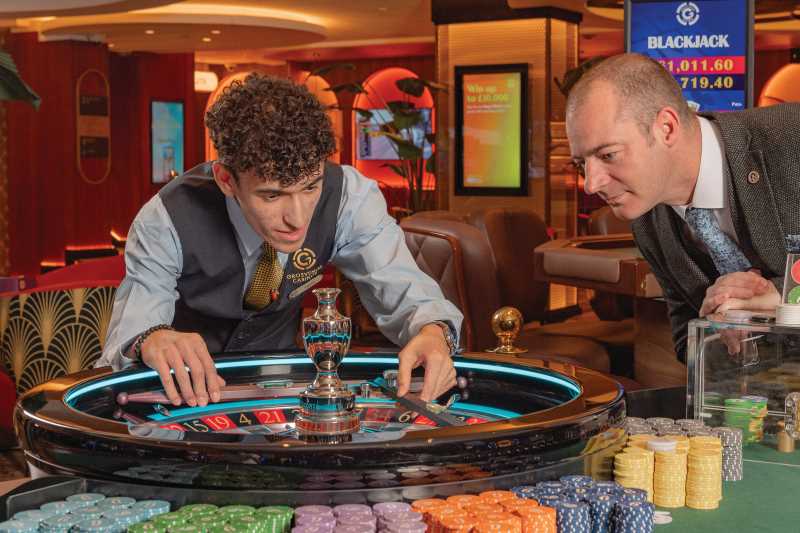
Rank’s flagship, the Victoria or “Vic” casino in London, is the latest in its portfolio to receive a complete overhaul. It has scaled up its gaming machines suite and added a better restaurant, a shisha terrace, a world-class poker room and a huge upgrade to the physical structure.
Overall, the operator has put £15 million (about $20 million) into the refurbishment, in what it calls Grosvenor Casinos’ “single biggest investment within its history.”
“Effectively, we wanted to create the best casino in London,” says Harper. “So rather than just address the infrastructure issues, we undertook a significant and complete refurbishment of the venue.”
But when plans for the redevelopment started two years ago, land-based reform was non-existent. Plans to update casino regulations were only briefly addressed as recommendations in the government’s white paper in 2023. Rank took a gamble. It modeled the updated interior on the premise that regulations would allow for additional gaming machines and come to fruition either before or after the Vic reopened.
“What we didn’t know was that the land-based reforms would be confirmed,” says Peter Turpin, the Victoria’s general manager. “We had to design the casino in the hope and expectation that it would match potential land-based reforms but also be suitable in the meantime.”
‘More Dubai, Less Istanbul’
The new rules reshape how many gaming machines are allowed on specific floor spaces. For instance, between 380 and 400 square meters (up to 4,300 square feet) would allow for 28 machines. The maximum is 40 within a 500-square-meter floor space.
“We created more floor space to be able to have those (additional) slots, but also have them in an environment that is really suitable for slots customers,” says Turpin. “We’re not going to try and squeeze them in different spaces. (The Vic has) been designed specifically with the expectation that we will have 80 slot machines.”
As for retail betting, Harper expects the operator to start introducing self-service betting terminals in its venues in September, alongside the added gaming machines. This is currently pending regulatory approval from the national Gambling Commission.
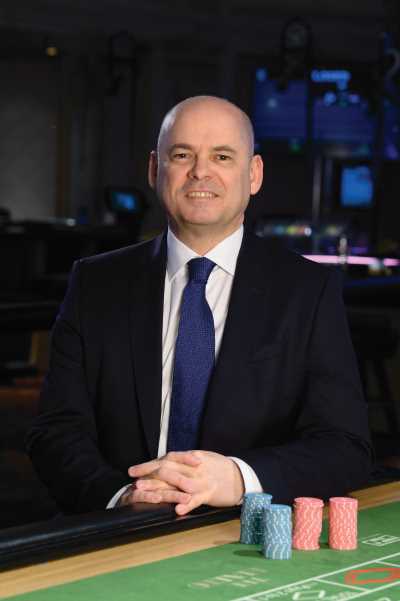
“License applications are being processed and reviewed,” he explains. “We anticipate rolling out sports betting terminals with effect from September.”
Prior to the changes, retail betting was allowed in casinos regulated under the 2005 Gambling Act. But this will be an entirely new vertical for converted casinos.
Turpin admits it’s unusual for a casino to undergo such a mammoth overhaul while it’s still performing well. “Often refurbishments have been undertaken because the business has dropped or it’s not doing so well. The Victoria was hugely successful. It was just time for us to refurbish it.”
Work on the Victoria started in September 2024. Impressively, the casino did not fully close at any point during the renovation, which was carried out in stages. “We didn’t close the casino at any point,” Turpin says. “But we certainly closed parts of the casino and displaced certain aspects.
“One big objective was to make sure that we presented a casino that our ongoing and loyal customers were happy with, and then that we were also well placed to attract new customers as well as we move forward.”
He notes that the casino attracts a large Middle Eastern customer base, and the casino wanted to help them feel at home in the Vic. “When we looked at our design—and there were a number of iterations—one of the things we landed on was to be a bit more Dubai and less Istanbul in our presentation, and what customers will see when they visit is a more contemporary offering.”
Competition in the Middle East
Rank is thinking ahead to the regulation of gambling in the United Arab Emirates, which could present a threat to London casinos if customers prefer new luxury locations in Dubai. But Harper said Rank welcomes competition across the sector.
“Inevitably when people invest and when competitive operators invest, there will be some migration. Some of our Middle Eastern customers will visit. By and large, though, investment into the sector is a positive.
“It’s a positive sign for the land-based sector. It shows confidence in the sector—and to a degree, it shows the customer demand for what we offer.”
 The Victoria’s redevelopment follows a spate of work to update others in Rank’s Grosvenor fleet, including a venue in Leicester. Harper says six other refurbishments are planned this year.
“We’re investing a lot of money on the basis that land-based reform provides the catalyst to satisfy customer demand, broadening the appeal of casinos.
“We have lots of opportunity to continue that investment program into the next couple of years,” he adds. “Return on investment is important, but we have confidence that we spend wisely and have a team of people capable of delivering returns.”
Preparing for Battle
In the six months to December 31, 2024, Rank’s Grosvenor casino business recorded revenue growth of 15 percent year-on-year to £192.8 million. Average net gaming revenue per week was also 7 percent higher at £7.3 million, CEO John O’Reilly told analysts in January.
At the time, he hinted at plans to improve and update the company’s offering. O’Reilly spoke of a “general sense that business would be more prosperous” thanks to the regulatory reforms.
But Rank isn’t the only business readying itself for a new era. O’Reilly noted an increase in new entrants into the U.K. market ahead of reforms. Wynn this year acquired a former Crown Resorts members club and rebranded it as Wynn Mayfair, while Bally’s also entered the U.K. via an Aspers casino acquisition in Newcastle.
“There’s some movement in the marketplace,” he said. “We are expecting our competitors to be readying themselves and also investing. That’s going to continue, I suspect.”