Lottery Law

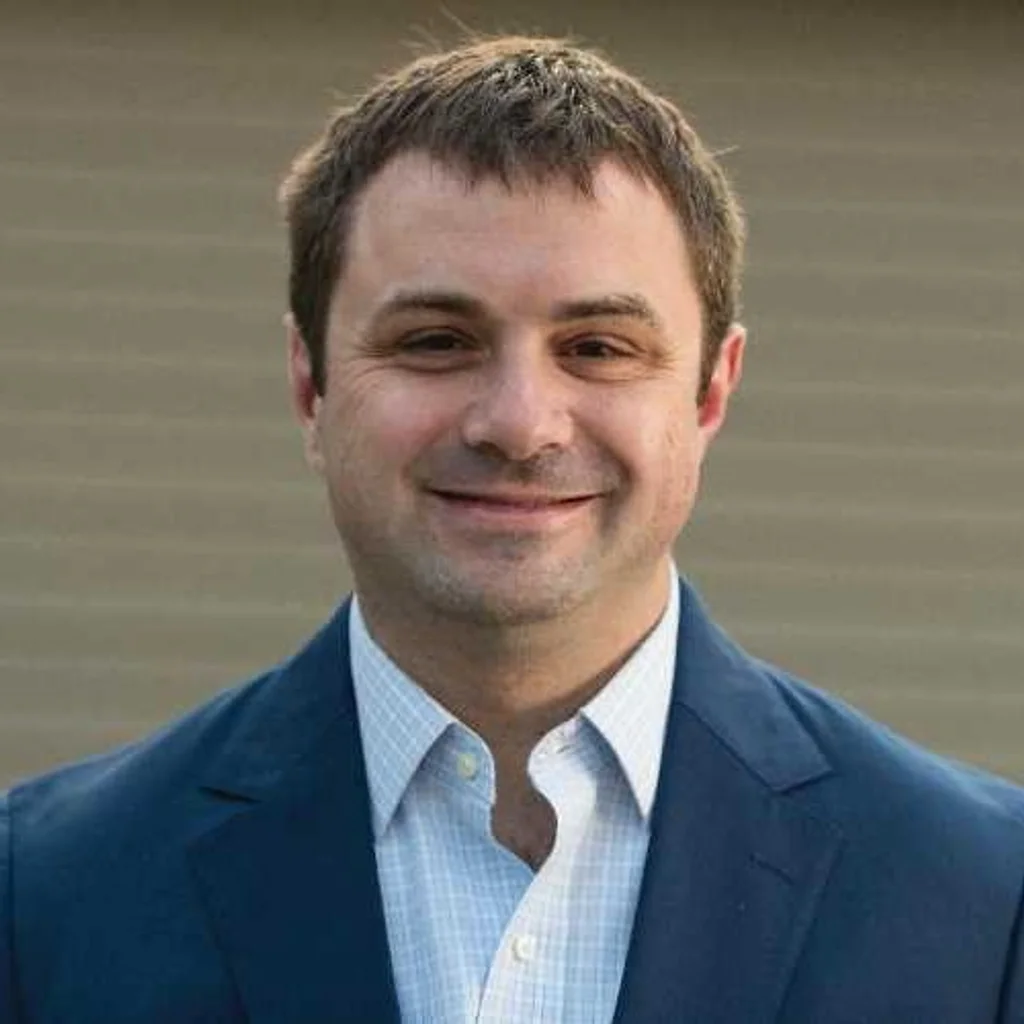
Ben Freedland is not a 5-year-old. He just acts like one sometimes in his job as general counsel for the Minnesota Lottery. Let him explain:
“The easiest way for me to mentor is to help others at the Minnesota Lottery solve their work challenges through asking questions like a 5-year-old. I love nothing more than sitting with colleagues and asking, ‘Explain it again, like I know nothing more than my ABCs.’ Pushing people like that has taught me so much about the lottery industry, and hopefully helped them understand and solve their own issues.”
Born in New Orleans, Freedland grew up in La Crosse, Wisconsin. He graduated from Duke—yes, he became a lifetime Blue Devil college hoops fan during his four-year stay as a public policy studies major—and moved on to law school in 2007 at the University of Texas in Austin. Law clicked in Freedland’s mind.
“Most challenges are dictated by the rules of the game. Understanding the rules usually leads to the best solutions, which led me to law school,” he says.
But as often happens, other aspects of a chosen profession often emerge, and Freedland found himself drawn to underlying business questions in law, not just the rules. “I loved working with clients who were making interesting products and solving interesting problems,” he says. “A great business lawyer helps businesses succeed, and I realized that’s the direction I wanted to go.”A few years as an associate attorney in Minnesota, Freedland joined the Minnesota Lottery in 2014, and he’s been there ever since.
“I wanted to give back to my community,” he says. “In Minnesota, lottery proceeds fund important projects that otherwise wouldn’t exist, and that aspect of its mission was attractive. Second, I was attracted by the blend of public service and for-profit innovation I saw in the lottery industry.
“In the United States, lotteries are essentially for-profit businesses folded into state governments. That structure leads to responsible profit seeking, which creates a wonderful place to work. Third, the lottery is fun! I wanted to be there and watch people’s lives change from the largest prizes in the gaming industry.”
From a legal viewpoint, change comes slowly to the lottery industry, a reflection of its dual purpose responding to both the marketplace and laws of the state, Freedland says.
“State legislators and governors are our boards of directors. Some boards are aggressive and seek lottery expansion and maximization, others are more conservative. It is hard to know what the future holds, but the lottery industry is filled with smart, experienced employees and a distribution network that touches nearly every corner of every state. When elected state governments are ready, the lottery industry can do anything,” he says.
Over some dozen years as his state’s top lottery lawyer, Freedland cites two colleagues who have had an enormous impact on his growth in the industry.
“Within Minnesota, Director of Operations Wes Harms has held nearly every important job at the Minnesota Lottery, and that breadth of experience cannot be replicated. Wes has always been generous with his time and knowledge, and his mentorship has played a large role in any success I’ve had.”
His counterpart at the Texas Lottery, General Counsel Bob Baird, has also provided invaluable knowledge as both friend and mentor.
“Because lotteries have geographic monopolies, we don’t compete. This has allowed for a knowledge-sharing and cooperation you might not find in the private sector. Bob has seen every problem up close and has never been shy about sharing solutions and ideas,” says Freedland, who relaxes by traveling the world with his family, including a just-completed excursion to Japan.