Like a Tremendous Machine


Twenty-four years ago, historical horse racing (HHR) was born at Arkansas’ Oaklawn Park racetrack. It was the first attempt to combine parimutuel horse wagering with the game play of commercial slots in markets with regulatory frameworks that didn’t allow such offerings.
The idea of utilizing data from tens of thousands of past races to make wagers on a slot-like cabinet was revolutionary at the time. In some ways, it still is. In the years since their introduction, the machines have had a substantial impact, revitalizing the U.S. racing industry by funding purses and attracting more fans and investment to the space.
Developing the HHR platform is like getting to the real-life version of the last question on the math test—the one that feels cruelly impossible to answer. Stakeholders had to find a way to remain compliant with parimutuel regulations while also ensuring that the games had the look and game play of a typical slot.
Much like the development of other Class II-adjacent systems over the years, every iteration of the games has improved upon the last. At this stage, players and officials alike have a hard time differentiating the games from their Class III counterparts.
Due to their unique technological qualities, HHR games have become a mainstay in markets that don’t have an abundance of gaming options, and somewhat of a quagmire in states that do. In Kentucky, for example, HHR reigns supreme, with more than 7,000 terminals live statewide. But as slot expert Buddy Frank noted in his latest Frank Floor Talk column for CDC Gaming Reports, its status in other states is somewhat up in the air.
“Ironically, Arkansas is no longer supporting HHR machines, but five other states are all in: Kentucky, Louisiana, New Hampshire, Virginia and Wyoming,” Frank wrote. “Kansas should come online in 2025. Alabama has some HHR too, but only in select locations. Several other states, including Arkansas, Idaho, Oregon, Maine, Minnesota and Texas have sponsored past efforts, or are working toward new efforts, to allow HHR in their jurisdictions.”
Still, the success and performance of the games in the markets where they operate is undeniable. According to research from JMP Securities, HHR revenue has increased at a compound annual growth rate of 67 percent over the last five years.
JMP analysts also posit that “growth will remain well above historical GDP-type growth for traditional casinos in the long term stemming from investment… and organic growth initiatives/opportunities.”
Take Virginia as an example—figures from the state Racing Commission show that in May 2019, the first full month of HHR reporting, statewide handle was $70.85 million. By June 2024, that number had skyrocketed to $404.95 million. Four of the first six months of the year posted handle totals above $400 million.
Even in smaller markets, growth is easy to see. For the entirety of 2016, the Wyoming Gaming Commission reported HHR revenue of $2.38 million. Conversely, revenue for just the first half of 2024 totaled $10 million.
Moving forward, HHR will continue to establish itself as an attractive and ready-made alternative to Class III gaming. This is especially true considering that legislative efforts have largely stalled. After several years of explosive growth across the country, there was no gaming expansion in any state in 2024.
But as the sector continues to grow, so too will its top performers. Among these are Exacta Systems, Ainsworth Game Technology and Churchill Downs Inc. (CDI).
Exacta’s back-end platform has helped numerous high-profile suppliers transfer their existing titles into HHR formats; Ainsworth offers its own platform and is live with thousands of its own games in the market; and CDI has outgrown its Kentucky Derby roots to become the leading HHR operator with properties in several states. Its latest opening, Derby City Downtown in Louisville, is profiled below.
In Conversation: Exacta Systems and Ainsworth Game Technology
EXACTA
P3: Exacta is a staple of the HHR sector. How and why did the company grow to become such a mainstay in the market?
Jeff Lind, President: Exacta was created to inject innovation into the horseracing industry. To do this, Exacta created a parimutuel gaming system compatible with any CMS system and with exceptionally flexible game modeling technologies.
Since Exacta doesn’t produce games and is therefore not competing with game manufacturers, we’re able to partner with best-in-class creators to bring their content to our customers. This, combined with premium service, creates a compelling and diverse gaming experience that’s a win for us, our game providers, and especially our customers.
The company was purchased by Churchill Downs Inc., in a deal that closed a year ago. What was the impetus for that deal and how has the relationship evolved thus far?
Churchill Downs is the most recognizable name in the horseracing industry, and Exacta has emerged as one of the outstanding rising stars in this industry.
As the largest operator of the Exacta HHR product, CDI has been very aware of the strengths of the Exacta product. CDI’s vast reach benefits Exacta, and Exacta’s unique technology and business model benefit the horse racing industry and, therefore, CDI.
Although in many ways Exacta operates as an independent subsidiary, the two companies have learned from each other’s strengths and chosen the best parts of each to improve processes and gain efficiencies.
Generally speaking, what’s the science behind your HHR platform? How has it changed over the years?
There are many innovations in the Exacta platform. It was built by seasoned central determinant innovators that played a significant role in redefining the Class II and lottery industries over the past 25-plus years. The platform is flexible, scalable and extremely reliable, and provides the best game modeling capabilities in the industry.
Exacta has a team focused on expanding the game modeling capabilities as our game development partners continue to create new gaming mechanics.
Where do you see the HHR market going in the future? Any future developments for the company that you can comment on at this time?
Exacta is committed to enhancing its platform through ongoing innovation and growth within its development team. We’re excited to announce our recent expansion into the international market with our first operator partner, IZI Group, based in Malta.
AINSWORTH
P3: Ainsworth has established itself as a huge player in the HHR market. How and why did that come to be?
Alex Piper, Product Marketing Manager, Class II & HHR: Ainsworth has always been a company that believes in our partners. When we received the call from CDI, stating that they were searching for a trusted supplier to provide technology to modernize instant racing terminals, now called Historical Racing Machines (HRM), we knew we would be the perfect vessel to expand the industry.
In the past, there had been other instant racing manufacturers in the market, but they supplied a very simple yet convoluted player experience. Those older machines did not look, feel or function like a typical Class III slot that you can find in Las Vegas or across the Ohio River in Southern Indiana.
CDI vetted other manufacturers before selecting Ainsworth to lead the charge to create our proprietary HHR platform, one other vendors could eventually connect their hardware and software to. We initially used the infrastructure behind our Class II central determinant system, and worked tirelessly with CDI to create a system that visually presents HRM as classic slots, while still adhering to parimutuel regulations.
We ported our Class II library to the HHR platform and in 2018, proudly assisted CDI as they opened the doors to Derby City Gaming. The HHR facility opened with 900 state-of-the-art HRMs, 100 percent being supplied by Ainsworth.
The Ainsworth team was so effective in our endeavors that the industry’s top suppliers have invested resources into connecting their own hardware and software to our platform. The ability to provide an HHR venue with a full suite of games, cabinets and title options that mimic a Class III casino floor only gives the player a better gambling experience, and was our ultimate goal. Kentucky players are now more enticed to wager in Kentucky, versus heading north across the river.
Since 2018, Ainsworth has expanded its HHR partnerships across Virginia, Louisiana, Wyoming, New Hampshire, Alabama, and soon, Kansas. It brings our company immense pride knowing we are very responsible for this market growth.
What does HHR offer to players that other casino or casino-adjacent games can’t? How does the experience differ?
High rollers have found a true home in HHR venues. IRS regulations for parimutuel betting state that jackpots must meet two requirements to be taxable: the single payout must be over $600, and the payout must be at least 300 times the player’s bet. This can be extremely enticing to a player who typically bets more than $4 per wager. For example, you could bet $40 a wager and walk away with $11,960, without being taxed.
The HRM also allows traditional racing fans to enjoy a slower paced gamble if they choose. Because the machine operates under the same parimutuel wagering structure as a regular horse race, and while the HRM does provide an auto-handicapping feature which allows the player to make a quicker wager, they could opt to manually choose the winners of the next randomized race that occurs. This feature might feel a little less intimidating to those that are new to HRM wagering.
The question was: “What does HHR offer players,” but I’d be doing HHR a disservice if I didn’t shed light on what it offers the horsemen and rural communities in states that don’t have legalized gambling but do have parimutuel horse wagering. HHR is an innovative product that has breathed life back into the iconic community, ultimately funding larger purses for horsemen.
These purses are larger than ever, jobs are being created and knowledge is being shared. Tracks are now offering more race days year-over-year, versus fewer a decade ago. Elisabeth Jansen, executive vice president of the Kentucky Equine Education Alliance, recently stated, “If it were not for historical horse racing, Ellis Park would be closed, and Churchill Downs would not have rebuilt Turfway Park.”
What HHR games have been particularly successful for Ainsworth?
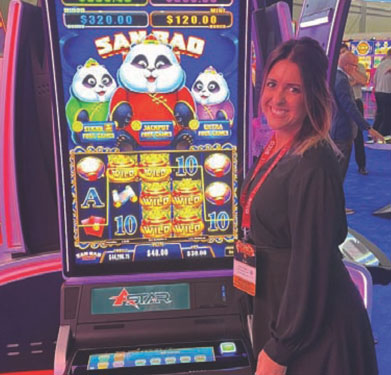
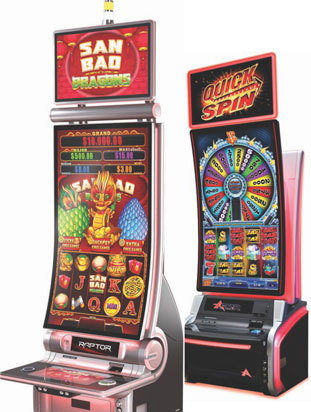 We’ve seen great success across the board, with both low and higher denominations. Our top penny brand is, without a doubt, San Bao. Launched in 2023, San Bao Pandas and San Bao Dragons were created specifically for the HHR market, targeting the newly found growing pot concept.
After realizing their immediate success, the brand became Ainsworth’s first-ever HHR-to-Class III port. The pair were selected as the launch brand for our new A-STAR Raptor portrait cabinet, and the games made a home on Eilers’ Top 25 New Video Games chart. Today, San Bao remains a Top 25 Indexing Parent Brand in North America.
QuickSpin is another player favorite that continues to shine. Debuting in 2019, Super Charged 7s forged the path for the game family that now features almost 20 titles. To this day, brand extension development continues.
Ainsworth is traditionally known to provide top-notch high-denom content, and our HHR offering is no different. Eagle Bucks, The Enforcer and Cannonball Reloaded can be found in almost every high-limit room.
Any future HHR releases currently planned that you can comment on? Perhaps some new releases for G2E?
We’re extremely excited about our latest pair, Rocket Link Freedom and Liberty, which were released to the HHR market in early August. Designed by the team that developed the San Bao brand, Rocket Link offers an expanding reel hold-and-spin feature that fits perfectly on the 49-inch high-definition Raptor game screen. Players can choose between denominations of 1cent -10 cents, while spinning for progressive jackpots, free games and explosive base game wins.
Speaking of QuickSpin brand extension, QuickSpin Electric Pots—Super Charged 7s and Super Charged 8s—are sure to impress. Debuting for the HHR market at G2E, players will enjoy the iconic QuickSpin wheel’s frequent appearance and legacy base game art, with the additional chase of three growing pots.
Squish, Coin Kingdom and Grand Fortune, three highly anticipated server-based brands, will also make their HHR G2E debut in October.
And They’re Off….Louisville’s Derby City is emblematic of what HHR facilities can be
When you think of the pinnacle of horse racing in the U.S. only one track comes to mind—Churchill Downs, home of the legendary Kentucky Derby.

That’s why the company that owns the track took its name. Churchill Downs Inc. has become a leader in horse racing and gaming across the south and Midwest. But its home is Louisville, and its base of operations is obviously strongest here.
When Kentucky legalized historic horse racing machines (HHRs) in 2021, Churchill Downs immediately became the biggest player in the state. It opened a Derby City operation five minutes from the city’s airport, and just this year opened Derby City Downtown, which has revitalized a struggling area of the city.
Molded out of an old bank building, Derby City Downtown is everything you’d expect an electronic gaming hall to be, offering many non-gaming amenities that attract customers, whether they gamble or not.
Paul Heretakis, principal with Westar Architects, Derby City’s designers, says the state-of-the-art facility immediately became a tourist attraction in Louisville. The challenge was building it inside an existing structure.
“It was spread over two floors, which is not always ideal,” Heretakis says. “But we really added a lot of amenities to each floor to give guests a reason to visit.”
The fact that it hosted HHR games and not traditional slots didn’t make a difference in the design, Heretakis adds. “We never looked at HRM (historical racing machines) any differently than regular slot machines,” he says. “It’s just a random generated system for the reels, versus one based upon a group of past races. They look and act just like regular machines.”
The goal was to re-create the racetrack experience, and an important element was inspired by the Kentucky Derby.
“The main feature of the gaming floor is the champagne celebration of the Run for the Roses—bright red roses and large, hand-blown glass balls sparkle with lights every half hour, so everyone feels like they won the Derby.”
Louisville is just across the river from Indiana, where traditional casinos are available, so Heretakis said the facility needed to be able to compete.
“We knew it would be competitive to have a casino in an urban core with great food, bars, lounges, and entertainment,” he says. “We knew we had to create a competitive facility that offered more than just gaming. The Churchill Downs people were on board with this, and we created wonderful amenities for both men and women.”
The destination was also designed to be a catalyst for urban redevelopment in the company’s hometown.
“It was very important that the property become a part of the community and neighborhood,” says Heretakis. “Garth Williams, the GM for the property, reached out to community leaders and charities long before the opening to pledge their commitment to the city and its revitalization. The effort led to multiple projects coming online to spark further growth in the area.”
But in the end, the class and elegance of the property had to match that of Churchill Downs. Heretakis explains some of the amenities.
“The Trophy Bar is a masculine space with leather couches, lounge chairs, and an amazing selection of bourbon and cigars. The bar displays all the trophies leading up to the Derby and Oaks. The outdoor smoking patio is a great place to unwind with friends. It also has a must-see life-size Derby trophy for great selfies.
“The Fascinator Wine Bar is a feminine space designed around beautiful florals, soft light and colorful lilies. The Kentucky Oaks comes alive. Charcuterie boards are available for light snacks. There’s also a great race and sports bar for food and sports betting.”
Clearly, HHR games can be a catalyst for a great gaming environment.
—Patrick Roberts