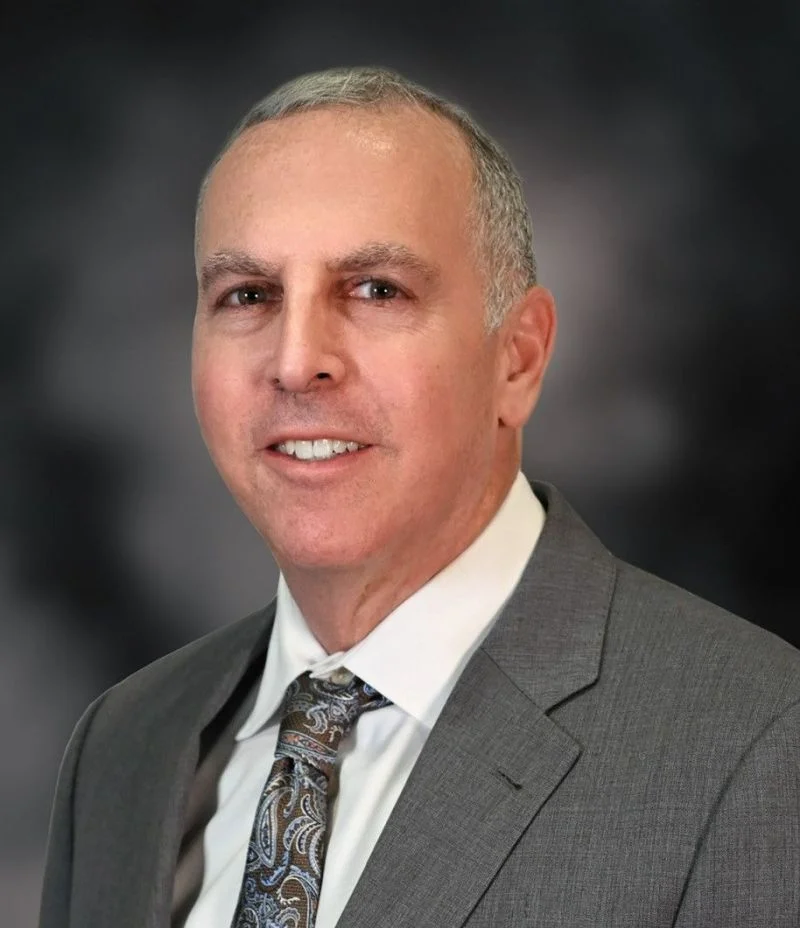
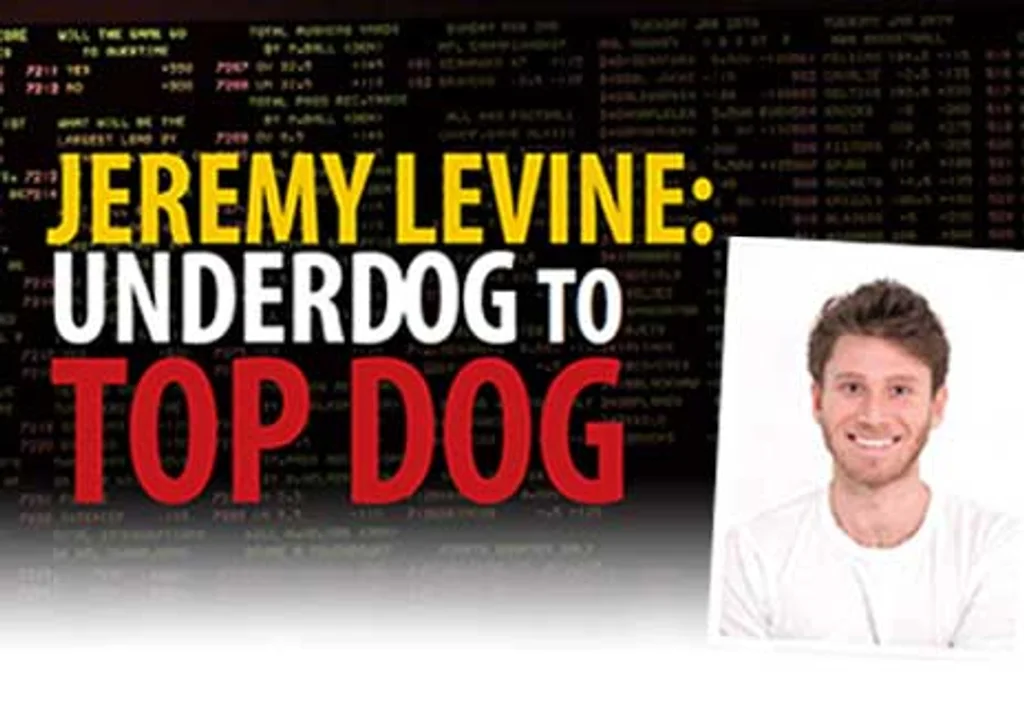
Jeremy Levine: Underdog To Top Dog

Growing up in Cambridge, Massachusetts, just outside Boston, means a birthright of sports fandom. There’s something not quite genetically encoded on people born in the area to be ardent and lifelong fans of the Boston Red Sox, Celtics, Bruins and New England Patriots.
For New Englanders, 1986 was a big year. The Celtics won their third NBA title of the Larry Bird era, probably with one of the team’s greatest lineups of all time. One of the dominant teams of the era, the Celtics ruled the Boston sporting landscape.
Led by the legendary Red Auerbach, the Celtics were a dynasty that won 16 titles when he was head coach, general manager or team president. Auerbach’s leadership style was based on a team culture focused around teamwork and discipline. He had an eye for talent as well. The Celtics have the most Basketball Hall of Fame members with 19, 10 of whom played or coached under Auerbach.
That era left a lasting impression on a young boy, born at the peak of the Celtics dynasty. It would have a lasting impact on not only the still far-off online sports betting industry but also on the effort to protect those who wanted to gamble wherever they are.
Jeremy Levine, an energetic 38-year-old serial entrepreneur and leader of Underdog, brings that passion Boston sports fans are so legendary for to the office every day. It’s not an in-your-face quality, but more the undying belief in doing things the right way.
 Underdog, a daily fantasy sports platform that offers Pick’em, Best Ball, Battle Royale and others, was valued at $484 million in 2022. As of October 2024, the company had more than 2.4 million active users, with most of the growth coming in states without legal sports betting, like California and Texas.
The site, launched in 2020, has a wide range of investors, including former Dallas Mavericks majority owner Mark Cuban, Phoenix Suns forward Kevin Durant and Detroit Lions quarterback Jared Goff. The site and app are currently live in 41 states for fantasy sports and in North Carolina for sports betting. Underdog Sports, the wagering arm of the company, is also licensed but not live in Ohio with plans to expand.
For Levine, one of three founders of the site, Underdog is about more than creating a place where fans can place bets or participate in fantasy sports. It’s the focus of a continuous evolution, a learning process to be the best leader he can be.
“My company is probably very sick of me saying this, because I try to say it over and over again, but the two things we focus on are people and product,” he says. “That’s where I try to spend much of my time. I view my job as being the lead recruiter for the company. It’s my job to make sure we always have the best people at the company.
“I think the thing I’m most proud of recently is the list of people who have chosen to join Underdog. It’s a lot of people with a lot of knowledge and experience in this space who really know the landscape and are making very educated decisions” to join the company.
Evolving as a Leader
“The person I was 12 months ago wouldn’t be the right person to be today, and who I am today is not going to be the right leader 12 years or 12 months from now,” Levine says. “I have to keep evolving and growing as we as a company keep evolving and growing.”
These growth and evolution changes are evident when he talks about his company. While many CEOs in the tech, iGaming or gambling spheres have profits and scalability at top of mind, as Levine said earlier, people and product—in that order—are his priorities.
“I think one of Jeremy’s superpowers is that he identifies people’s strengths and weaknesses really well,” says Peter Jennings, a friend and co-founder of The Solver and board member of Unabated Sports. “I think as an entrepreneur he has this relentless optimism. And I think he inspires people to execute on their superpower, to go after the grand vision that he has.”
Much like Auerbach understood that every player, no matter how great, needed different motivation to achieve their best, Levine focuses on finding the best people and putting them into a position to succeed.
One of those who made the decision to join Underdog is Stacie Stern. Now the senior vice president government affairs and partnerships at Underdog, Stern first met Levine when he was fresh out of college and attended an industry association event in 2012. At that time, Stern was the general manager at Head to Head Sports, a fantasy sports company.
She says he approached her years later while she was at FanDuel as government affairs director and asked her to join the company and build out the government affairs department. “He really convinced me to take a leap, and 95 percent of that leap was him as a person he had grown in the industry” during the ensuing years.
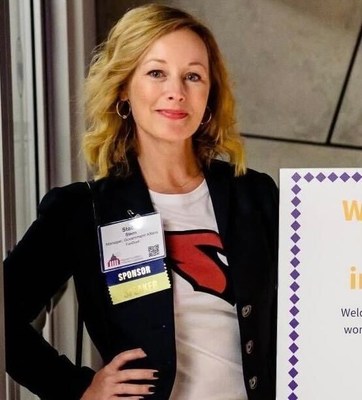
“He was this young, vibrant, energetic, kind of whiz kid who had an idea for a fantasy game that was a stock market of sports,” Stern says. “This was really in the infancy of the daily fantasy sports boom, when FanDuel and DraftKings were kind of getting their feet wet.
“What struck me from that very first time I met him was how driven and energetic he was. You could just tell. One of my best friends in the industry, who’s been around since the inception of this association, said, ‘Man, there was something special about Jeremy.’”
Stern says they talked about his idea for what became StarStreet, but came away more impressed with the energy Levine brought to the discussion and the way he went about meeting people and listening to their advice.
“I think what set him apart from some of these other website or app founders—you know, we were hearing from a lot of people at that time—he listened, he was respectful and he took advice. And I thought that was really impressive,” she says. “He was maybe 22 years old, but I was really impressed with his ability to listen and ask questions instead of coming in and acting like, ‘Oh, I’ve got the next big thing. And let me tell you how smart I am and how great I am,’ which we saw a lot of in the 2012-2014 daily fantasy sports boom.”
Failure Is an Option to Learn and Improve
Creating products and solving problems, rather than an all-encompassing desire to make money, drives Levine, Jennings says. “There’s a lot of different areas in this industry that I think are more of a slippery slope from a moral and ethics standpoint,” Jennings says. “Jeremy has really stayed and pushed Underdog in the direction of good things, in my eyes. I think that’s really, really important, and we’re starting to see a bigger emphasis across the industry. I think Jeremy’s been a big reason for that.”
Levine’s focus on soaking up information and using that to the best of his ability comes naturally. His parents modeled it for him at an early age. An only child, Levine saw firsthand how passion for work can merge with the personal.

“My dad is still a criminal defense attorney. He just loves to work,” Levine says. “He refuses to retire. I remember when we were on a family vacation and he’s got the yellow legal pad out, sitting on the Spanish Steps in Rome, writing all day. He just loves to work in the same way.
“I got the love of working from him. I view business as we’re kind of blessed to be able to play the most interesting game in history. It’s
Monopoly times 1,000. It’s as if you’re playing a game and have fun while doing it.”
While it is fun when you are winning, it isn’t all sunshine and kittens for Levine. There have been failures as well. That first entry into the field, StarStreet, didn’t survive.
“We weren’t able to get the traction for that—a sports stock market—that I thought the product deserved,” he says. “Ultimately, that was on me as a 22-year-old not knowing the things I needed to know to scale a business.
But that failure was a critical learning experience.
“I certainly learned by doing,” Levine says. “I don’t have any classical training on any of the things I do, but you just try to learn.”
Of course, that desire to learn carries over into his private life. Levine is learning to surf.
“I’m a horrible surfer,” he says with a laugh. “I’m an absolutely terrible surfer. It’s terrifying to me!” But it’s something he’s doing with his wife, Iman Bashir.
“I’d rather be at my computer working,” he adds. “Now, after seeing how bad I am, she lets me stay at the computer.”
‘Unpredictably Rational’
But much like Auerbach wasn’t born a great coach or manager, Levine learned by observing and listening to others. Described by a friend as “unpredictably rational,” Levine, like Auerbach, is a motivator in addition to having a bright business mind.
“I was perfectly happy at FanDuel when Jeremy approached me,” Stern says. “‘I want you to come in and build out a government affairs department and work with me. I want to work with you,’ he said to me… Never in my wildest dreams did I think that we would actually work together. But as I had watched him grow, I thought, ‘He’s doing things the right way. He treats people well, and I think he could be on to something.’”
That growth and care for people has earned Levine and Underdog recognition in the business community. LinkedIn named Underdog its No. 15 top startup emerging company recently, citing the investment in GuardDog, the fund designed to support and scale innovation in responsible gaming.
And for the second year in a row, Goldman Sachs recognized Levine as one of the Most Exceptional Entrepreneurs at its Builders and Innovators Summit in October.
Which is all well and good, but doing things the right way is more important to Levine. “I have made the commitment to myself that I’m going to do whatever it takes to be takes to be the best CEO in the world for Underdog, and that is a continuous kind of learning and evolving process.”
Blending Talented People
But being able to blend the high-talent quotient of a high-talent team takes a deft hand. Auerbach had to do it in 1986 with a lineup that included Bird, but also Bill Walton, Robert Parish, Kevin McHale, Dennis Johnson, Rick Carlisle and Danny Ainge. All were superstars who bought into what Auerbach and coach K.C. Jones preached—teamwork.
Levine is able to do the same. He’s recruited engineers from DraftKings, executives from FanDuel, and the COO of PointsBet North America. “Universally, I’ve probably had 30 of these recruiting calls over the last nine months where it’s someone ready to make that decision (to join Underdog), and I’m that final call, and all but one of them have chosen to come to Underdog.
“And what I now get to say—and I very much hope is true—is I think if you ask any of them, they’re very happy they made that decision.”
It might not have seemed that way back in the early days, however.
“I remember early on one night just pacing around my parents’ attic, probably at 5 in the morning, as I was struggling to raise money, thinking, ‘Am I crazy, or is everyone else crazy?’ And the thing is, over the years, you see people taking shortcuts or having massive early success, and you see people succeeding who you just know not to be good people, not treating people well. It feels like such a shortcut.
“That’s something where just continuing to treat people the right way, like with Underdog, how much that’s paid us back, where people have trust and have faith. It’s part of the reason we’re able to get so many people from all these companies, because I’ve spent 15 years now building these relationships.”