Embracing Social Media


Few things move and change as fast as the gambling industry. Social media is one of those lucky few. It exists in a nebulous state of constant reinvention and disruption. While it is almost unilaterally accepted as a helpful tool, making the right use of it can be a hefty challenge.
Take a look at your position in the industry. Suppliers might need a tailored approach that reaches players, customers and employees alike. Marketers might need a holistic view of what works and what doesn’t, then must be able to apply that knowledge to various clients.
Meanwhile, an influencer must keep up with the latest in social technology and produce boatloads of content to maintain their audience.
Experts in applying social media to gaming reveal the ever-changing social strategies that make a real difference.
A Supplier Story
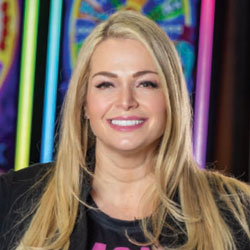 “AGS’ goal with social media has always been to promote three things: products, people, and culture,” says Julia Boguslawski, the company’s chief marketing officer. She and two colleagues—Nikki Davis, director of marketing communications and Andrew Chang, senior creative marketing manager—outline AGS’ “wide net” approach to social media.
“Elevate and connect,” Boguslawski says. “Those are the guiding markers of our approach. Then we ask: who is the audience? What are we trying to say and who are we trying to reach?”
AGS uses different accounts to reach specific audiences. The Rakin’ Bacon account on TikTok and Instagram, for example, features the game’s mascot, “Cornsquealius.”
“We have a lot of fun with the Rakin’ Bacon account,” Davis says. “It’s a pig, a brand, a personality. We’re able to be more playful and showcase our personality.” The Cornsquealius influence extends to all of the AGS social channels, where the company is not the least bit shy about making copious pig puns.
Between the Rakin’ Bacon account and multiple other AGS accounts, there’s a lot to juggle. Chang manages the overarching content strategy. “Things change all the time because trends happen out of nowhere,” he says. “If you want to convert people on the back of a trend, you have to be flexible and pivot on a dime when needed. That’s just the nature of social media.”
The AGS marketing team believes a good social push can move the needle, and they’ve seen it happen before. The catch? Boguslawski says “the game has to be good as a baseline.”
No company wants to put out a dud, of course. But recognizing when a game has that spark is crucial. “We look for our games that have a few early success stories like Rakin’ Bacon and allocate our resources to give it a boost via social media.”
A boost might include posts and pictures, but it could also include an influencer campaign—more on that world later. Boguslawski highlights the return on investment a good social campaign can make:
“We had a video that went viral on our Rakin’ Bacon account; that’s a million-plus people watching, and it is relatively low cost. If you do it right, you can get a lot of engagement.”
Doing it right is easier said than done. “Every single platform has a different audience,” says Chang. “Maintaining your tone of voice and your brand authenticity is a challenge. You have to find a balance.”
Balance is more than just a buzzword. AGS uses it to inform an overarching social strategy from top to bottom, and it has dedicated team members for that very purpose.
But what about smaller operations in need of support? That’s where outside help can come in.
The Agency Approach
Julia Carcamo is the president and chief brand strategist for J Carcamo & Associates, which also sponsors the Casino Marketing Boot Camp.
“We do some tactical execution on social media,” she says, “but it’s mostly on the strategic end. We focus on how a client is positioning themselves, how they engage with customers, and if they’re targeting the right customers. We look at social media as a part of their overall marketing strategy.”
 Chad Hallert, chief marketing officer at Good Giant, says, “Social media really lives in that middle portion of the marketing funnel for us. If we think of a traveler’s or buyer’s journey, social can get that initial ad exposure.”
The needs of a casino client can vary widely, and both marketing experts see a diverse array of requests when they’re first approached for social media help.
“It almost always starts with something that’s missing,” says Carcamo. “Staff, budget, time. Properties want to market on social media but can’t quantify it well enough to justify filling that gap. So it’s usually a very tactical reason they have for seeking help.
“The next step is just sitting back and having a conversation. What does their database look like? What is your engagement like? What types of people are coming to you via social? You have to ask a lot of questions before you put all your eggs into a single social basket.”
Hallert describes almost the same journey for new clients who need social help: “It’s very tactically focused. They’ll say ‘Competitor X has more followers than us’ or ‘Our CEO doesn’t like our social presence.’”
The tactical gaps can also be focused on social platforms themselves, Hallert notes. “Should we be using TikTok?” is a popular one. “That’s where we start,” he continues, “but then we shift the discussion to the broad strokes.”
More questions then surface: Why is the client on social media? What are they trying to achieve? What are your measures of success? Hallert likens it to a hamster wheel, and marketing agencies need to gently help clients dismount to focus on actually moving forward.
“The nature of casinos is they’re running so fast,” Hallert says. “It’s a 24/7 business, and it can be siloed. Your social media coordinator might not be talking with the player development team or general ad team all the time. Social media is an investment, and most of our clients have some social media support on property. Where most fall short is the strategy, planning, and calendar creation. You have to mix up types of content and have someone on property to execute.”
Once an agency has a firm grasp on the client’s needs and an agreed high-level strategy, the engagement and growth can kick in.
“Years ago, we were only measuring social impact with likes and follows,” Carcamo says. “Now, that doesn’t really tell you anything. When you have an engaged community, you actually know their names. You can connect them back to your database and see whether social media has managed to change their behavior. Maybe you get one more visit a month by posting a promotion that appeals to mid-level, infrequent players. It’s all about behavior change.”
Naturally, an agency is only part of an ideal social media approach. Both Carcamo and Hallert prefer a hybrid strategy.
“I always advocate for marketers to be smarter and better,” Carcamo says. “The way that often takes shape is working with an agency on strategy, guidance, mentorship and development. Then, we let their team execute. They’re the pens with boots-on-the-ground expertise.”
Despite her enjoyment of a casino floor, Carcamo can’t always be on-property, so working with marketers who can is crucial.
Hallert agrees. “Staff is expensive, and you have to keep social media-focused employees engaged with various tasks. You have to invest in the approach. So we think an agency-leading strategy, best practices, help with posting (where, when, etc.), and editing is key. Then internally, you can have someone on the property’s team attending an event who can snap photos and work closely with other internal departments.”
One way agencies, suppliers and operators can reach players directly is through influencer partnerships.
The Influencer Impact
Brian Christopher is the face and voice behind BC Slots, a massively popular social network in which he plays slots for his audience. It’s a simple name and a simple idea, but it’s a huge lift that makes a big splash in the social media world.
The BC Slots YouTube channel has more than 691,000 subscribers at the time of writing, and he has two other channels with lesser (but still quite high) subscriber counts.
He posts two videos per day, and he isn’t shy about how much work that takes.
“It’s a lot of time, Christopher says. “And we haven’t mastered cloning yet, so it’s a labor of love. But still labor.”
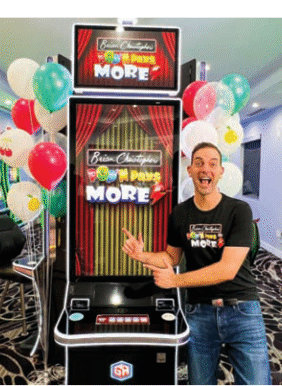 Christopher’s content covers all aspects of the gambling and casino-adjacent world. “I do plenty of gambling videos,” he says, “but we’ll also show viewers my experiences. I was at a ballgame during my recent Potawatomi visit, for example, and the audience loves that kind of thing. We’ll do posts, polls, carousels, photos, anything.”
His volume is a big reason for his success, but not every piece of content hits. “Some posts will go viral on TikTok and completely flop on YouTube or Facebook. We have to cater to the different platforms, retention rates, and all these data points.”
Despite the heavy lift—Christopher has 12 staffers in total—his network has grown enough to garner the attention of BetMGM, which recently announced a partnership with him. He even has his own slot: Brian Christopher’s Pop’N Pays, developed with and produced by Gaming Arts.
Most recently, Christopher helped the Yaamava’ casino launch the Squid Game slot machine. “It was the first casino in the country to get it,” he says. “So I was on hand to play the game.”
That’s a great example of a licenser (Netflix) and operator using Christopher’s influence to drum up interest. Generally, he thinks suppliers and even some operators can do better with their social media approach.
“There’s a lot of value here,” he says. “A supplier might sell a slot machine to their customer—a casino—but then players need to play it, and that’s where I can help.”
He says some of the videos he sees are of company execs who, sure, are excited about a game, but don’t have the end user in mind with their approach to the content.
“Spending tens of thousands on a billboard might get you 100,000 sets of eyes. Maybe 10 percent of those people gamble, and maybe only 10 percent of them are the ones who might go to the property. On the other hand, we attract gamblers, the outright target audience. We know what the players want. Allocating a small portion of a marketing budget to influencers can move the needle more than almost any other form of marketing.”
He’s encouraging and bullish about the prospects of influencer marketing, but Christopher can also afford to be choosy.
“If I promoted everything people asked me to, no one would watch me anymore. It wouldn’t feel real. We probably select 1 percent of the offers that come our way because it has to be authentic for us. We have to like the game or the property enough to share it with the audience.”
For any operators with their ears perked, looking to book Christopher, here’s what he likes: “High volatility, lots of features, and a shaky-shaky element.” For more on that last one, you’ll have to watch his content. Or play his slot game.
Looking Back, Looking Forward
Gone are the days when social media was a shiny new novelty. Now it’s a core facet of marketing budgets and strategies. In 2024, there are more platforms than ever, and each calls for a tailored approach with bespoke content.
Asked about the most important type of content for the here and now, the experts agree: short-form video. TikTok careened into the space like a meteor and created a new way to engage, while competitors scrambled to keep up.
Going forward, companies will need to increasingly shape their content production around this trend to meet their audiences where they already engage.