DATELINE… UNITED STATES nov 2007

Gaming’s M&Ms – Maryland and Massachusetts head down the gaming path
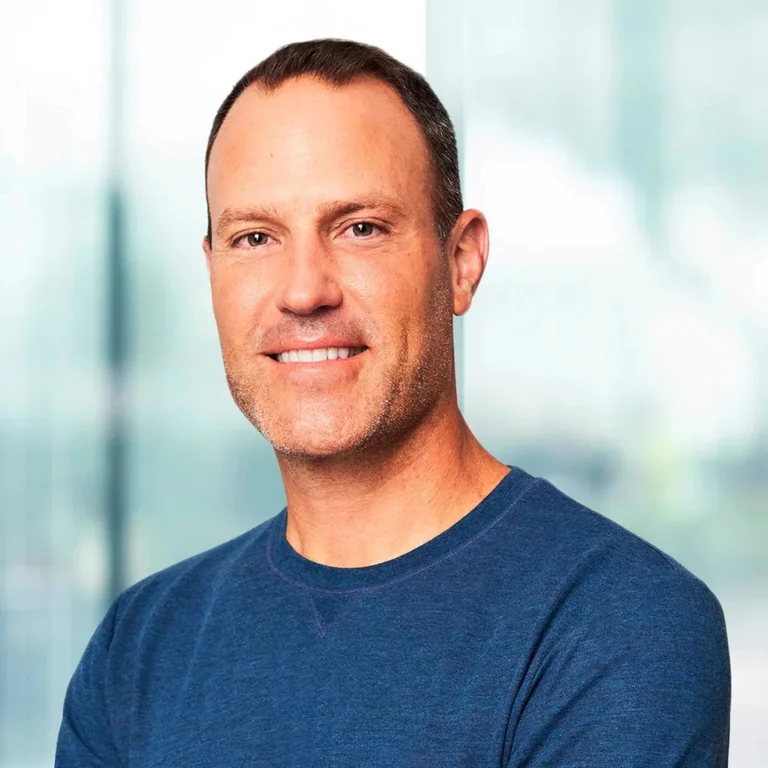
Maryland Governor Martin O’Malley (pictured) has proposed slots at racetracks to save the state’s racing industry, while Massachusetts Governor Deval Patrick proposed a trio of commercial casinos for his state to raise millions for the state and create 20,000 jobs.
The dominos continue to fall in the eastern part of the U.S.
Responding to difficult budget environments and evidence that state residents are playing elsewhere, the governors of Massachusetts and Maryland last month proposed legislation that would legalize gaming in their states.
Standing in the paddock of a horse breeding farm, Maryland Governor Martin O’Malley last month proposed legalizing slot machines at state racetracks in order to save the state’s racing industry, and also, by the way, to close some of a $1.7 billion state budget shortfall.
O’Malley’s plan would permit up to 9,500 slot machines-all owned by the state-at various locations throughout the state, mostly at racetracks. When fully operational, the governor expects it to generate up to $550 million for the state each year. He will designate $100 million of that to the tracks and $6 million to problem gambling treatment programs.
In Massachusetts, Governor Deval Patrick broke a summer of silence to propose three casino resorts, one in the state’s southeast corner, one in the west and a third in Boston.
The casinos, said the governor, would put $400 million into the treasury and generate 20,000 jobs. But he emphasized that he doesn’t want to transform “Massachusetts into Las Vegas.”
The money, from a 27 percent tax rate and the sale of casino licenses, would go for roads, infrastructure and property tax relief. At least 2.5 percent would be earmarked for public health, including battling gambling addiction. It would also fund Patrick’s dream projects, like the world’s largest stem cell bank and expanded commuter rail. It is considered by many politicians to be the last revenue source besides raising taxes.
Licenses, good for 10 years, would be sold for $200 million. Casinos could open within five years, according to estimates.
Fiscal desperation seemed to be the principal reason behind the proposals in each state,
In Maryland, O’Malley is not the first governor to support slots. His predecessor, Robert Ehrlich, also supported slot parlors in the state but his proposals were shot down by a Democrat-controlled legislature. O’Malley, also a Democrat, believes he has the power to move the plan through the legislature.
“What we have tried to do from the first days of our administration is restore a spirit of civility and the ability to search for compromise and consensus, O’Malley said. Certainly we’re all talked out on this, aren’t we? I don’t think there’s a single other issue to be debated or considered.
O’Malley’s main opponent is House Speaker Michael E. Busch, who spearheaded the defeat of Ehrlich’s proposals. Busch doesn’t much like O’Malley’s plans either.
My position on gambling has not changed,” Busch said in a statement. I am not an advocate for slot machines. I don’t think we can expect Marylanders to step up to the plate and pay $2 billion in taxes while unjustly enriching racetrack owners.’
Massachusetts is also facing a huge budget crunch and the hundreds of millions of dollars in revenue that would be gained by approving the three casinos apparently convinced the previously anti-gaming Patrick.
Some economists feel that high price of the licenses could shut out many potential developers and possibly cap the casinos’ economic benefits.
Critics say that the governor relied heavily on gaming moguls such as Donald Trump, Charles Sarkis, owner of Wonderland Greyhound Park, Sheldon Adelson, CEO of Las Vegas Sands Corp. and representatives of Indian gaming tribes to provide information for the economic assessment of the benefits of casinos. These same people will bid for casino licenses.
Others who interested are Harrah’s Entertainment Inc., whose chairman, Gary Loveman, hails from Massachusetts, Steve Wynn and MGM Mirage.
Like Maryland, however, Patrick faces opposition.
State Representative Daniel Bosley announced, I am profoundly disappointed in this governor. There really isn’t new revenue here. It just gives him cover to spend more money.” Casinos make it harder for other businesses to operate near them, he alleges.
House Speaker Salvatore DiMasi’s office announced himself willing to look at Patrick’s proposals before taking a position.
Another senator commented, Most of these developers are nothing more than glorified snake oil salesmen.”
In both states, studies have shown that residents are leaving the state in droves to gamble in casinos in neighboring states.
In Massachusetts, residents head to Connecticut’s two casinos, Foxwoods and the Mohegan Sun. A third of their customers are from Massachusetts. But many gaming experts feel that the region’s market is nowhere near saturation, although their profits have remained flat in recent years.
Maryland tracks have been under attack from surrounding states. Delaware and West Virginia have had slots since the late 1990s and Pennsylvania recently legalized the devices. A recent study by the Maryland Department of Labor, Licensing and Regulation showed that Marylanders were spending at least $400 million on slots in Delaware and West Virginia alone. That translates to more than $150 million for programs in those states funded by slot revenue.
It is time to find consensus that allows our racing industry and horse-related agriculture to compete on a level playing field with the states around us, O’Malley said. And it’s time to stop sending dollars out of the state of Maryland, and instead keep them here.
O’Malley’s plan is the only option left for the state to close the budget gap, he says. There is no “Plan B” should this fail in the legislature.
Senate President Thomas V. Mike Miller Jr. vows to get it through his chamber, but Republican leaders vowed to block it.
Gaming tax hike proposed in Nevada – A Nevada teachers group announced plans to push for a ballot initiative that would rely on the state’s gaming industry to improve funding for public education programs and increase teacher salaries.
The proposal from the Nevada State Education Association would add another 3 percent tax on gambling revenues at casinos grossing more than $1 million a month. It would bring their total tax to 9.75 percent, and generate more than $200 million a year.
“There is nothing more important than increasing educators’ salaries, benefits and improving their working conditions as well as the learning conditions of students,” said Lynn Warne, NSEA president. “We have chosen to stand to make a difference and we will not quietly submit to the idea that there is nothing we can do.”
The proposal would need voter support in 2008 and 2010 before it would take effect.
Lynn Warne, president of the Nevada State Education Association, said polls show overwhelming support for the union’s petition to amend the state constitution.
Warne said that the increase is modest compared to casino taxes in other parts of the U.S., saying, “We think 9.75 percent is fair when they are paying a 53 percent gaming tax in Pennsylvania. When you look at the national average tax for casinos, it’s about 20 percent.”
Not surprisingly, the state’s gaming industry does not support the proposed tax increase. Bill Bible, president of the Nevada Gaming Association, pointed out the obvious: “If you raise taxes you reduce investment and the amount of jobs that are created as a result of that investment.”
Bible criticized the proposal for targeting only one industry. He added that gaming funds nearly 33 percent of public education in Nevada. Bible also said that the resorts agree with the teachers on the need for quality education, but added, “The problem with this particular proposal is that it targets one industry… and doesn’t bring other payers to the table.”
Senate Majority Leader Bill Raggio thinks the legislature should be the only one to approve a tax increase. He does not support using a ballot initiative to impose higher taxes on any industries.
“Targeting a single tax source for a single spending purpose is not a responsible approach,” Raggio said.
Eastern Front - MGM Mirage announces mega-development in Atlantic City, opens permanent Detroit casino
 MGM Mirage last month shifted its attention from the massive CityCenter project and joint ventures with Kerzner International and Dubai World in Macau to debut the permanent MGM Grand Detroit and announce the MGM Grand Atlantic City.
The opening of the permanent casino comes eight years after MGM Grand Detroit debuted its temporary casino, which closed its doors one day in advance of the grand opening of the permanent facility. MGM Grand Detroit will be one of three permanent casinos to operate in the city of Detroit once the MotorCity Casino and Greektown Casino permanent complexes open later this year, and next year, respectively.
At its grand opening press conference. Jim Murren, president and COO of MGM Mirage, the parent company of MGM Grand Detroit, pointed out that his company has created 3,000 permanent jobs, invested $800 million into its permanent casino and previously spent $200 million on its temporary casino for a total capital investment of over $1 billion in Detroit. He said that it has been his company’s goal to broaden the awareness of Detroit to the people of Cleveland, Chicago, and across the Midwest and East Coast. He thanked the thousands of construction workers, hundreds of businesses that worked on the construction of the MGM Grand Detroit, and the dedicated MGM Grand team members for bringing the permanent complex to fruition.
 MGM Grand Atlantic City is a $5 billion project that will occupy 60 of 72 acres set aside for the project alongside the Borgata, which is a MGM Mirage joint venture with Boyd Gaming, the operator. Along with the city’s biggest casino (280,000 square feet), MGM Grand AC will include three hotel towers holding more than 3,000 rooms and suites (one tower, a 57-story skyscraper, will become the tallest building in the state), retail, entertainment and convention facilities.
The $5 billion price tag does not include the value of the land. Unlike CityCenter in Las Vegas, there currently is no residential or condominium component to the project, but may be added at a later time on the extra 12 acres.
MGM Mirage Chairman and CEO Terry Lanni says he expects the project to create “very healthy returns” for company shareholders.
“We believe the success at Borgata demonstrates the eagerness for further evolution of the nation’s second-largest gaming market, Lanni said. We will continue to raise the bar, and by doing so, hope to re-energize the city’s resorts offering.”
Company officials say the announcement of the Atlantic City development is completely unrelated to an ongoing investigation by the New Jersey Division of Gaming Enforcement into the business relationship between Pansy Ho and her father, Stanley Ho, who for many years controlled all gambling in Macau. Ho’s connections to the organized crime triads have long been suspected, but Pansy Ho denies there is any business relationship between her and her father. Regulators in Nevada and Mississippi have found there to be no reason to reject the MGM joint venture with Pansy. Should New Jersey turn down the arrangement, however, MGM officials have suggested they would abandon New Jersey in favor of Macau.
MGM Mirage plans to file for city and state approvals toward the end of 2007 and early 2008, with groundbreaking scheduled for mid-2008. Completion is set for 2012.