
An AML Mess


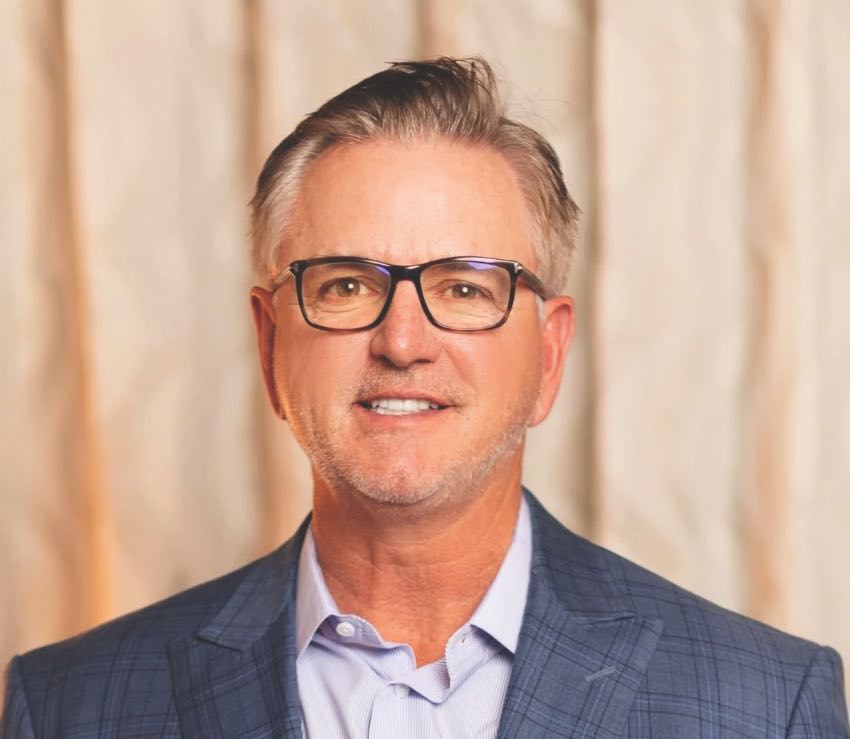
As Nevada Gaming Commissioner Brian Krolicki addressed representatives of Resorts World Las Vegas, the tortoise-shelled spectacles hung off his face, similar to the image cast by Chuck Schumer when a camera centers on the venerable senator from New York.
Schumer’s refusal to wear the glasses snug against his nose or take them off entirely has been used derisively by detractors to critique his inability to take a firm position on a matter of consequence. But at the Nevada commission’s closely watched March hearing, Krolicki did not mince words. In weighing whether to approve RWLV’s $10.5 million settlement with the Nevada Gaming Control Board, the commissioner wasted little time getting down to business.
“The failure from the casino floor to the C-suite and even beyond Las Vegas,” said Krolicki, pausing for emphasis, stood out as “truly extraordinary.”
Months earlier, the NGCB filed a 12-count complaint against RWLV stemming from widespread allegations surrounding the casino’s anti-money laundering deficiencies. On the eve of spring training, Los Angeles Dodgers star Shohei Ohtani’s former interpreter received a 57-month prison sentence for his brazen theft from the reigning National League MVP, money used to pay gambling debts.
In the aftermath of the shocking case, the compliance culture regarding money laundering across the Las Vegas Strip has been placed squarely under the microscope.
As of this month, Resorts World Las Vegas is one of three major casinos that have reached settlements with Nevada regulators costing them a combined $19 million. Beyond RWLV, the MGM Grand and the Cosmopolitan of Las Vegas also settled with the state.
 The comprehensive investigations have ensnared some of the nation’s largest illegal bookmakers. The bookies themselves maintained a Rolodex of celebrity clients that included star pro athletes, Hall of Famers and LeBron James’ business manager. The gambling entrepreneurs allegedly used their ties with casino representatives to divert clients to their massive enterprises.
From there, prosecutors claim, the defendants funneled the customers offshore to a bevy of obscure call centers in exotic locations such as Costa Rica. The investigations coincide with three sports betting scandals responsible for the darkest period of integrity in college and professional sports since the historic 2018 PASPA decision.
Krolicki warned that the settlement served as a “clarion call,” not just to Resorts World but the larger industry, that Nevada takes the culture of non-compliance with the utmost seriousness. Over the first months of 2025, conference panelists in Quebec, Newark, San Diego and elsewhere have intensely debated the ramifications of the case.
As the dust settles from one of the largest money laundering investigations in state history, questions remain whether the enforcement action will prevent another casino from pushing the envelope again.
“I hope all of the findings are carried through for many, many years,” Krolicki pronounced sternly. “I never want to do this again.”
Duffle Bags, Leather Purses and Brown Paper Bags
Weeks later, Krolicki returned to the same chair for a hearing on a stipulated settlement with MGM Resorts. Unlike RWLV, which neither accepted nor denied responsibility for the charges, attorneys for MGM were contrite at the April hearing. In taking blame for a slew of AML compliance failures, MGM Resorts Chief Legal Officer John McManus admitted that the corporation could have done better.
For now, only one casino executive has been convicted in the sweeping case. Nevada gaming officials revoked Scott Sibella’s license in December 2024, months after the former president of MGM Grand avoided jail time during a federal sentencing hearing.
Sibella, who spent eight years in the position, received 12 months of probation for his failure to file a suspicious activity report (SAR). The filing relates to the activities of Wayne Nix, a former minor league pitcher, who ran an illegal sportsbook in California. Nix traveled often from Southern California to Las Vegas, where he frequented some of the world’s largest casinos.
The former pitcher in the Athletics farm system arrived at the casinos with large sums of cash in tow—transported in duffle bags, leather purses or even brown paper bags. At one point in July 2018, Nix used $120,000 in cash to pay a marker at the MGM Grand. Sibella never filed an SAR on the transaction, leading to the charges.
In many cases, Sibella protested that he was being made the scapegoat for the transgressions. He claimed to understand that certain MGM employees received kickbacks while assisting Nix in his endeavors. As of April, two hosts implicated in the investigation remained employed at the company, MGM confirmed at the hearing.
Nix used multiple websites and a call center through Costa Rican-based Sand Island Sports to facilitate the wagers. Among the celebrities who reportedly placed wagers with Nix are former Dodgers All-Star Yasiel Puig, NBA Hall of Famer Scottie Pippen and Maverick Carter, the business manager of LeBron James. At one point, Nix informed Sibella that his gambling enterprise took a $5 million wager on the 2019 Super Bowl from an unnamed customer who also bet with MGM.
By 2020, the MGM Grand accepted $4,079,830 in illicit cash proceeds from the Nix gambling business, the complaint states. In January 2024, the MGM Grand and The Cosmopolitan of Las Vegas agreed to pay a combined $7.45 million in separate non-prosecutorial agreements with the Justice Department. The settlement for violations of the Bank Secrecy Act served as the basis of the Nevada regulatory complaint against the casinos.
Sibella told investigators that he met Nix at a VIP golf event. The former executive acknowledged making “several gentlemen bets” with Nix on the golf course, but he claims he never maintained a sports betting account with the bookmaker. Federal prosecutors suggest otherwise. Nix, according to court filings, assigned account number R3507 on the Sand Island Sports website to Sibella to track his betting history.
Nix is not the only California bookmaker to be cited by Nevada regulators for his activities at the MGM Grand. While nine of the 10 charges against MGM related to Nix, the final one pertained to Matt Bowyer, one of the nation’s largest bookmakers. Bowyer is most widely known as the bookie used by Ippei Mizuhara, Ohtani’s former interpreter.
Over a 28-month period through January 2024, Mizuhara made approximately 19,000 wagers with Bowyer’s enterprise amounting to at least $325 million, according to federal prosecutors. Though Mizuhara hit on winnings of $142 million, they were offset by losses of almost $183 million, resulting in a net loss of $40.2 million. In February, a California federal judge sentenced Mizuhara to prison for embezzling approximately $17 million from Ohtani to cover his gambling losses.
A longtime whale bettor, Bowyer is well known at sportsbooks across the Las Vegas Strip. One sportsbook manager, who spoke to GGB on condition of anonymity, took Bowyer’s action before ultimately limiting him due to issues with his source of funds. According to regulatory filings, MGM had suspicions of Bowyer’s illegal bookmaking activities as early as 2015. During a four-year period through 2018, Bowyer wagered at MGM subsidiary properties on at least 300 occasions, the complaint states.
A Remediation Plan
During a 74-minute hearing in April, MGM outlined a set of eight remediation measures aimed at strengthening the company’s AML compliance framework. Among the changes, the company formalized procedures for the credit and compliance departments to share financial information on patrons to assist Know-Your-Customer reviews.
In addition, MGM now requires casino marketing hosts to undergo annual in-person training, where they must pass a quiz on the company’s AML policies. Last year, MGM informed stragglers that they would receive a reduction in their bonus for skipping the training. Participation levels rose steadily due to the incentive, MGM Resorts Chief Compliance Officer Stephen Martino noted at the hearing.
While the remediation efforts appear to be a step in the right direction, some question whether the modifications are enough. One remedy conspicuously absent is the voluntary placement of independent AML monitors inside the casino properties. Monitors unaffiliated with the casinos offer an alternative to rogue officials who may be tempted by collusion. The monitors can also maintain a 24/7 presence inside the properties to detect major laundering schemes in real time.
The scandals represented one of the most-discussed topics at April’s Indian Gaming Tradeshow & Convention in San Diego. Anne Layne, senior manager at Grant Thornton, one of the largest U.S. accounting and advisory firms, is in favor of the independent monitors. However, high cost burdens associated with enforcement can make implementation a challenge. Large multi-national corporations such as MGM Resorts can absorb the costs, but many smaller companies cannot.
“While compliance is important, it is also important to make sure that the businesses can continue—it’s really about striking a balance,” Layne told GGB.
The Venetian’s Largest Customer
In 2013, then-FinCEN Director Jennifer Shasky Calvery delivered the keynote address at the Global Gaming Expo. Weeks earlier, Las Vegas Sands had agreed to forfeit $47.4 million in a non-prosecutorial agreement with the U.S. Justice Department.
The settlement concluded an investigation into the Venetian’s failure to inform federal authorities that a high-stakes gambler made numerous suspicious deposits with the casino. Zhenli Ye Gon, a Chinese-born Mexican businessman, also had suspected ties with an international drug cartel, according to the U.S. Justice Department.
At his peak in the early 2000s, Gon earned a distinction as the Venetian-Palazzo’s largest “all-cash, up-front gambler.” During a 25-month period through 2007, Gon made $45 million in wire transfers to Sands from two banks and seven “casas de cambio,” a Mexican term for currency exchange houses.
During a 2007 raid of Gon’s mansion in Mexico, authorities seized $207 million in cash, setting a record for the highest recovery by law enforcement in a single raid. Cooperating extensively with the Justice Department, Sands significantly bolstered its Casino Suspicious Activity Reporting program under the agreement. After spending nine years in U.S. prison, Gon was extradited to Mexico in 2016.
MGM officials made reference to the Sands case at this spring’s NGC hearing. In the wake of the non-prosecutorial agreement, MGM hired international law firm Gibson, Dunn & Crutcher LLP to revamp the company’s AML program. Gon had also transferred about $10 million to an account held with Destron Inc., an MGM Resorts subsidiary, the Wall Street Journal reported.
An Industry Crusader
At the G2E conference down the hall from the high-end baccarat rooms Gon had frequented, Calvery issued a stark warning to the industry. The FinCEN director made it clear that she had little sympathy for casinos that shirked their reporting obligations under the Bank Secrecy Act. In a multitude of cases, it can be argued that casinos have vastly more information than any other financial institution on their customers, she said.
“Those casinos that choose to ignore their AML obligations and operate outside of the law are going to be held accountable,” she warned.
Calvery did not stop there. A former All-American guard at George Washington University, she ramped up the press against non-compliant casinos in a return trip to Vegas.
Before a sold-out crowd at the 2014 BSA Conference, the FinCEN director gushed that the overwhelming participation at the event showed that the industry had a strong interest in developing a deeper understanding about the topic.
“Casinos must continue their progress in thinking more like other financial institutions to identify AML risks,” she urged.
A bureau within the U.S. Department of the Treasury, the Financial Crimes Enforcement Network’s stated mission is to “safeguard the financial system from illicit activity, counter money laundering and the financing of terrorism,” among other objectives.
As online sports betting proliferates, criminal actors can abuse U.S. financial institutions by depositing the “proceeds of crime into betting accounts and subsequently withdraw funds after minimal betting activity,” authors from the Treasury Department wrote in the 2024 National Money Laundering Risk Assessment.
Falling on Deaf Ears
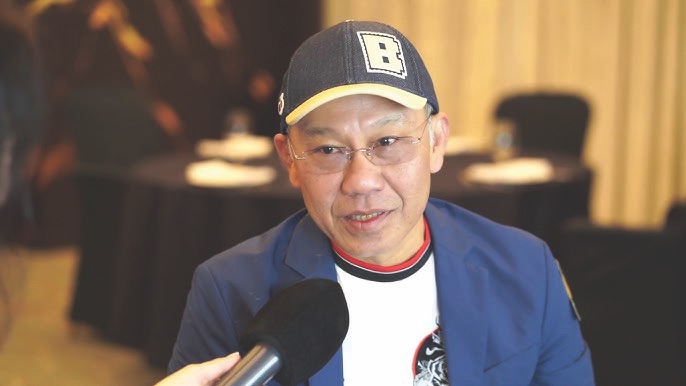 Just before Calvery spoke in 2014, a shadowy figure in the underground sports betting world had set up shop in an ornate Caesars Palace villa. Paul Phua arrived in Vegas hours before the start of the FIFA World Cup. The principal owner of IBCBet (now MaxBet), Phua helped construct an “illegal wire room” that handled $400 million in illegal sports wagers on the World Cup, prosecutors alleged.
Reputed as the “world’s largest bookmaker,” Phua also has been tied to an organized crime group in Hong Kong. While Justice Department filings identify Phua as a senior member of 14K Triad, attorneys for the bookmaker denied the allegations in a statement issued to ESPN. On July 9, 2014, the same day as a semifinal tilt between Argentina and the Netherlands, the FBI raided the villa. Phua later walked free after a Nevada district judge ruled that the FBI conducted an unconstitutional search in the raid.
Years later, Phua’s name still resonates in Vegas circles. A confidant of Steve Wynn, Phua helped the casino magnate establish Wynn Macau in 2006. According to Phua’s website, his outsized presence in Macau is so impactful that when he discontinued his junket tour, economic activity in the city-state fell sharply.
Last September, Wynn Resorts agreed to forfeit $130 million to the Justice Department to settle charges that it conspired with unlicensed money-transmitting businesses worldwide to transfer funds for the financial benefit of the casino.
There have been other black eyes for Strip properties since Calvery’s warning to the industry. In 2015, Caesars agreed to pay $9.5 million in fines for failure to monitor suspicious activity relating to wire transfers involving high-roller foreign gamblers. A year later, CG Technology paid a $22.5 million fine to the federal government for engaging in a series of illegal gambling and money laundering schemes.
Before eventually closing shop, CG operated a sportsbook in The Venetian, among other major properties throughout Vegas. Without referring to a case by name, MGM’s McManus identified other AML cases within the state where the defendants acted with “willful blindness.” MGM, he asserts, is distinguished from the others. Although McManus conceded that MGM took missteps, he told the NGC that the company maintained best practices with its AML program.
The Most Expensive Property in Strip History
As Vegas recovered from the Covid-19 pandemic, RWLV opened in June 2021 with a price tag of $4.2 billion. Sibella left MGM Grand in 2019 to take his executive position at the new casino. The property turned heads with a pitch billing it as the first casino on the Las Vegas Strip to fully embrace a cashless gaming experience.
Banned from the MGM Grand in 2018, Bowyer found a new spot to take his action. By October 2023, Bowyer gambled at RWLV at least 80 times, losing $6.6 million, according to a Nevada regulatory filing. Overall, the bookie lost $7.9 million, an amount covered in part by Mizuhara’s payments.
Bowyer pleaded guilty last August to several federal charges, including transactional money laundering and operating an illegal gambling business. According to the complaint, Bowyer instructed Mizuhara to transfer approximately $15 million to a bank account maintained by one of his associates. The bookmaker also “transferred or directed the transfer” of at least $9.3 million to “Casino A,” according to filings. Numerous sources identified “Casino A” as RWLV, ESPN reported.
From a sports betting perspective, staff members of Casino A’s sportsbook reached out to Bowyer periodically to invite him to make large bets to offset its risk, prosecutors allege. Damien LeForbes, another bookmaker awaiting sentencing, wagered at least $148 million at the casino, according to a federal complaint.
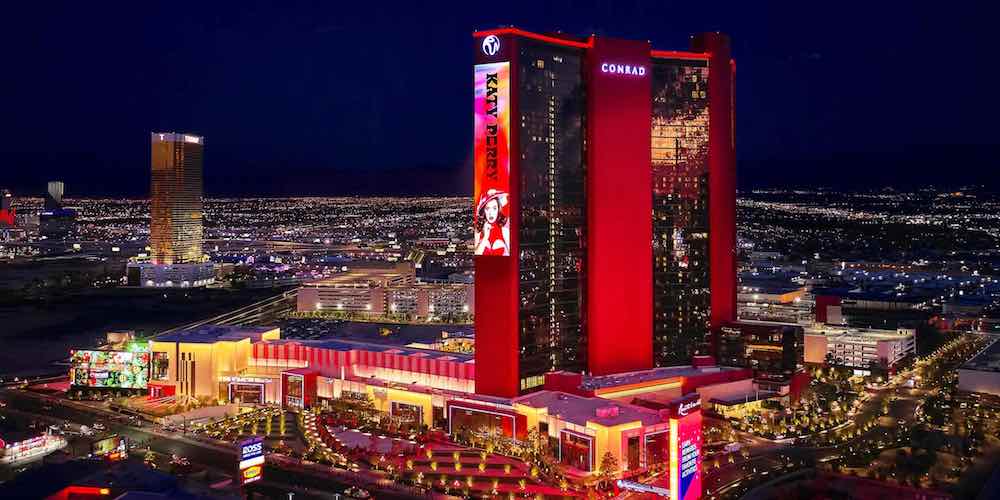 When Bowyer’s file appeared before Resorts World Las Vegas’ AML committee, several members noted that his sources of funds were not commensurate with his betting patterns. At one meeting, an unnamed executive requested that Bowyer’s role as a bookie be stricken from the record. In a statement, RWLV wrote that it “regards attempts at money laundering as a threat to the integrity of the company, the gaming industry and on the entire financial system.”
A so-called “Dream Team” of industry luminaries represented RWLV at the March hearing. The contingent included former Nevada Governor Brian Sandoval, former NGCB Chairman A.G. Burnett and Jim Murren, longtime CEO of MGM Resorts. Before leaving MGM Resorts in 2020, Murren received an email from a VIP gambler concerning alleged illegal conduct involving Sibella and others.
Besides his new role advising RWLV, Murren serves as the chair of the General Commercial Gaming Regulatory Authority, the agency that regulates the UAE gambling industry.
The $10.5 million fine against RWLV is the second largest in Nevada history. The Nevada Gaming Commission has the option of modifying the settlement if the federal government takes formal action against the casino. In addressing the confluence of illicit activity, outgoing NGCB Chairman Kirk Hendrick underscored the threats posed by illegal bookies who are flush with dirty money.
“They come to Vegas because they have a lot of money,” said Hendrick during a G2E panel last October. “If they win, great, they’ve laundered money. If they lose, they’ve laundered money. It’s up to our licensees to know their customers and where their money is coming from.”
A Chiseled Bookie
Toned from frequent workouts, it is not a stretch to envision Bowyer as a Raiders linebacker among a crowd on the Strip. Trained in jiu-jitsu, Bowyer operates a martial arts studio in Laguna Hills, California. He’s also known in betting circles for his congenial demeanor and affability with his clients.
It may explain why Bowyer became so successful at recruiting clients. While federal prosecutors allege that Bowyer had at least 700 sports betting clients, sources have pegged the amount at upwards of 1,000 at the peak of his operation. In a 2018 letter, an anonymous tipster encouraged the MGM Grand to explore whether Bowyer’s casino host funneled customers from the MGM to his illicit sports betting business.
MGM banned Bowyer later that year, representatives for the company disclosed at the NGC hearing.
In some cases, referrals for high-net worth customers can be worth up to 25-30 percent of their net losses. The role of the hosts in the Bowyer, Nix and LeForbes cases appears to be integral. As a result, leading casinos could have monitored the incentives available to the hosts more effectively, a close observer of the California illegal market told GGB.
Bowyer is close friends with Owen Hanson, a former USC tight end who received a 21-year sentence in 2017 for running an international narcotics trafficking operation. Using sports betting as a front for his drug business, Hanson sent vast quantities of cocaine to Australia on behalf of a Mexican cartel.
Released early from prison last year, Hanson is attempting a reclamation project with a protein ice popsicle business. While Hanson remained incarcerated, a bevy of his clients jumped to Bowyer’s sportsbook, multiple sources told GGB.
Due to a pending sentencing hearing in October, Bowyer declined comment.
Federalism vs. States’ Rights
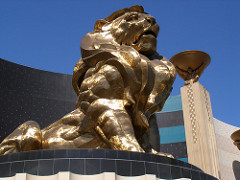 MGM Resorts CEO Bill Hornbuckle, who missed the Nevada commission hearing in April, told GGB earlier that month that the company treats suspicious activity with the utmost seriousness.
In addressing issues on federalism versus states’ rights, Hornbuckle lamented that the rise of prediction markets could be the “concrete” that enables the federal government to enter the gambling space. The hearing was held at a time when Congressman Paul Tonko of New York has continued to push for a federal framework for sports betting.
The confluence of AML lapses raises the question of whether the government should establish a federal gambling commission comparable to national regulatory agencies in France and the U.K.
The disparate AML cases share some common themes. Despite his immense wealth, Gon wired certain amounts from the same institutions on consecutive days, breaking the transfers into smaller amounts to potentially avoid suspicion. Sands, according to the Justice Department, failed to understand the layered manner in which Gon transferred the funds.
By comparison, a transaction from Nix drew suspicion since he deposited more than $5,000 in small denominations of cash. During the two-year period covered by the Sands agreement, the Justice Department required the company to conduct three follow-up reviews. At RWLV, a report on the casino’s enhanced AML standards must be submitted within two years of the settlement.
If major sanctions in the past did not result in systemic change, should the industry expect a different outcome today? Industry observers suggest that jurisdictions considering gambling expansion can send a message that a culture of non-compliance will not be tolerated. New York State Gaming Commission Chairman Brian O’Dwyer hinted as much in denouncing the activities at multiple properties in Las Vegas. Still, O’Dwyer stopped short of recommending that such violations in the past should disqualify candidates for a license in the state’s downstate casino bidding process.
Despite the scandals, Krolicki contends that Nevada holds the “gold standard” among regulators, accepting nothing less than perfection from the compliance teams of its licensees. In terms of corrective action, a skeptic may argue that without license suspension or revocation, a simple fine does not carry teeth.
Moving forward, nefarious activity such as crypto money laundering and promotion chip fraud—two allegations at the forefront of the scandals—may receive closer inspection from FinCEN.
More than a decade since Calvery’s meticulous polemic, her message still rings true.
“I fear there may be a culture within some pockets of the industry of reluctant compliance with the bare minimum, if not less,” she said. “I hope that together we can make a cultural change.”