2026 Emerging Leaders of Gaming 40 Under 40


SOMETHING FOR EVERYONE
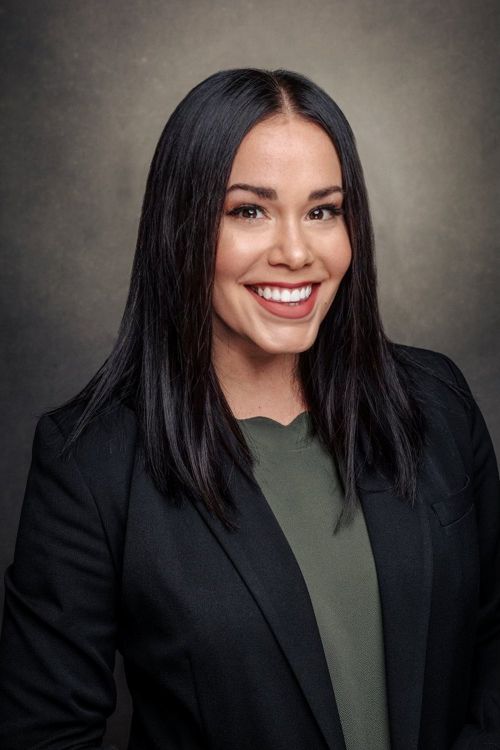 Jen Bryson. Vice President of Marketing, Hollywood Casino Columbus
Resilience led Jen Bryson to a career in gaming. The company culture at Penn Entertainment allowed her to grow.
The vice president of marketing at Hollywood Casino in Columbus, Ohio, was born in Puerto Rico. She moved to Florida as a youngster before ending up in small-town Ohio for grade school. Bryson later graduated from the University of Toledo—the first member of her family to get a college degree.
Finding the right role took a few more steps, but it ultimately paid off. After college, Bryson worked in radio sales. Though it wasn’t for her, she loved the job’s fast pace. That led her to sales and marketing for SMG, a convention center and arena venue management company. After honing her skills there, she was ready in 2021 for the move to Penn. She started in Maryland before moving back to Ohio in 2023. For her, the Buckeye State will always be home.
“The amount of moving that my family has had to do to get to where I am now, within the business, it’s paid off,” Bryson says. “It’s been really nice and really rewarding.
“You realize that moment when everything just kind of clicks, and you’re like, ‘OK, yeah, this is for me, it checks all the boxes, it meets all the needs.’ I’m just super grateful that I’ve found a culture and a job and a family within Penn that has given me not just the opportunity for me to grow within the business, but to have fun.”
That fun keeps her on her toes, because every day can be different. Right now, Bryson is focused on a new hotel that Hollywood Casino is building in Columbus, with plans for a late spring 2026 opening. That project has consumed a lot of her time.
“There’s a lot of evolution in our property right now, with a lot of high-level projects, table games, expansions and whatnot. There’s a lot going on,” she says.
What would she tell anyone interested in a career in gaming? “I would say go for it. The casino industry has something for everybody. There’s the hospitality side, there’s the operation side. Once you get to the director level or VP level, you ‘own’ areas. But you also have so much integration with all the other different areas, too.
“It’s so much fun. Because the industry has such a wide variety of talent and different niche areas, you’re likely to find something in any department, in any area of the industry.”
—Kathy Urban
SCALING GAMES, EMPOWERING TEAMS
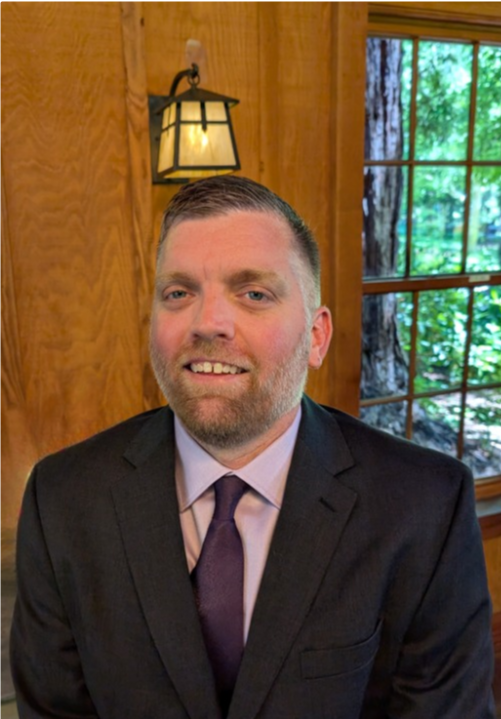 Brant Frazee. Vice President, Online Game Development, AGS
Working with smart people seems to raise the bar for everyone. For Brant Frazee, vice president, online game development at AGS, working with smart people started early, and with a much younger crowd.
Frazee taught Algebra II, Precalculus, Calculus and Advanced Placement Stats to students in grades 6-12 at BASIS, a charter school in Phoenix, Arizona after graduating with a math and economics degree from Duke University.
“I had about as good a resume as I could have had, but then 2008 happened and screwed everybody,” says the second-generation Phoenix native. “So I had to teach my first year out of college. It was really fun, but it was a ton of work.”
Luckily for Frazee—and unluckily for those math students—he got an opportunity to do a job he says he was born for, as a mathematician at Design Works Gaming in Scottsdale. But Frazee’s career as a math teacher paid off down the line, when a former seventh-grade student eventually joined DWG as an intern before being hired full time.
“I think that’s one of the things I’m pretty good at—I spend a lot of time investing in the people who work for me,” says Frazee, 38. “I was 23 when I was teaching high schoolers, so they thought I was almost the same as them. BASIS is full of really smart kids. Duke was awesome, and there I was, around a bunch of smart people. So what I’ve been trying to do in my career is just be around a bunch of really smart people, which I’ve been able to do.”
In his role at AGS, where he has been since November 2022, Frazee oversees multiple teams around the world. One day he could be working on recruiting. On another day he could be budgeting, overseeing a project or working with the math team designing a game. In his time at AGS, he has seen gaming mature with more competition and better games. With AGS’ background in the Class II Native American market, including slots, table games and gaming platforms, Frazee has his hands full. AGS’ Rakin’ Bacon flagship brand now has seven games live.
“We port a lot of games from land, but then we also do online-first games,” he says. “But one of our focuses is getting a lot of these titles that have been hits, like Rakin’ Bacon, ported.”
Looking ahead, Frazee is hopeful more states will legalize iGaming beyond the current seven. “Given the pace that we’ve been on, there’s going to be continued innovation,” he says. “I think there are going to be new game types that don’t exist right now.”
Artificial intelligence will have a role in that. “I think making content will be easier, but there will be a lot of bad content,” he says. “The thing we’re focused on is quality games that hold up over time. We’re not just trying to produce as much as we can. We’re trying to produce really quality content that will last for a long time.”
—Kathy Urban
DISCOVERING COMPLIANCE
 Marissa Wheeler. Senior Director, Regulatory Compliance, IGT
It’s not often that a layoff can be a blessing in disguise. But when Marissa Wheeler was let go from her job at a large mortgage company, she got not one, but two blessings.
First, she was able to stay home and spend time with her newborn daughter. Second, she realized it was time to go into a field that had always interested her: gaming. The rest, as they say, is history.
Wheeler, senior director, regulatory compliance at IGT, was first hired at Station Casinos as an operations analyst. It was her entry into gaming.
“I had no idea what it was, no idea what my role would be, but I willingly accepted it,” she says. “I figured, if I’m out here, I may as well work in an industry that’s super popular.”
The 39-year-old moved to Las Vegas around the time of the Great Recession in 2008-09. “It just wasn’t a great time to graduate college and try to break into a career. So that was a little bit tough.”
But she persisted. In her first job as operations analyst, she did financial planning and analysis, payroll analysis and property reviews. “I think that gave me a good introduction to the casino world and how everything works—food and beverage, hotel, gaming—and what it all looks like on a daily basis,” she says. “I was able to look at budgeting and then into the payroll side of things to analyze compensation and compendiums. I thought that was super interesting.
“One day, my boss said, ‘Hey, they need someone in compliance.’ And I said, ‘I don’t know what that is. I don’t know what they do. I don’t know anything.’ They’re like, ‘You’ll be great. Just go over there and talk to the director and you’ll figure it out.’”
She fell in love with the challenges of working in compliance. “I love everything about compliance,” says Wheeler. “It’s one of the most interesting fields, the most niche fields you could be in that nobody knows about. It’s not like you go to school for this. You don’t grow up wanting to be a compliance professional in the gaming industry. Unless you know someone in the industry, you don’t think about it.”
Wheeler sees opportunity for young people in the field. “Get in, take it all in, learn as much as you can,” she says. “Because they can’t take away what you learn, (even if) it doesn’t work out. Learning is the biggest part, as well as being curious. Don’t just accept an answer, actually go look for it. Search through the files. Search through the correspondence. Make sure that you’re actually doing the research. That’s a big part of this.”
Because what you’re looking for could be something you never expected, like loving compliance.
—Kathy Urban
AND NOW FOR SOMETHING COMPLETELY DIFFERENT
 Seni Thomas. CEO, EDGE Markets
A lot is said about innovation in the gaming industry, but with EDGE Markets, Seni Thomas has created something truly unique. Quite literally, it’s the only limited-use checking account in history.
In short, if you go to the cage in a casino, you can bankroll your play for the evening. Go to a bar in the same casino? Your card will be declined. “We are actually the only debit card that lobbied Visa to block ATM withdrawals, because there’s no KYC on the transaction,” Thomas explains.
EDGE Markets is a newcomer to the industry, active for five years but only visible since last year’s National Football League kickoff with its EDGE Boost card. Thomas, too, is a relative newcomer, having entered after founding advertising technology businesses and working on Arena Group’s deal to acquire Sports Illustrated ’s media rights.
Coming in as a newcomer—and not a gambler to boot—is a strength in his eyes. “I think it actually took somebody not from this industry, frankly, to develop what we have,” he says.
To Thomas, the payments infrastructure for gambling is broken. That’s due to the fact that most industry technologies are created through operators going to payments specialists with a problem, he says, leading to solutions that solve a pain point for the operator, but not the end user. “They’re slow, they’re clunky, expensive. I think we’re really the only company that’s gone in the other direction. We really built a consumer-first product that also solves problems for the operator.
“Banks don’t like these transactions,” he continues. “There are debit decline rates. The average American can’t get out more than $800 at a casino on a debit card. There are Automated Clearing House and chargeback issues, which are huge risks for the industry.”
In short, “there’s never been a friendly bank in this industry.”
Thomas has built a friendly neobank from scratch. Deposit checking accounts are held with Cross River Bank, Member FDIC. The EDGE Boost Visa Debit Card is issued by Cross River Bank, Member FDIC, pursuant to a license from Visa U.S.A. Inc. But the process almost broke him mentally, Thomas jokes. It took EDGE Markets four years to build the technology stack and accumulate the necessary regulatory approvals. And it really was building from scratch, he points out: “A lot of the normal financial technology companies will not touch these transactions.”
That does create a competitive moat for EDGE Markets, something it’s fortified by baking in responsible gambling features with the EDGE Boost card. Customers have to carry out full KYC processes to get the card, and they can set universal spending limits. They can also use Co-Pilot, a buddy system where users share activity transcripts to make players more accountable or they can send a code to a friend to approve an increase to their spending limits. Customer usage of Co-Pilot exceeds 50 percent, according to Thomas.
Next year customers will be able to set spend limits based on their monthly income, which calculates the sum using their fixed costs month by month. These solutions are widely available in the financial services sector, but EDGE Markets has brought them to the gambling industry for the first time.
Thomas’ enthusiasm for the product, for bringing something genuinely new to the industry, is palpable. And the industry is buying in, with the World Series of Poker, Pechanga Resort and Casino, Circa and Gambling.com Group among the company’s partners.
“The fact we’ve been able to grow and get recognition in the industry in such a short period of time, it definitely seems we’re doing something right,” says Thomas.
—Robin Harrison
DESIGN ‘UNICORN’
 Kalyn Johnson. Associate, Lead Interior Designer, HBG Design
Last December, hospitality design practice HBG Design announced the appointment of Kalyn Johnson as associate and lead interior designer. The firm hailed her “unique combination of conceptual creativity, technical precision and mentorship.”
Johnson’s ascent began 10 years ago, when she joined Memphis-based HBG as an intern. She soon scaled the ranks, rising from junior interior designer to interior designer before assuming her present role, creating vibrant, welcoming spaces at resorts around the U.S.
Recent projects include the $300 million expansion of Michigan’s Gun Lake Casino Resort, which transformed the locals property into a four-diamond “super-regional destination.” The new 252-key hotel tower, which opened in March, is topped by the opulent, two-story Ogema Suite featuring panoramic views. Johnson was painstaking in her attention to detail, “from elegant furnishings and finishes to fully automated in-room control systems.”
She was also charged with bringing new energy to the gaming floor through the Social Bar & Lounge, “a bold, high-impact venue” designed to be a hub of connection at the property. “Every decision—finishes, lighting and even adjacencies—was made with the guest experience in mind,” Johnson says.
At WinStar World in Oklahoma, home of the world’s largest casino, Johnson created dynamic F&B outlets to support the 6,500-seat Lucas Oil Live event center. And at Four Winds Casino South Bend in Indiana, she built a “culturally resonant hotel arrival experience” for positive first impressions that endure.
Johnson’s process starts with imagining the experience from a guest perspective, analyzing “how someone moves through a resort, what emotions they feel, and how they connect with the space from the moment they arrive to the moment they leave.
“Curiosity really drives me,” she says. “I love listening to clients and hearing directly from their guests, because that feedback helps shape stronger, more thoughtful design solutions.”
On the drawing board now: interior design for the $405 million Ho-Chunk Beloit Casino Resort in Wisconsin, slated to open in 2026. “It’s the largest and most complex project I’ve worked on to date,” Johnson says. “What I enjoy most is weaving in authentic local influences. We’re partnering with Wisconsin-based operators and consultants to ensure the resort feels rooted in its community while delivering the elevated experiences today’s guests expect.”
Johnson is quick to point out that she “never designs in isolation. True success comes from the collective effort” of design leader, design team and client. “If a design direction isn’t resonating,” she says, “I don’t see it as a setback, but as an opportunity to listen more deeply, uncover what truly matters and guide the team toward solutions that align with the client’s vision.”
Johnson is grateful to mentors like HBG Principal and Project Manager Deidre Brady, who “exemplifies composure under pressure, with an extraordinary ability to resolve challenges in real time.” She also thanks Interior Design Leader Emily Marshall, “who has shown me how to translate ideas into compelling narratives on the spot, elevating concepts by blending creativity with operational insight and industry perspective.”
Looking to the future, Johnson hopes to broaden her impact with other successful projects. She’s also invested in developing the next generation of leaders at HBG. “I’m energized by the opportunity to grow into a hospitality design role that balances creativity, strategy and mentorship at a higher level.”
Asked what she enjoys most about her career, this designing woman replies, “The balance. Hospitality and entertainment design brings together the analytical and the creative. Every day brings a new challenge, and each person brings unique strengths to the table.”
HBG agrees. Saluting Johnson’s conceptual creativity and empathetic leadership, it has called her “a true unicorn in the industry.”
—Marjorie Preston
THE ONE WHO MAKES THINGS HAPPEN
 KJ Amin. Chief of Staff to the President & CEO, MGM Resorts International
It’s humbling but also energizing” to be named among gaming’s emerging leaders, says KJ Amin, chief of staff to MGM Resorts International President and CEO Bill Hornbuckle.
“I think of it in two ways,” says Amin. “One, it’s recognition of hard work, but it’s really recognition of the teams I’ve had the opportunity to work with. I’ve learned a lot about this industry and how it works from them.
“Two, it’s not so much a title as a responsibility. We’re the ones tasked with ensuring that this industry keeps evolving and remains sustainable for the next generation, especially as such a highly regulated industry.”
Amin’s nomination for the 40 Under 40 Class of 2026 marked her as a person who makes things happen, one whom people in the know want to know. She’s risen through the ranks over 15 years, starting as a food and beverage analyst at the Bellagio. That starting point in F&B was the foundation of Amin’s approach to her current role.
“I learned early on it’s all about the partnership,” she explains. “I was helping chefs manage food costs and labor productivity. I learned quickly that if I could relate to them and partner with them, it helped the collaboration, helped us problem-solve and drive results 10 times faster.
“If I could understand their business, their challenge, what makes their business or restaurant unique, we could come together much faster. And I carried that with me.”
As chief of staff, she deploys those skills across all of MGM Resorts’ businesses. Ultimately, she says, data and strategy are only assets if you understand the operations and the people behind them. “Because strategy doesn’t work without execution, and execution sometimes doesn’t work without a bigger vision.”
Take digital gaming. Amin admits it’s not something she knew much about, but following MGM’s joint venture with Entain to form BetMGM, then the acquisition of LeoVegas to roll out BetMGM globally, it’s now a key part of the business. “I’ve had a great team that’s helped me learn it from the basics,” she says.
To her, that’s key to the business culture at MGM Resorts. “We’re very collaborative—and we don’t just say that, we actually mean it. If you don’t know something, you pick up the phone or get a hold of someone, and they’ll point you in the right direction.”
That collaborative spirit is part of what has kept Amin at MGM Resorts for so long, in a tenure that spans on-property operations and corporate functions. Working on both sides of the table has kept her “curious and engaged along the way.”
She has created a unique place for herself, working on strategy and ideas, but with a very clear operational understanding of how things get done within MGM Resorts—and crucially, developing the ability to pair these two strengths.
When it comes to her career path, Amin says an open mind, inquisitive nature and passion for both operations and development have helped pave the way.
“I came to my role by putting my head down, working hard and just doing good work,” she adds. “I want to keep growing in this industry, whether that’s the hospitality side, the non-gaming side, the development or strategy side.”
As the person who makes things happen, with that blend of strategic chops and operational excellence, don’t be surprised to see her become an increasingly prominent figure at MGM Resorts and across the industry.
—Robin Harrison
THE BUSINESS OF ENTERTAINMENT
 Ariel Adler. Vice President of Strategy, Business Development and Licensing, Light & Wonder
Ariel Adler’s career has traversed entertainment, consulting and gaming: three worlds united by creativity, analysis and the ability to anticipate change. As vice president of strategy, business development and licensing at Light & Wonder, Adler plays a pivotal role in shaping the company’s long-term direction and executing on its transformation into a content-first global powerhouse.
Adler grew up in San Diego, fascinated by the intersection of business and storytelling. After earning his undergraduate degree in film from the University of Southern California, he began his career at United Talent Agency representing filmmakers and creative talent. He later moved to Warner Bros. and the advertising firm TBWA Media Arts Lab, where he worked on campaigns for Apple.
His growing interest in the business side of entertainment led him to pursue an MBA at UCLA Anderson School of Management, and afterward, a consulting role at L.E.K. Consulting in the firm’s technology, media and telecommunications practice. There he advised film and TV studios, streaming services, sports leagues and online sports betting and iGaming operators—his first exposure to the gaming industry.
That early experience opened the door to a role at Scientific Games (now Light & Wonder), where he joined as senior director of strategy at a time of major corporate transition. “It was a chance to get in on the ground floor, not just of the company’s growth trajectory, but of building the strategy function itself,” Adler recalls.
Today, he leads strategy, business development and brand licensing initiatives across Light & Wonder’s businesses, supporting both organic and M&A-driven growth.
Adler’s day-to-day is dynamic by design. “We’re a bit of an internal consulting group,” he explains. “When something is complex, high-priority or cross-functional, my team steps in to help define the strategy, model opportunities or solve critical challenges for our business units.” That approach extends to licensing, where Adler oversees Light & Wonder’s relationships with major IP partners such as Warner Bros. and NBC Universal, ensuring the company’s games continue to leverage iconic brands that resonate with players worldwide.
Throughout his career, Adler has been guided by three principles: rely on data, build relationships and stay adaptable. “Data-driven decision-making is critical. Intuition alone doesn’t cut it,” he says. “And don’t wait to be invited into the conversation; earn your place by having something thoughtful to contribute.”
His emphasis on flexibility reflects the nature of the industry itself. “Gaming evolves constantly. The companies and people who thrive are those who can evolve with it.”
Adler credits Chief Strategy Officer Michael Lorelli as one of his most important mentors and role models. Both joined the industry as “outsiders,” bringing a fresh perspective rooted in the consulting discipline. “He’s mastered the art of providing structure without losing sight of the unique dynamics of our industry and organization,” Adler says. “Watching him bring consulting-style thinking into the gaming industry has been a great model for me.”
Among his proudest professional achievements, Adler cites leading the effort to identify charitable gaming as a strategic adjacency, culminating in Light & Wonder’s acquisition of Grover Gaming, as well as supporting the company’s delisting from Nasdaq and planned listing on the Australian Securities Exchange.
Looking ahead, Adler is focused on continued growth and innovation. “The next few years are about expanding our reach in new channels, harnessing AI to drive efficiency and creativity and continuing to enhance the player experience across platforms,” he says. “I’m fascinated by how evolving player experiences and AI will reshape our industry. We’re just scratching the surface of what’s possible. It’s an exciting time, not just for Light & Wonder, but for the entire gaming ecosystem.”
—The Innovation Group
ART OF THE DEAL
 Jason Ayton. Vice President of Business Development and Strategy, OpenBet
As senior vice president of business development and strategy at OpenBet, Jason Ayton has built a career defined by precision, vision and an instinct for where the gaming industry is headed next. From his early days at EY to playing a key role in OpenBet’s recent management buyout, his path reflects the kind of drive and discipline that has made him one of gaming’s most influential emerging leaders.
Ayton’s profound interest in business began early, inspired by a father who ran a media rights company. He had a natural fascination with capital markets and value creation, and after graduating with top honors in accounting and finance from the University of East Anglia, Ayton joined EY to earn his chartered accountancy qualification.
It didn’t take long for him to find the sector that would define his career. “I’d always been interested in sports and gaming,” he says. “When you’re genuinely passionate about an industry, it becomes much easier to understand the products, the ecosystem and how consumers think,” he explains.
“I’ve always been and still am a customer myself, which makes the work not just more intuitive but far more enjoyable. I’m fortunate to work in an industry I truly love. At EY, I also found myself working on deals for the likes of Ferrero and SABMiller.”
Within a few years, Ayton became EY’s key associate on gaming transactions, including supporting major mergers such as Ladbrokes–Coral and Paddy Power–FanDuel. That experience caught the attention of Scientific Games, which he joined in 2019 to strengthen its finance and strategic planning capabilities. He soon earned the trust of CEO Jordan Levin, who became both mentor and sponsor. “When I told him in my first meeting that I wanted to sit in his chair one day, he definitely thought I was mad, and it’s still referred to today,” Ayton laughs. “But it broke the ice and set the tone for the start of a great relationship.”
That boldness paid off. Ayton helped guide Scientific Games through a transformative restructuring that created new independent entities, including OpenBet, which he later helped steer through its sale to Endeavor Group and eventual management buyout. “From day one, I was given opportunities that stretched far beyond my title,” he says. “I learned that when people trust you with big things, you have to deliver and then ask for more.”
At OpenBet, Ayton has spearheaded multiple acquisitions, including SportCast, a leader in bet-builder technology. He has led expansion into emerging markets such as Brazil, where he serves on the board of BandBet, a joint venture with Grupo Bandeirantes.
Today, his remit spans global business development, commercial strategy and new-market entry. “It’s an incredibly exciting time for OpenBet,” he says. “We’re combining decades of stability with a renewed entrepreneurial mindset.”
Ayton credits his rapid rise to both strong mentorship and a relentless work ethic. “There’s no substitute for hard work,” he emphasizes. “If you can anticipate what people will ask before they ask it and deliver it well, you build credibility fast.” He also points to the guidance of Levin, CFO Alex Ambrose and COO Nikos Konstakis, who helped broaden his skills beyond finance and into leadership and deal-making.
Looking ahead, Ayton is focused on sustainable growth and innovation. “We have to evolve responsibly, creating engaging, safe, next-generation products that connect with new audiences.” He believes the future of gaming lies in fusing technology, entertainment and social interaction. “For younger players, gaming has to feel culturally relevant, content-driven, community-driven and fun.”
From EY’s deal rooms to OpenBet’s global strategy sessions, Ayton’s trajectory reflects both the rigor of finance and the creativity of gaming. “The industry rewards people who move quickly, stay curious and build trust,” he says. “Those principles have guided me throughout my career.”
—The Innovation Group
PLAYING OFFENSE
 Alex Smith. Senior Vice President, Legal & Regulatory, Fanatics Betting and Gaming
The repeal of the Professional and Amateur Sports Protection Act in May 2018 was an opportunity for Alex Smith.
“I was working at a law firm when PASPA was repealed,” Smith recalls. “I thought this was an opportunity for a lawyer to come in and have an impact on an industry, where there was no one with 20 years’ experience that I would have had to sit behind and learn from.”
This took him to FanDuel and “playing offense” on the rapid rollout of sports betting across the U.S. as states regulated. But FanDuel was already a fully formed business. A chance to join Fanatics Betting and Gaming, led by former FanDuel CEO Matt King, was “an opportunity to join truly on the ground floor and build from day one.”
“It was definitely a risk,” says Smith, “although with a strong starting team that’s done it before—with so many lessons learned from what they got right and wrong the first time—and with the backing of Fanatics, a very strong brand with an incredible balance sheet to invest, I didn’t feel like it was.”
Going toe to toe with DraftKings or FanDuel is nevertheless a daunting task. “But if you look at any tech industry, it’s rare that the day-one leaders are the long-term leaders,” Smith says. “Fanatics has a different model, a model that can work long term. We talk about being profitable earlier, with a lower amount of investment than our competitors ever had. I think we can achieve that.”
That unique model positions betting as part of a wider sports entertainment ecosystem. In Smith’s eyes, there is unlimited potential to build that ecosystem. “A lot of our competitors are gaming companies that can only operate within the walls of gaming, whereas we can deliver on experiences, merchandise, collectibles for our customers in a way competitors can’t. We think in the end that will be a real differentiator.”
And with prediction markets the latest potential disruptor to real-money gaming—something Smith predicts will “take a little while to play out”—he’s taking a clear-eyed look at what might come next.
“We’re a company with compliance in our DNA, and we’re a regulated business. So we’ll continue to play within the walls of legality. But we want to compete wherever we can and wherever our customers want to be. Fanatics is more than just sports betting. We’re trying to build an ecosystem around sports. If there’s another product type or industry that we can get into that’s appealing to our customers and where it’s legal and we can operate as a standup company, we will do that.”
The pace of new state rollouts for sports betting has slowed, but with Fanatics a relative newcomer to the market, Smith is still on offense. After all, 2024’s football season was the first where the business was at full strength and operating a competitive app, he notes.
“We’re still hopeful there are more states to come, both for sports betting and iGaming. But it’s been helpful for us to get an operational footing and not just continue springing to the next state rollout.”
Not that he prefers a more sedate pace. “We like insanity and we like crazy, so we’d prefer more states, more challenges and more late nights.”
Being named in the Emerging Leaders of Gaming 40 Under 40 Class of 2026 is “quite an honor,” a reward for those challenges and late nights. “I’ve seen past recipients, and they’re a lot of people I respect and look up to. I’m also proud of my company being recognized as a fairly new entrant to the gaming market.”
Essentially, having moved into the sector in 2019, when U.S. sports betting launched, he’s developed the institutional industry knowledge and experience that others entering the sector will learn from.
“I’m excited to continue growing Fanatics and seeing where things go, continuing to expand the business and be along for the ride.”
—Robin Harrison
INVESTING IN RELATIONSHIPS
 David Williams. Co-Founder and Partner, Discerning Capital
David Williams’ path to gaming investment began not in a casino, but in a college classroom. As co-founder and partner of Discerning Capital, a firm focused exclusively on regulated gaming and its adjacent ecosystems, Williams blends institutional investment rigor with a deep understanding of the industry’s people, products and evolution.
A graduate of Washington & Lee University, Williams traces his professional origins to an unlikely place: an undergraduate course called Accounting for Casinos. There he met Davis Catlin, the course’s unofficial adjunct professor, who then worked at Sands Capital (no relation to Las Vegas Sands) as its gaming-focused equity analyst. Catlin would later become his business partner in Discerning Capital.
“I’ve been told I was the only student who sent Davis a handwritten thank-you note for his help with the class,” Williams recalls. “It wasn’t transactional. I just wanted to express gratitude.” That small gesture sparked a relationship that ultimately opened the door to a full-time role at Sands Capital.
Williams began as an investor in consumer and gaming companies, and he developed a global perspective on how businesses grow and endure. He covered consumer technology, retail, e-commerce, video gaming and other business spaces, and was among the firm’s lead contributors on investments in casinos and hospitality companies, including Las Vegas Sands. “Gaming was a part of the consumer space that most investors overlooked, but it fascinated me,” he says. His work later extended to digital gaming and early iGaming operators, foreshadowing the industry’s next transformation.
Williams then shifted gears to gain operating experience. He joined an early-stage fintech startup, guiding it through multiple funding rounds, and later served in a leadership role at Hungry, a venture-backed food technology marketplace connecting local chefs with corporate catering clients.
“Helping operate a corporate food business through the global pandemic was one of the hardest but most intellectually stimulating things I’ve ever done,” he says. “Most importantly, it gave me empathy for entrepreneurs that I never would have developed as an investor alone.” That operational grounding would prove invaluable when he and Catlin reunited, this time at Las Vegas Sands, to launch the company’s strategic investment arm focused on digital innovation.
Their time at LVS offered both exposure and insight. “We realized that when it came to making minority investments in regulated gaming, there were very few institutional investors in the venture/growth equity stages around the table bidding against us because they were unwilling to undergo gaming licensing,” Williams explains. “That’s when we knew there was an opportunity to build something focused entirely on this ecosystem.”
In 2022, the pair launched Discerning Capital, with a mission to back entrepreneurs across the regulated gaming value chain from online operators and suppliers to technology, sports and media platforms connected to the broader gaming industry.
Discerning Capital takes an active, relationship-driven approach to investment. “If all we can bring is capital, we’re probably not the right partner,” Williams says. “We want to help founders think strategically, build strong governance and scale responsibly with a focus on long-term value creation, not short-term wins.”
His leadership philosophy centers on three principles: authenticity, generosity and consistency. “Success is often about small things that others overlook: writing a thank-you note, following through on promised introductions, and showing genuine curiosity. The smartest people aren’t always the ones who win; the most intentional people do.”
Williams also encourages young professionals to invest in relationships early. “Start building your network before you need it,” he advises. “You never know when that one connection changes everything; it has for me on numerous occasions.”
From his vantage point as an investor, Williams sees an industry on the verge of profound evolution. “We’re only in the third or fourth inning of this industry shift,” he says. He points to “challenger brands” and B2B technology providers that seamlessly remove/improve the technology debt of incumbents as key areas of growth. “As technology modernizes and new capital enters the space, there’s enormous potential to reshape what most consider mature, seemingly high barriers to entry markets.”
For Williams, the journey of building Discerning Capital mirrors the entrepreneurial path of the founders he backs. “It’s not easy. In fact, most days are full of fire drills,” he admits. “But I’ve learned to enjoy the climb versus solely focusing on making it to the summit, which I will willfully admit is something I constantly have to remind myself of. At the end of the day, the most rewarding part of it all is seeing someone you believed in succeed, watching them build a company or category that didn’t exist before and knowing you played even a small part in their story.
“In my assessment, entrepreneurship can be boiled down to traveling with purpose to an uncertain destination. It’s inherently scary, but it’s also incredibly fulfilling when you’re doing it with great people.”
—The Innovation Group